

Indigenous and cross-border pride at the first international march La Quiaca - Villazón
This was the first international Pride march on the border between Argentina and Bolivia. We marched from our Indigenous bodies, peripheral, subversive by birth, castrated of possibilities.”


Share

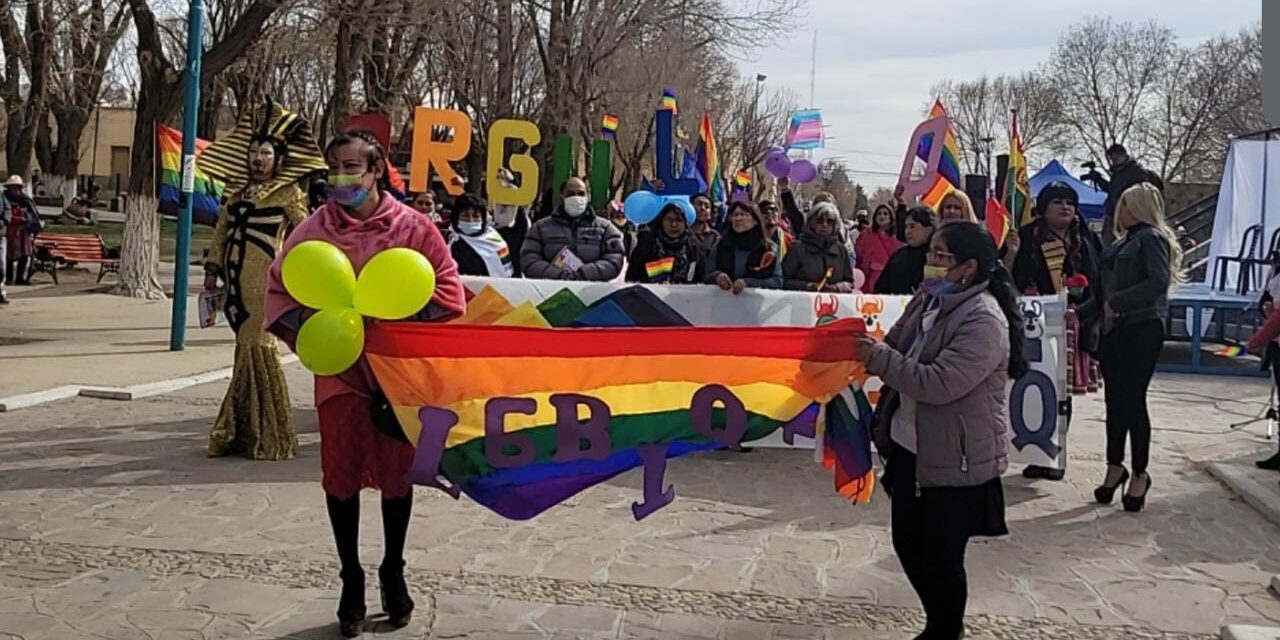
LA QUIACA, Argentina. The first International Pride March in the border cities of Villazón, Plurinational Bolivia, and La Quiaca, Argentina, took place this week, on June 28, International Pride Day. "Transvestizing the Qariwarmi Indianness" was the slogan. Because if there's one thing that LGBTQ+ people around the world have known since childhood, it's that gender-based violence knows no geographical boundaries, just as racial violence does not.
The organization of the event was a joint effort between Rosalinda Ancasi from the Gender and Diversity office of La Quiaca, and Marcos Colque from the LGBTQ+ Movement of Villazón.
“We were all brunettes and that was the most beautiful thing, breaking down the borders with indigenous queerness,” says
activist Alexis Méndez, a participant in the march.
Breaking down borders with indigenous queerness
Rosalinda Ancasi is the first openly trans woman in La Quiaca. She works in the Gender and Diversity office of her municipality. She says she has fought for a long time to finally reach this day: a historic day for LGBTQ+ people in La Quiaca and Villazón. “Mobilizing together helps us achieve greater visibility and strengthens our demands. We seek to position ourselves as people who deserve more respect and affection from society. We often suffer discrimination within our families, communities, and schools,” said Rosalinda.
This is what the trans and travesti community means when they say that violence is structural. It doesn't manifest in just one
way, nor in just one place. The activists' response was to work across different fields. The trans and travesti employment quota policy, approved in 2021 in Argentina, was the culmination of a long journey begun more than 20 years ago by Indigenous trans women Lohana Berkins and Diana Sacayán
.
In La Quiaca, since a trans woman has been heading the Diversity office, they say that important transformations are taking place for the lgbtttqpnb collective, in conjunction with social organizations and activists.
"We march for those who today cannot say who they are"
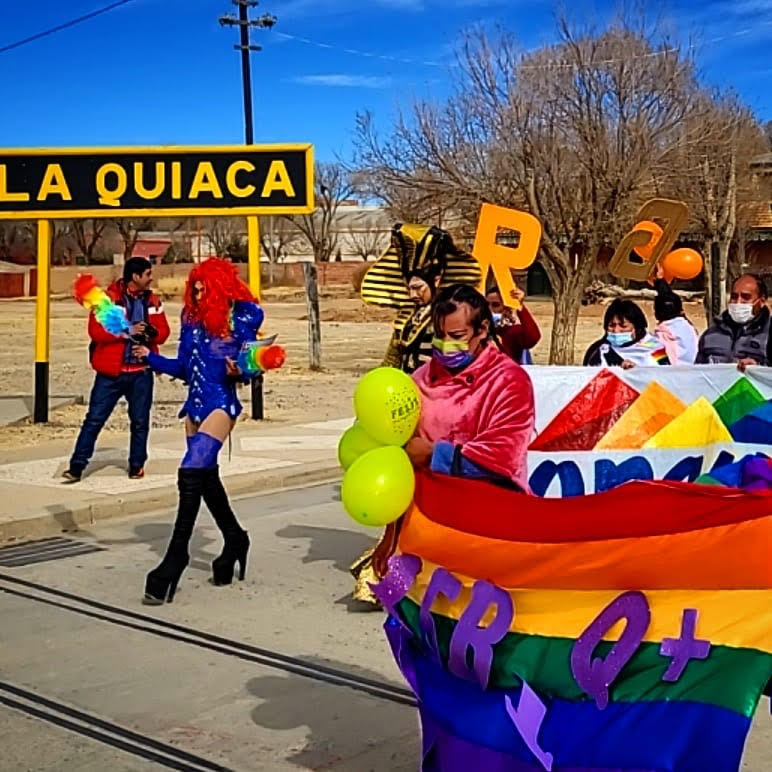
Marco Colque is a leading figure in the LGBT movement in Villazón, Plurinational Bolivia. He identifies as part of the Aymara nation, whose language includes gender-neutral pronouns in addition to masculine and feminine forms. “We are holding this march not only for
ourselves, but for all those who still cannot freely express who they are. We want to tell them that they are not alone, that we are a community,” Marco stated.
Non-heterosexual sexualities, transvestites, and all identities that fall outside the gender binary
are still rejected and judged. Marco also shared that his family and friends have respected him. But he says, “We have to make ourselves known to show that we exist and contribute to society as a whole, like everyone else. Therefore, we deserve to be treated with dignity from childhood.”
The attendees, including children, appreciated Marcos' idea of providing music for the march in Villazón with traditional bands, instead of DJs or electronic music as in other places, creating a territorial march atmosphere.
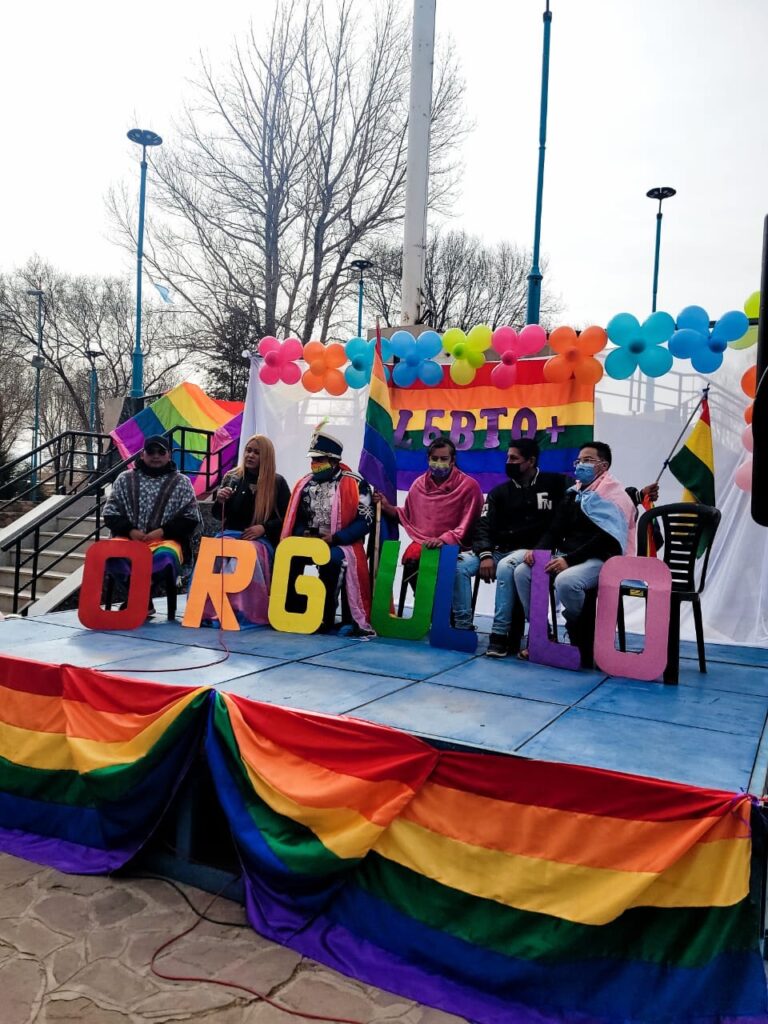
The International Pride March began on the morning of June 28th, with participants arriving from various towns and cities on both sides of the border, including Humahuaca, Sucre, Tilcara, San Salvador, Salta, and San Antonio de los Cobres. They filled the streets of La Quiaca with color. The central plaza was adorned with sequins, high heels, signs, and trans and LGBT flags.
Mayor Blas Gallardo and members of the City Council were present.
The organizations are demanding, among other things, compliance with the Transgender-Nonbinary Employment Quota Law in
state agencies. It is estimated that more than 200 people participated in what was the first Pride March in this city.
Quebrada Pride
In the afternoon, the participants crossed the border into Bolivia to meet in Villazón and continue the day's events. The meeting point was Plaza de las Banderas, where, for the first time, trans and rainbow flags filled the public space. The joyful atmosphere
, the freedom, anxiety, and emotion on the faces of those who attended, demonstrate that coming out is not just metaphorical. Public spaces are contested daily, and the struggle to inhabit them collectively today has made it clear that there is no turning back; there is no going back into the closet.
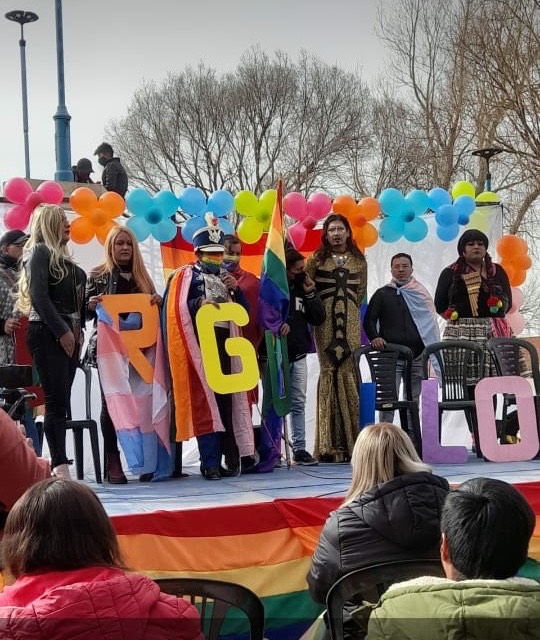
Among the social organizations was “Orgullo Quebradeño,” a collective that brings together anti-racist gay, lesbian, and trans people who embrace their Indigenous identity and experience rural life. Since 2018, they have been organizing activities that seek to
intertwine cultural life, rural life, and the ritualistic forms of sexual dissidence.
Smuggling and stereotypes
Gustavo Cabana, from the Omahuaca nation and part of the organizing committee, points out that the central question during the march's planning process was : what happens to sexual disobedience in the border regions of the Andean territory? “We, the queer people of the collective, use the rebozo as a political symbol, to confront the heterosexual order that comes down through the channels of white patriarchy, as well as the present ethnic patriarchy, which oppresses us as strongly as Western patriarchies.” He tells us that during the organization of this march, they discussed the idea that just as there are ways to smuggle across
geographical borders, “there is a dyke smuggling, a queer smuggling, a trans smuggling inscribed
on our bodies.”
Gustavo explains that “there were mixed feelings at the event, since on the Argentinian side, there are stereotypical views of Bolivia. Many of us are breaking down prejudices that come from the big cities where LGBT culture is concentrated.
Xenophobia often stems from ingrained nationalist and racial beliefs, and LGBTQ+ people are not exempt from discriminating against members of their own community. On the contrary, this is a reality that is repeated, especially in big cities, against people of color and those from other regions.”
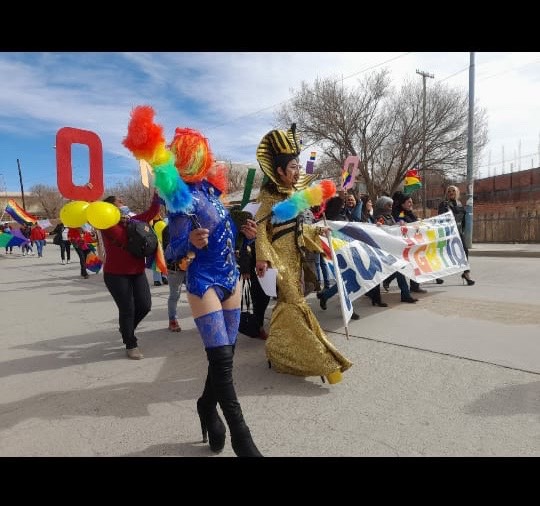
Great Ayllu trans, queer, lesbian and non-binary
“Those notions that people in Bolivia or the highlands are more closed-minded about this issue are being shattered today with
this great Ayllu of trans, queer, lesbian, and non-binary people,” Gustavo concludes. This critique of gender and geographical boundaries that produce erotic, affective, bodily, and political inequalities was discussed during the organization of this
event. The debates were compiled into a manifesto written and read by the activist
Alexis Mendez from the Quebrada de Humahuaca.
Despite the cold and the high-altitude wind, no one remained indifferent to a voice that challenged and resonated among all those present on this historic day of demonstration. Alexis Méndez speaks out to society as a transvestite queer woman
belonging to the Omahuaca nation, and with heartfelt affection for the community of Chorrillo. The independent artist, dancer, and folk singer affirms that “we must not forget our roots, our weaving, our food, and our songs because they are yet another form of resistance.” “ We march from our Indigenous bodies, peripheral, subversive by birth, deprived of possibilities .”
He points out that sexual diversity in these territories persists and endures alongside their communities. “We look upon our families, our ancestors, our ayllus with respect. That’s how we do it today. However, everything has its limits; heteronormativity has also reached the ayllus,” says Alexis. And he adds, “We can no longer allow hatred from any quarter. Some people believe that sexual disobedience originated with colonialism, but that’s impossible.”
Fortunately, records exist today of the important role that non-conforming people played within Andean cultural communities , and just as we existed before the arrival of the colonists, we did so then as well. On the other hand, one of the discussions that has been taking place in the community for years is that the urban LGBTQ+ community insists on presenting white
, middle-class faces as the official image that hegemonizes the non-heterosexual experience.
Plurinational, brown, brown and indigenous march
“It’s very powerful to think that when we travel to the city we see constant discrimination, a very strong racism directed at our racialized bodies, and often from people within the LGBT community itself. Our Indigenous bodies challenge that white, hegemonic homogenization that is created in cities, because we refuse to forget our roots,” Alexis
adds, “being LGBT forces you to forget your roots, and who we are.”
With modernity has come the idea that city people are more advanced in these debates, attempting to sanitize
gender and sexual identity by detaching our Indigenous, Black, Brown, and marginalized history from the LGBT debate. “It’s up to us to unite these spaces, areas, and experiences to create knowledge for our children, our grandmothers; we have a history of generations of transvestites in the area,” says Alexis.
Holding the first Pride march in Villazón and La Quiaca is part of an important decentralization process where the voices and bodies of LGBTQ+ people are now making their presence felt in every corner of the country. Marco comments, “I’ve been to many Pride marches in big cities like Santa Cruz and La Paz. However
, marching in your own city is essential to educate our neighbors about respecting the diverse identities that have always existed throughout history.” Taking to the streets of your neighborhood is about expressing your identity. And not just your gender identity. Today we speak of Plurinational Identity, because this is also a march for people of color, Indigenous people, and people of color .
Marching in the territories of the Aymara, Quechua, and Kolla nations is to offer our bodies as a symbol of protest against the
consequences of a white, extractive, and colonial patriarchy. This plurinational and diverse march is a reclaiming of the existence of the third gender, which is part of the ancient Andean culture. It is a journey into memory that reminds us that the punishment and genocide of the LGBTQ+ Indigenous community began in Abya Yala, or present-day America, with the arrival of
European ships five centuries ago.
Slowly, the dispossession extended beyond communal land to encompass a way of life based on complementarity and reciprocity among all who inhabit this land. Here, Andean people of color played
roles in ceremonies as mediators between the feminine and masculine, able to move between both poles. Why, then, must we continue to reduce the experience to only two options?
This June 28th, the invitation was extended to the people of Villazón and La Quiaca to step out of the closed-off and competitive world of the male-female binary. To cross borders that prevent collective embrace. We want to walk together towards a good life, where no one has to feel afraid to go out in public for being different.
We are present
We are committed to journalism that delves into the territories and conducts thorough investigations, combined with new technologies and narrative formats. We want the protagonists, their stories, and their struggles to be present.
SUPPORT US

FOLLOW US
Related notes


We are present
This and other stories are not usually on the media agenda. Together we can bring them to light.