

Plurinational and anti-racist pride at the Stop Trans Murders march
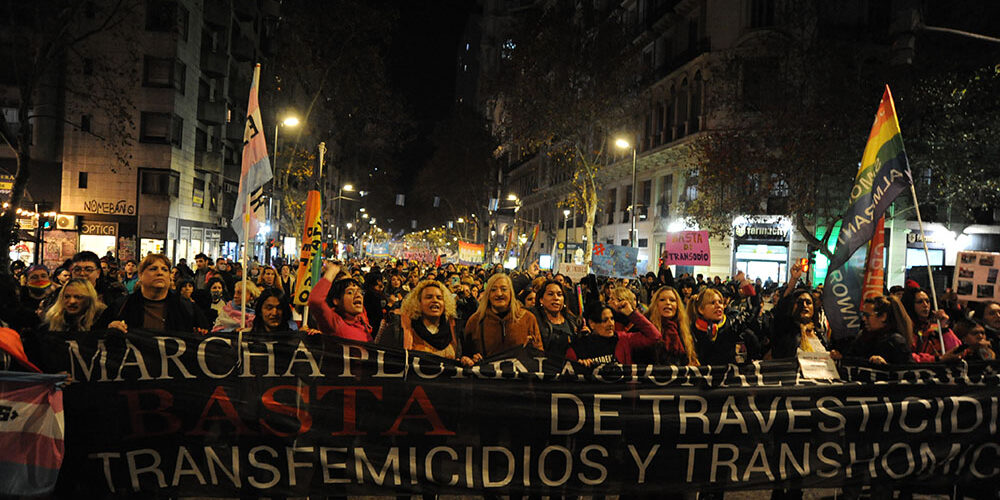
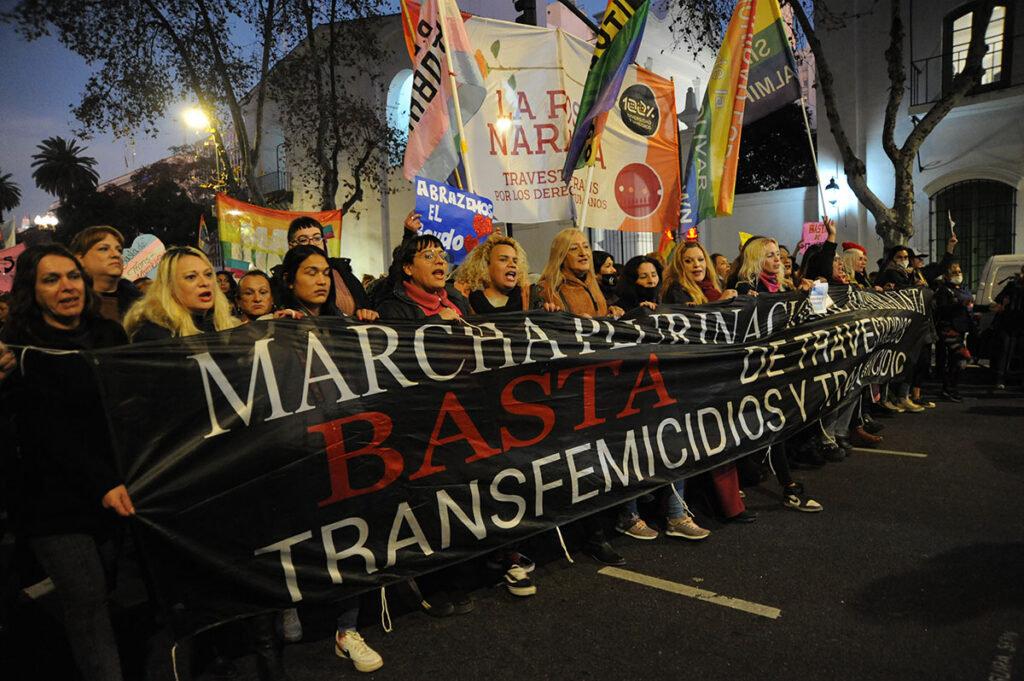
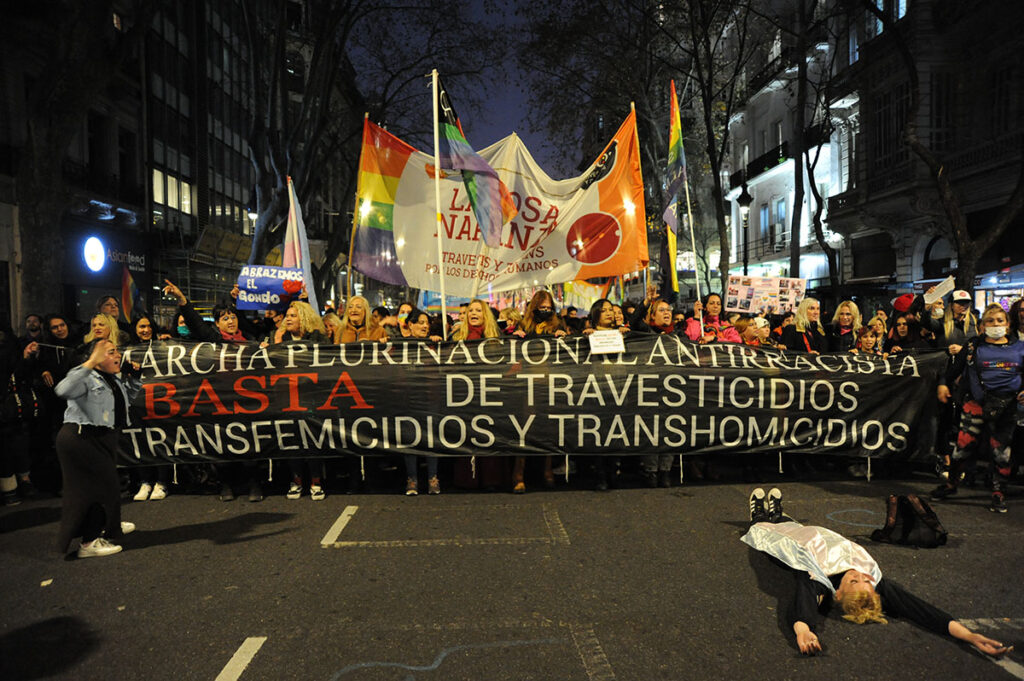
In the City of Buenos Aires and in various parts of Argentina, thousands joined the March to Stop Transvesticide, Transfemicide and Transhomicide on Pride Day.


Share

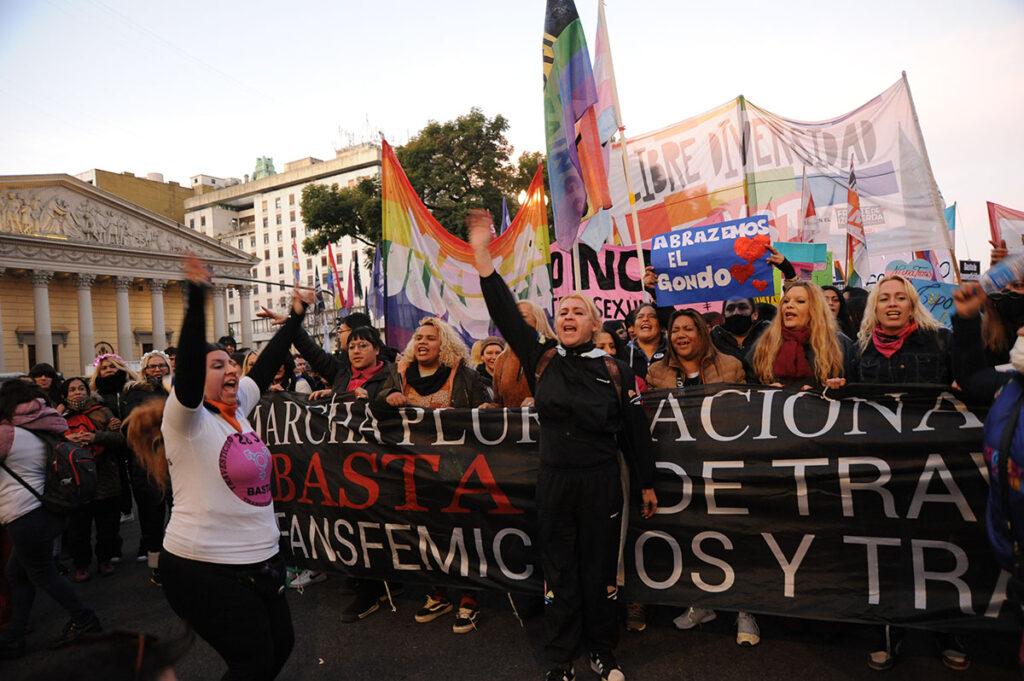
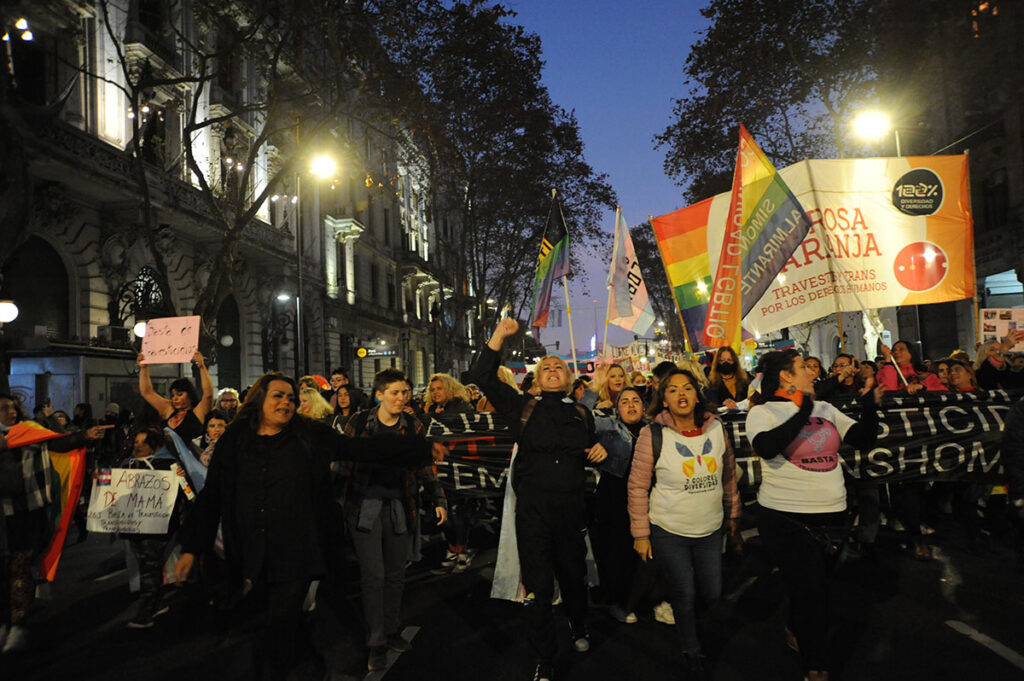
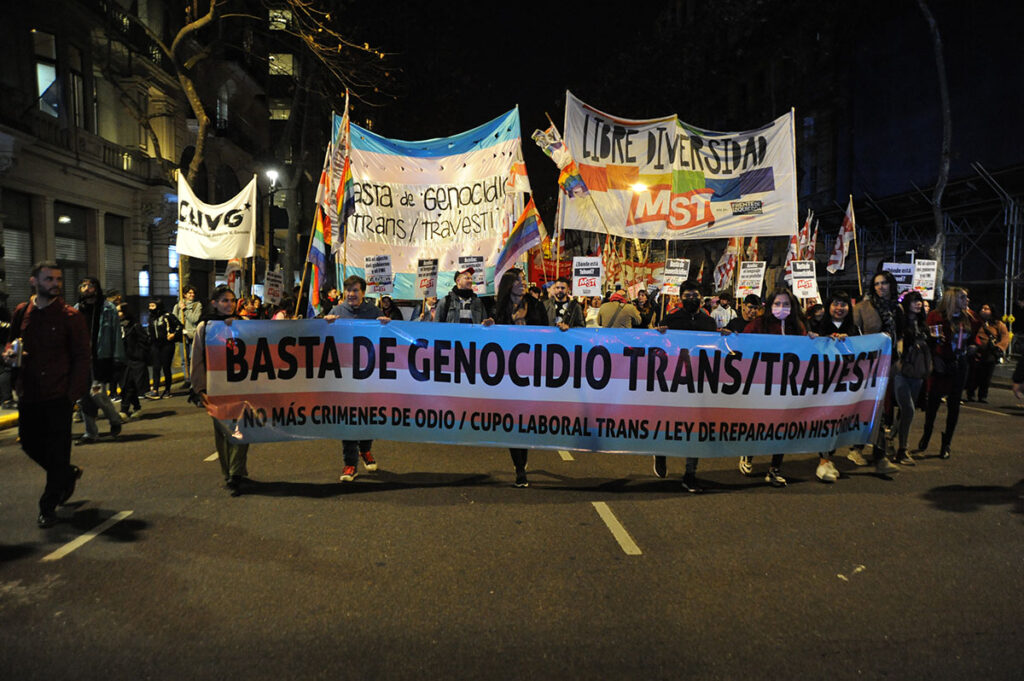
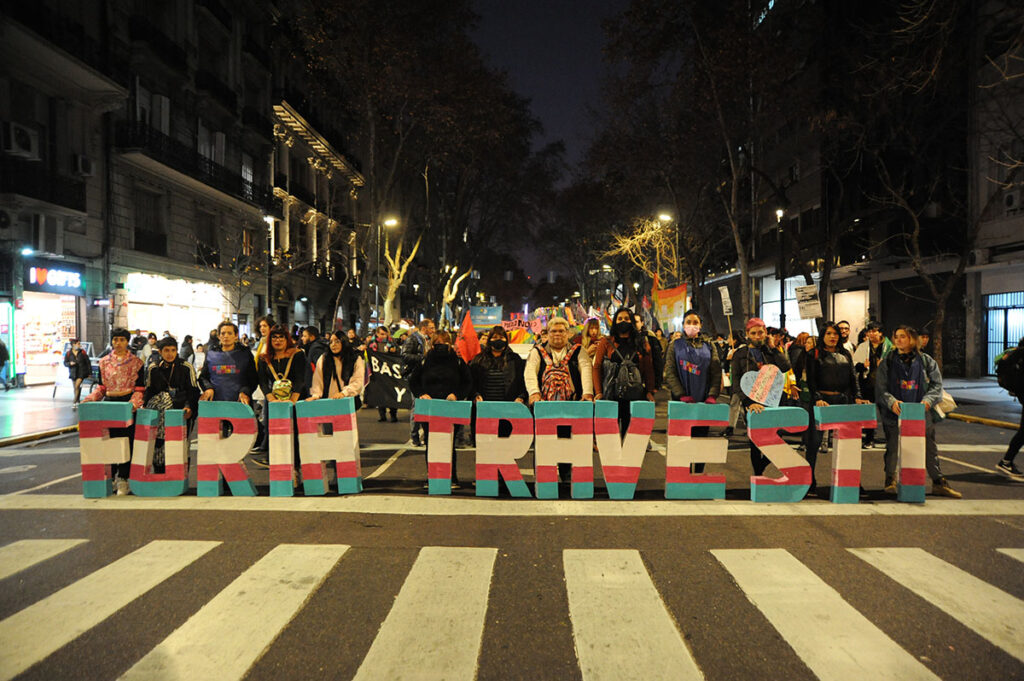
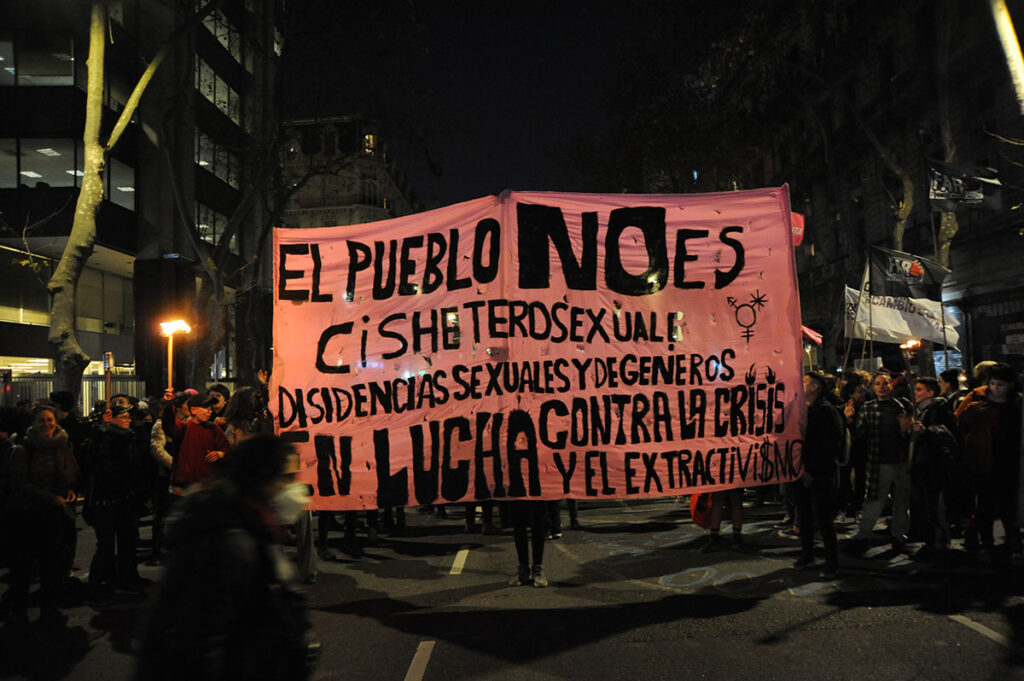
BUENOS AIRES, Argentina. For the past seven years, International Pride Day in Buenos Aires has been a day of mourning, not celebration. Since 2016, on June 28, transvestites and trans people, LGBTQ+ activists, trans feminists, and other organizations have marched from Plaza de Mayo to the National Congress to demand an end to transvesticide, transfemicide, and trans homicide. This year, the march emphasized its plurinational and anti-racist identity and was also replicated in various locations throughout Argentina.
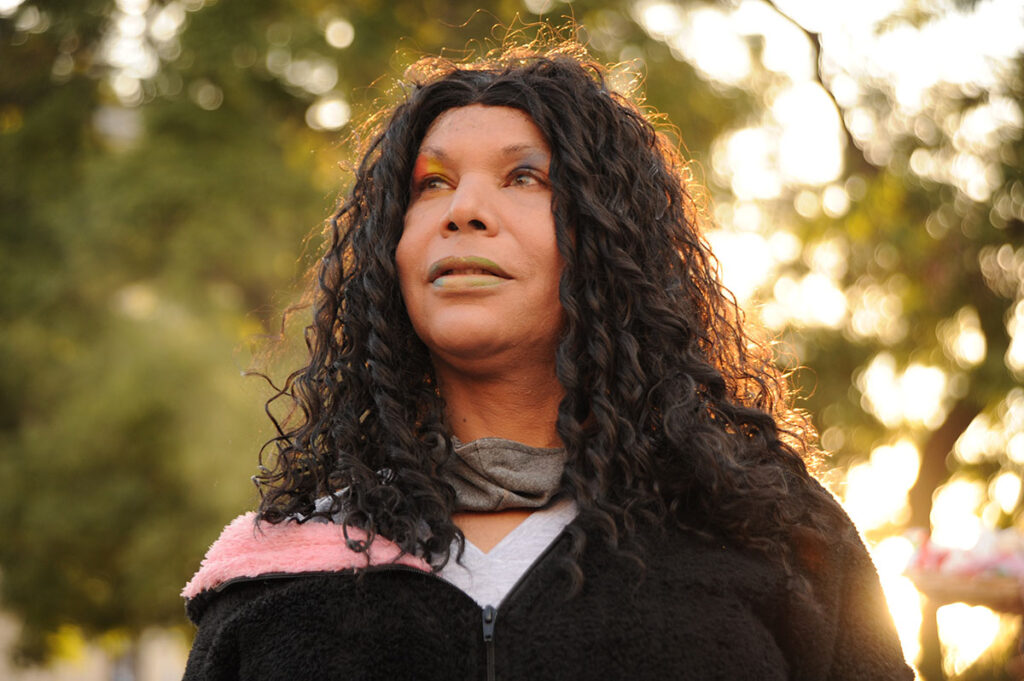
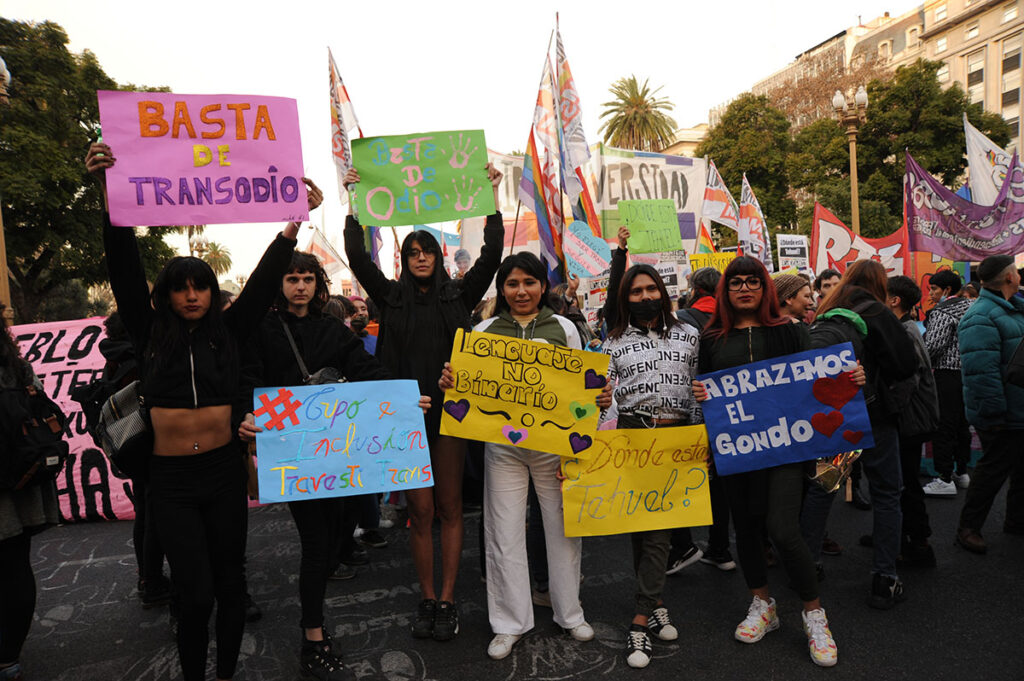
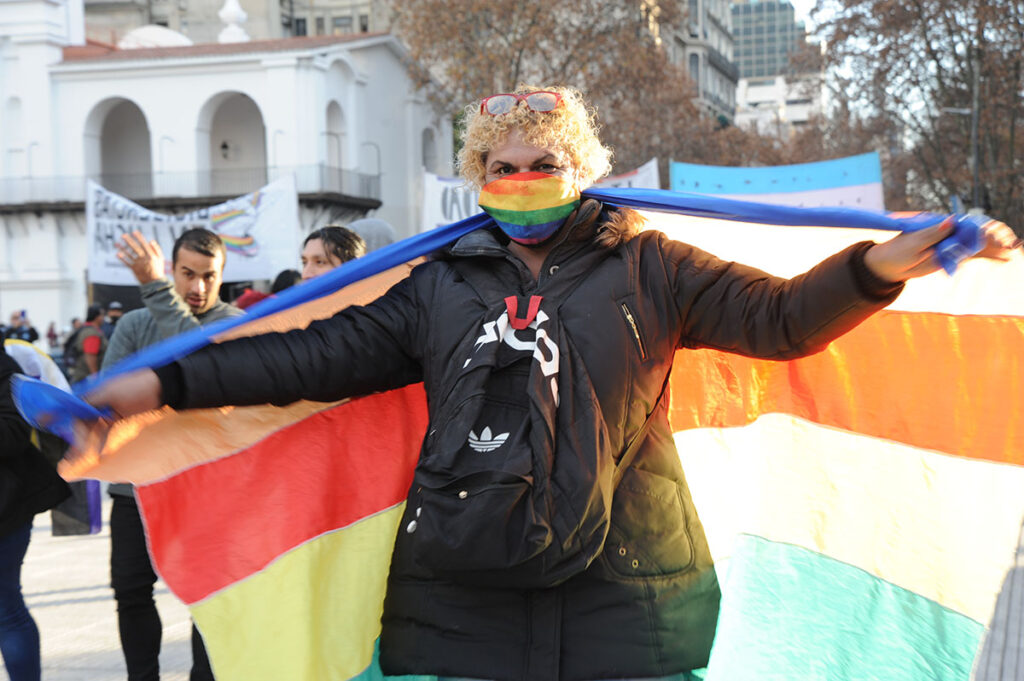
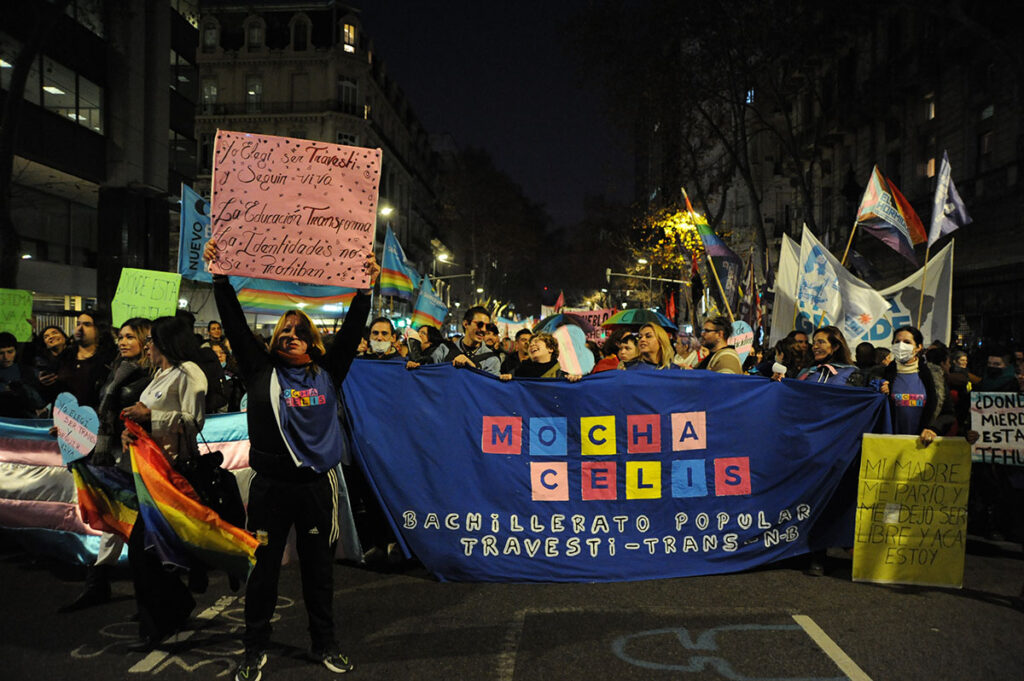
Starting at five in the afternoon, activists and transvestite organizations, LGBTQ+ groups, and some political organizations began arriving at Plaza de Mayo. Students, graduates, and teachers from the Mocha Celis Trans Popular High School were there, as were the women from the Hotel Gondolín and thousands of others who struggle daily for basic survival. Mothers with their trans children, young people in transition, non-binary people, and older trans women demanding historical redress were also present.
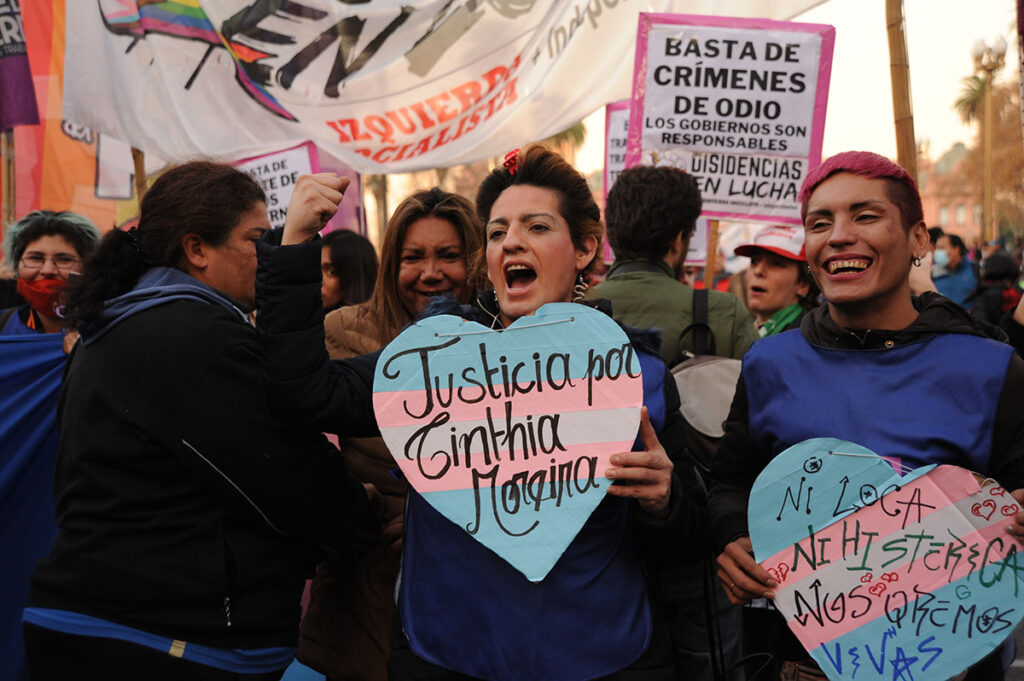

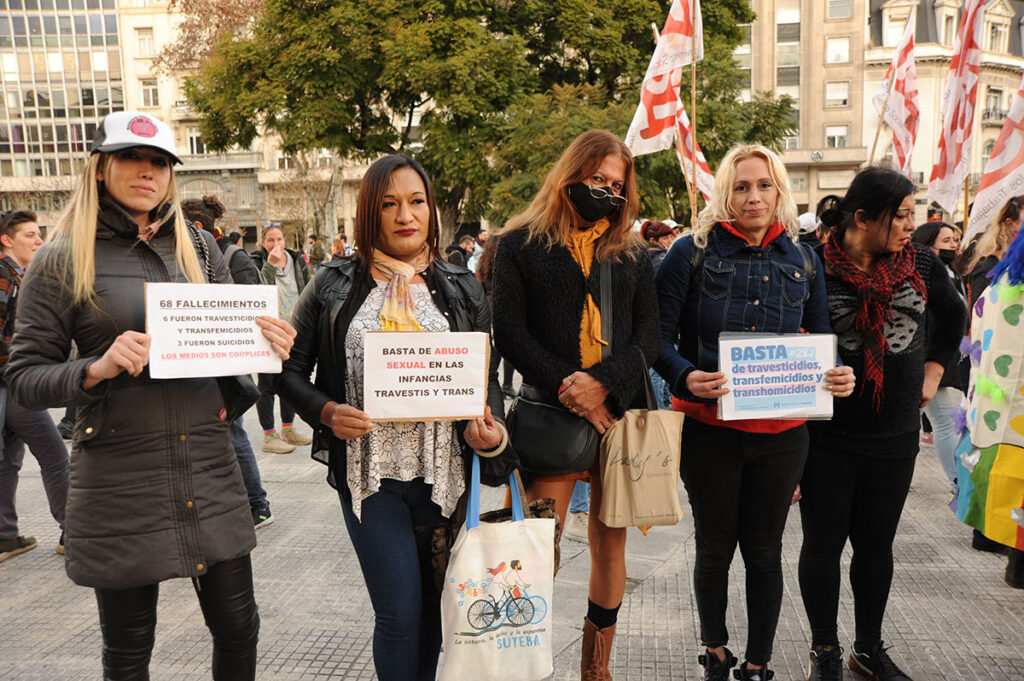
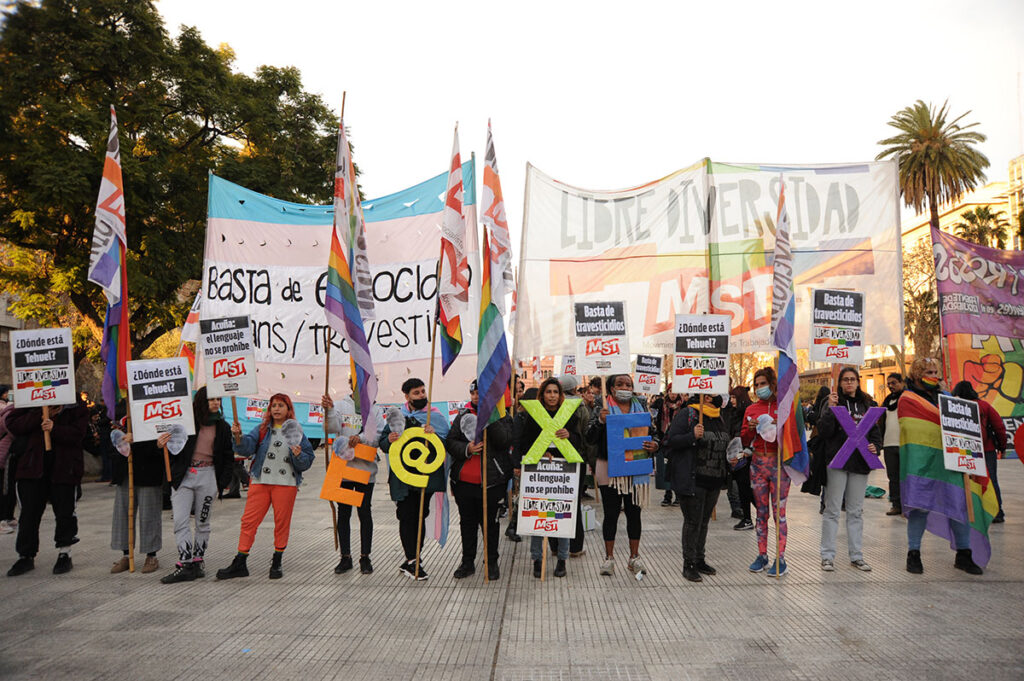
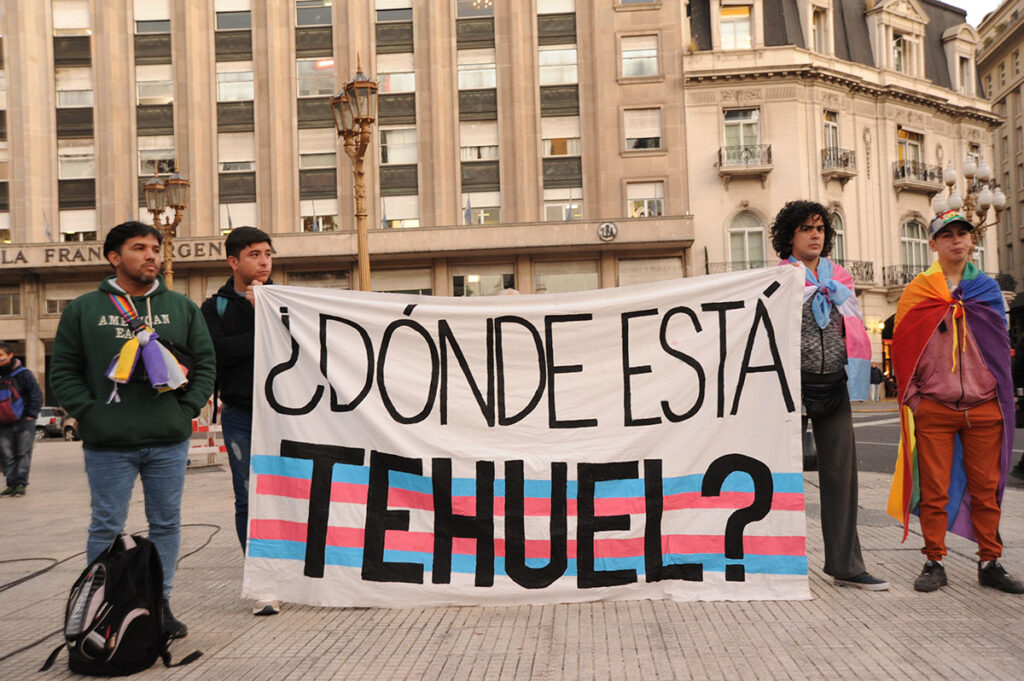
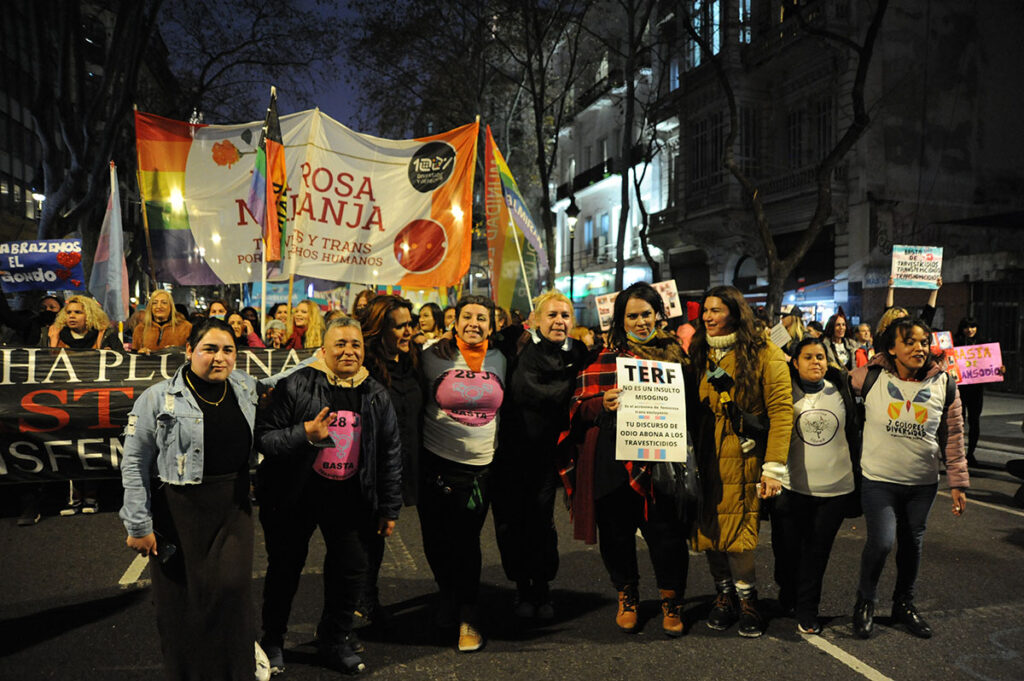
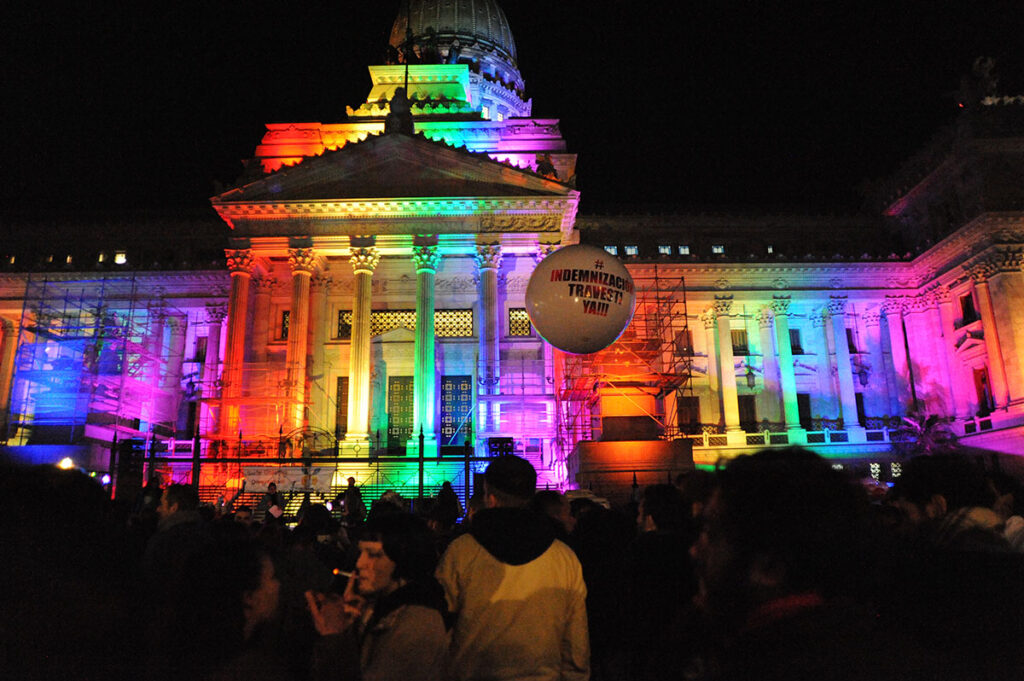
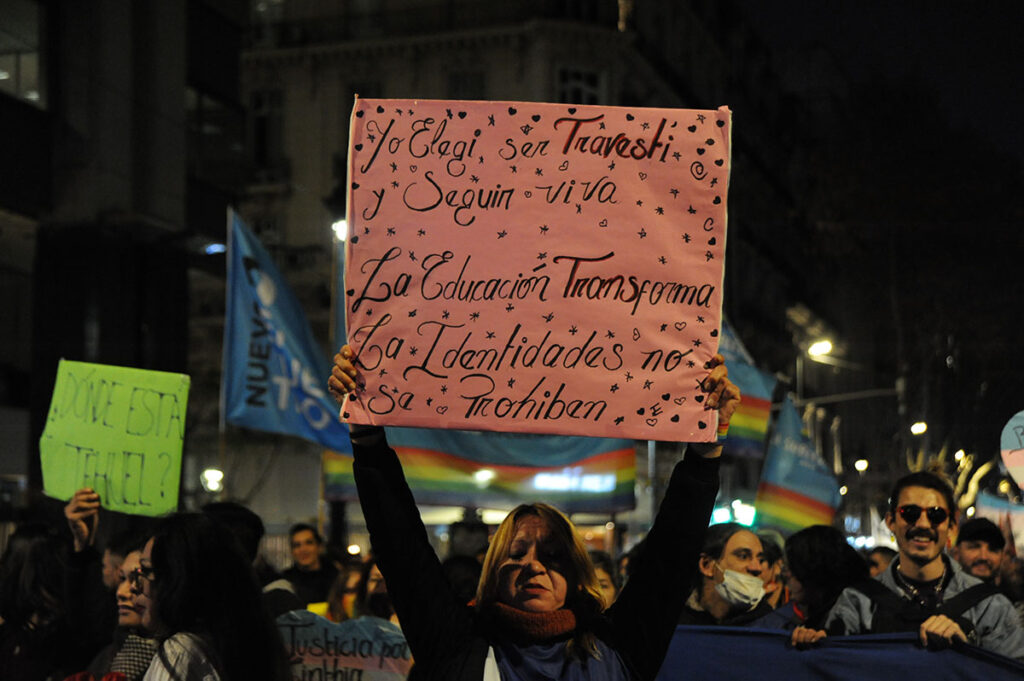
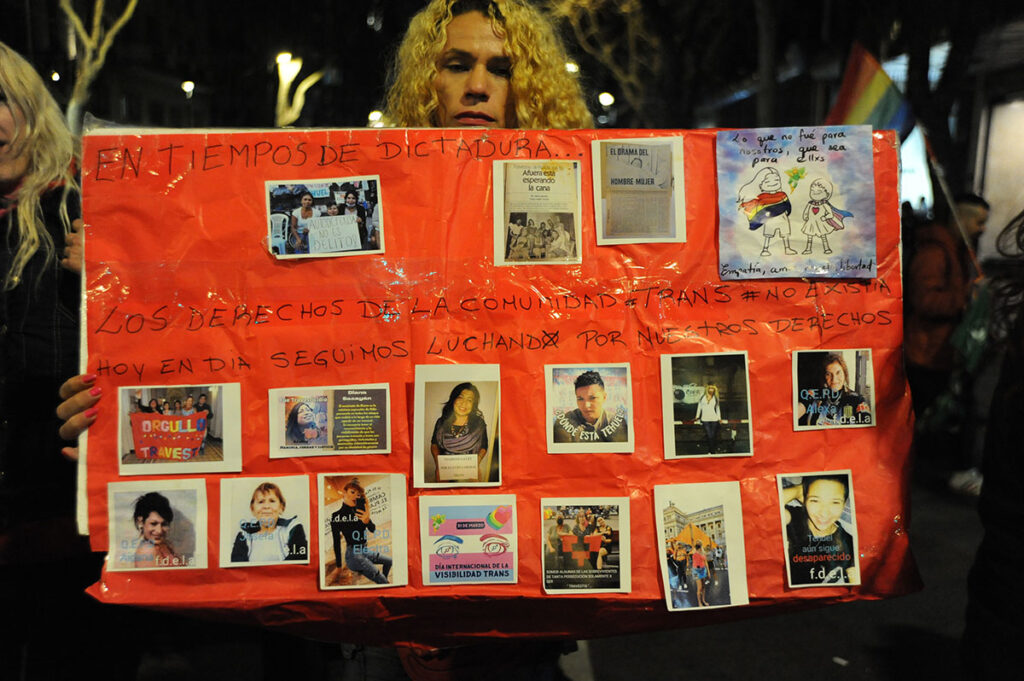
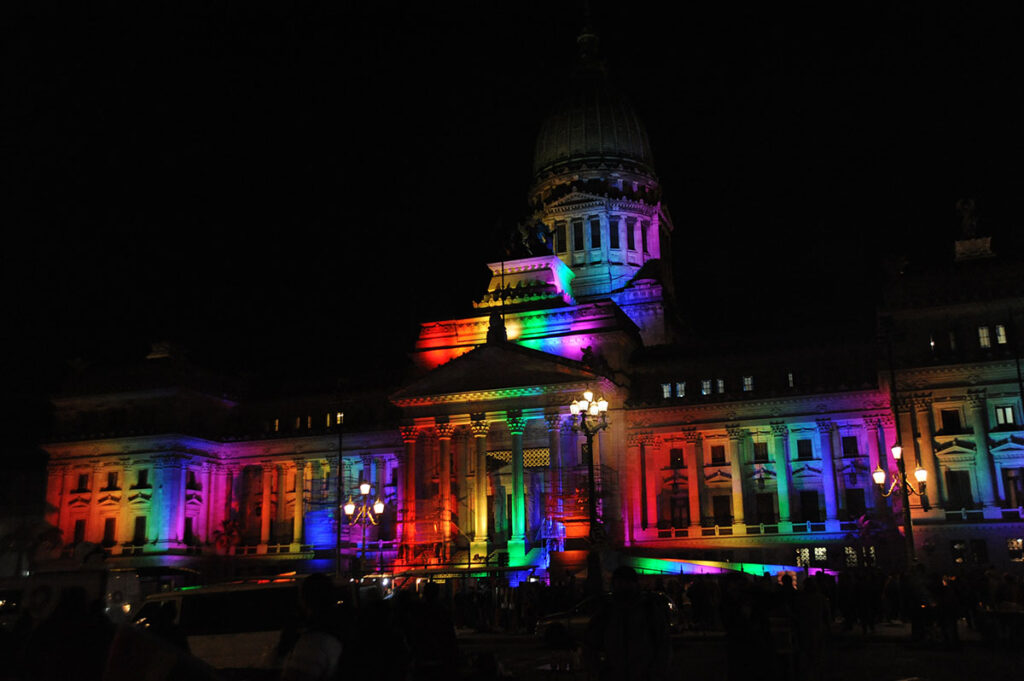
This demand was also part of the central slogans summarized on so many banners and signs. Some are the same as years ago: Stop the trans genocide, Stop killing us. Others were painfully added last year with the still unanswered question: Where is Tehuel? And in 2022, the defense of inclusive language was added. Following the City Government's recent ban on the use of inclusive language in schools, the letters E and X appeared on many of the signs yesterday. The topic was also addressed in the document read at the end by trans activists, when night had fallen and the National Congress was illuminated with the LGBTQ+ colors.
“We march for equal rights. For those we have already won and that must be fulfilled,” said Ivana Solange Burgos, as she marched with the sign #StopTransMurders and her body covered in blood and homemade makeup.
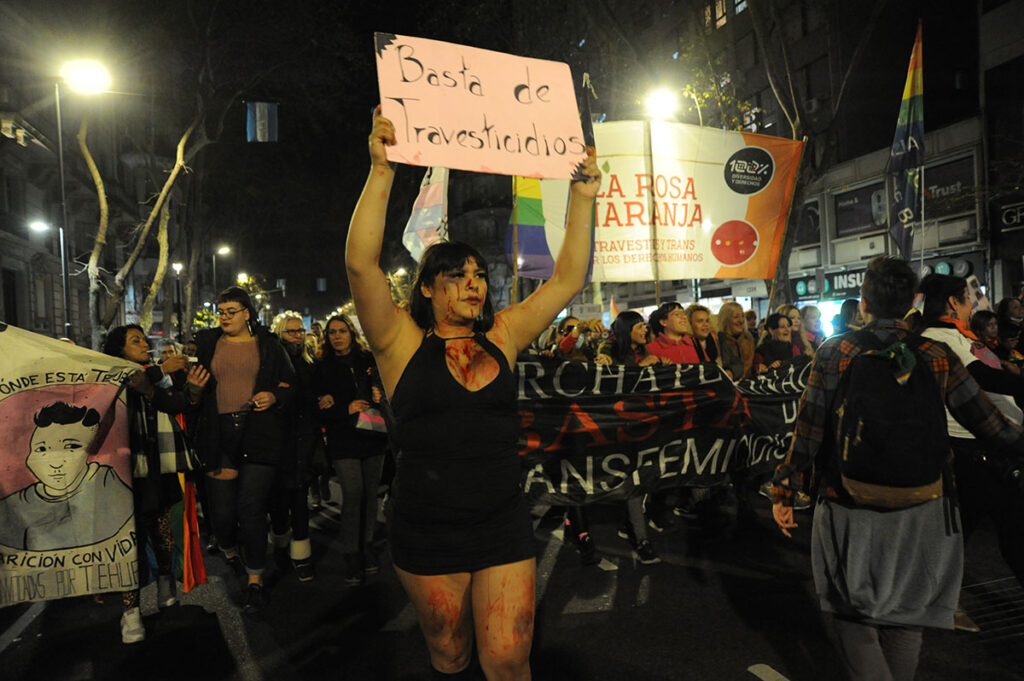
The TTT organizations that are calling for the march shared the figures they have collected so far this year: more than 30 trans women have died from preventable causes (social transvesticide), six transfemicides and transvesticides, and four suicides.
“Public policies are the most powerful tool to erode the foundations of transphobic murders. Access to work, health, employment, and education,” Greta Pena, Undersecretary of Diversity Policies at the Ministry of Women, Gender, and Diversity, told Presentes. “I thank the trans and travesti movement, which is always in the streets demanding change,” said the official and lesbian-trans-feminist activist.
They are asking to add "transvesticide" to the Penal Code
Congresswoman Mónica Macha was one of the few politicians who marched yesterday (and has been doing so since the first one). A short time earlier, on International LGBTIQ+ Pride Day, she had introduced a bill to incorporate the crime of transvesticide into Argentina's Penal Code.
“We need concepts that name the chains of violence and stigmatization suffered by the transvestite and trans community,” said the congresswoman, who is also the author of one of the projects that promoted the National Transvestite and Trans Quota Law (Law for the Promotion of Access to Formal Employment for Transvestite, Transsexual and Transgender People “Diana Sacayán – Lohana Berkins”).
The project gained momentum following the legal proceedings surrounding the hate crime of Diana Sacayán. In 2018, the court convicted the perpetrator, classifying it as a transphobic hate crime. However, in 2020, when the Criminal Cassation Court reviewed the sentence, it removed that specific designation of hate crime against transvestite identity. “Our debt to our transvestite and trans sisters is still very large,” Macha told Presentes.
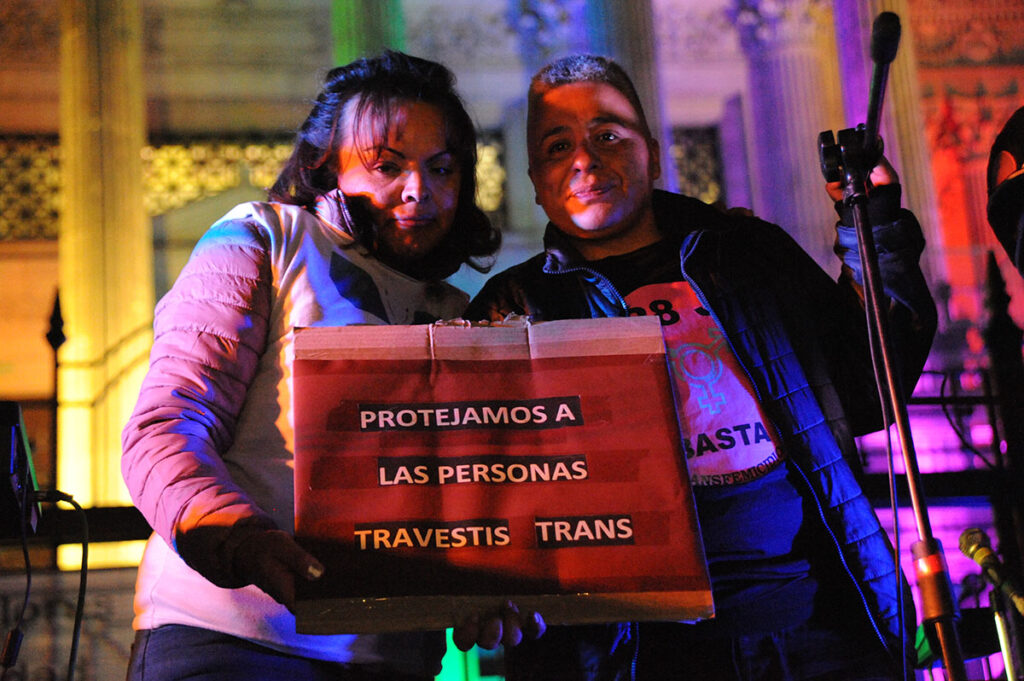
On the stage where he read the document, Say Sacayán, Diana's brother and a leader of MAL (Anti-Discrimination Liberation Movement), referred to this project and recalled that after Diana's death (in October 2015), this march emerged in June 2016, and has managed to endure and advance the demands of the trans and travesti communities. "Fear and silence won't stop us, and the cold certainly won't stop us."
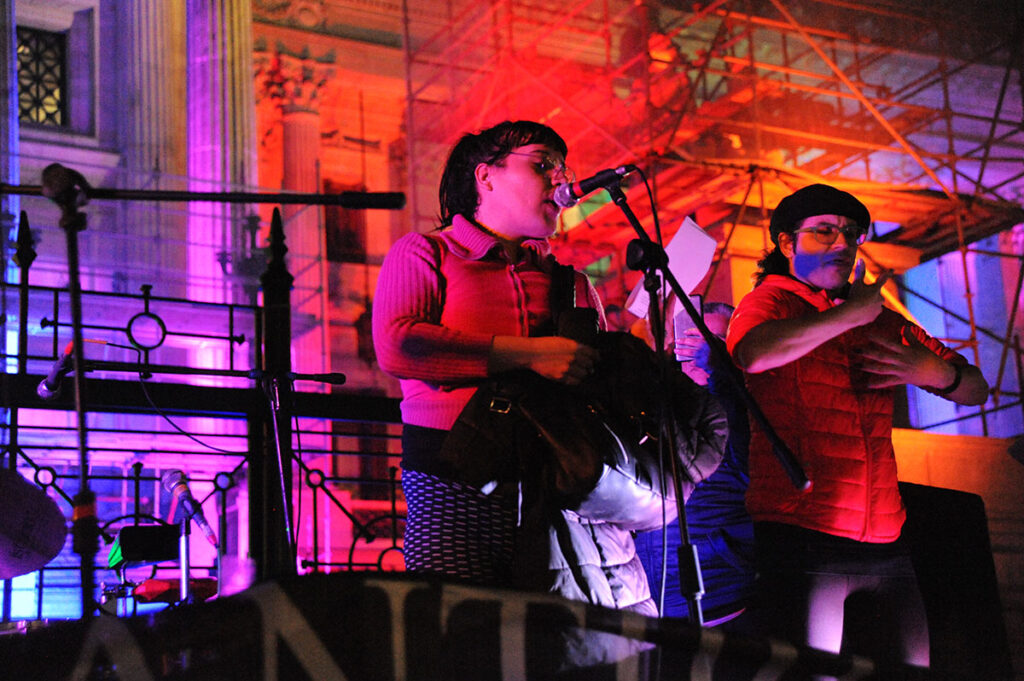
“We need the law to reinforce, through the penal code, that transvesticide, transfemicide, and transhomicide are aggravated homicides,” she stated during the reading of the document. This text, which activists read aloud as it was passed around the stage among various leaders while a sign language interpreter narrated it, summarized many demands. She also reminded everyone that the trial for the hate crime of Melody Barrera, murdered by a police officer, is about to begin in Mendoza.
Historical reparations and compliance with the employment quota
“Today, with the movement of trans and travesti organizations, we are not marching to celebrate. We are marching for our dead. To say 'Enough with transfemicides and travesticides,' 'Where is Tehuel?' And to demand many things, including the effective implementation of the employment quota throughout the country,” Marcela Tobaldi of La Rosa Naranja told Presentes, alluding to another of their demands. The activists point out that while achieving a labor inclusion law is a huge victory, the State does not allocate sufficient funds nor implement it effectively across the country or in all branches of government.
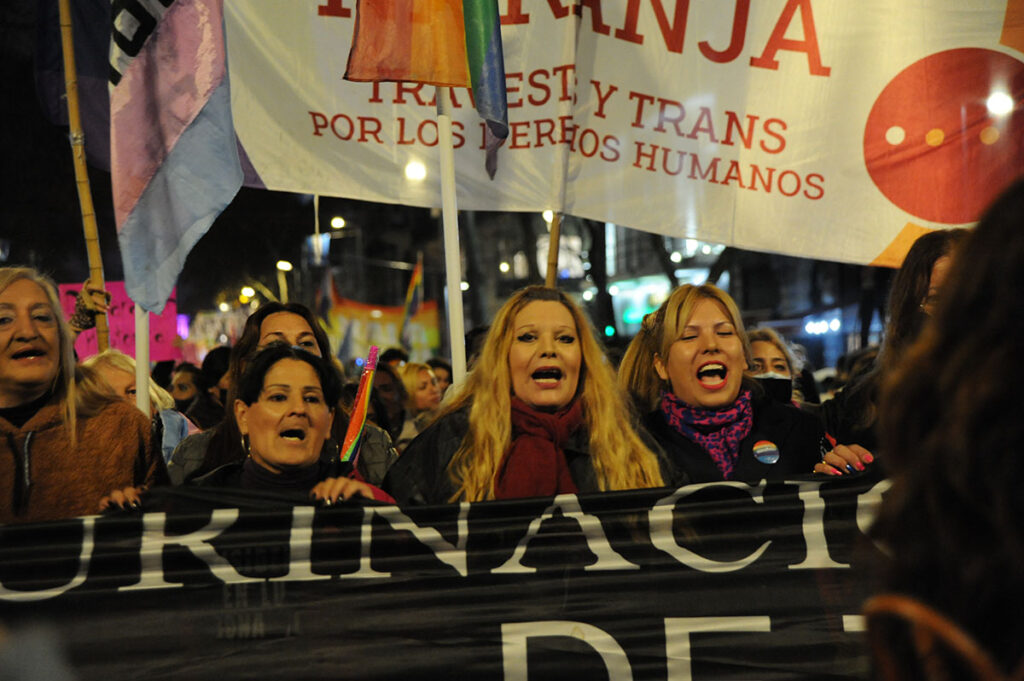
“We are fighting for historical redress. Women over 45 don't have access to work or healthcare, especially in the City of Buenos Aires,” Alessandra Bavino, a trans activist, told Presentes. She said there are initiatives in the province of Buenos Aires, but emphasized that in the City, there is no job inclusion.
The demands directed at the City Government were loud and clear throughout the march. On one hand, the shouts and chants that echoed through the streets condemned Mayor Horacio Rodríguez Larreta. But above all, the document, which went far beyond the ban on inclusive language in schools, denounced a series of inequalities in Argentina's wealthiest city.
One example mentioned yesterday: after the recent fire at the Gondolín Hotel, activists denounced the lack of containment measures and support. "The City government's response was nonexistent," they stated. They also protested the lack of job opportunities in the city and the absence of policies guaranteeing access to healthcare and housing. On this point, they highlighted the economic exploitation faced by transgender people when renting housing.
Stop the hate speech
“Stop the hate attacks in the media. It enables a cruel and common sense for our lives. We demand that media violence be regulated,” they stated in the document.
For education and childhoods free from violence
At this march, there were some trans children and teenagers marching with their families. “She’s my granddaughter, super trans,” Marcela told Presentes. Jessica, the little girl, was marching down Avenida de Mayo with her mother and grandmother. She had pink and blue glitter on her cheeks, a sign she had made herself, “I march for my trans friends,” and a photo of Diana Sacayán hanging from her neck. She was with the girl’s mother, Araceli.
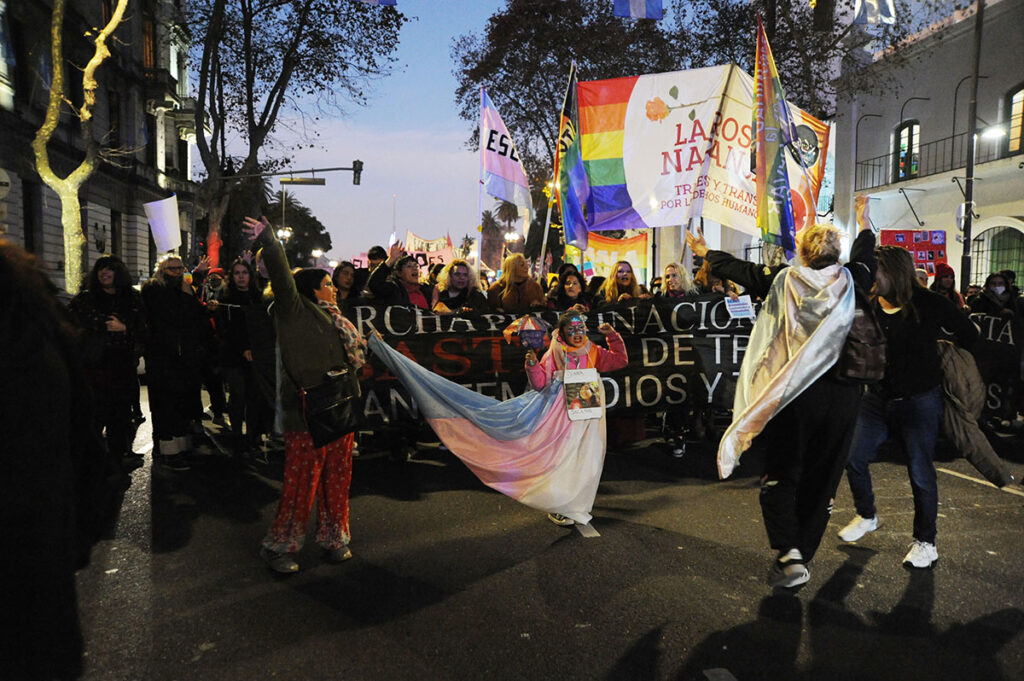
The demand for childhood and adolescence free from violence permeated the entire march and the document. Calls were made for the implementation of Comprehensive Sexuality Education, access to healthcare without discrimination, and the need for an inclusive approach in pediatrics. And it was demanded that individuals be able to legally change their gender marker at age 16 without parental consent.
The debt is with us.
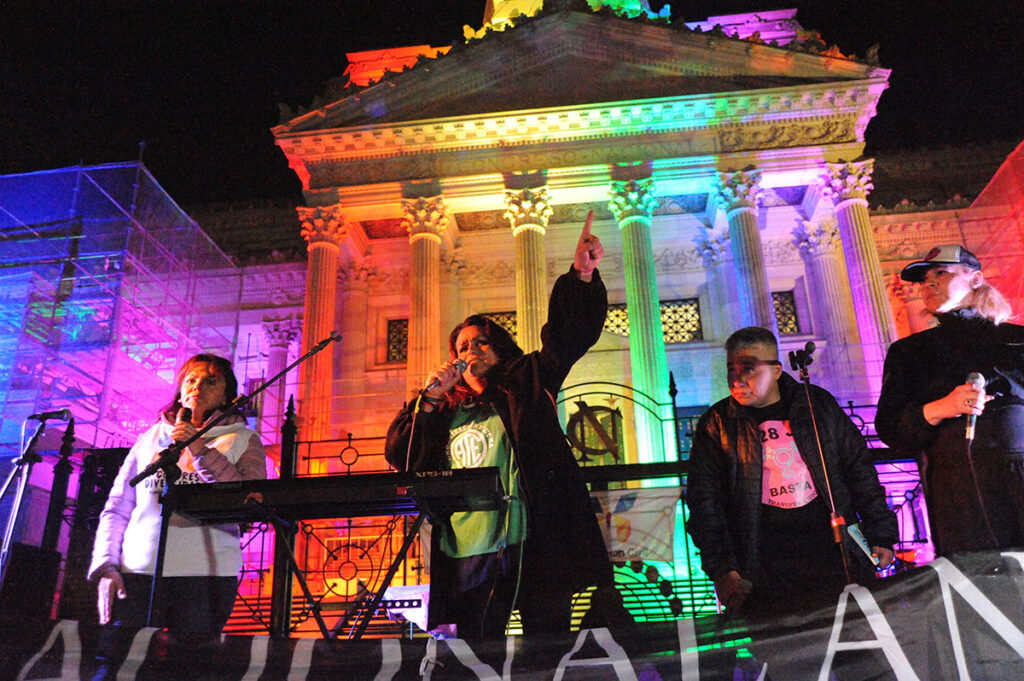
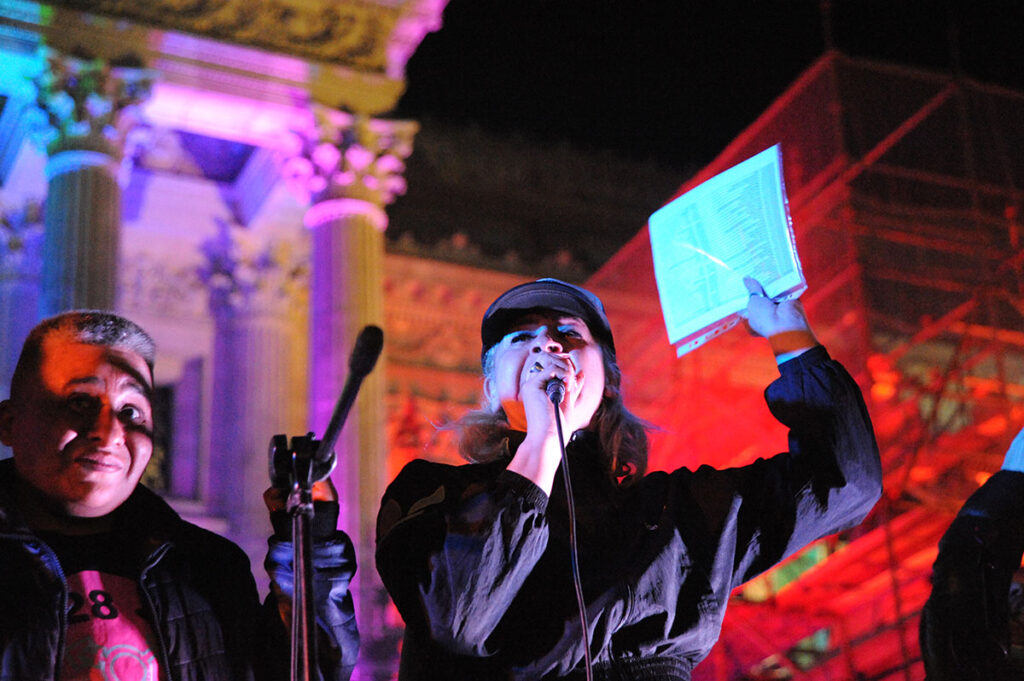
A group of people marched for about six blocks along Avenida de Mayo. “We believe it’s important to continue reclaiming this history that we, the new generations of trans and travesti activists in Argentina, have been writing. To continue building a collective memory with the banners of Diana and Lohana. Until seven years ago, June 28th was a day that didn’t exist in the City of Buenos Aires. We need to change the living conditions of trans and travesti people, for society to understand and apologize to us. It’s a debt,” said Alma Fernández, a trans activist. From the stage, she rallied the crowd: “ The debt is with us. No to the IMF, yes to our community. The State must pay for the damages caused.”
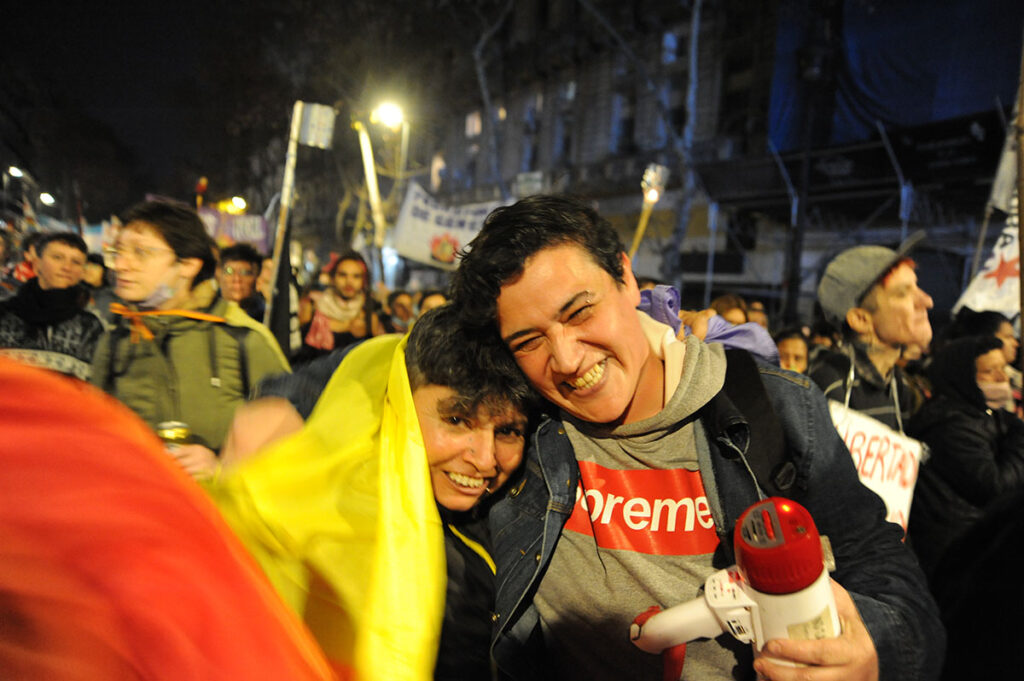
“We resist, we exist, and we stand with those who are with us and with those who will come after us. This march didn't exist eight years ago: Trans Fury!” the organizers declared from the stage, their backs to the National Congress. “This place is ours too!” the organizers reminded the crowd. The trans ballroom and the Sudor Marika show, which closed the day, added a festive touch to Pride.
We are present
We are committed to journalism that delves into the territories and conducts thorough investigations, combined with new technologies and narrative formats. We want the protagonists, their stories, and their struggles to be present.
SUPPORT US

FOLLOW US
Related notes


We are present
This and other stories are not usually on the media agenda. Together we can bring them to light.