

In Mexico, 1 in 20 people identify as LGBTI+
For the first time, Mexico conducted a survey to learn about the situation of the LGBTI population.

Share

GUADALAJARA, Mexico. Institute of Statistics and Geography (INEGI) presented the results of the National Survey on Sexual and Gender Diversity ( ENDISEG, 2021 ), a statistical exercise that allows, for the first time in history, to know the Mexican LGBTI+ population.
“The 2021 National Survey on Gender Equality (ENDISEG 2021) is the largest survey on this topic ever conducted in the country. It responds to the long-standing demand to understand the demographic characteristics of the LGBTI+ population in Mexico. It is essential to have data that allows us to develop options that reflect the realities and needs of the LGBTI+ population. We must provide useful information to decision-makers and those responsible for public policies aimed at eliminating inequalities, so that these policies can reach the sectors with the greatest needs,” reads the results presentation sheet
The numbers
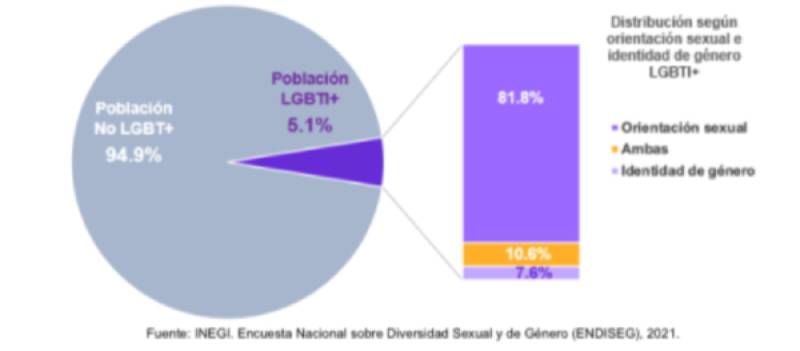
The INEGI reveals that in Mexico, one in 20 people over the age of 15 are LGBTI+. This figure represents 5.1% of the country's total population, or approximately 5 million people.
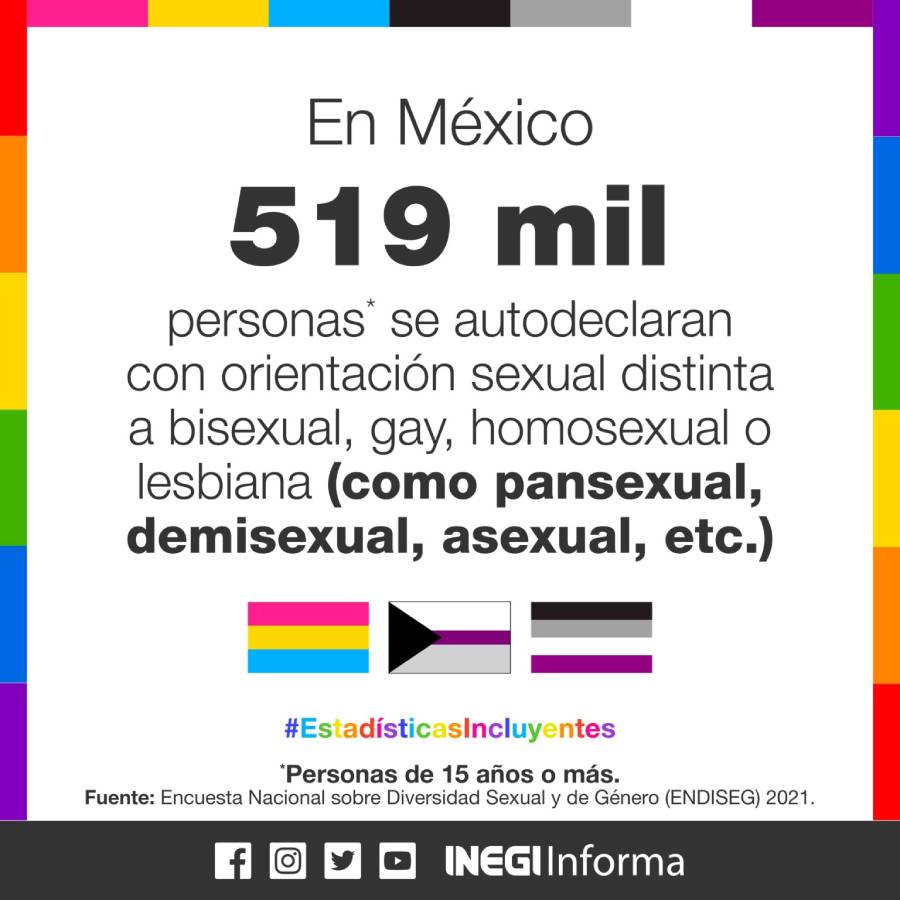
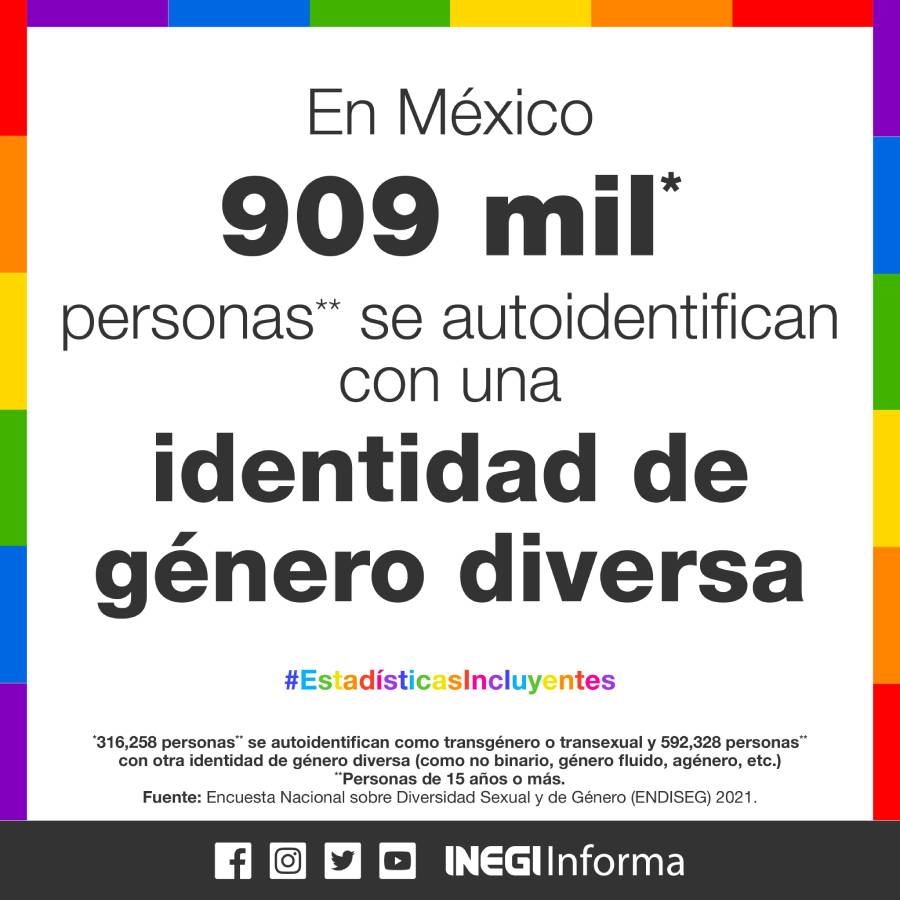
Of these, 4.6 million are lesbian, gay, bisexual, or identify with a sexual orientation other than heterosexual; and 909,000 are transgender or live a gender identity different from the one assigned to them at birth. Just over 500,000 people live with a non-normative sexual orientation and gender identity, such as a bisexual transgender man.
Of the five million LGBTI+ people in Mexico, 11 out of every 100 consider themselves Indigenous, either because they speak an Indigenous language, identify as Indigenous themselves, or because their family speaks an Indigenous language or belongs to an Indigenous group. Additionally, 4 out of every 100 are of African descent.
According to the ENDISEG, the states with the highest absolute number of people who identify as LGBTI+ are: State of Mexico ; Mexico City ; Veracruz ; Jalisco and Nuevo León .
In relation to the percentage of total population, Colima , Yucatán , Querétaro and Guerrero are the states with the highest percentage of LGBTI+ population.
The importance of data
“The 2021 National Survey on Demographic Dynamics (ENDISEG) is a watershed moment. There are at least three reasons for this: it fills a historical gap in demographic information about this population; it answers, for the first time, the question ‘How many are we?’—an increasingly common demand from the community; and, perhaps most importantly, it provides official statistics so that the Mexican government can design and implement public policies to achieve a more equitable and inclusive society. Knowing ourselves is a fundamental step toward the full recognition of our rights,” says Julieta Brambila, Director General of Communication, Public Information Service, and Institutional Relations at INEGI, in this article published in El País .
“During the presentation of the survey results, the Undersecretary for Human Rights, Alejandro Encinas, commented: “ This hard data should strengthen public policies to address the needs of this sector of the population . It should help us confront the deplorable discrimination that in many cases is normalized through attitudes and practices that translate into the denial and violation of human rights, socioeconomic inequality gaps, and violence, where in the last five years there have been at least 461 violent deaths of people of diverse sexual orientations and gender identities.”
"Therefore, for the Undersecretariat (of Human Rights of the Ministry of the Interior) and its areas, it is central to strengthen the actions and policies to prevent and combat the alarming levels of homophobia, transphobia, lesbophobia and biphobia in Mexico," he emphasized.
Bisexuals and non-binary people, majority populations
The survey methodology had two phases: one with a greater emphasis on statistical analysis, in which nearly 44,000 households across Mexico were surveyed between August 23, 2021, and January 16, 2022; and a second, qualitative phase involving 14,364 participants. Additionally, the most sensitive part of the questionnaire was conducted via headphones and tablets.
During the presentation of the results, Edgar Vielma, director of Sociodemographic Statistics at INEGI, commented that these methodologies “favored the confidentiality, privacy and security of the people who participated.”
Of the five million LGBTI+ people counted:
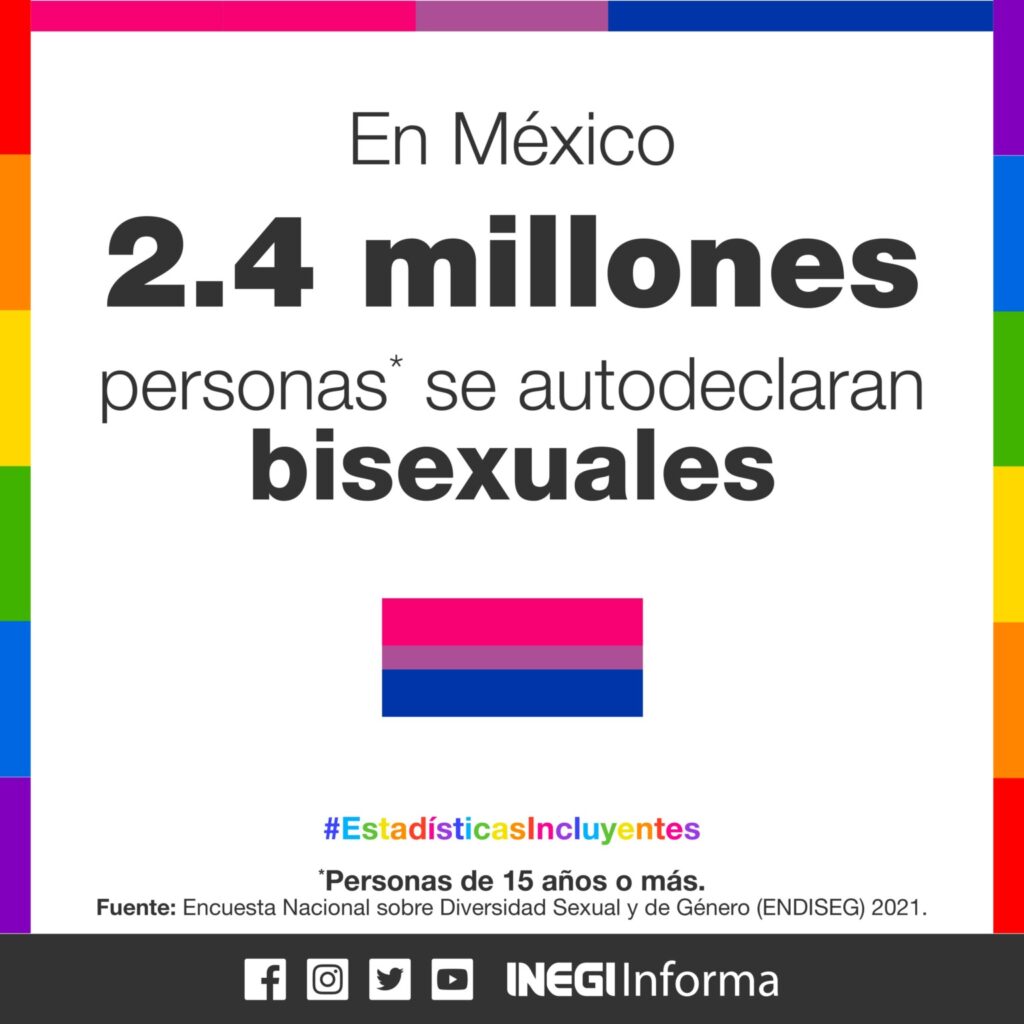
- 2.4 million identify as bisexual.
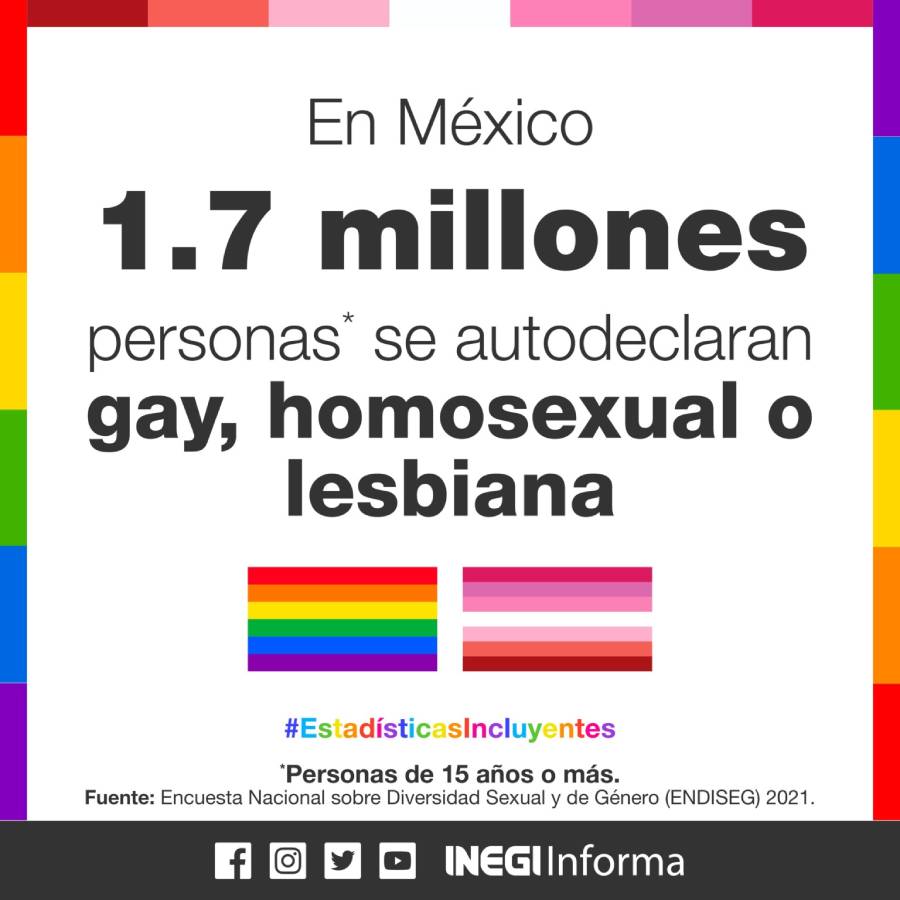
- Just under 500,000 identify as lesbians.
- More than 1.2 million as homosexuals/gay.
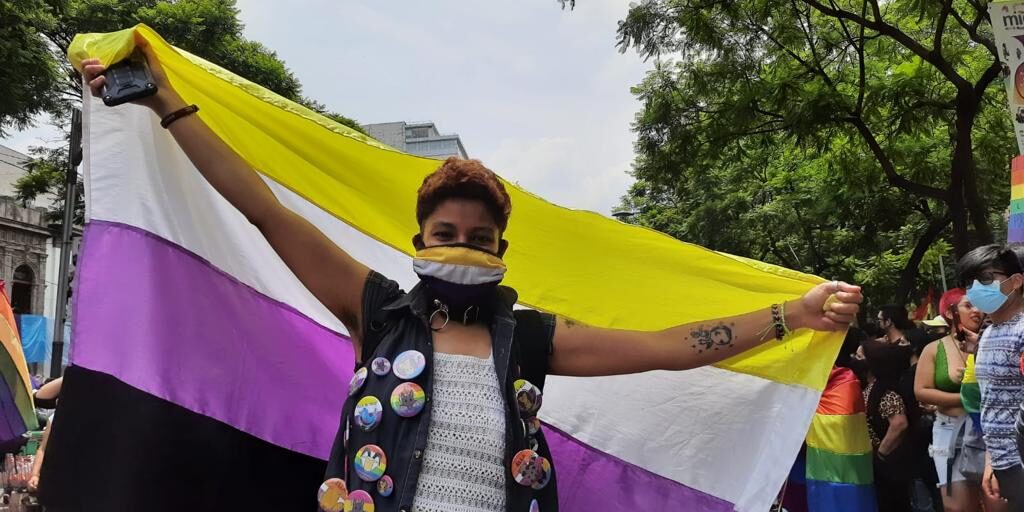
- Nearly 600,000 people identify within non-binary identities.
- More than 300,000 identify as transgender/transsexual.
The other part of the data collection was through a qualitative web survey in which 14,364 people participated; this data highlights a majority participation of trans men (700), in contrast to the 643 trans women who responded.
“I realized it in my early childhood”
More than half (53.7%) of the respondents are between 15 and 24 years old, and 29.3% are between 25 and 39 years old. According to ENDOSIG, this data may be due to “greater openness and self-awareness.”
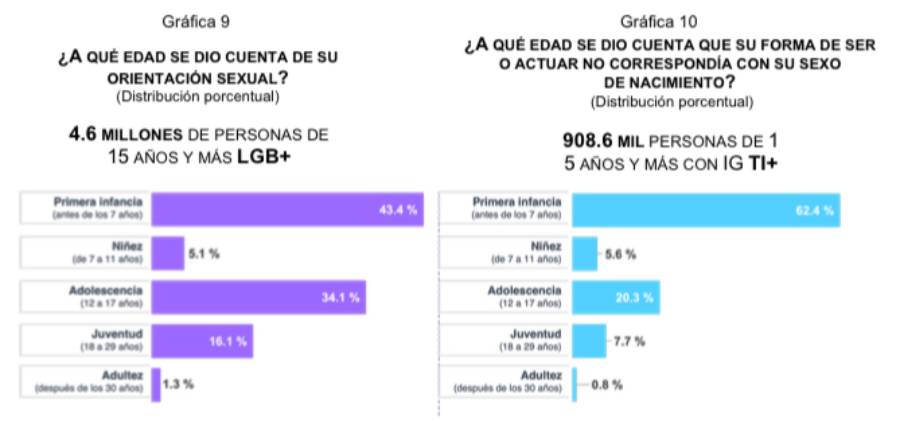
These figures make sense when you consider that it is during early childhood (before age 7) that most LGBTI+ people become aware of their non-normative sexual orientations and gender identities. In fact, it is noteworthy that more than half of transgender people, 62.4%, reported becoming aware of their sexual orientation and gender identity during this stage of life.
This information is relevant in a country where only the states of Jalisco and Sinaloa allow transgender people to access legal recognition of their gender identity without age limits through an administrative procedure. And where local legislatures have denied this right despite the fact that in March of this year, the Supreme Court of Justice of the Nation recognized transgender children and declared unconstitutional any gender identity laws that discriminate based on age.
In addition, INEGI highlights that another moment of self-identification occurs during adolescence (between 12 and 17 years old).
Mothers are the ones who accompany the most
The survey highlights that mothers are the first people LGBTI+ individuals tell about their gender identity. Friends and siblings follow. Fathers are the least likely to share information about their gender identity and sexual orientation.
An important fact about trans people is that 27.5% responded that they have not shared their gender identity with anyone, compared to 13.4% of LGB+ people who have also not mentioned their sexual orientation.
In this regard, INEGI highlights in its report that this data is valuable "to understand the openness they have had towards other people, and thereby identify their support networks at a given time."
More than half a million LGBTI+ people forced into “conversion therapies”
There are actions by mothers, fathers, or both that endanger the life and human rights of their LGBTI+ children when they find out about their children's sexual orientation and gender identity.
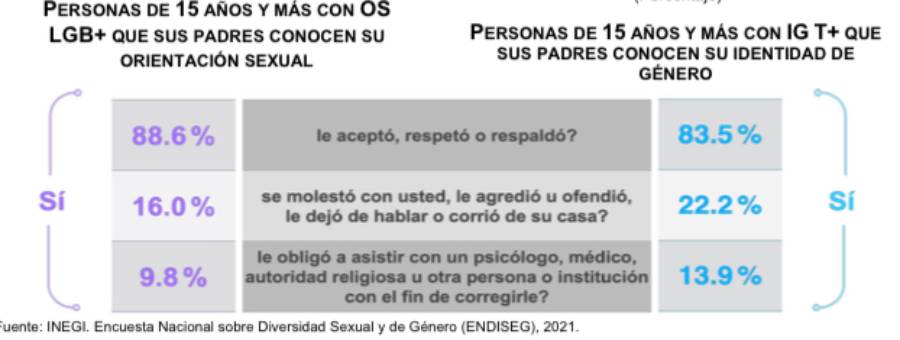
According to the ENDISEG survey, 1 in 10 LGBTQ+ people and 1 in 4 transgender people were forced—by their mother, father, or both—to seek help from a psychologist, religious authority, or any other type of institution in order to suppress their sexual orientation and gender identity. In absolute numbers, this represents 518,311 LGBTQ+ people.
In addition, 1 in 5 trans people were attacked and excluded from their homes when their parents or both found out about their gender identity.
Mental health, hand in hand with the violation of rights
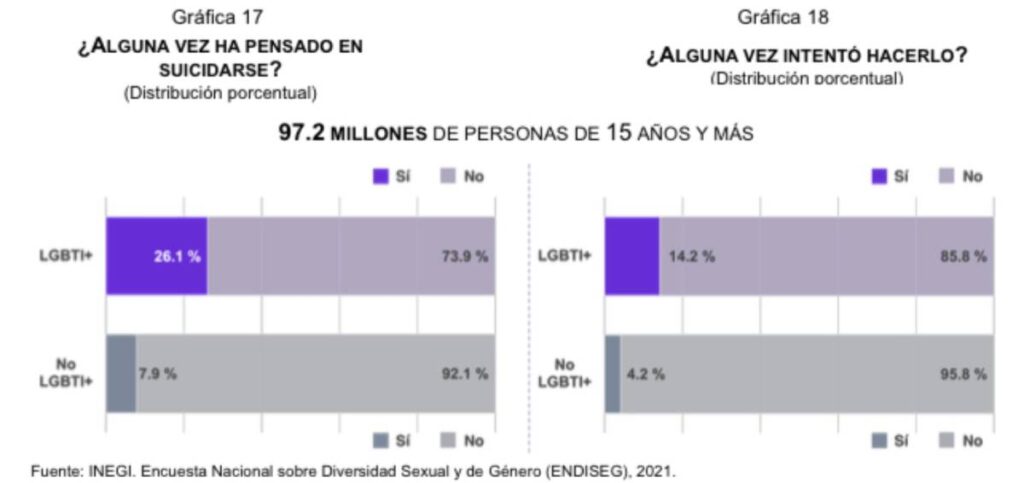
The survey also highlights that LGBTI+ people are three times more likely to experience suicidal thoughts and suicide attempts, compared to people who are not LGBTI+.
According to the data, more than two million LGBTI+ people - that is more than half of the total surveyed - have thought about or attempted suicide at some point in their lives.
The ENDISEG indicates that "problems in the family and couple" are the main cause of these experiences of violation of their mental health; followed by problems at school and work.
Being LGBTI+ is not the cause. The cause is the violence, exclusion, and discrimination they face in their family, educational, work, and social environments. This is explained by the fact that, in the last year, LGBTI+ people experienced twice as many discriminatory experiences (32.3%) compared to cisgender heterosexual people (13.2%).
Furthermore, the results show that 81.8% of the LGBTI+ population has experienced at least one emotional problem in their lifetime. These can include: depression; stress; anxiety; anguish; fear; insomnia; and changes in appetite.
“What is not named does not exist”
The results presented by INEGI do not include intersex people. Furthermore, the word "intersex" is not mentioned in the questionnaire. There are also no questions addressing the specific experiences and violence reported by organizations and documented in Mexico's first intersex survey .
The questionnaire does not mention sex work as a job option. Although international organizations such as the Inter-American Commission on Human Rights and activist groups in Mexico confirm that, due to the cycle of violence, sex work is often the only employment option that trans women, in particular, find to survive, the ENDISEG does not include it.
The survey covers an area on housing and household in its questionnaire, but it does not take into account those LGBTI+ people who are homeless or living on the streets.
In this regard, LLECA, an organization dedicated to working with homeless LGBTI+ populations , emphasized on its Twitter account: “We need initiatives that reflect our realities. Not all LGBTI+ people live in a home and/or have access to technology or the internet, which renders invisible those who live in other spaces: such as the streets, hotels, or shelters. There are no social programs or public policies that include LGBTI+ people due to a lack of data; that is why it is necessary to count them. What is not named does not exist.”
We are present
We are committed to journalism that delves into the territories and conducts thorough investigations, combined with new technologies and narrative formats. We want the protagonists, their stories, and their struggles to be present.
SUPPORT US

FOLLOW US
Related notes


We are present
This and other stories are not usually on the media agenda. Together we can bring them to light.