

Buzz Lightyear: To infinity and beyond a lesbian kiss
The Buzz Lightyear movie was banned in fourteen countries for a lesbian kiss that lasts less than a second on screen. Why is it at the center of the debate? Verónica Ferrari (Peru), Caracol López (Mexico), and Mariana Rodríguez Fuentes (Argentina) answer.


Share

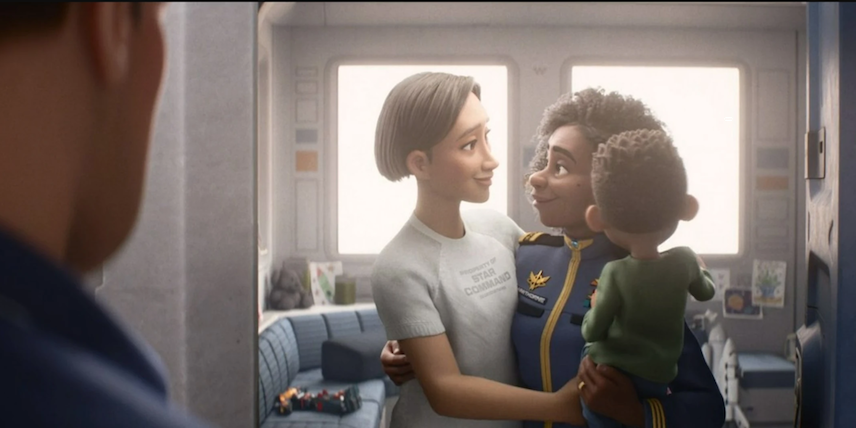
On June 17, Pixar and Disney released "Lightyear," the Toy Story prequel about the origins of astronaut Buzz Lightyear, in Latin America. Spoiler alert : Alisha Hawthorne is Buzz's best friend and commanding officer: she's an astronaut, Black, and a lesbian. Buzz travels back and forth on missions, and each time he returns, he experiences "time dilation": his flights of minutes feel like years to the planet. This is also true for his friend Alisha, who, between Buzz's missions, has developed a relationship with Kiko, the scientist he marries and with whom he has a child. Alisha and Kiko share a fleeting kiss, barely a peck. More than 14 countries, including the United Arab Emirates, Bahrain, Saudi Arabia, Egypt, Kuwait, Oman, Qatar, Malaysia, Indonesia, Jordan, and Lebanon, deemed this scene a violation of content standards and banned the film's release.
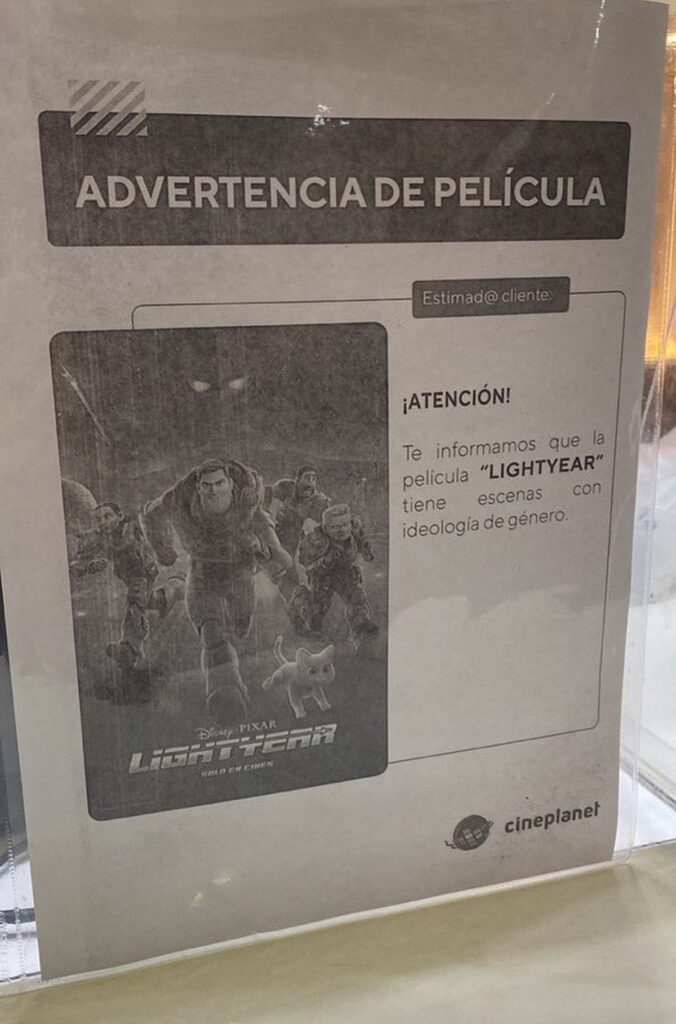
In other countries, the kissing scene was removed without Pixar's authorization. In Peru, the Cineplanet cinema chain placed a warning both in the film's synopsis and on posters in theaters. It warned: "scenes with gender ideology." This outraged artists and viewers, to the point that the chain ended up removing the warning. It issued a statement regretting what happened, asserting that it "does not represent our values and culture of diversity, equity, and inclusion."
Let's say lesbian*
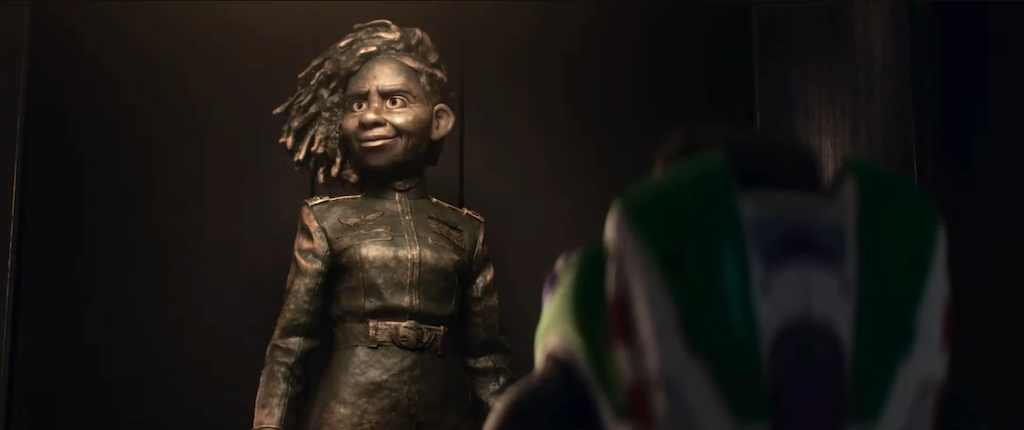
What does it generate and what does it imply when a Disney-Pixar film presents a lesbian love story? “What is being contested here is not just a kiss, but the possibility of existing,” says Mariana Rodríguez Fuentes, a journalist and trainer in Comprehensive Sexuality Education (CSE), and a lesbian activist from Tucumán (Argentina).
Disney movies are constantly educating. “They do so from a heterosexual perspective. Sexual diversity is part of an expression of sexuality, a human right. Discussing whether or not to make it visible is discussing the possibility of making visible and explicit a right that all people have: to live and construct their sexuality as they feel and desire. It 's not gender ideology; it's about transmitting the same opportunities, access, and rights to all children, ” says the comprehensive sex education trainer.
Real diversity
For Verónica Ferrari, a linguist and lesbian activist from Peru, the decision to include this story “implies, on the one hand, that they are making ‘risky’ executive and commercial decisions, to say the least. They are testing the waters to see how these films are received and what path they can take in future productions. On the other hand, they are taking real diversity into account, I suspect at the insistence of their own viewers and creative staff.”
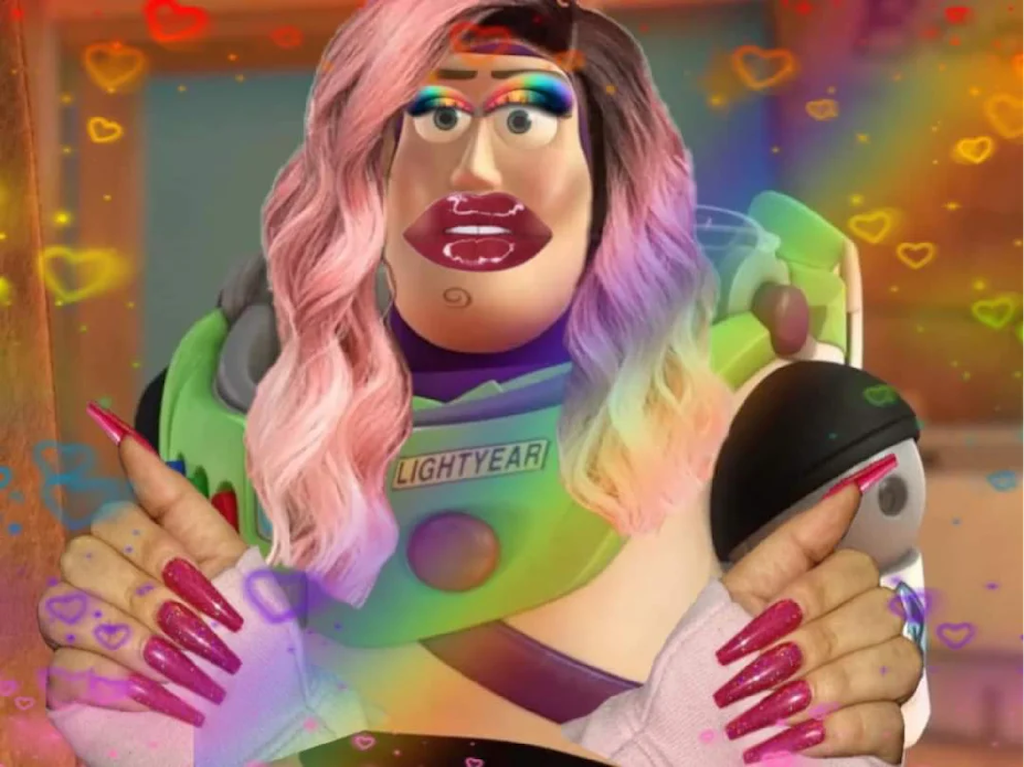
The character of Alisha could be considered Disney and Pixar's first explicit LGBTQ+ representation. We could be celebrating the birth of a role model for children, who is neither white nor heterosexual. And hope that the next step will be a leading role. But nothing is ever that easy for lesbians: as the years go by, heteronormativity can be suspended in minutes and memes explode on social media.
“ How much does a cultural product with a rather superficial representation matter when you consider the entire system surrounding that product?” asks Caracol López, a digital journalist from Mexico. “I don’t think it’s that important. Since I participate in and work with media, I’m a little suspicious when these kinds of things are put at the center of certain media agendas, because that’s not what interests us. As someone who also consumes cultural products, and who as a child wanted to see things that spoke to her about herself, I say: a victory, right? But it’s a very, very small victory when we see it in the context of what it actually affects our material reality, what it actually affects our political struggle ,” adds Caracol.
Given the flood of repercussions from the film's ban: is it necessary to talk about this? Does mainstream commercial cinema dictate our agenda?
For Vero Ferrari, “more LGBTQ+ children will be able to see role models in these cartoons, even if those role models seem distant given the poverty that plagues Latin American childhoods and the limited opportunities to achieve their life goals. And for many of us, being astronauts is an exception, a small step against the norm.” The Presentes correspondent in Peru adds: “Compared to cartoons from several decades ago, there’s a rejection of repeating the misogynistic and discriminatory educational patterns we grew up with, and that’s incredibly important for future animators.”
Provide references
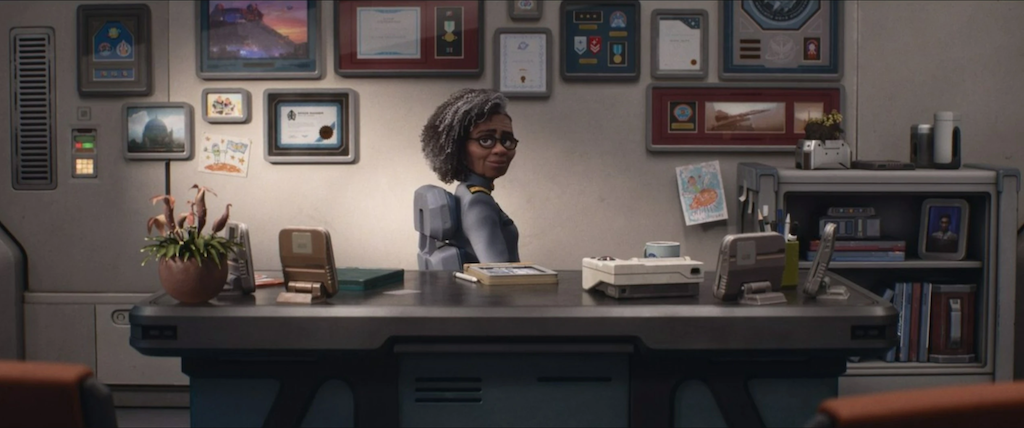
“From my perspective as a lesbian aunt ,” says Mariana Rodríguez Fuentes, “to two girls of primary school age, I think that for the first time they will see in a drawing a reference to the way of life or the construction of a couple that their aunt has.”
While major companies producing cultural content for teenagers and children (Pixar, Disney, Marvel, or DC) have been trying to establish themselves with discourses on feminism and gender perspectives, Mariana points out that they do so “by adapting a very hegemonic view of the content. Disney has been so questionable in its construction of princesses, so assimilated to the gender stereotypes of hegemonic women, that it has been constructing different representations for that for some time now.”
She cites as examples the films Mulan, where the debate for the warrior princess is "not being able to access a space because she is a woman." And there's Frozen, where Princess Elsa is "one of the first whose story doesn't focus on the construction of a male counterpart, nor on a romance with him, but on her ability to deal with her magic. Her concern is how to be a better leader. How to manage her power."
Many Disney characters have stood the test of time. Thinking about how they have shaped and generated references , the fact that this film includes lesbian representations "simply means generating more explicit references around the different ways of experiencing sexuality," says Mariana Rodríguez Fuentes. " It's not much more than that; it's about providing references, which is what all of us in the LGBTQ+ community need to have in our childhoods. References for how to be ourselves and not always live with the desire for something that is wrong, or something that I don't find reflected in my adult role models, in schools, and institutions. It's about bringing the possibility of being oneself closer from childhood," she affirms.
Disney also didn't want to include the kiss
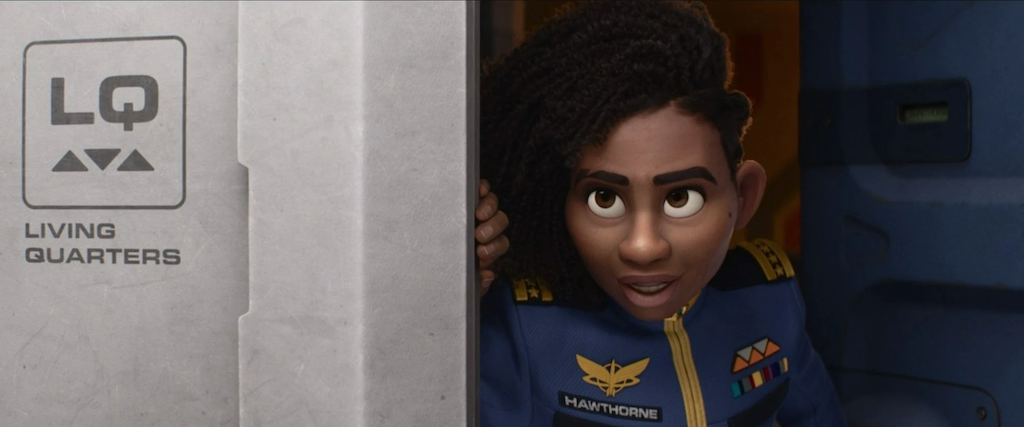
Caracol López believes: “From the perspective of what is truly important and transcendent for our community, we have already moved beyond representation for representation’s sake in public spaces. When we see these kinds of battles over cultural products, we tend to consider mere representation as triumphs or failures. But that’s not the case. When you analyze a cultural product, whether artistic or not, considering who creates it, who broadcasts it, who receives it, and how it is marketed, you already see that analyzing only one part of that entire chain is not enough .”
For her, “we should look at the conditions under which these cultural products are produced, what’s behind them. We shouldn’t allow pink/rainbow washing simply to capitalize on our need for representation.”.
To cite just a few of those production conditions: although Disney CEO Bob Chapek proclaims that the company's films and shows are "more powerful than any tweet or lobbying effort ", until recently Disney also did not want to include the kiss.
The campaign against LGBT+ rights
So, in the context of the “Don't Say Gay” campaign, this scene might not just be a lesser evil. It could serve as rainbow-washing . Because in March of this year, it came to light that Disney politically supported and donated money to Florida legislators who are promoting an initiative known as “Don't Say Gay.” This campaign has alarmed the LGBT+ community. It seeks to prohibit education about “sexual orientation or gender identity” from kindergarten through third grade, as well as any discussion “that is not appropriate for the age or development of the students” in other grades.
Finally, the company suspended its donations after Disney employees and LGBT+ activists protested and demanded that the company use its influence against this legislation.
What the film industry knows
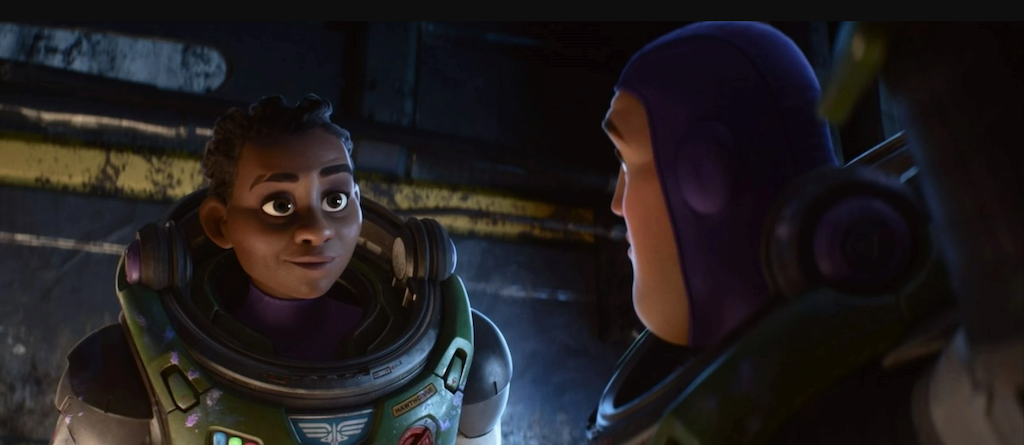
Caracol López believes that “they aren’t doing these kinds of things because they care about diversity.” She contextualizes both the situation surrounding the Don’t Say Gay campaign in Florida and the case of the film “Nimona.” It is “based on a webcomic that did have a story, where the fact that two characters were homosexual and had a complete relationship, integrated into the plot, mattered. And they put too many obstacles in the filmmakers’ way. Finally, Annapurna, a small video game and film production company, is going to produce it with Netflix.”
According to Vero Ferrari, “it’s always necessary to talk about sexual diversity, about what we understand and what our differences are. Talking opens up the possibility of understanding others, and that’s essential for social peace. The film industry looks for what might be profitable . It’s the entertainment business; it knows that nowadays you can’t be openly racist, sexist, or deny the existence of sexual diversity . They would lose more if they did. Rejection of progressivism reduces their profits. Embracing fascism doesn’t.”
*Let's say lesbian: June 19th was commemorated in Argentina as Lesbian Poetry Day in memory of Macky Corbalán. She wrote: “Lesbian lesbian lesbian lesbian, say it as many times as she kept it silent.”
We are present
We are committed to journalism that delves into the territories and conducts thorough investigations, combined with new technologies and narrative formats. We want the protagonists, their stories, and their struggles to be present.
SUPPORT US

FOLLOW US
Related notes
We are present
This and other stories are not usually on the media agenda. Together we can bring them to light.