

They protested against discrimination against lesbians and trans people in Mexico City
In the second case this year, there was no statement from the venue that displayed LGBT flags this month for Pride Month.


Share

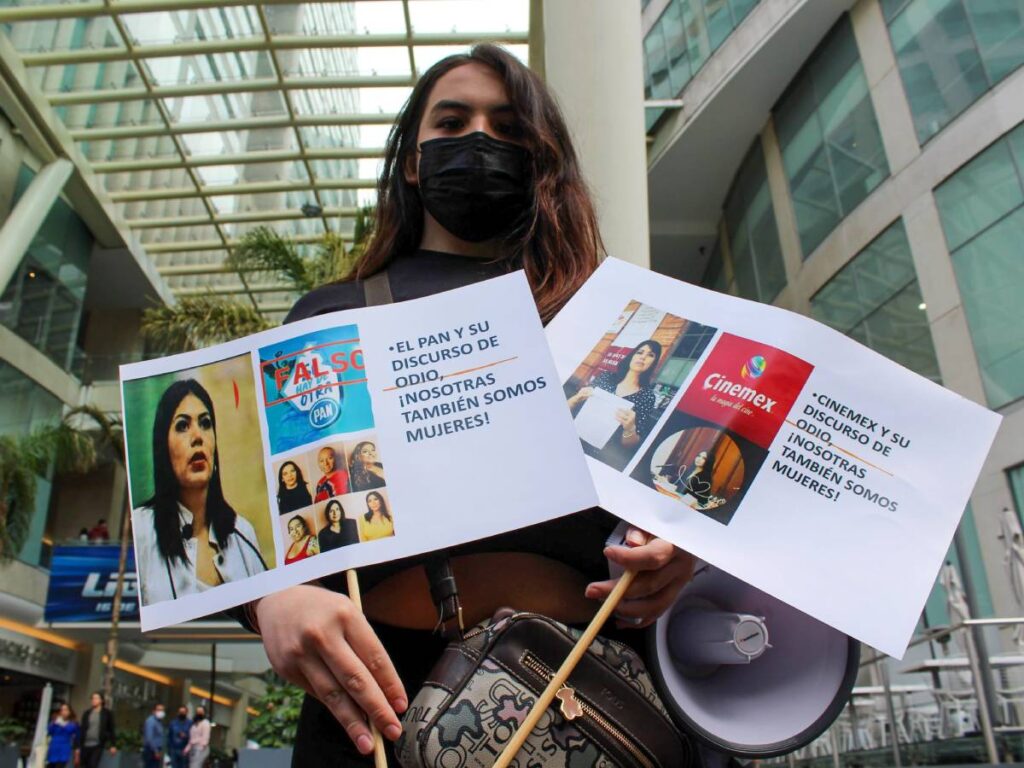
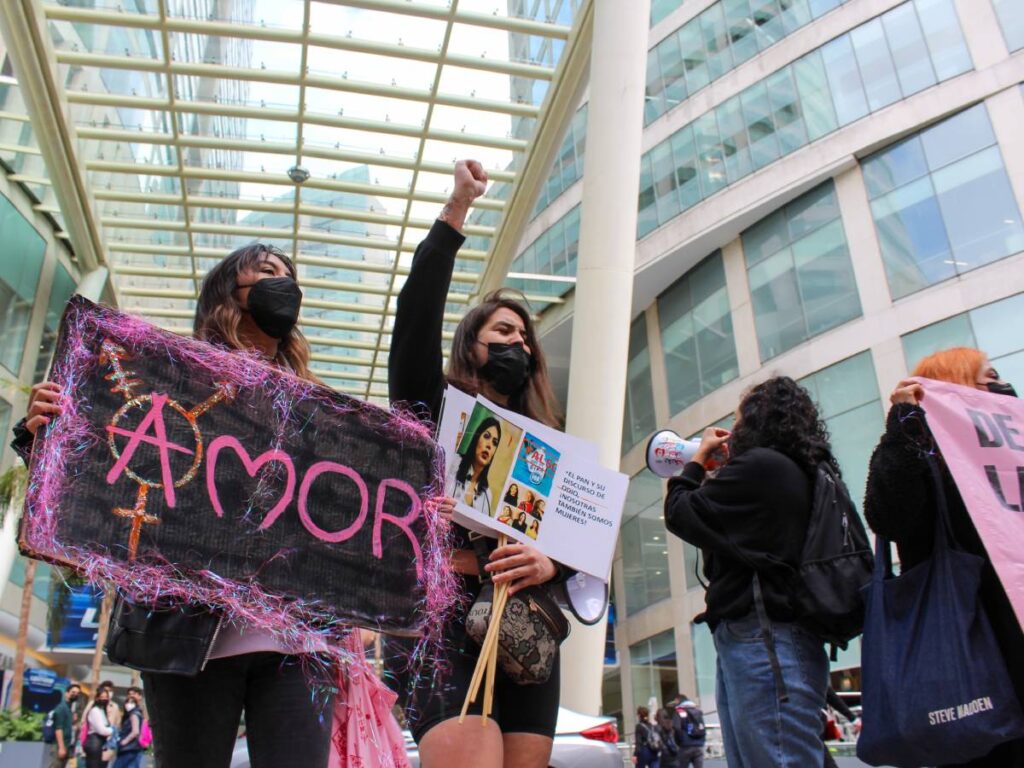
GUADALAJARA, Mexico. On the afternoon of June 22 in Mexico City, transgender, non-binary, and queer people protested outside the Reforma 222 shopping mall against the ongoing discrimination against transgender women and queer people. During the demonstration, two of the affected individuals demanded a public apology, staff training, and guarantees that the discrimination would not be repeated. To date, Reforma 222 has not responded to any of the discrimination complaints filed against it.
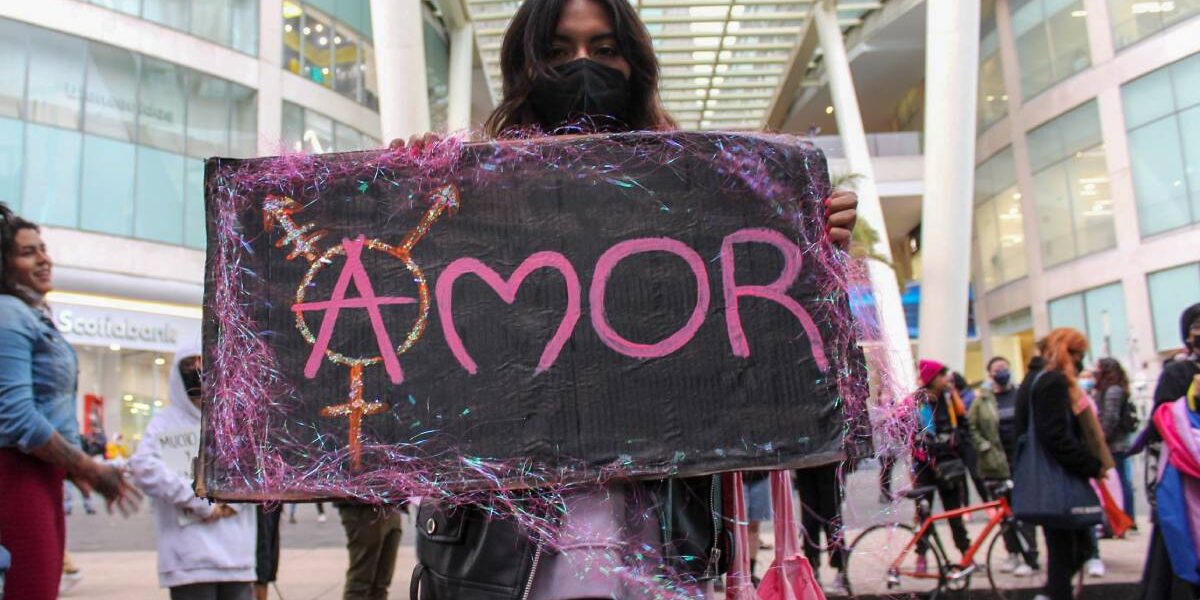
The protest comes after the most recent incident. On June 18, journalist Arlen Molina and her girlfriend decided to go into the shopping mall to use the restroom. They had come from the Lencha March and were carrying a sign with the word “love.” Upon entering the mall, they were detained by security personnel who argued that “those expressions are not permitted.”
“We only went in to use the restroom and buy some food. But then a security guard stopped us, arguing that due to the rules and regulations of the place, we couldn't do that. I said that we went in without any reason to protest, just to use the restroom. We weren't holding up the sign, but they insisted that 'those kinds of expressions aren't allowed there.' We found it aggressive and even harassing because he wouldn't stop following us,” Arlen Molina told Presentes .
Despite the argument of "not complying" with the rules of the place, the security staff never showed Arlen and his girlfriend the regulations that stipulate the rule they supposedly broke.
“They never showed us the regulations, and I insist, we didn't go to protest but to use the bathroom. What bothered them and still bothers them is seeing lesbians and trans women expressing themselves freely,” Arlen maintains in an interview.
In this same location, acts of transphobia have already occurred, with at least five trans women being removed from and denied access to the restrooms. In November 2015, Jessica, Lia, and Alessa were prevented from entering the restrooms. On April 15 of this year, Paulette and Coletti were removed from the restroom at the Cinemex located in the same shopping center.
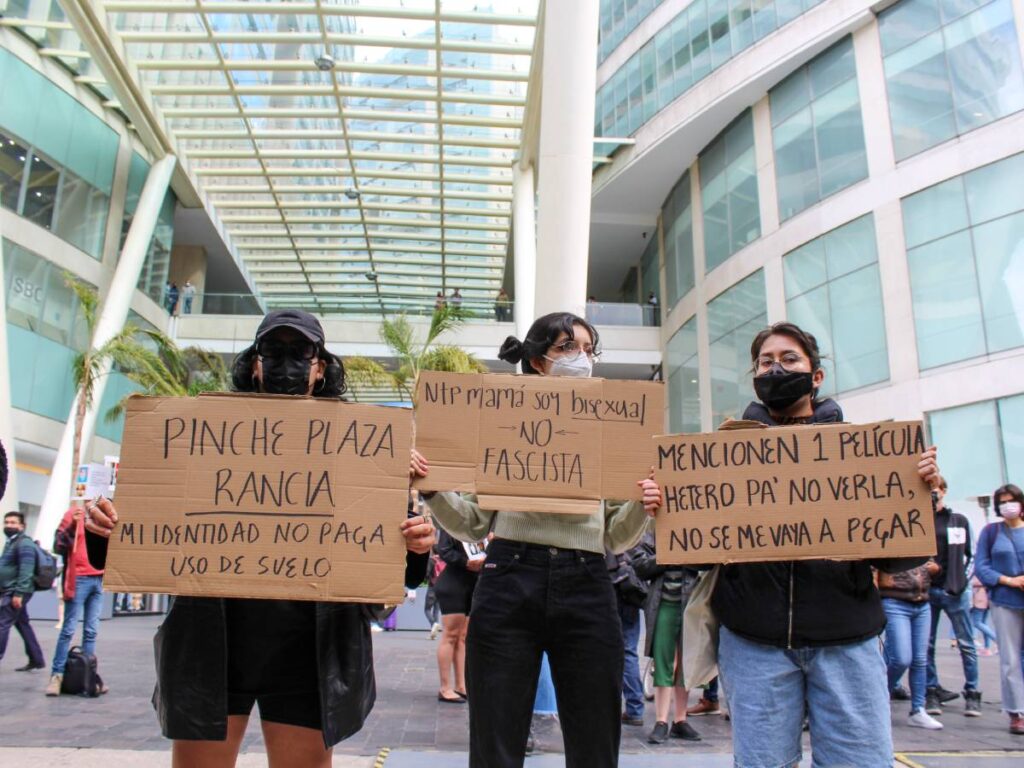
“We demand a public apology, that they train their staff, and that this never happens again.”
During the protest, Arlen and Paulette demanded the removal of a representative from Reforma 222. But for more than two hours, no one from the shopping center approached them.
“We feel completely ignored. That’s why we want and demand an explanation, a public apology, and that they train their staff so that LGBT people, people of color, and people with disabilities don’t experience something like this. After our complaint on social media, we realized that this plaza has a long history of mistreatment. That’s why we took action, so we wouldn’t remain silent,” Arlen explains.
Reforma 222 is a commercial complex located near the Zona Rosa , a historic area frequented by LGBT and LGBTQ+ people. Since the transphobic incident in 2015, the company has not issued any statements or offered a public apology. Despite widespread coverage of the allegations on social media and in the press, it has also failed to reach out to the victims.
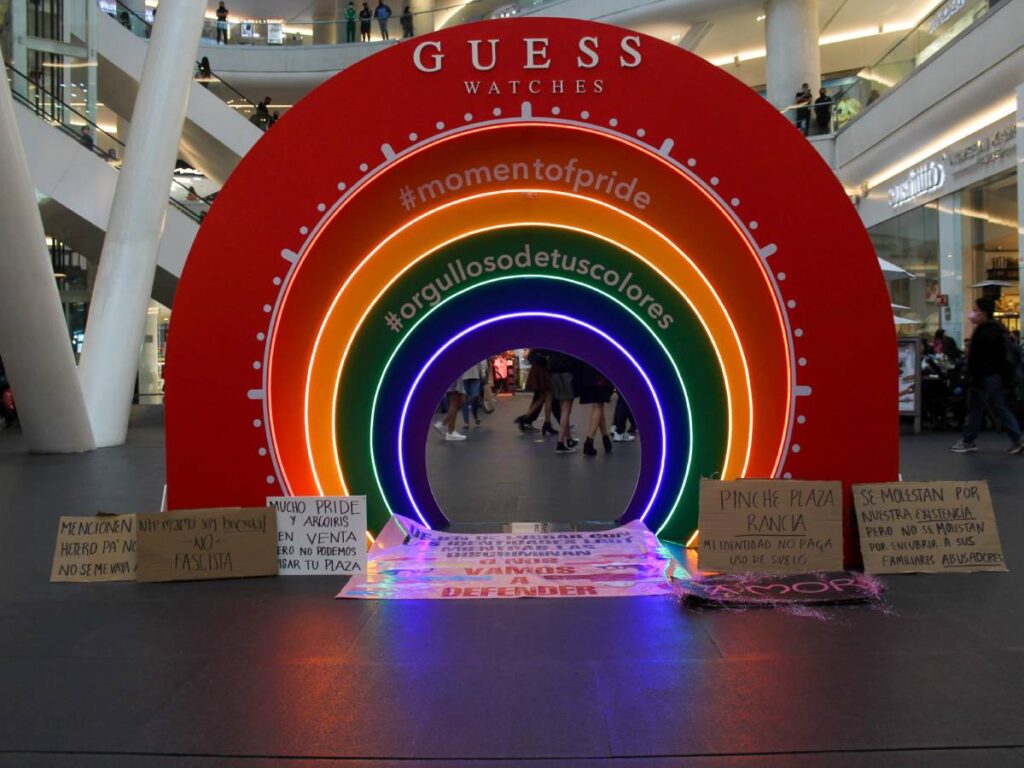
on their website announces "this is your safe space".
Violence against lesbians is commonplace.
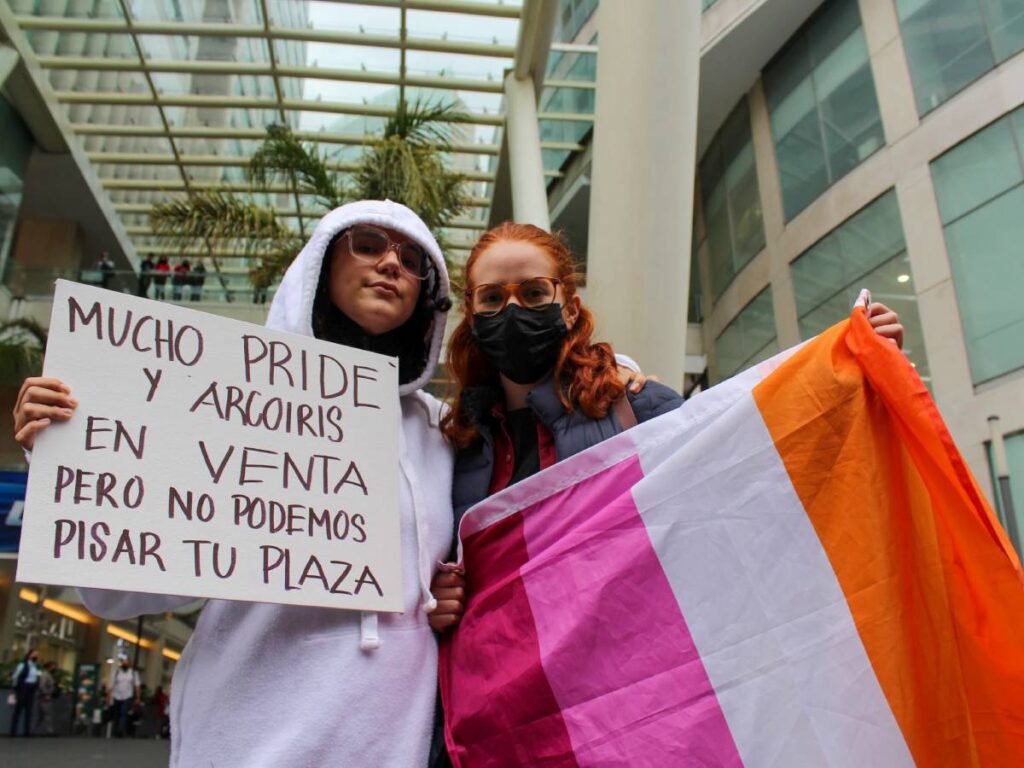
During the protest, lesbian couples attended in solidarity and also to demand recognition of the everyday violence they experience, which is often ignored. Presentes spoke with them, and this is what they told us.
“In a month like this (June), there are companies, corporations that are all about ‘yay pride, give me your money,’ but they don’t want to talk about these things, about this violence, about the fact that we exist before and after June . With the audacity of stores full of rainbows, they tell us we can’t use the bathroom. It’s important for society to understand that these corporate rainbow displays are forced inclusion. We protest because this violence continues to happen, and I wouldn’t want to leave spaces like this for other queer youth,” —Issa.
“We believe it’s important to come here also because just yesterday or the day before, we ourselves were discriminated against at the market. We were treated badly for being together; they wouldn’t speak to us, nor would they let us touch the products they were selling . They never told us why, and we ended up going somewhere else. So , it ’s important to make visible all the violence we experience because it’s made invisible by other types of violence, but we experience it every day,” —Raquel.
“ It’s not right that commercial spaces like Reforma 222 profit from our community . A community that has been formed through struggle, but also through pride, happiness, and continued resistance. It’s outrageous that while they charge brands that are celebrating this month with their colors, they tell us in many ways that we can’t be here,” —Rebeca.
“We saw the sign and it made sense to come because my friends and I have experienced lesbophobia in previous years here (at Reforma 222). Once it was for kissing my girlfriend in the fast food area and a police officer came up to us and said, ‘You can’t be all over each other . ’ What happened to the girls on Saturday wasn’t a coincidence. And honestly, I also came because I’m not willing to patronize an establishment that doesn’t support us and that this month is full of talk about pinkwashing , damn it, and doesn’t respond when we’re discriminated against,” —Angie.
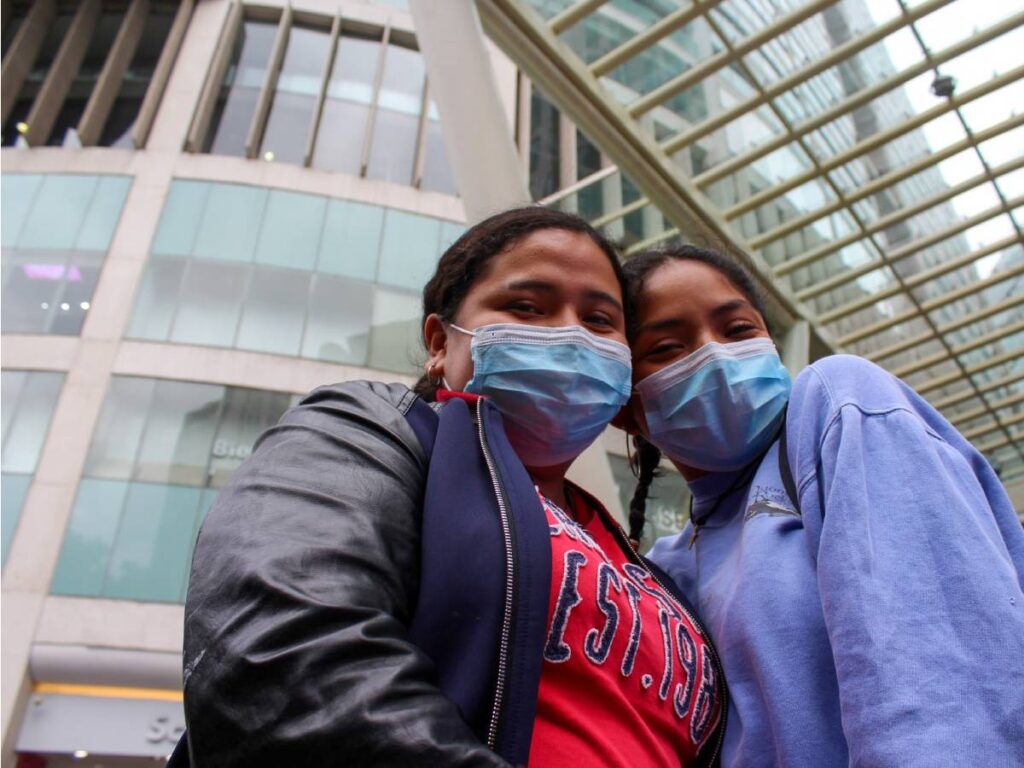
“I found out about the march on TikTok. I came because I believe this can happen to any of us. I feel it's very important to come, to demand that these things happen to us , like being harassed, getting leered at if we're holding hands or kissing, and that they can happen in places like a plaza that are supposed to be safe spaces.” —Tania
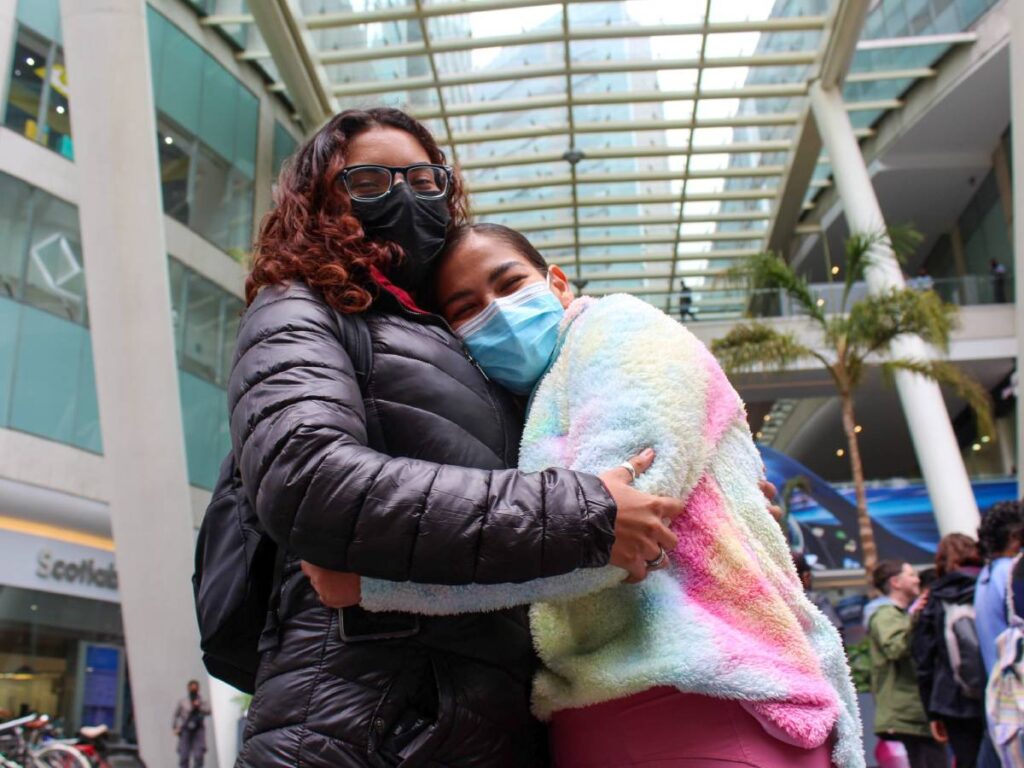
“It’s important to raise our voices and stand in solidarity with our comrades, because we, as non-binary and Sapphic people, are also affected by all this violence. And it doesn’t just happen in public squares; every day there are acts of lesbophobia, transphobia, and nbphobia , and being present means being visible. We mustn’t forget what happened here (Reforma 222), what happened in Chinatown , what happened to Natalia Lane . The point is not to forgive, not to forget, and to keep raising our voices and keep demanding, ” —Nahui.
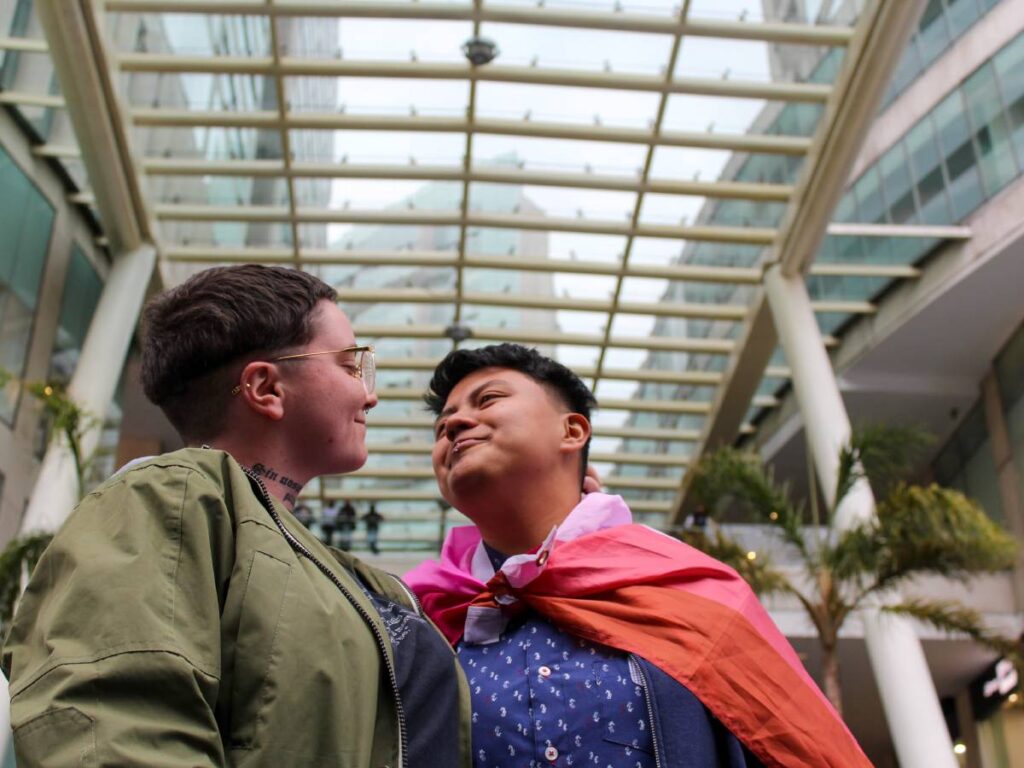
“In our daily lives, we have to be careful, and no one should have to go through that. Our daily lives are very different from those of a cisgender heterosexual person, and I think it’s important to make that visible so we can, perhaps, raise awareness that this is what we experience every day . I mean, being afraid and having to be careful about going to the bathroom, about whether we kiss, about whatever, shouldn’t be the norm for us.” —Iván.
Complaints with limitations
The three known cases of lesbophobia and transphobia at Reforma 222 have been reported to the Council to Prevent and Eliminate Discrimination in Mexico City (COPRED) . However, the recommendations issued by the Council may or may not be followed by those who have committed discriminatory acts.
In Mexico, the National Council to Prevent and Eliminate Discrimination and its state counterparts serve to report acts of discrimination committed by public servants and also by private individuals.
“It has limitations because it only issues recommendations that, in this case, companies may or may not follow ,” explains lawyer Miriam Silvia Mata to Presentes . She is currently defending Paulette against the discrimination she experienced at the Cinemex at Reforma 222 in April of this year.
“ The act of discrimination needs to be addressed as a matter of moral damages, but the evidentiary system is complex. It's not something tangible, and furthermore, the consequences of moral damages involve the emotional impact. So, a judge is the one who decides how deeply or how little you were affected by that discriminatory act. And in Mexico, there's no scale for measuring emotional impact; moreover, there are still judges with biases, but it's really the victims who know what they're going through. Each case has different facets and underlying causes of the emotional impact,” the lawyer warns.
There is currently a proposed amendment to Article 1916 of the Federal Civil Code that seeks to include discrimination as moral damages. The proposed addition states that “moral damages will be presumed when discrimination occurs based on ethnic or national origin, gender, age, disability, health conditions, religion, opinions, sexual orientation, marital status, or when human dignity is violated.”
We are present
We are committed to journalism that delves into the territories and conducts thorough investigations, combined with new technologies and narrative formats. We want the protagonists, their stories, and their struggles to be present.
SUPPORT US

FOLLOW US
Related notes


We are present
This and other stories are not usually on the media agenda. Together we can bring them to light.