

What is it like to be a trans dad
On Father's Day, we share experiences of trans fatherhood. The desire, the struggle, and the political construction surrounding the desire to be a dad.


Share

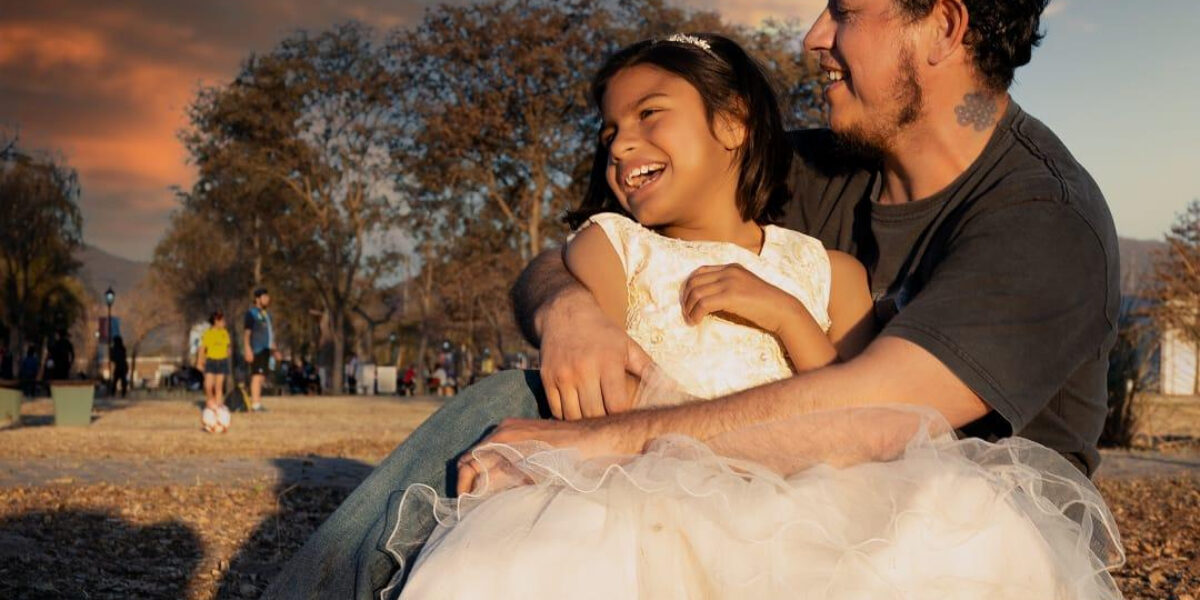
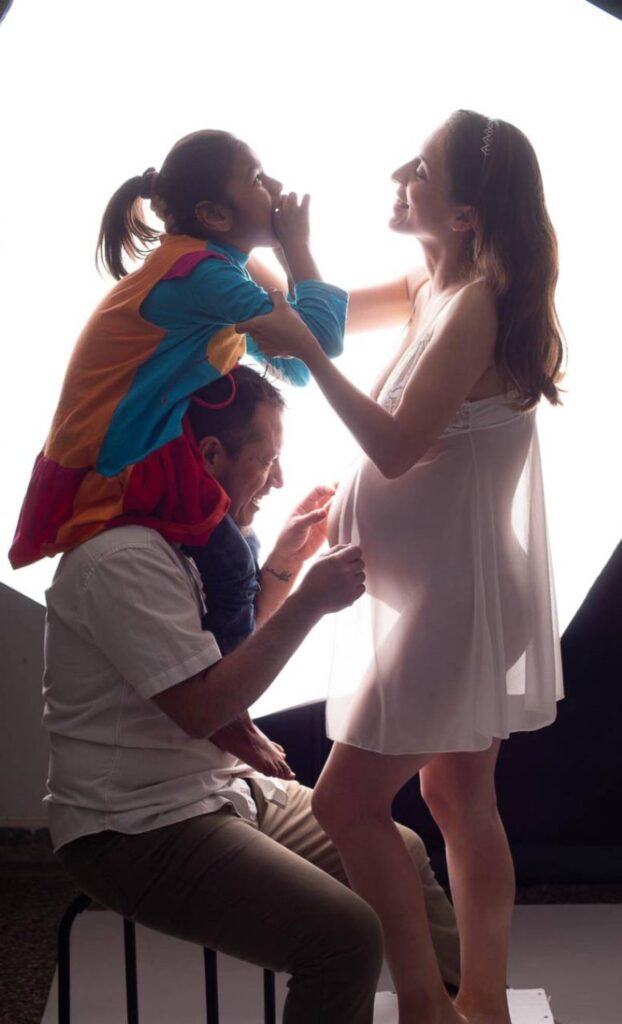
BUENOS AIRES, Argentina. “Many times I thought that no one would love me. That trans people weren’t worthy of love. And look at me now, building a wonderful family,” says Santiago Merlo (46) as he puts his daughter Lola to bed on a Tuesday near midnight. Today, he is a proud trans dad.
Their reality is both similar to and different from others. There are trans men becoming fathers all over the country, and each one has managed to do so in different ways. Today, several of them make up the Trans Fatherhood Network , created just a year ago. And by sharing their stories, they open the door to the possibility for others who also desire to be fathers.
Parenting online
Surrogate fathers, fathers who were pregnant before transitioning, fathers through adoption, foster fathers in blended families, fathers through ROPA (Reception of Oocytes from Partner) methods. All of them still face difficulties with respect for gender identity.
“Many of my colleagues who were fathers at another time, but are registered by the system as mothers or women who gave birth, are prevented from correcting their children’s birth certificates,” says Santiago Merlo, co-founder of the Network, regarding some of the ways the healthcare system rejects them. “Another issue is access to fertility treatments when you’re not married. It’s stressful going through that whole process. If you’re not married, all the rights belong to the person carrying the pregnancy. That’s very difficult for us, as we’re on the verge of having to initiate adoption proceedings for our own children .”
Currently, there are around 20 trans parents on the network. The internet and social media were key to its creation. Many of them haven't met in person yet because they live in different parts of the country: Córdoba, Neuquén, Buenos Aires, CABA (City of Buenos Aires), San Luis, Chubut, Santiago del Estero, and Santa Fe.
“We are generators of desire. Every achievement that trans people have, such as getting a job, earning a degree, or having a child, motivates others to start catching that desire they thought they couldn't achieve,” explains Máximo Toledo, from San Miguel, in the province of Buenos Aires. He is another member of the Network.
Making visible the existence of trans parents
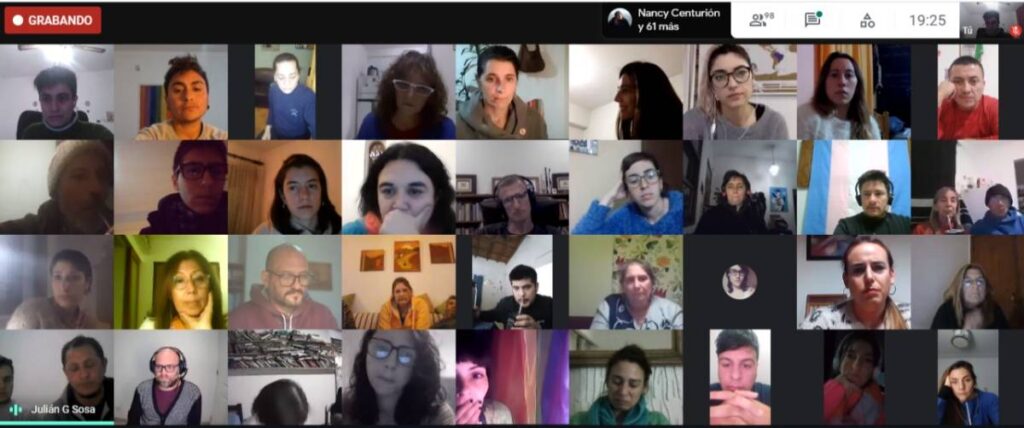
Their first priority was to make their existence visible. Although there are already organizations for diverse families, there wasn't a space in the country specifically for trans parents. Last year, for Father's Day, they held the first national conference, a virtual meeting that drew 250 participants. The event had a dual purpose: firstly, to educate those outside the trans community; and secondly, to inspire others and inform members of the community about available resources.
“Those of us who founded the Network are beginning to achieve our reproductive goals. Only now are we becoming visible. There are many people who transition and previously had children. When they are adults, they don't know how to explain to their child that they are their parents, and they also have to change the birth certificate to reflect that they are no longer their mother,” explains Máximo.
In 2019, Máximo became a father and began to raise awareness about the possibility of having children through the ROPA method as a trans man. He knew another trans man from Córdoba who had successfully conceived, and later met Santiago Merlo. He saw a video of Benjamín Génova, who was already a father and was trying to change his daughters' birth certificates. They then began to connect and get to know each other. They talked through calls and WhatsApp.
“And that’s when we said, ‘Well, let’s put something together because we’re all facing different problems.’ In 2020 we started giving talks, and last year we came up with the idea of creating something in the form of a network. We said, ‘Let’s put it together for Father’s Day,’” says Máximo.
On Saturday, June 18, ahead of Father's Day in Argentina, the Paternity Campaign held a series of events in front of the National Congress to raise awareness about the need to expand and extend parental leave policies in Argentina. "From the Trans Fatherhood Network, we joined the campaign, making our stories and realities visible. We are trans and non-binary men who gestate, adopt, and provide support. Because we want to #ProtectEquality, we demand leave policies with a gender perspective and the effective implementation of the Trans Employment Quota Law ."
Santiago Merlo: “For me, fatherhood will be a choice or it won't happen.”
In a pool, during a rehabilitation exercise, Lola said "Pa-pa ." In two syllables. At that time, her vocabulary consisted of seven words. She was adding one more, and with it, she was referring to Santiago as her "pa-pa."
“Named me was how I found my place. She put me in the role of father to her, of caring for her, of being there for her. She showed me every path, she taught me how to take care of her. The moment she called me 'Dad,' it was the most beautiful word I've ever heard,” says Santiago, moved as he recalls that moment.
Lola has cerebral palsy. They were adopted when she was five. For Santiago, becoming her father changed his life. He shattered all romantic notions of fatherhood. At one point, he wondered if he would be able to do it. Love, he says, prevailed. “And thanks to Lola, Vicente is here today. For me, fatherhood is truly a choice, or it isn't. She set the bar very high and made me realize that I really could do it.”
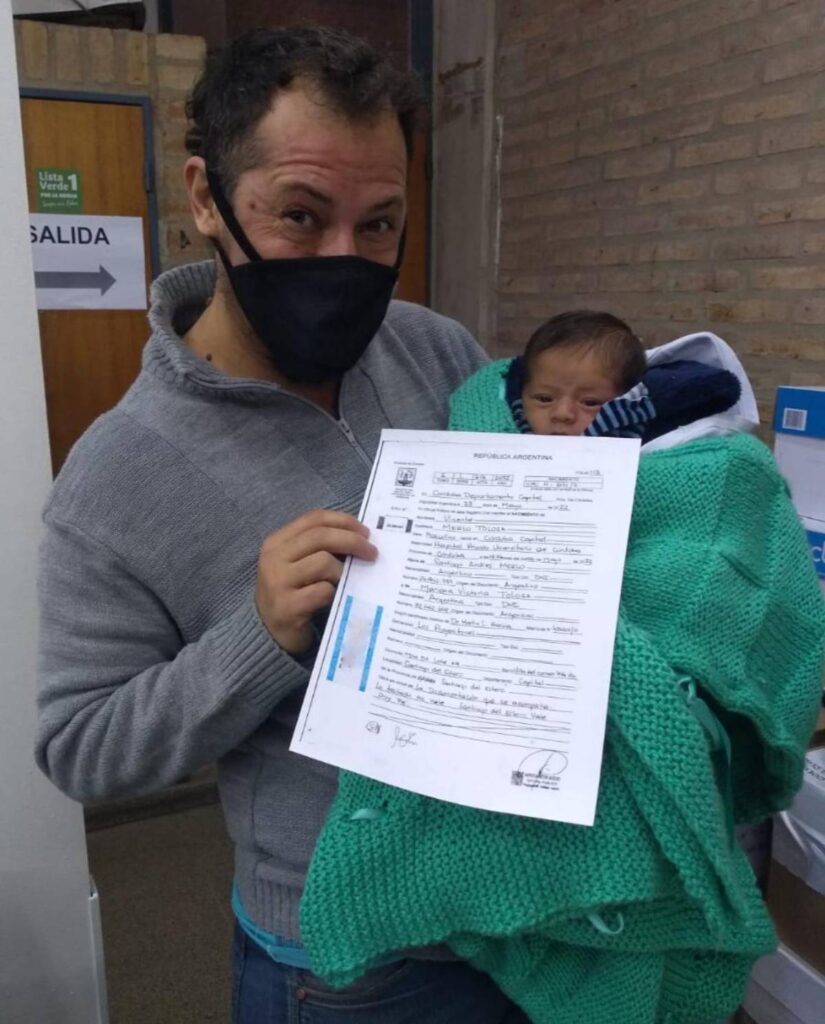
Vicente came into his life through a complex method called IVF (In Vitro Fertilization). The surrogate was his partner, Victoria. The pride of being a father is evident in his voice. Even while waiting in the emergency room for Lola to be seen, and with Vicente in his arms, he wants to share his story, the struggle to have that baby, how much he longed for him.
“I’m from Córdoba. And this baby is the result of many journeys and paths. He’s an interprovincial baby. We carried out the entire fertilization treatment in Santiago del Estero. The surgery was in Tucumán, with a contribution from the Bank of Buenos Aires. He was born here in Córdoba.”
After a long journey, they also achieved a respectful birth. Vicente was born dancing to cuarteto music, "so he'd know what province he was in," Santiago laughs. The song "Universo paralelo" is one of Lola's favorites. And it was the first thing her brother heard when he was born.
Santiago holds a degree in Communication and is a teacher, health educator, and community educator. He leads workshops on Comprehensive Sexuality Education (CSE) and the Micaela Law, and is part of two inclusive clinics in Mina Clavero and Villa Dolores, Córdoba province. He also heads the civil association La Casita Trans , which supports children and adolescents and their families (approximately 40 families in the province). He is also a co-founder of the Trans Fatherhood Network, along with Benjamín Génova, the father of two teenage daughters.
He says he always had the desire to be a father. As a child, he would play at being a dad. His role model was his own father: "The first feminist I ever knew," he says. He was in charge of childcare when his mother worked outside the home as a rural teacher. "I dreamed of being the man I am, and the kind of fatherhood I'm building," Santiago says, his voice filled with emotion. This week he finally registered his son, and on the birth certificate, he is listed as his father.
Máximo Toledo: “I didn’t know any trans man who had been able to have children through the ROPA method”
Máximo and Santiago were among the first in the country to make their trans parenthood visible, and also among the first to succeed. They met through social media. Each of them achieved it in different ways.
Three years ago, when he began his search, Máximo didn't know any trans men who had been able to father children using the ROPA method. The method was first used by lesbian women, so that the child could have genetic material from both of them.
“When we thought about using the ROPA method, I had already started my transition. In the medical system, they always spoke to me in terms of us being two girls, and I wasn't a girl. When you're going to donate eggs, they treat you as female,” says Máximo.
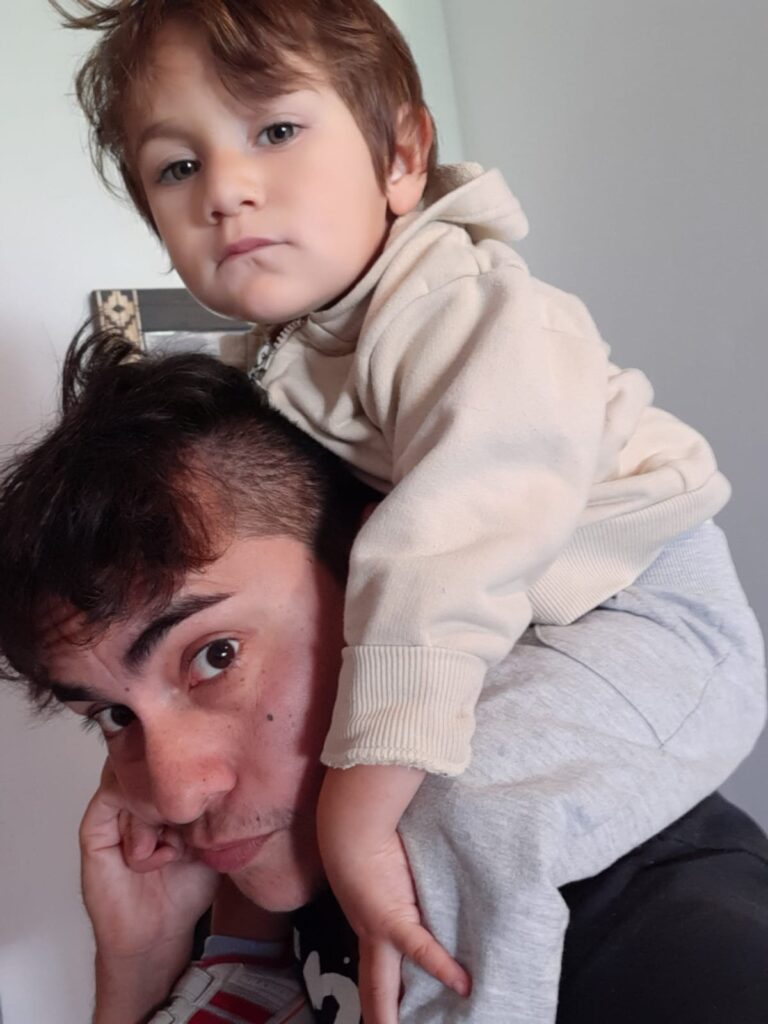
His son's name is Kai, and he's already two years old. Máximo lives in San Miguel, Buenos Aires province, and is a social worker. He's part of a health clinic for LGBT people in the municipality of Moreno.
“Paul B. Preciado says that we have been historically condemned to not have offspring. A political infertility. We are not wanted with children. That has a factual historical basis that had to do with our castrations. In the trans community, the first thing that was discussed was genital surgeries,” says Máximo, and insists on a necessary change.
“There needs to be a cultural shift that can accompany the laws. We are not the exception to the rule, we are part of everyday life.”
Men who gestate and the media
“The premise of cissexism is that trans people are less valuable, less important, and less real than cis people. There’s always this idea that they’re a fraud.”
“This is how the media approaches it, playing with the idea that he is not actually a man,” explains Andrés Mendieta Presentes who wrote the master’s thesis called “Boys (don’t) gestate: configurations and representations of pregnant trans men in the Argentine digital press (period 2008-2019).”
The thesis concluded her master's degree in Gender Studies and Policies at the National University of Tres de Febrero. The study period begins in 2008, when the case of the "first pregnant man," Thomas Beatie, became popular in the media. "I use quotation marks because he wasn't the first. Pat Kalifa had already written about the difficulties of getting pregnant," Mendieta points out.
The researcher studied media representations of pregnant men between 2008 and 2019. He found that there is an “inability to read that male body with a belly as a pregnant man. The pregnant male body is an unintelligible body.”
“There’s a deliberate confusion in representing a pregnant man as a ‘mother’ or ‘father,’ precisely because of the inability to understand that this body is gestating, and that he is a pregnant man. The use of quotation marks, misgendering , or headlines like ‘the incredible case of the pregnant man,’ always sensationalizing the situation, are common. These are the most common approaches when discussing a transmasculine pregnancy. The focus is always on the before and after ,” he explains.
Although some news stories have changed, and now there is a voice for trans men in the media, Mendieta points out that the sensationalist approach is never absent.
Thomas Beatie and the work of love
Trans men have been fathering children for years, even though the healthcare system doesn't support them. Thomas Beatie was the most well-known surrogate father. His column , "A Labor of Love," was published in many countries, often accompanied by a photo of him pregnant.
There, from his home in Oregon, USA, he recounted: “I am transgender, legally male, and legally married to Nancy. Unlike those in same-sex marriages, domestic partnerships, or civil unions, Nancy and I have over 1,100 federal marriage rights. Sterilization is not a requirement for sex reassignment, so I chose to undergo chest reconstruction and testosterone therapy, but I retained my reproductive rights. Wanting to have a biological child is not a male or female desire, but a human desire.”
We are present
We are committed to journalism that delves into the territories and conducts thorough investigations, combined with new technologies and narrative formats. We want the protagonists, their stories, and their struggles to be present.
SUPPORT US

FOLLOW US
Related notes


We are present
This and other stories are not usually on the media agenda. Together we can bring them to light.