

Peru: Constitutional Court refused to recognize two same-sex marriages performed abroad
The judicial body declared inadmissible the two lawsuits in which recognition of marriages performed in the United States and Mexico was sought.


Share

LIMA, Peru. Peru's Constitutional Court declared two lawsuits seeking recognition of marriages performed abroad inadmissible. One of them was filed by Congresswoman Susel Paredes , who married Gracia Aljovín in the United States .
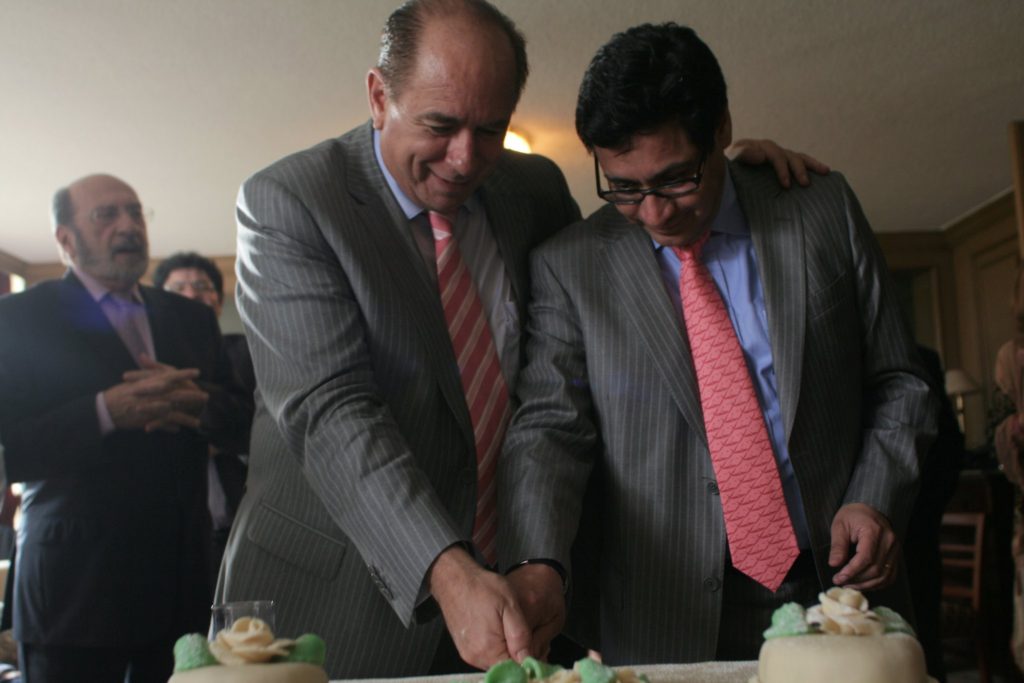
This is yet another example of institutionalized homophobia. Two years ago, they refused to recognize the marriage of Oscar Ugarteche and Fidel Aroche, which took place in Mexico .
This decision by the Constitutional Court was one of the last decisions it made before the end of its term in May.

Decisions based on old concepts
Judge Marianella Ledesma, who issued a dissenting opinion, contrary to her colleagues, stated that the Constitutional Court is acting like a tribunal of the Holy Inquisition.
“How difficult it is for some to see us as equals! How difficult it is to accept that times have changed and that all Peruvians have rights. Why seek, at any cost, to deny rights to others who are not part of their 'establishment'?” she wrote in her justification.
The expert added how this ruling will be interpreted in the future. “I foresee that these rulings will be studied, like a kind of legal 'paleontology,' revealing an anachronistic way of thinking regarding the rights of Peruvians in our country.”
How the vote was cast
The majority opinion of the judges contained a series of inaccuracies in their arguments against same-sex marriage. They misrepresented the Peruvian Constitution, the American Convention on Human Rights, the Universal Declaration of Human Rights, and the International Covenant on Civil and Political Rights.
They also denied the binding nature of Advisory Opinion 24-2017 of the Inter-American Court of Human Rights . That opinion orders all States Parties to regulate same-sex marriage in their countries in order to guarantee the fundamental rights of all people.
In their 21st paragraph, the judges accuse the Inter-American Court of Human Rights of believing itself to be “the sole possessor of truth” and “a monopolist of virtue.” Yet it is they who act in this manner. This is something the Inter-American Court pointed out to them when they attempted to illegally pardon former dictator Alberto Fujimori and were stopped by this body.
An attempt to curb legality
According to constitutional lawyer Yolanda Tito, “the Constitutional Court, in analyzing the case, issued a ruling that could be considered 'legalistic.' It stated that same-sex marriage lacks constitutional basis, relying on a literal analysis of our Civil Code and our Constitution. That is, without seeking an interpretation that could protect the plaintiffs' most basic rights.”
Tito pointed out several concerns raised by this ruling. The first is that the Court states that the Advisory Opinion (number 24-2017) issued by the Inter-American Court of Human Rights in response to a consultation by Costa Rica is not legally binding because the Court is 'ideologically driven'. Therefore, it dismisses the considerations expressed therein.
Secondly, there's an interpretation of the word 'union' that equates union with marriage. This could even lead to attempts to eliminate the term "civil union" as an alternative to same-sex marriage.
The first is a clear disregard for the Regional System for the Protection of Human Rights. And the second is an attempt to put a "lock" on any possibility of legal recognition for lesbian and gay couples in the future.
A path to the right to marry
The lawyer also outlined the procedure for marriages performed abroad. “While this is a ruling of inadmissibility and not a judgment, in practical terms it is a decision on the merits,” she emphasized.
“This is a case of exhaustion of national jurisdiction. The plaintiffs are entitled to resort to international jurisdiction, so that, after going through the Inter-American Commission, they can take their case to the Inter-American Court of Human Rights. There they will surely obtain the justice they are seeking.”
For lesbian activist and member of Demus (Study for the Defense of Women) , María Ysabel Cedano , this not only harms the LGBTIQ+ community.
“They harm Peruvian citizens in their fundamental rights, their human rights and the right to national and international jurisdictional protection, in accordance with the Constitution and human rights treaties.”
Without legal validity
Cedano points out that these rulings have no legal validity. “They are contravening not only the law, but—even more seriously—public and private international law, the right to national and international judicial protection, the right to equality and non-discrimination, the right to access justice, and the right to form a family. Furthermore, they are disregarding the American Convention on Human Rights.”
The activist hopes that the Court will "bring justice to the table and overturn the Constitutional Court's decision, as happened in the case of its pardon for Fujimori."
“We cannot accept a Constitutional Court that leaves citizens unprotected in this way. What is the purpose of international justice then? What is the purpose of the Inter-American Court of Human Rights then?” he emphasized.
This type of ruling also harms not only lesbians who get married, but also those who have children and who fight before the Peruvian justice system to be recognized on their children's identity documents.
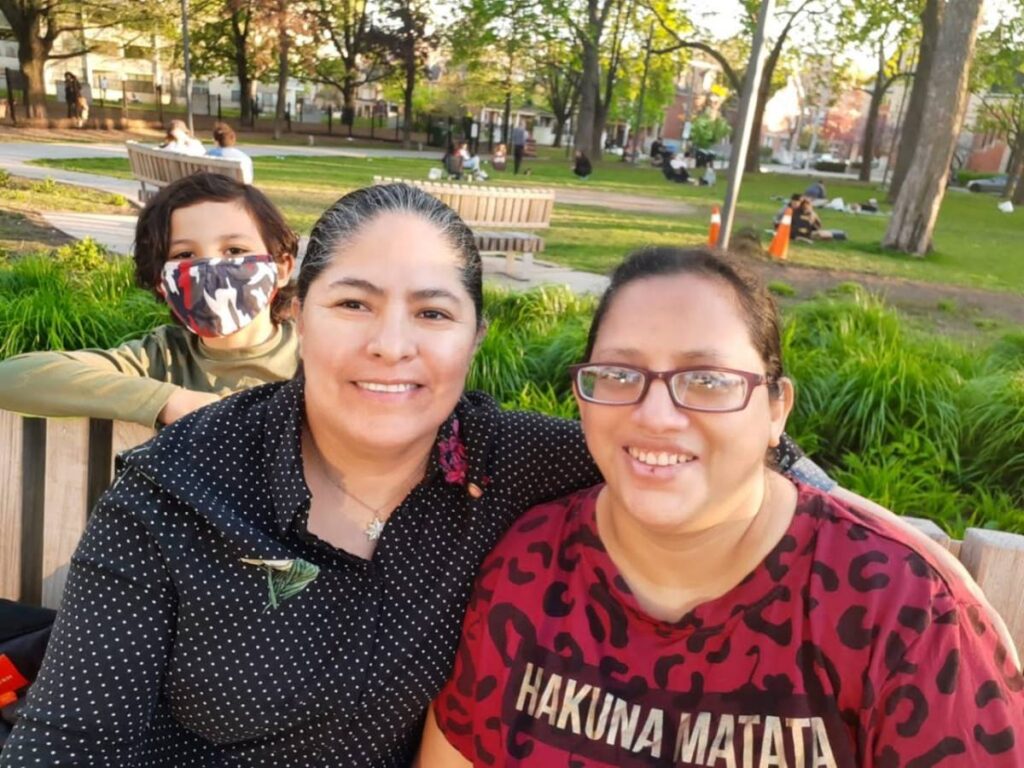
This is what happens with Jenny and Darling, and their son Dakarai, whose case has already been presented to the IACHR through a precautionary measure .
Regarding the legal protection process for marriages between same-sex couples
The amparo is a special constitutional process of urgent attention, which is presented when fundamental rights are violated.
In this case, the plaintiffs, Susel Paredes and Gracia Aljovín, were married in the United States and sought to have their marriage registered in the registry called Reniec (National Registry of Identity and Civil Status) .
The women allege a violation of their rights to equality, non-discrimination, and the free development of their personality, since, according to Peruvian law, legal acts performed abroad can be registered in Peru, provided they do not violate public order or morality .
These are demands from same-sex couples for the recognition and registration of their marriages performed abroad, so that the rights they have acquired by marrying abroad are respected without violating any international public order norms.
Therefore, the Peruvian State, through the outgoing Constitutional Court, disregards Article 2050 of the Civil Code, the Constitution and Advisory Opinion 24-2017 of the Inter-American Court of Human Rights.
We are present
We are committed to journalism that delves into the territories and conducts thorough investigations, combined with new technologies and narrative formats. We want the protagonists, their stories, and their struggles to be present.
SUPPORT US

FOLLOW US
Related notes
We are present
This and other stories are not usually on the media agenda. Together we can bring them to light.
1 Comment