

What's behind the ban on inclusive language in Buenos Aires schools?
The ban extends to the content that reaches classrooms. Condemnations from various sectors.


Share

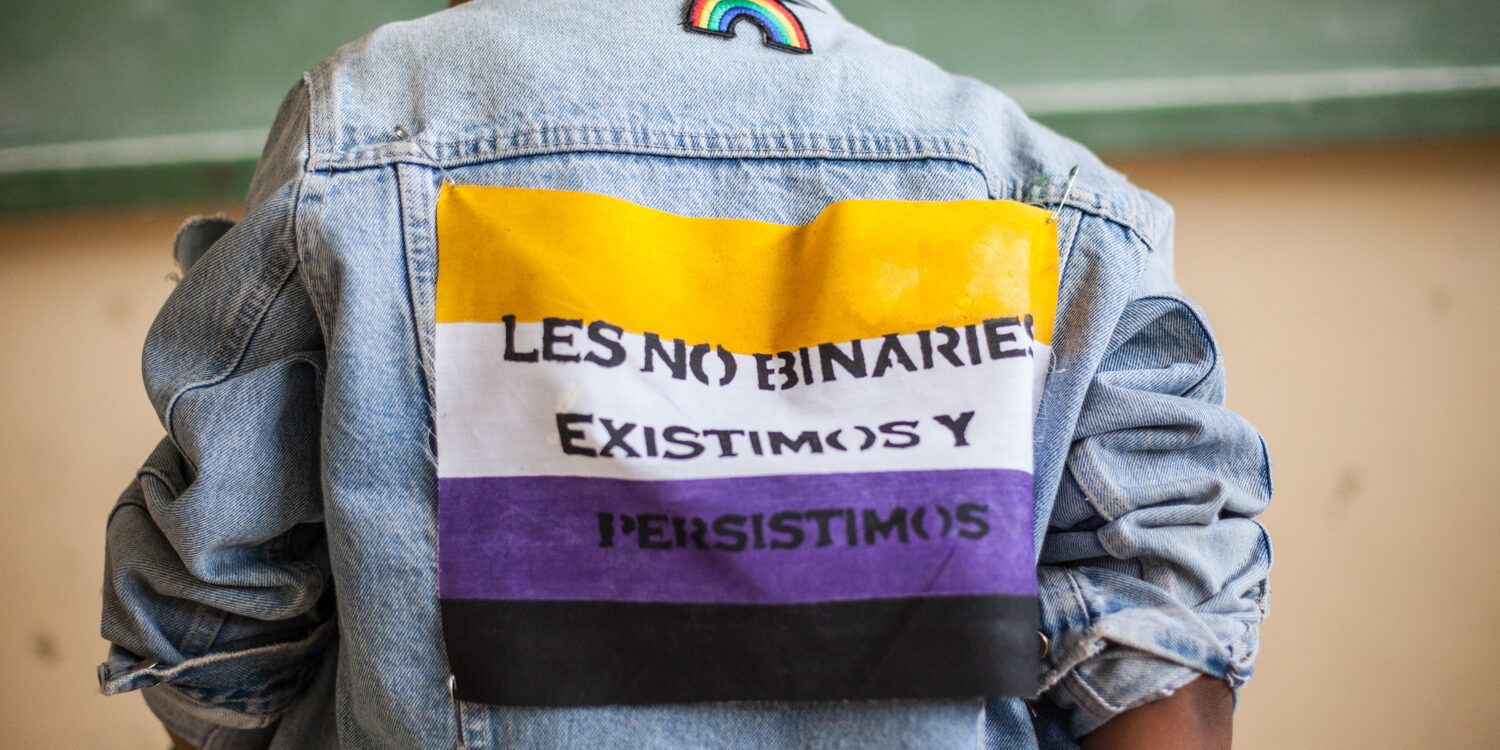
BUENOS AIRES, Argentina. The Buenos Aires City government has banned the use of inclusive language in schools through a resolution . The ban includes not only its use in classrooms, but also any educational materials that incorporate inclusive language .
The decision by the Minister of Education of the Autonomous City of Buenos Aires was communicated in Circular 4/2022 by the Buenos Aires City Ministry of Education. The circular ordered teachers to conduct their teaching activities and carry out institutional communications “in accordance with the rules of the Spanish language, its grammatical norms, and the official guidelines for its teaching.” The measure, as clarified in the resolution, “applies only to the content taught by teachers in class, the materials given to students, and official documents from educational institutions.”
An excuse to discriminate
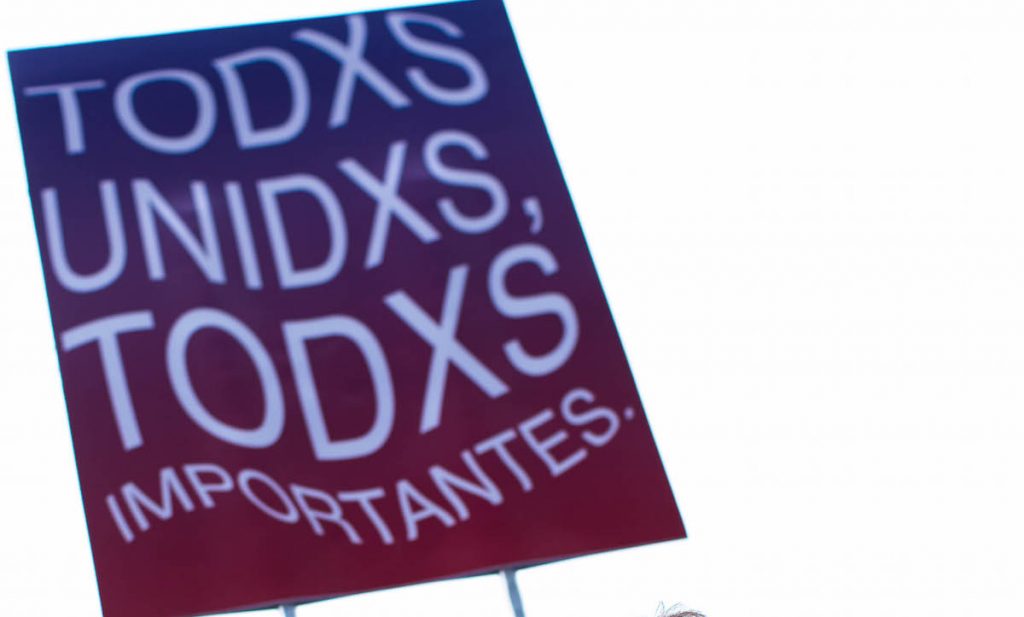
The Ministry stated that this decision was made following the results students obtained in Language Arts assessments after the pandemic. At a press conference, both Minister Acuña and the Mayor of Buenos Aires, Horacio Rodríguez Larreta, defended the ban . “From now on, teachers in the city of Buenos Aires must respect the rules of the Spanish language, both when they are in the classroom and when speaking to their families. The Spanish language must be respected in schools,” said Rodríguez Larreta.
For her part, Education Minister Soledad Acuña clarified, “We are not persecuting anyone, nor is this a witch hunt; we want to improve teaching so that children learn. We don't ask permission from union leaders; we make decisions based on evidence and after consulting with specialists.”
The Minister of Education, Jaime Perczyk, criticized the measure. “Education needs improvement, but that's not achieved by prohibiting inclusive language.” The Minister of Women, Gender and Diversity, Elizabeth Gómez Alcorta, also commented on the matter. “Schools must be inclusive and democratic environments that respect freedom and diversity. Nothing good is learned from a prohibition,” she stated.
Currently, more than twenty academic institutions have approved the use of inclusive language.
“It’s a very profound setback.”
In 2021, National Deputy Mónica Macha, who chairs the Women and Diversity Committee, presented a bill to Congress to guarantee the right to use gender-inclusive language . This bill was a response to one presented by lawyers Patricia Alejandra Paternesi and Cynthia Roxana Ginni seeking to prohibit the use of inclusive language. That bill was sponsored by two legislators from Juntos por el Cambio, the party currently governing the City of Buenos Aires.
“The definition put forth by Soledad Acuña, Minister of Education of the City of Buenos Aires, is an anti-democratic and exclusionary political act. It denies the law, gender identity, and more. If there's one thing that schools are meant to be, it's places for transmitting knowledge, experiences, and historical perspectives,” Deputy Mónica Macha Agencia Presentes . “ Prohibiting inclusive language means that many children will face greater difficulties when they need to be addressed by gender-inclusive names. This has a direct impact on the subjective development of children. I find it very serious ,” she emphasized. “Politically, it's a wink to the far-right.”
Inclusive language is a constant target for journalists and politicians who work to construct hate speech. “For the general population, it represents a profound setback and goes against an entire political, cultural, and historical process that has been moving in favor of inclusion.”
The classroom experience
Sol Fantín holds a degree in Literature, teaches primary school, and also teaches Comprehensive Sex Education for teachers. She considers this decision an intimidating and persecutory measure.
"It puts us in a position where we have to violate the rights of some of our students, colleagues, and other members of the community, for example, members of our families, the families of the students."
The lawyer asserts that the basis for this prohibition is unfounded. “It creates confusion about the nature of language and its teaching for teachers who are not specialists or who don't come from the field of linguistics and language. The City government claims, without any linguistic or pedagogical basis, that inclusive language harms language learning.”
And he adds, "The Spanish language allows for expanding its gender range; it allows it morphologically, and comprehension is not harmed. The basis for this decision is a political one, a matter of language policy. They are spreading information that is linguistically false."
What cannot be prohibited
France and Uruguay are also attempting to implement reforms and prohibitions to prevent the use of inclusive language. “The resistance to inclusive language stems from the lack of recognition of this language by language academies, which are the bodies that govern the norms. This lack of recognition generates uncertainty; however, its use is gradually becoming established among the population, mostly those under 35,” Inés Garbarino, a translator and French teacher, Presentes
In 1990, France began a spelling reform that was implemented in 2016. It consisted of simplifying certain spelling rules to facilitate learning. “This reform was achieved, but there was a lot of resistance. Language is a bastion where many conservative viewpoints take refuge, which is why there is so much resistance,” she states. “We must keep in mind that language is a living organism, so inclusive language will probably become the norm sooner or later .
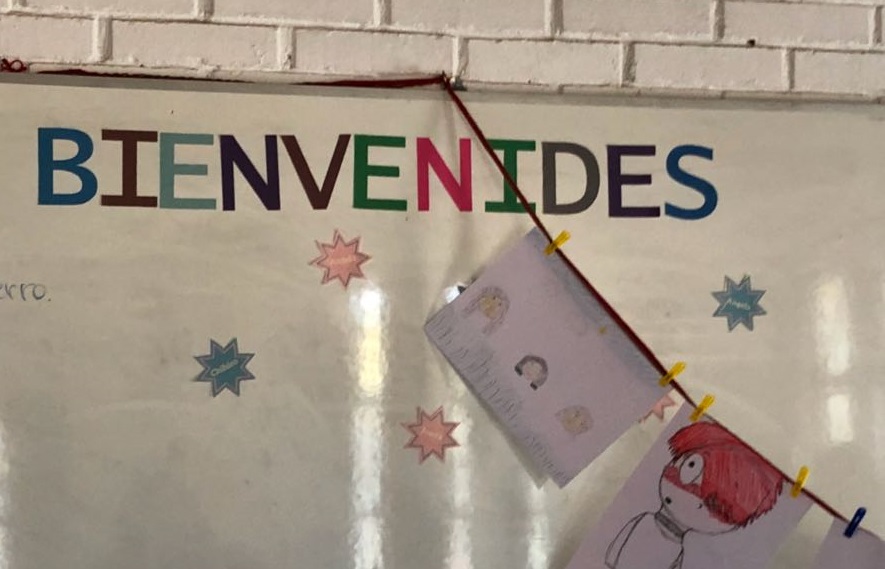
Regarding the City government's justification, Inés Garbarino states, “It may have a basis in the definition of literacy for those who are just beginning to grasp writing, because rules are needed. That would be understandable in that case, but, in any case, there is a teacher who can speak and explain what the phenomenon is. And that this phenomenon exists . Inclusive language cannot be prohibited, because once it becomes established in usage, it cannot be stopped. A linguistic phenomenon cannot be stopped .”
An inapplicable prohibition
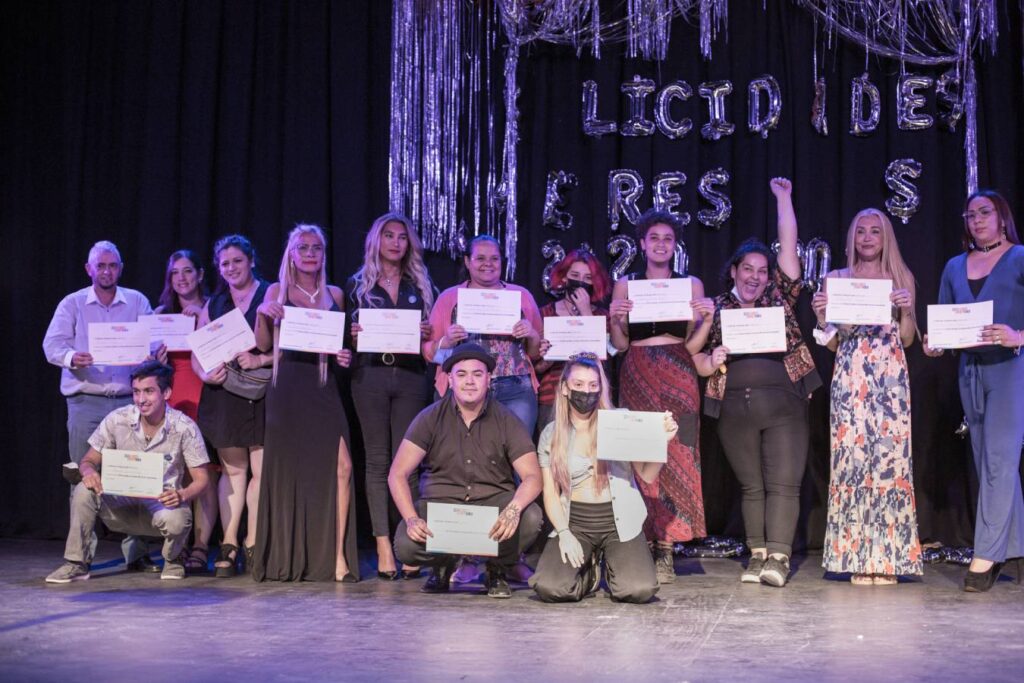
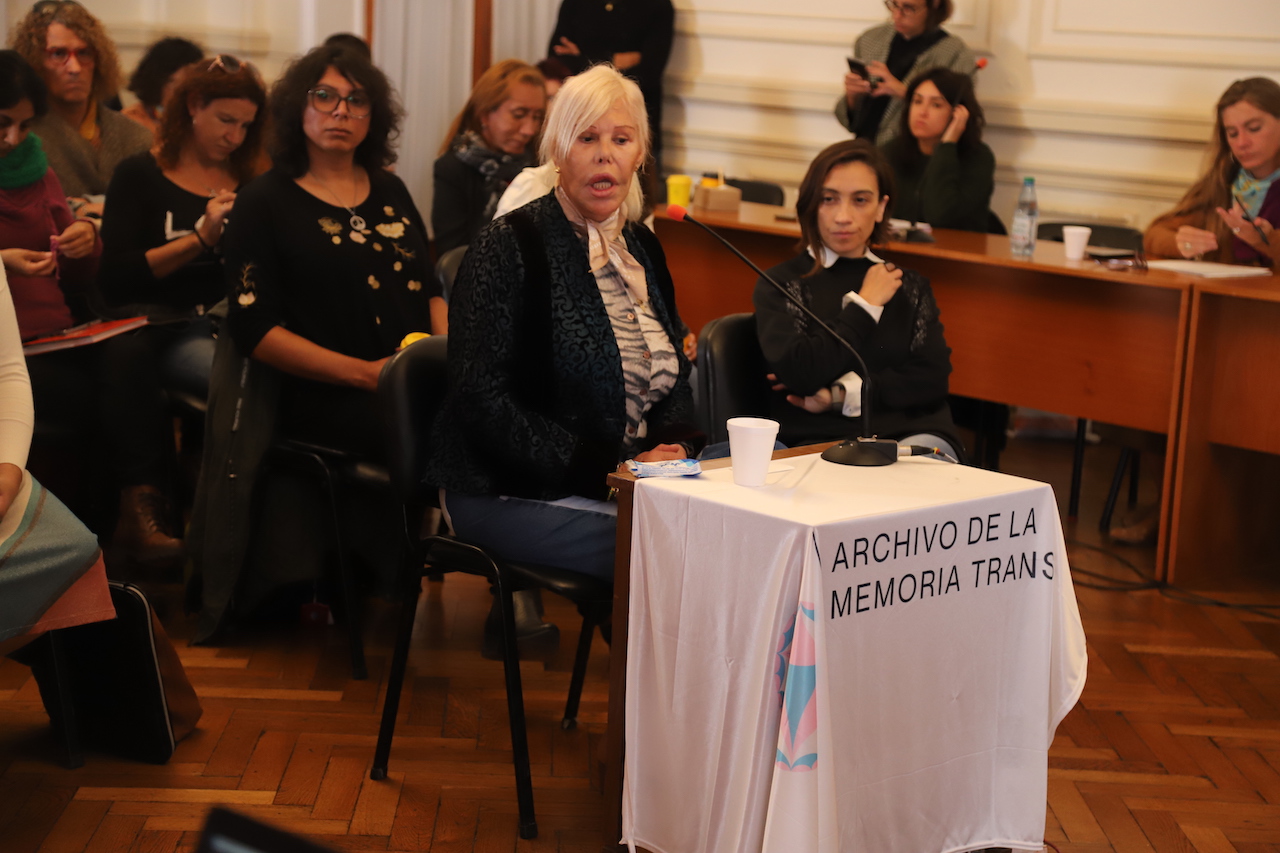
from the academic secretariat of the Mocha Celis Transgender Popular High School , states, “This resolution is inapplicable at Mocha Celis for several reasons. But the main one is that in this school there are people who also use neutral pronouns and use the letter 'e' to express diversity. This expulsion measure is unacceptable in the context of this institution because of everything it generates in the experiences of the educational system.”
“For me, the new resolution is an act that clearly violates the rights and the advanced guarantees of rights that we have today in Argentina.” Among the points Mireles highlights, she states that this prohibition reproduces patterns of violence that, in turn, generate significant exclusion in education.
“The City of Buenos Aires has systematically expelled transvestite and trans people. This is particularly evident in the lack of information provided to teaching staff and the failure to implement comprehensive sex education. I find it unacceptable that 16 years after the approval of Comprehensive Sex Education (CSE), it is still not being implemented, and that last year, when we assessed its implementation, we found that only 40% of it is being applied at the federal level.”
“At Mocha Celis, we understand that language is a collective construction. Our work is the result of the activism of trans and travesti collectives, which we will continue to deepen. We have sufficient evidence of the need for the formal education system to rethink and re-evaluate itself in order to guarantee rights.”
Violence and discrimination
Mireles observes that this resolution comes in the wake of a series of violent incidents and events that have occurred recently, and that the ban only fuels that violence. “A measure like this negates the experience of identity and the possibility for all of us who are part of the diverse population to continue progressing. In particular, it undermines our ability to have safe environments free from violence and discrimination in our schools.”
He adds, “This is happening during Pride Month, and this kind of measure is being implemented. It's not a coincidence; weeks ago, Bar H was vandalized, then the Gondolín Hotel. These are situations that concern us, and going forward, we will continue to collectively consider administrative actions to prevent this measure from being implemented.”
The repudiations
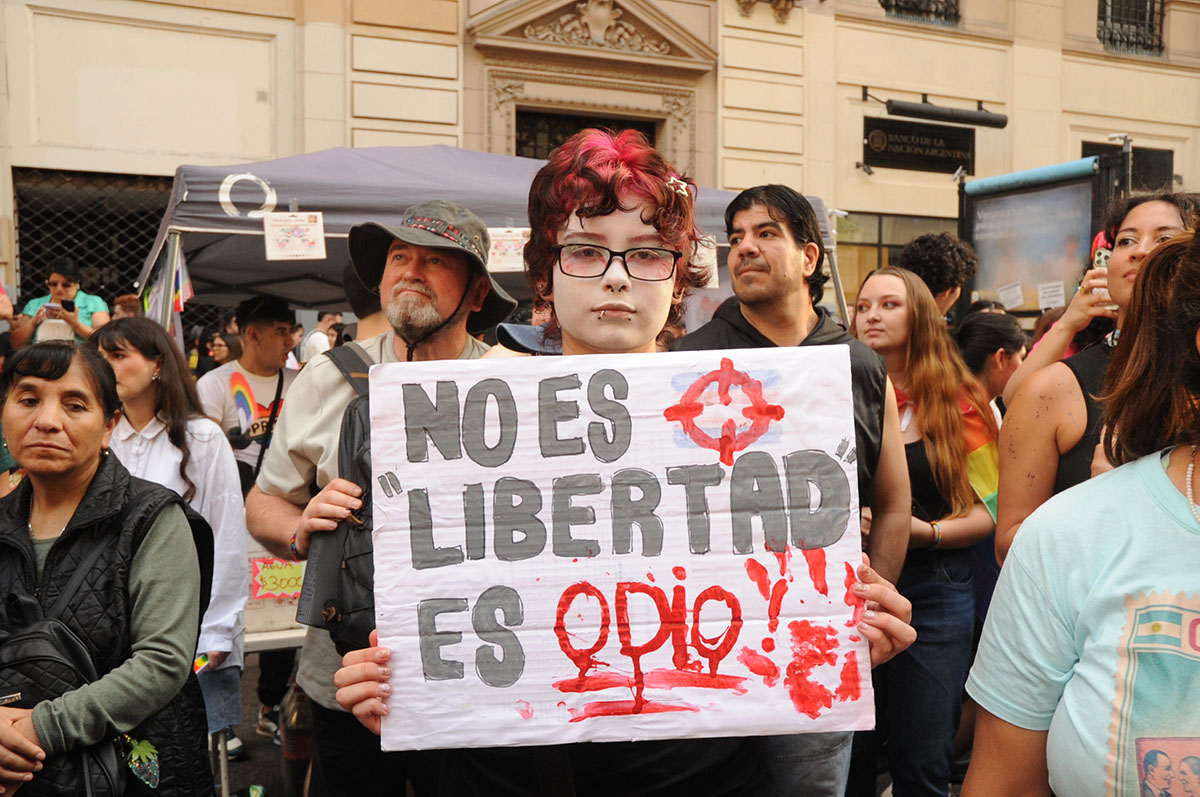
Organizations, unions, educational leaders and activists condemned the decision announced by the City government.
Pride Month , the City government issued a “resolution” prohibiting the use of inclusive language in classrooms and official communications. This not only violates the freedom of expression of students, teachers, and families, but also contradicts the Gender Identity and Comprehensive Sex Education laws,” states the Chirimbote publishing house.
“More and more students identify with a gender different from the one assigned to them, or with none at all, or are in transition. Is this how the right to be and be named as they wish is sanctioned? The pedagogical proposal of the Buenos Aires Minister of Education, Soledad Acuña, is to censor identities, especially those of children and adolescents.”
The Union of Education Workers (UTE) also condemned the resolution. “What is not named does not exist: Denying the existence of trans and non-binary children and adolescents through language constitutes an attack on the right to identity of each and every one of them, and to be in an environment where diversity is respected.”
In this regard, UTE broadened the concept of this prohibition within a context where hate speech is prevalent in the media. “It is part of the right-wing offensive in education. Language is a collective construct that is constantly evolving and shapes realities. We, the teachers, will continue building a public and equitable school for all, recognizing and lovingly embracing each and every one of our students.”
Laura Velasco, a legislator and member of the Education and Women, Gender and Diversity committees in the City of Buenos Aires, also addressed this issue. “It’s a provocation. For so many years, the Buenos Aires city government failed to implement Comprehensive Sexuality Education in the city’s schools with a specific budget or program. If learning difficulties exist, they are related to the lack of funding and political will to create quality education for everyone,” stated Velasco, who is also an educator, teacher, and professor of literature, and a specialist in Comprehensive Sexuality Education.
We are present
We are committed to journalism that delves into the territories and conducts thorough investigations, combined with new technologies and narrative formats. We want the protagonists, their stories, and their struggles to be present.
SUPPORT US

FOLLOW US
Related notes
We are present
This and other stories are not usually on the media agenda. Together we can bring them to light.