

The doctor who abused four young people in the Calchaquí Valleys was sentenced
For the first time in Tucumán, a criminal judge handed down a sentence in the town of Amaicha del Valle, in the Diaguita Calchaquí indigenous territory. She convicted the doctor who sexually abused four young people.


Share

AMAICHA DEL VALLE, Tucumán*. For the first time in Tucumán's history, a criminal judge handed down a sentence in the town of Amaicha del Valle, in the Diaguita Calchaquí indigenous territory. This was no ordinary sentence: a doctor and former director of the only Primary Health Care Center (CAPS) in Colalao del Valle , Eugenio Heliodoro Guantay . While in office, taking advantage of his position of power, he sexually abused four young people. The reported incidents occurred between 2014 and 2018.
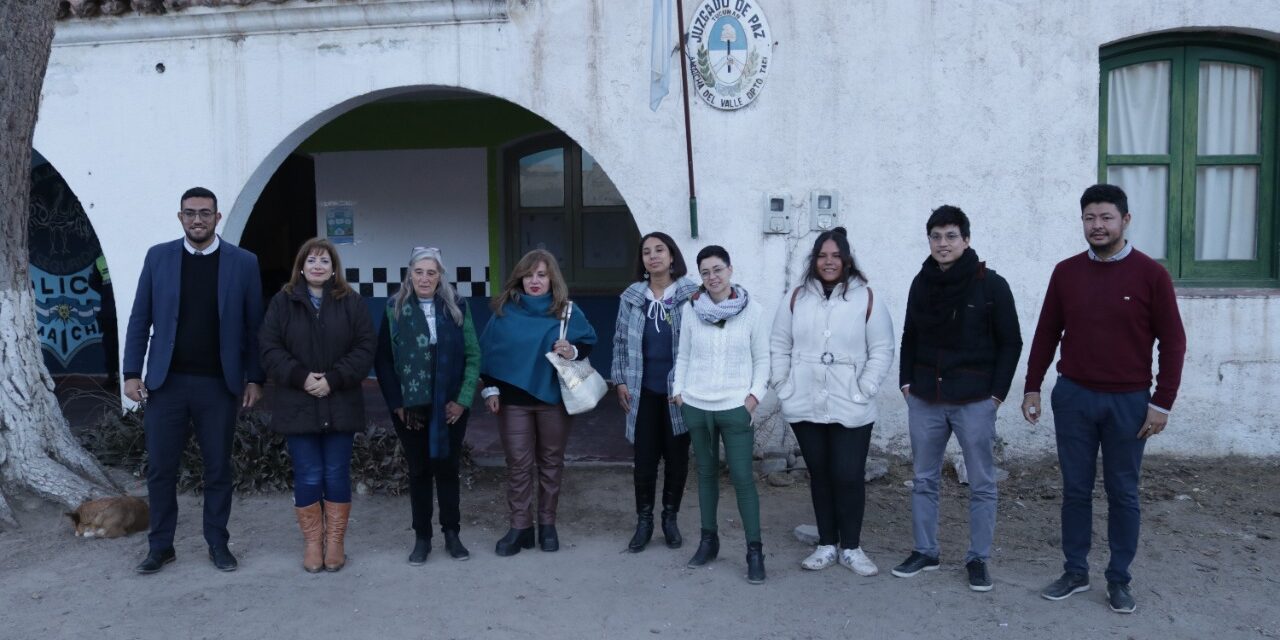
Following a request from the plaintiffs, represented by attorney Jimena Gómez Roselló , and supported by submissions from the La Chacana Foundation and the MxM Foundation , the Supreme Court of Justice of the Province authorized the Second Criminal Court , presided over by Judge Stella Maris Arce , to relocate to the Justice of the Peace Court in Amaicha del Valle to deliver the sentence. This was a "positive action," as Roselló described it, to reduce the geographical distances the four plaintiffs had to overcome during the legal proceedings.
“There is no doubt: he attacked the sexual integrity of the victims.”
Route 307, which connects the capital of Tucumán with the Calchaquí Valleys , is a winding road with curves and switchbacks. Although it's only 158 kilometers from San Miguel de Tucumán to Amaicha, the journey is slow and includes sections of gravel road.
After a four-hour journey, the hearing began shortly after noon on Thursday, June 9th. Present were court staff, the Victim Assistance Office of the Supreme Court Rita Nahir Agüero, the deputy clerk of the Amaicha del Valle Justice of the Peace Court a leading figure among Indigenous women from the Valles region and president of the La Chacana Foundation , the plaintiffs, and the complainants. The entrance was guarded by the Gendarmerie, and the perimeter of the courthouse was fenced off. The defendant, along with his legal counsel and the prosecution, led by Estela Giffoniello, participated remotely.
It was a summary trial, a procedure where the parties reach an agreement on the sentence the defendant receives. According to the law, the prosecution and the defense participate. In this case, the plaintiffs, who represented the interests of the four young women, also participated.
The main requirement in this type of trial is that the defendant admit guilt. In this case, the judge explained that, in addition to Guantay's admission of guilt for the four acts, the evidence was conclusive enough to validate the conviction. "There is no doubt that he violated the sexual integrity of the victims ," she stated.
“Don’t be ashamed to report it.”
This type of crime is characterized by a lack of evidence because these acts are committed in places where there are no witnesses. The judge considered the consistency and clarity of the statements given by the complainants , both at the police station and at the prosecutor's office when they ratified their statements, and at every opportunity they were asked to do so. Furthermore, the statements were corroborated by various testimonies, expert reports, and other evidence incorporated into the case file as supporting documentation for the complaints.
“Don’t be ashamed to report this,” the judge said after listening to the young women. In their accounts, they described how they suffered discrimination and harassment from the community of Colalao del Valle after reporting the doctor . One of them even had to move to another town because she couldn’t bear being judged for defending a right.
Regarding the sentence and reparations
Guantay was sentenced to 3 years in prison in different modalities (effective and conditional), plus the disqualification of the registration for 10 years, where he will not be able to practice medicine.
The lawsuit also requested comprehensive reparations measures that would have an impact on the social fabric of Colalao del Valle . “The court ordered SIPROSA ( Provincial Health System) to appoint a professional trained in gender and diversity as the new director of the Colalao del Valle Primary Care Center (CAPS). It also ordered intensive training for six months for the CAPS's healthcare staff on gender-based violence and sexual abuse, clarifying that this training would improve access to comprehensive healthcare for women and girls. Furthermore, it ordered monitoring of the healthcare services provided by this institution. Finally, the Provincial Ministry of Education will be asked to conduct talks at the Colalao del Valle school addressing the rights of women and girls, gender-based violence, and sexual abuse.”
“Talks in schools so that this doesn’t happen to more girls”
On this last point, it was expressly requested by the first of the young women who dared to come forward. “ I want talks to be given in schools so that this doesn't happen to any other girl ,” she said before the court.
The four victims expressed their joy and relief at having reached the end of this process and at having been heard personally and in their own territory by Judge Stella Maris Arce. They also stated their satisfaction with the entire sentence.
End to the pact of silence in the Calchaquí Valleys
“The women who reported the abuse are the ones who made this happen. They have broken the pact of silence that exists in the Valleys, the silence surrounding these issues, and the way in which sexual abuse is becoming normalized. From today onward, there is a very strong message that sexual abuse will no longer be tolerated ,” Roselló stated.
“I urge you to continue down this path of defending your bodies, defending your human rights, and demanding that others respect your dignity. And when you decide to exercise your sexuality, let it be a voluntary and free act. Don't be ashamed, don't feel guilty about reporting, because what you are doing is exercising your rights. You have already suffered enough without having to hide. Society has to change in this respect. We all have to contribute to eradicating violence ,” the judge stated.
Rita Agüero , a leading figure among Indigenous women from the Valleys, was present throughout the trial. She also spoke about the harsh reality they face in the Valleys, highlighting the normalization of sexual violence and the lack of resources and public policies to combat it. Regarding the presence of the Judiciary in delivering this sentence, she stated: “ It is very important that they listened to the voices of the victims and that there is justice in our Valleys.”
“Dealing with people in this direct way brings the Judiciary closer to the people, who are the recipients of our services. We must eliminate the gaps that exist between citizens and the Judiciary. We are here to change this reality, and we will change this reality together,” concluded Judge Arce.
Regarding the facts
Eugenio Heliodoro Guantay was the director of the only Primary Health Care Center in Colalao del Valle for over 20 years. As the head of the institution, a doctor, and a man, he was a highly respected figure in the community.
In 2018, a young woman reported him to the police and then made a post on her social media recounting how she was sexually abused in the doctor's office when she went to get a prescription for a chronic respiratory problem she suffered from.
Her post went viral, and other women in the community contacted her to share similar experiences. One was a minor, another had sought help after experiencing gender-based violence from her partner, and yet another recounted an abuse she had suffered in 2014.
The four of them embarked on a journey in which they had the support and advice of Jimena Gómez Roselló , who at that time was beginning to practice law.
Four years later, after countless trips, the accumulation of evidence, and collaboration with various institutions and key figures, the legal process finally concluded, and the young women closed a painful chapter of their lives. Providing comprehensive reparations in their communities is now the responsibility of the provincial government.
*This article was originally published in La Nota Tucumán and is reproduced through a partnership with Agencia Presentes.
We are present
We are committed to journalism that delves into the territories and conducts thorough investigations, combined with new technologies and narrative formats. We want the protagonists, their stories, and their struggles to be present.
SUPPORT US

FOLLOW US
Related notes


We are present
This and other stories are not usually on the media agenda. Together we can bring them to light.