

From soup kitchens to hair salons: organized transvestites and trans people are changing the lives of a neighborhood
The organization El Teje de San Martín opened the Fuego beauty center, runs a community dining hall, and is working to open an agroecological pasta factory.


Share

BUENOS AIRES, Argentina. El Teje de San Martín is an organization of trans and travesti women that emerged in response to the urgency of the Covid-19 pandemic. In just two years, they have broken down barriers and expanded their reach. They opened Fuego, a beauty salon run by trans and travesti people , maintain a soup kitchen open to the community, and are on the verge of opening an organic pasta factory.
“During the pandemic, with the urgency, the first action was ReparTeje,” says Paola Ivanna “La Diosa,” one of the founders of El Teje. A long-time trans woman in the area, known for initiatives like the Taconeadas of the 2000s, distributing condoms and information at bus stops along Route 8. Famous for opening the Inclusive Clinic at Fleming Hospital in 2010, two years before the Gender Identity Law, where they lovingly welcome victims of violence and persecution from the northwest area of Greater Buenos Aires.
“The first soup kitchens we set up on the highway, because on top of everything else, they wouldn't let you go out to work, and the police would chase you away. So we said, 'Let's set up the soup kitchen directly on Route 8, on Fridays.' That way, if the police chased us, we could just pick up the hot food right there from the pot. Other times we cooked under the bridge (at the José León Suarez train station), and we also ran a vaccination drive there,” he recalls.
Based on the survey, and the intention to obtain resources from the State, they discovered that access to identity was much more restricted than they thought.
The collective space that saves
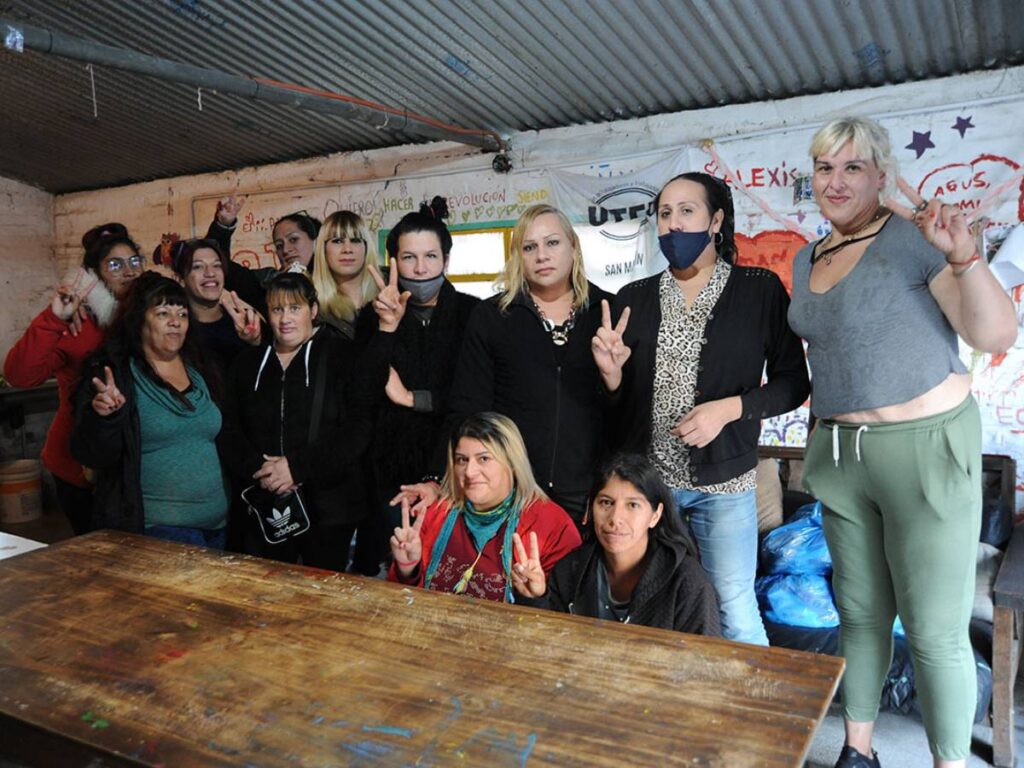
The act of coming together sparked the need to structure the organization, conduct an internal survey, and plan challenges aimed at organizing dignified workspaces, professional training, and access to rights.
Teje emphasizes the importance of women themselves defining the strategies for the State to reach a historically vulnerable community, full of distrust, with its own problems, and with rhythms learned on the street.
“We’ve had many achievements, both in our organization’s connection with the government and other institutions, and in our own individual development. As El Teje, we’ve experienced the power of being organized,” emphasizes Arny, who is in charge of Fuego’s outreach strategies. “It’s about starting from your own place, your town, your region, organizing yourselves and thus amplifying all your knowledge,” she advises, adding that this is especially important for women in other countries who lack supporting legislation.
Break down the wall on Márquez Avenue
The members of El Teje live in San Martín or in neighborhoods of neighboring municipalities, which border the northwest of the City of Buenos Aires . San Martín, like so many others, is an unequal district, which becomes poorer the further it gets from the border with the big city.
El Teje has activity on both sides of that symbolic border, which segregates populations according to their income: Avenida Márquez. On one side, there is the (relatively) clean and organized city, and in the most affluent neighborhood of all, Villa Ballester , there is Fuego.
On the other side, the neighborhoods that expanded—towards the Buen Ayre highway and the forgotten Reconquista River—with haphazard land occupations along the banks of the main landfill in the greater Buenos Aires area: the CEAMSE in José León Suárez. There, El Teje runs a community kitchen.
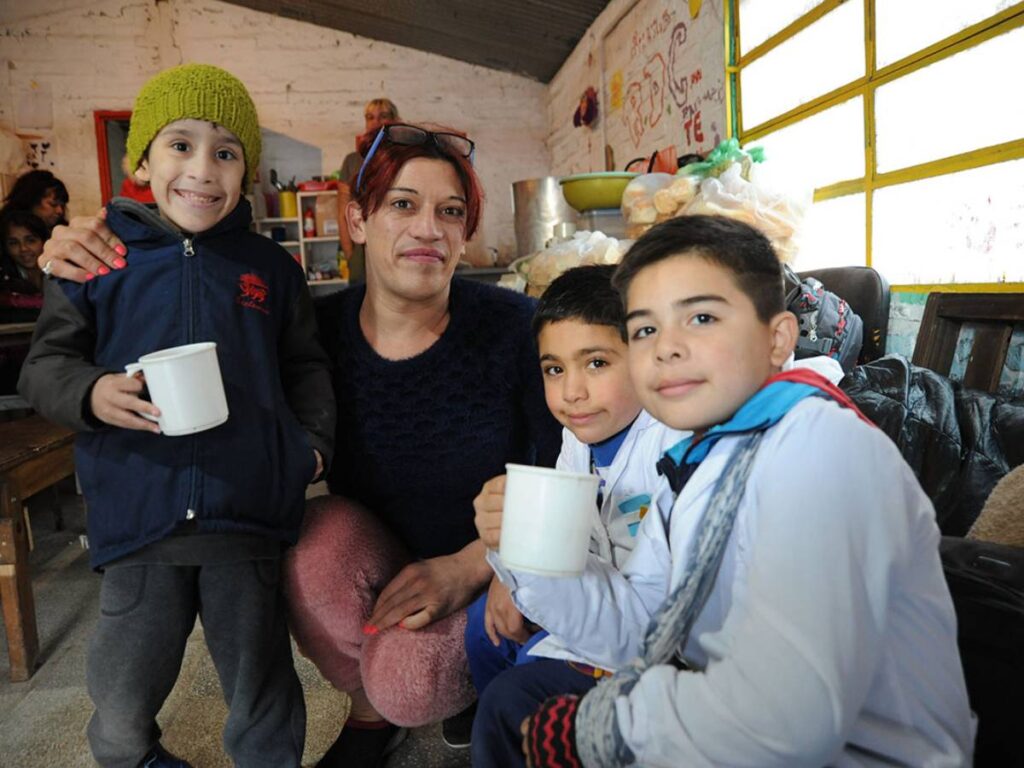
One of these spaces, the snack bar, is a place to address gender stereotypes among children. “The first thing we did was a festival on Children’s Day. Instead of preparing pink and blue gift bags, we put all the toys mixed together on the table and let them choose freely. That small action is a way to start changing the culture little by little and to work with the mothers in the neighborhood,” says Mara. Because of her red bangs and plush leg warmers, the children nicknamed her “Panam,” after the children’s entertainer.
The families of Carcova have an ambiguous relationship with the waste from the CEAMSE landfill: respiratory and skin diseases are prevalent, but many also make a living by recovering what others discard. Families in the area generally suffer from a lack of public services, including street cleaning, and a shortage of schools and health centers.
Marlene's birthday
Paola Ivanna La Diosa's house is located a few meters from the soup kitchen in the Villa Carcova neighborhood, a settlement on the outskirts of San Martín. A network of cables crisscrosses the street, crisscrossing the street from house to house, a makeshift setup that results in at least one house burning down every winter. The cable network casts a labyrinthine shadow over the relatively new asphalt.
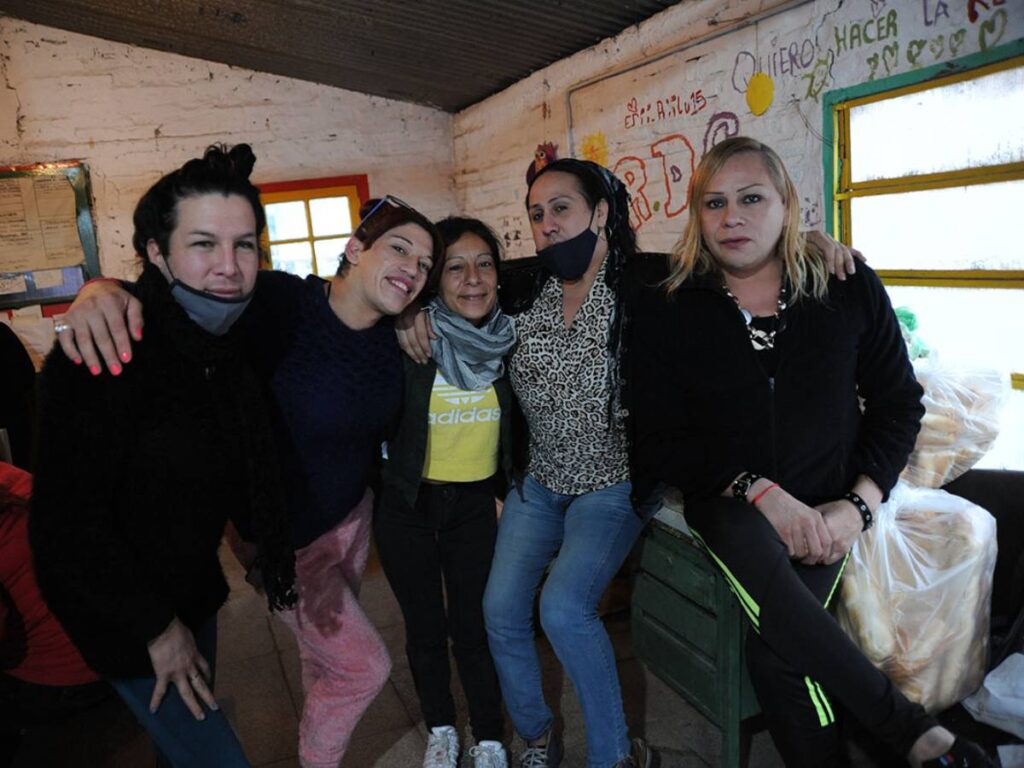
This Thursday there's a community meal and snack, like every Monday and Thursday, but this day is special: it's Claudia Marlene's birthday. In the living room-kitchen of Paola Ivanna "La Diosa" (The Goddess), as she's known, there's a large cake with pastel rainbow frosting in the center of the table. Next to it, a quince tart. Everything can be enjoyed with well-stirred, frothy, and sweet coffees.
Among the guests, a black cat moves stealthily among armchairs, handbags, and bodies protected from the growing cold outside, as the sun begins to set.
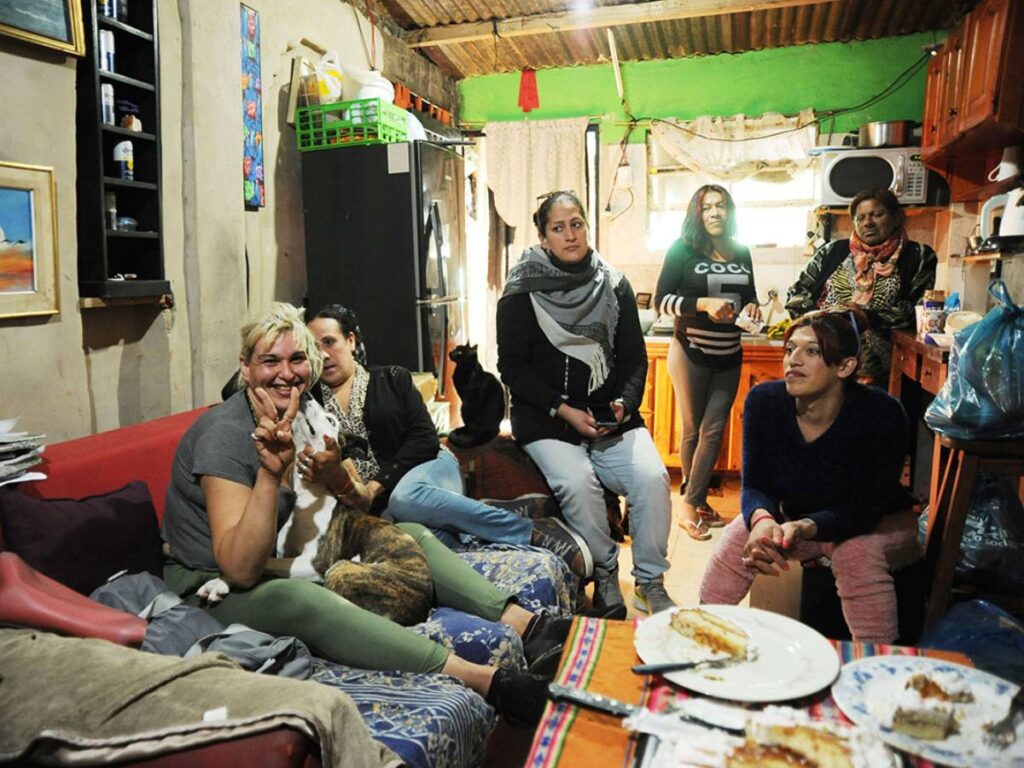
Photo: Ariel Gutraich.
Defending oneself against violence
Just as they honor birthdays, they also organize for self-defense. “A cis woman came in all beaten up, we told her to come here, to stay, we created a WhatsApp group called Las Beibis and we all went out. We kicked him out. And we continue to support her in that group, all of us from the soup kitchen are there,” she says proudly. “We chased him away. He went to where his friends were, and we went to them and told them, ‘If you protect him, we’ll smash all your cars.’”
“Sorry about the puppies,” says Paola, as she grabs a grumpy white dog with transparent eyes onto her lap to stop it from attacking the photographer. “She’s a very trans, feminist dog, she’s not used to seeing men here. She gets like this with the guys,” she explains, laughing, as they hold the dog.
At Paola's house, they are raising funds to build a tile roof, move the private house to the first floor, and on the ground floor inaugurate the "Casa Trans Evita," which will serve as a shelter and refuge for dozens of women in transit.
Use carefully
During the organization of El Teje, and the community work, a space was enabled to set limits on the consumption of psychoactive substances, and to think about self-care strategies, both individual and collective.
“We need to talk about how all excessive consumption is harmful: what we consume, what quality it is, what we mix, what days, what times. I can say that I am a consumer and that I shouldn't be criminalized or stigmatized for it. It used to be very hidden among us, and now, thankfully, we can talk about it. Because that's what we need: to talk about these issues in health settings,” Paola emphasizes.
On Mondays and Thursdays there's a community meal and snack time. They're ideal days for inner cleansing, days of self-care. "Let's not be lazy today, and let's go help out at the soup kitchen," they say to each other, supporting one another.
"Getting high" means consuming to the point of falling flat on your face: an exaggeration, in most cases. They greatly value the opportunity to talk, not from a prohibitionist perspective, but with a harm reduction approach in mind.
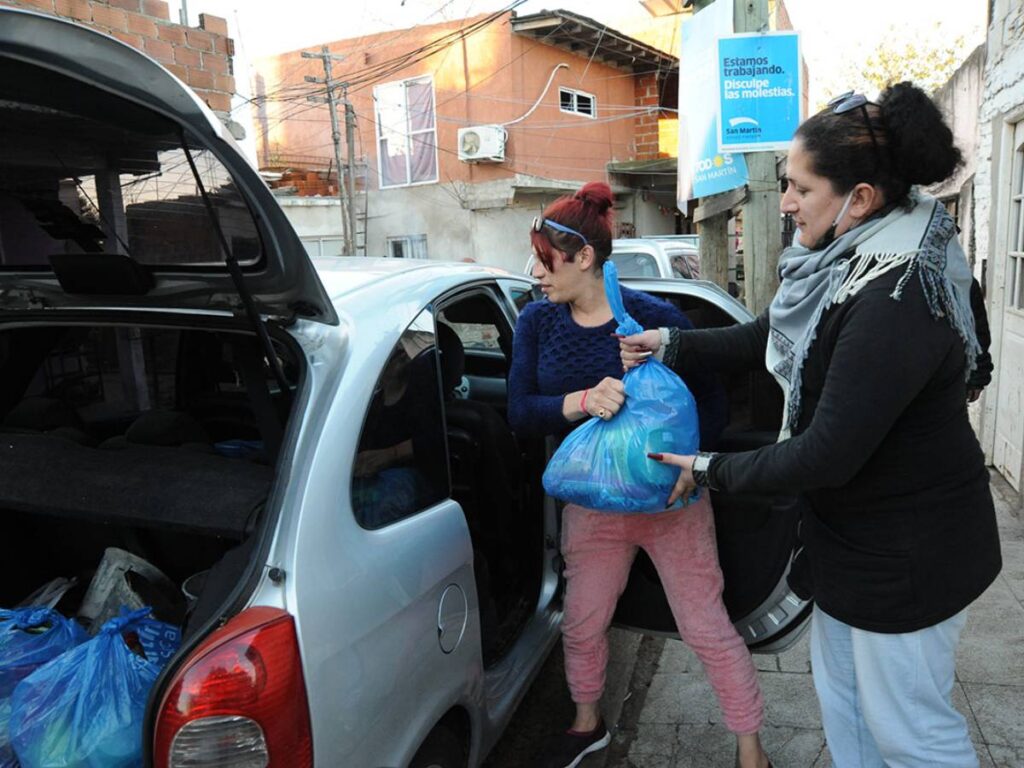
Photo: Ariel Gutraich.
Sex work
They support their colleagues who choose sex work using a harm reduction approach, similar to how problematic substance use is addressed. Without prohibiting anything, they listen, share, and propose healthy boundaries for deeply ingrained, almost identity-defining behaviors.
“We emphasize to each other the importance of getting training, finishing high school. The idea is that sex workers, feminists, can get into universities and be able to choose whether we want to continue with sex work or not,” they agree.
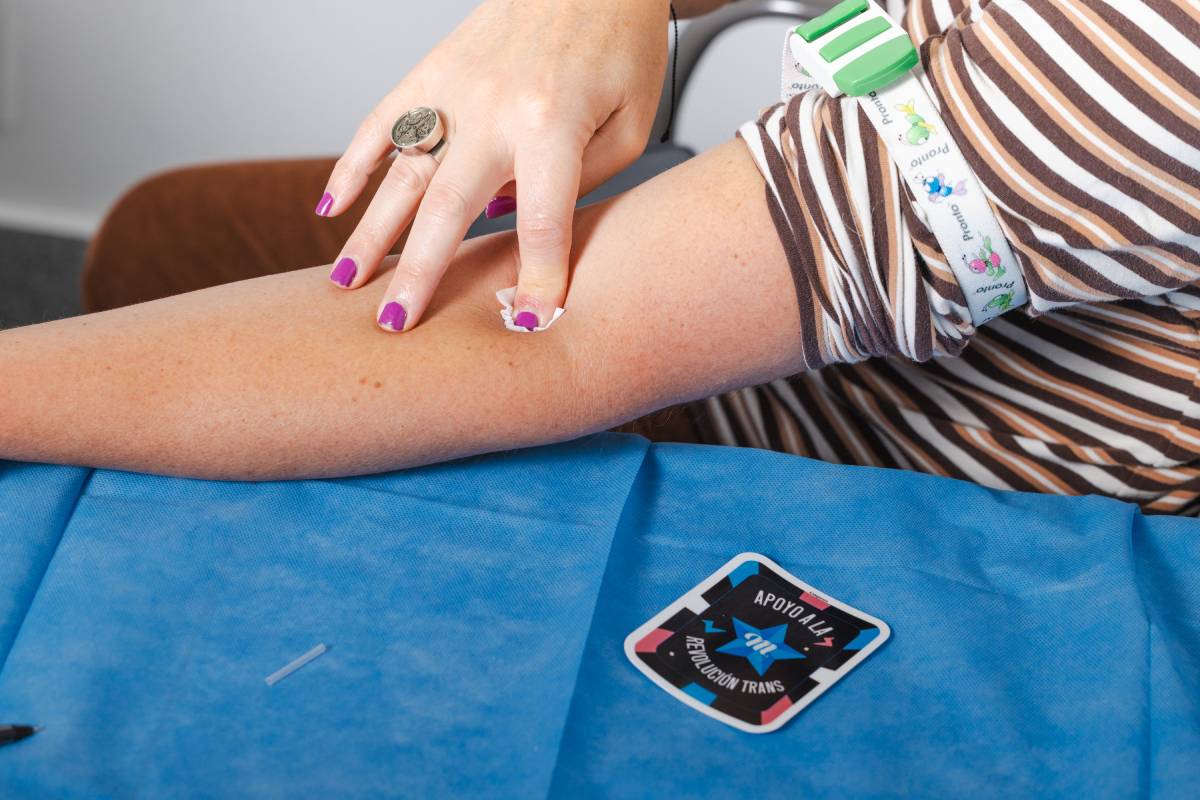
In mid-May, they organized a Taconeada, like the ones they have been doing for 15 years, but this time with a mobile vaccination unit from the Municipal Health Department, to administer flu vaccines to the workers who, despite not meeting the established priority health criteria, which are based on age or pre-existing conditions, managed to be included.
This was the result of a conversation El Teje had directly with the Municipal Health Secretary, to whom they explained the health criteria that justified prioritizing sex workers: the street, the cold, the night, etc. The health policy, combined with El Teje's presence in the community, proved successful: 500 vaccine doses were administered.
A beauty center for everyone
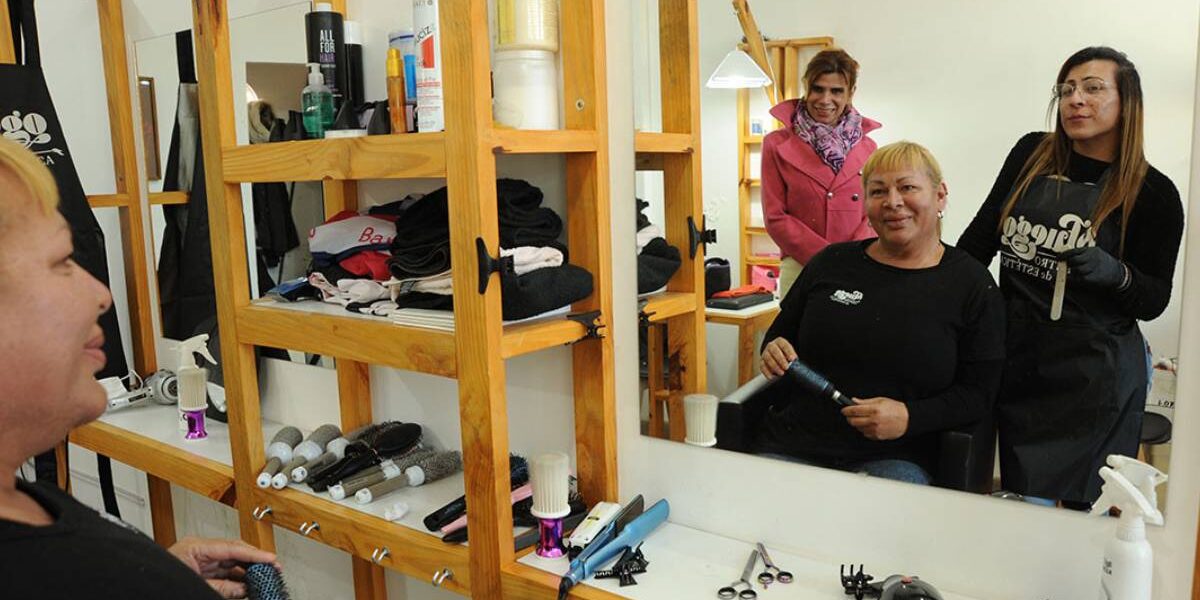
The organization's greatest achievement is the Fuego beauty salon. Clients of all ages, nationalities, backgrounds, and socioeconomic levels book appointments and pay for their chosen haircut, color, and/or manicure design.
Fuego is a collective achievement, but Josefina is the driving force behind it. She has 30 years of experience in the business: “I started very young,” she explains, glancing at the meticulously shaped eyebrows in one of the large mirrors. She is in charge of opening and closing the shop every day: rain or shine, or even if it's 40 degrees Celsius (104 degrees Fahrenheit).
Josefina learned the trade by investing part of what she earned on the street. She enjoyed some golden years when she ran her own shop in the Villa Pueyrredón neighborhood of Buenos Aires. Like so many others, she couldn't work during the pandemic because people were afraid of getting infected, so she went to a friend's house to pick up El Teje's merchandise. She joined the organization, and now, from Tuesday to Saturday, without fail, she travels the twenty minutes from her home in Villa Bosch to her workplace on her motorcycle.
She sits behind the main counter, organizing shifts, income, and supply needs.
The experience of Fire breaks multiple boundaries
It's located in the heart of the traditional Villa Ballester neighborhood. It's a place where transvestites and transgender people strive to find dignified, registered employment through a worker cooperative.
It was a pleasant surprise for them to be received so warmly. When they arrived, some neighbors brought them gifts, and now they have customers who bring them breakfasts or lunches to share.
Next to Josefina is Laura, and beside her, a colorful palette of nail polishes. “I worked on the street and studied in San Miguel,” she says. She managed to enroll after being rejected by two schools closer to her home. They told her, with feigned kindness, that there were no vacancies, but it was an excuse not to admit trans people. She managed to enroll and graduate. Her sisters were her “guinea pigs” until she felt safe and started working from home.
“Now we are paying for two vocational training courses: one for sculpted nails and another for comprehensive hairdressing,” Laura points out, proudly.
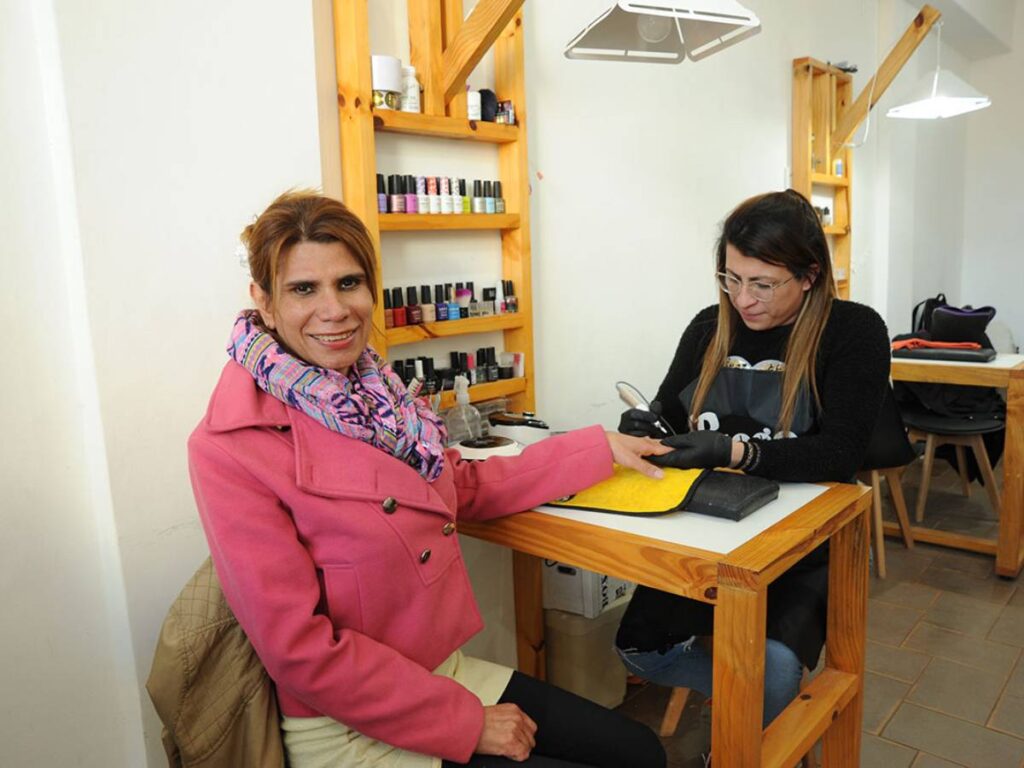
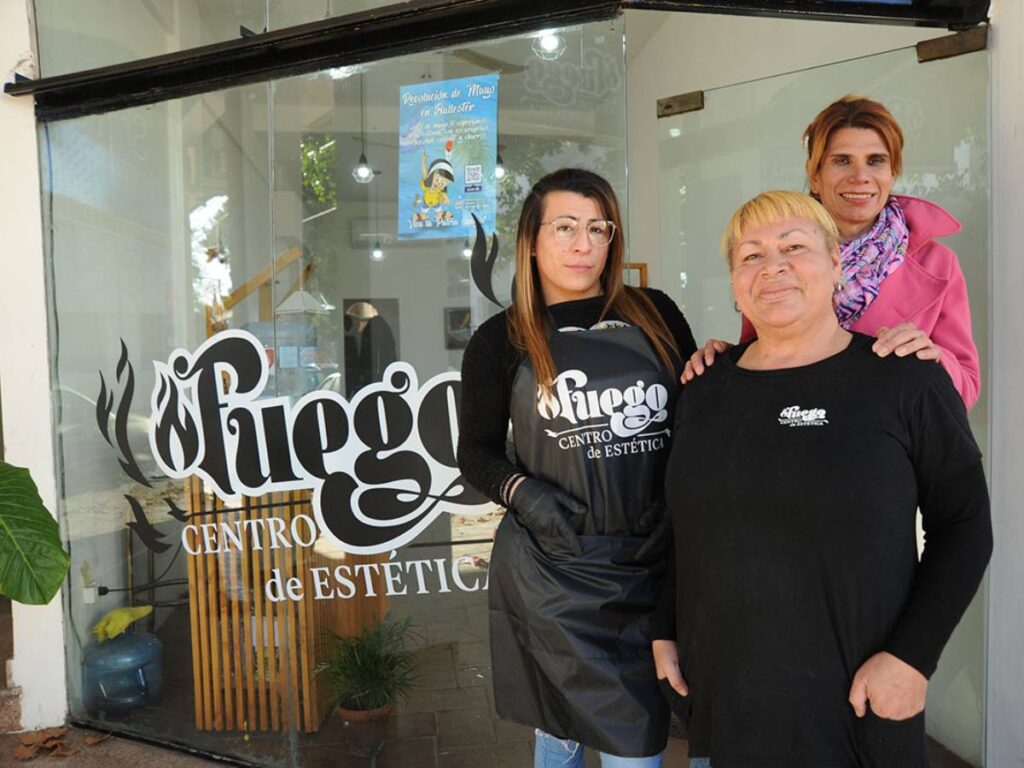
Photo: Ariel Gutraich.
Inclusion in trade
The hair salon opened its doors on the patriotic date of July 9th - when Argentina's independence of 1816 is commemorated - with the host Florencia de la V . Also present were Mayor Fernando Moreira, National Deputy Leonardo Grosso, and the National Director of the National Institute Against Discrimination, Xenophobia and Racism (INADI), Ornella Infante.
Today they are fully integrated into the Villa Ballester Merchants Network, which also went through difficult times during the pandemic and the prolonged isolation during 2020 and part of 2021.
Every Friday, Arny participates in the Villa Ballester Merchants Network meeting, a tradition that began in December when he had the honor of hosting the event organized to promote Christmas sales. He also identified a need and organized training for businesses that didn't yet have social media profiles, encouraging them to start leveraging this sales channel and diversify their customer base.
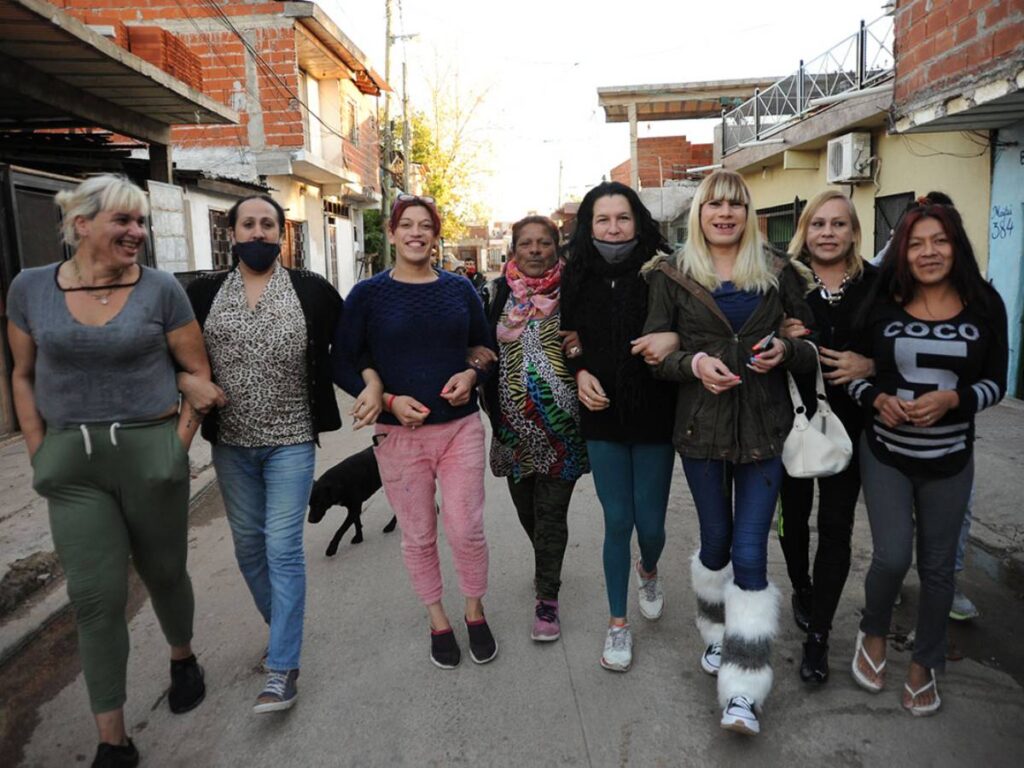
A clamp to limit power
Fuego allowed them to showcase their capabilities and grow in political influence. The premises are across the street from the police station. “They treated us like we were nobody,” Jose recalls, as do the older members of the group, in particular. But they emphasize that today they have a very good relationship with the police.
Teje starts from trans people, their life experience and their specific needs, but in a planned way it links with all the other actors in the community.
These political connections are activated in an orderly fashion in emergency situations. In early 2022, in the area where sex work is offered, a group of uniformed officers in a private car threatened and demanded money from the sex workers.
The organization was received by the Secretary of Government and Security at the Municipal Palace and they managed -at least- to get the identified officer transferred and the harassment stopped, they say.
“We are very organized on Route 8, we all know each other, we are part of the neighborhoods and no cop is going to come and try to extort money from us. We are transforming the cruel reality.”
We are present
We are committed to journalism that delves into the territories and conducts thorough investigations, combined with new technologies and narrative formats. We want the protagonists, their stories, and their struggles to be present.
SUPPORT US

FOLLOW US
Related notes


We are present
This and other stories are not usually on the media agenda. Together we can bring them to light.