

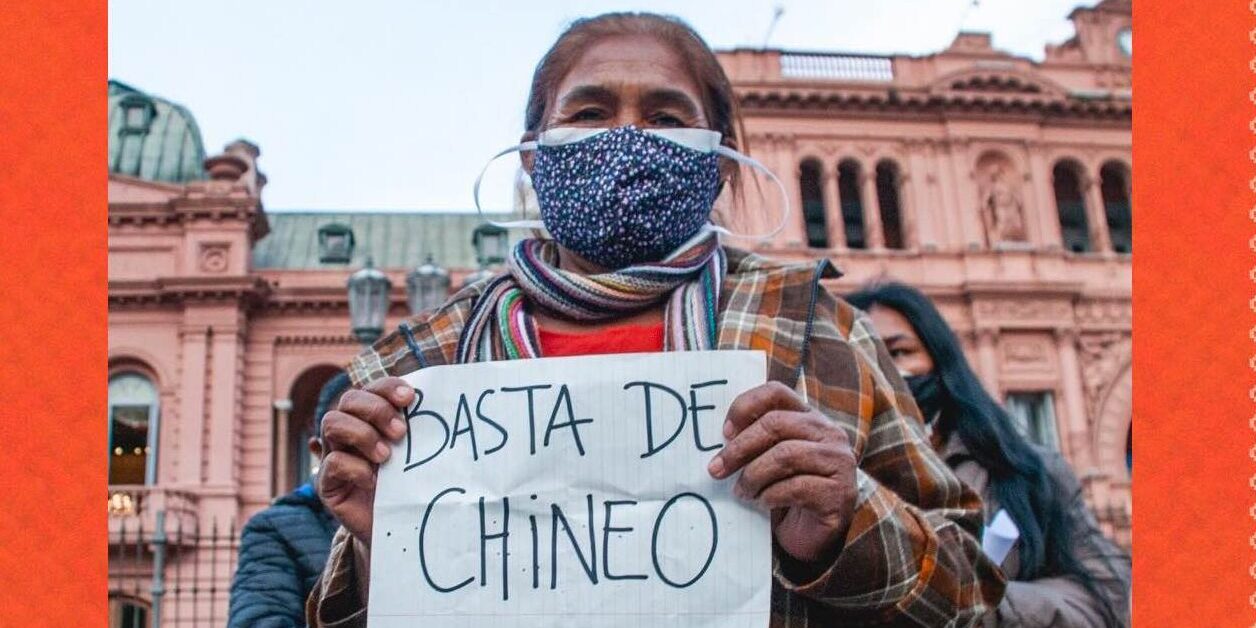
What is "chineo" and why do we demand "Abolition now!"
Women and diverse indigenous nations demand that the Argentine State take measures to abolish "chineo" and end this racist, sexist, and colonial practice.


Share

Chineo , and racist practice of sexual violence against Indigenous children and women. It is a systematic abuse perpetrated by non-Indigenous men that still persists, especially in northern Argentina and other parts of Latin America. It has nothing to do with Indigenous culture, but it permeates it. And it perpetuates, well into the 21st century, the conquest of the bodies—the territories—of Indigenous children, women, and diverse individuals.
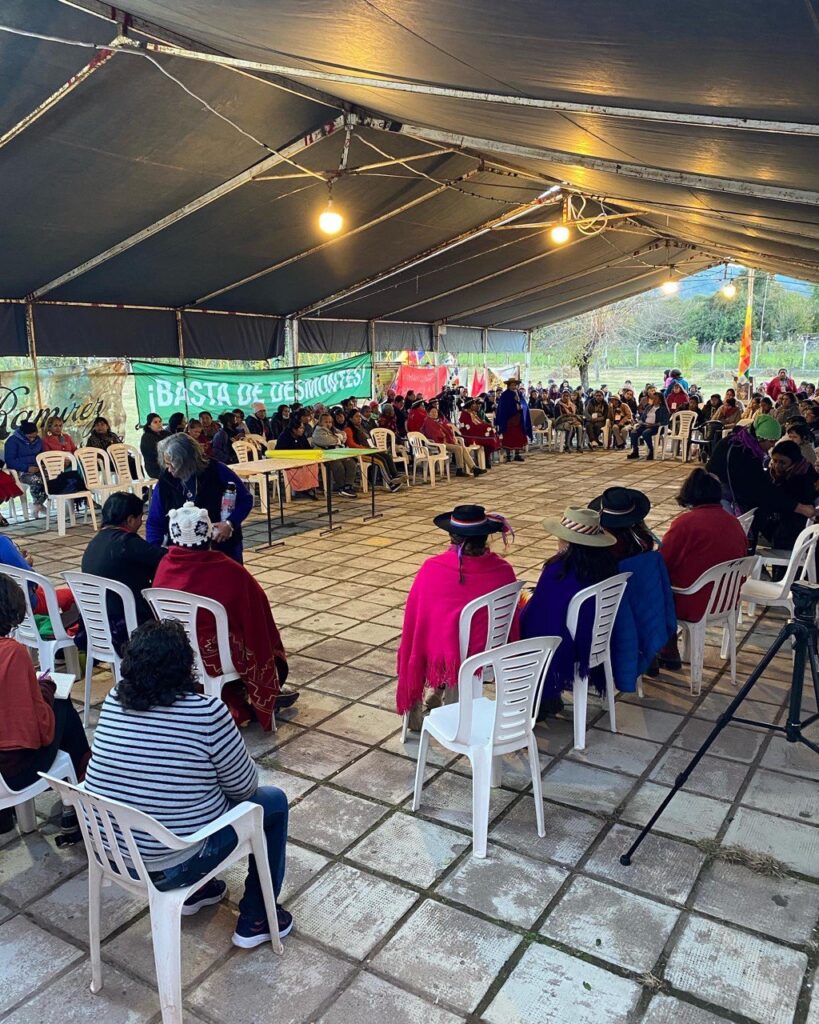
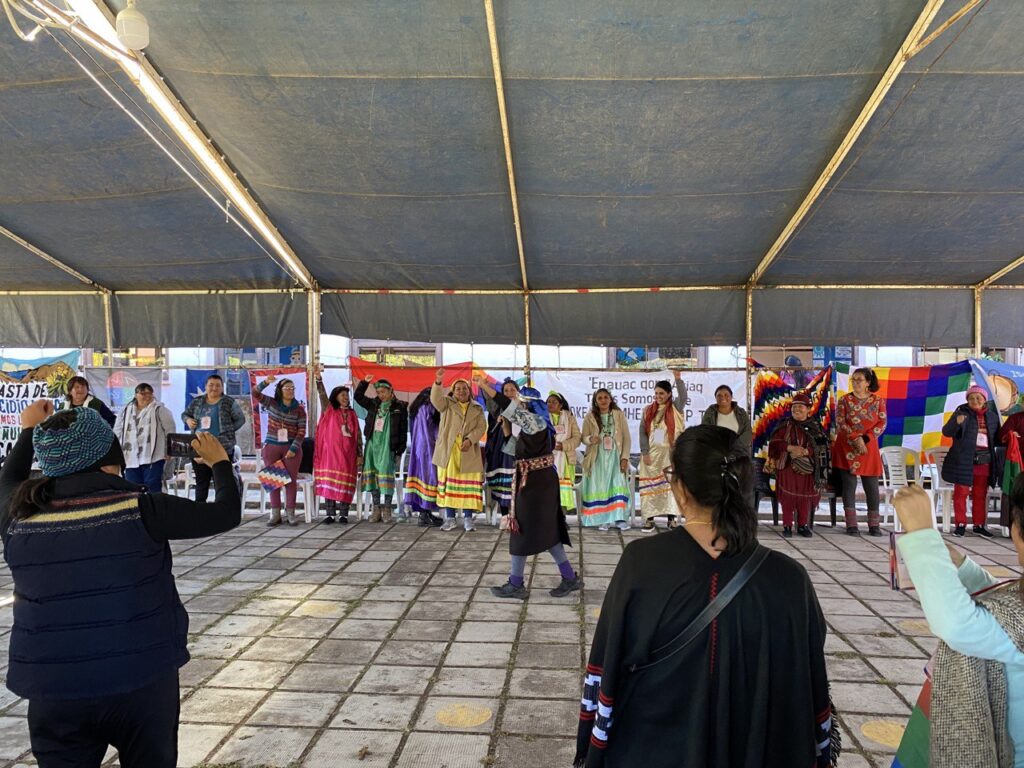
At the end of the Third Plurinational Parliament of Indigenous Women and Diversities for Good Living, which brought together more than 250 women, lesbians, trans and non-binary people in Chicoana, the participants decided to request an urgent audience with President Alberto Fernández, "to deliver to him in person the Demands that we have prepared point by point, for the prevention and abolition of Chineo."
Why “chineo”?
Although it may sometimes be referred to by other terms in some places, "chineo" is the name used since colonization. And today, Indigenous women and diverse communities use it as a way to remember and seek justice, to situate the crime historically and politically.
At the Third Plurinational Parliament of Indigenous Women and Diversities for Good Living, different stories of child molestation were shared, as well as other types of sexual violence.
“The exploitation of indigenous communities is affecting the future of our territories, killing our people. If we don't make decisions, it will be part of our genocide,” Marilyn Cañío, of the Mapuche people, told the indigenous sisters.
“The concept of chineo is very powerful and painful to address. We know of cases that affected the spiritual health of the bodies—the territories—the families, and the community. Generally, they received no support other than the strength of the women organized in their territories. But without assistance from the State, whether municipal, provincial, or national,” shared one of the women in a circle for sharing experiences. In these spaces, they also reached a consensus on what the different measures should be to abolish this practice.
Trans/travesti activist María Pia Ceballos, from Mujeres Trans Argentina (MTA) Salta, also present in Parliament, highlighted the importance of suing judicial officials “such as judges and prosecutors, who cover up these crimes, as well as the churches.”
One of the few cases of child sexual abuse that reached the courts and the media was that of Juana, a 12-year-old Wichí girl who was raped by a group of non-Indigenous men in 2015. They were convicted in 2019. But Juana's family continues to receive threats to this day. The Indigenous Women's Movement for Good Living reported that Juana's mother was intimidated to prevent her from attending Parliament.
The request to the State
At the end of the meeting, Indigenous women and diverse groups agreed to ask the Argentine State to “make a real and urgent commitment to abolish child sexual exploitation once and for all.” “Chineism is part of the genocidal policy against our Indigenous nations,” stated Mapuche weychafe (warrior) Moira Millán.
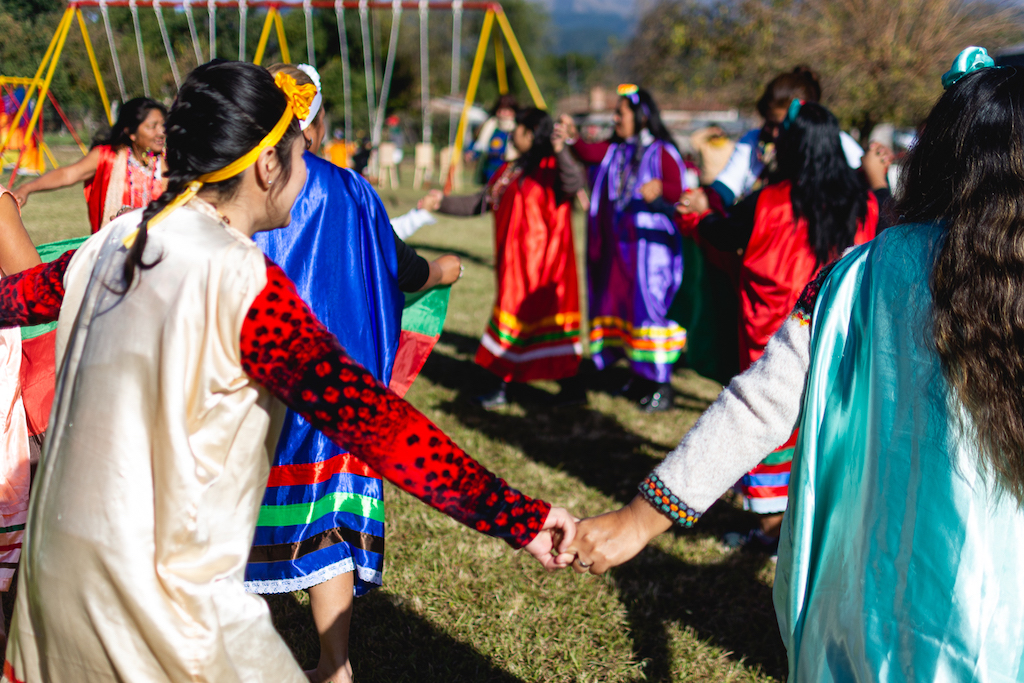
In recent years, the Indigenous Women's Movement for Good Living - which brought together other indigenous women and diverse groups to the Plurinational Parliament - has been denouncing and calling for the abolition of this racist and colonial practice.
"Demanding" to abolish the "chineo" (a term referring to a practice involving child pornography).
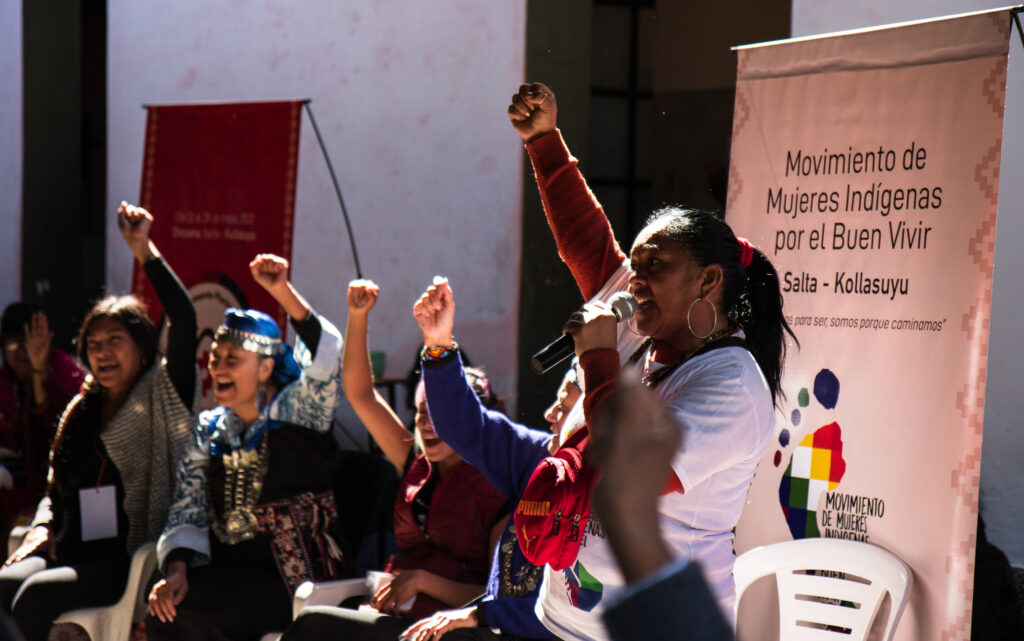
“It is time to give an ultimatum to the State, which has remained complicit in crimes such as the “chineo” (child sexual abuse) and has further reinforced impunity through its indifference. This abhorrent practice of sexual violence against our children must end.” This was expressed in the document summarizing the measures discussed between May 22 and 25 at the meeting attended by women and diverse groups from 21 Indigenous nations, some of whom came from Chile and Bolivia.
“The objectives were met and we have emerged from there strengthened, recovering our ancestral spirituality since it is from spirituality that we draw strength and clarity for this important struggle that transcends us and commits us to the lives of children throughout Indo-America and why not the world,” they said in the Declaration of the 3rd Plurinational Parliament.
⚠️ #Statement #AbolishChineoNow #StopChineo
— Indigenous Women's Movement for Good Living (@mmindigenas) June 2, 2022
From the Movement, we want to inform all of society about a decision reached by consensus during the 3rd Parliament in Salta.
There, we decided to request an urgent meeting with President Alberto Fernández. pic.twitter.com/4yNUpStRHW
Hate crime
There they expressed their Ultimatum to the Argentine State for the abolition of chineo and summarized in a “demanding” set of measures to abolish chineo:
- We demand that child molestation be declared and classified as a hate crime , carrying the maximum penalties without any possibility of parole or reduced sentences. “We understand child molestation as a systemic, racist, and colonial criminal practice.”
- Declare it as a crime that cannot be subject to a statute of limitations.
- To hold accountable and disqualify from working in indigenous territories any companies that have employees who have committed this abomination .
- who rape indigenous children be prosecuted, convicted and dishonorably discharged
5. That religious institutions and groups operating in indigenous territory and complicit in these criminal practices be expelled and condemned.
public officials, as well as the traditional authorities of Indigenous Peoples, who are perpetrators, accomplices, or facilitators of these practices , be tried and condemned without exception and without recognition of special privileges.
7. The seizure of all the rapists' assets, with the proceeds to cover the economic support and recovery of the victim.
8. Economic sanction against the Argentine State, for the creation of a fund for prevention, recovery and support for victims of child abuse , administered by the Indigenous Women's Movement for Good Living.
9. To dismantle the complicity that perpetuates this crime, the mechanisms for dialogue and representation between Indigenous Peoples and the State . From now on, women must be the recipients and administrators of food and social assistance programs. Many Indigenous chiefs and male leaders exploit their positions of power to humiliate and sexually abuse girls and young women within their own communities.
10. We demand that those who cover up the crime also be condemned , and to the same extent as the perpetrators.
11. Development of protocols with the participation and consultation of Indigenous women and diverse groups. These protocols are intended for implementation in institutions, both at the national level and in each of the provinces and municipalities, such as educational, health, justice, and security institutions.
For more than 200 years
“It is crucial that any legislation or measure taken to address the abolition of child pornography must contain each and every one of these points we have outlined.
This demand will be walked, collectivized, and woven together with many threads of solidarity from around the world. We are convinced that a proposal has emerged from the 3rd Plurinational Parliament of Indigenous Women and Diversities for Good Living that will have a continental impact.”
“We understand and maintain that the main person responsible for these criminal practices remaining in force for more than 200 years has been the Argentine State itself, which in none of its successive governments has generated mechanisms for condemnation nor produced legal instruments for the prevention and treatment of cases of child abuse.”
The demand was extracted from the Declaration from Chicoana Women and Indigenous Diversities of the nation peoples: AvaGuaraní, Aymara, Chané, Charrúa, Chorote, Chulupí, Diaguita, Guaycurú, Huarpe, Kolla, Lule, Mapuche, Moqoit, Purépecha, Qom, Quechua, Ranquel, Simba Guaraní, Tapiete, Weenhayek, Wichi.
We are present
We are committed to journalism that delves into the territories and conducts thorough investigations, combined with new technologies and narrative formats. We want the protagonists, their stories, and their struggles to be present.
SUPPORT US

FOLLOW US
Related notes



We are present
This and other stories are not usually on the media agenda. Together we can bring them to light.