

The State abandoned Praxedes Candelmo: the IACHR recognized the violation of his rights
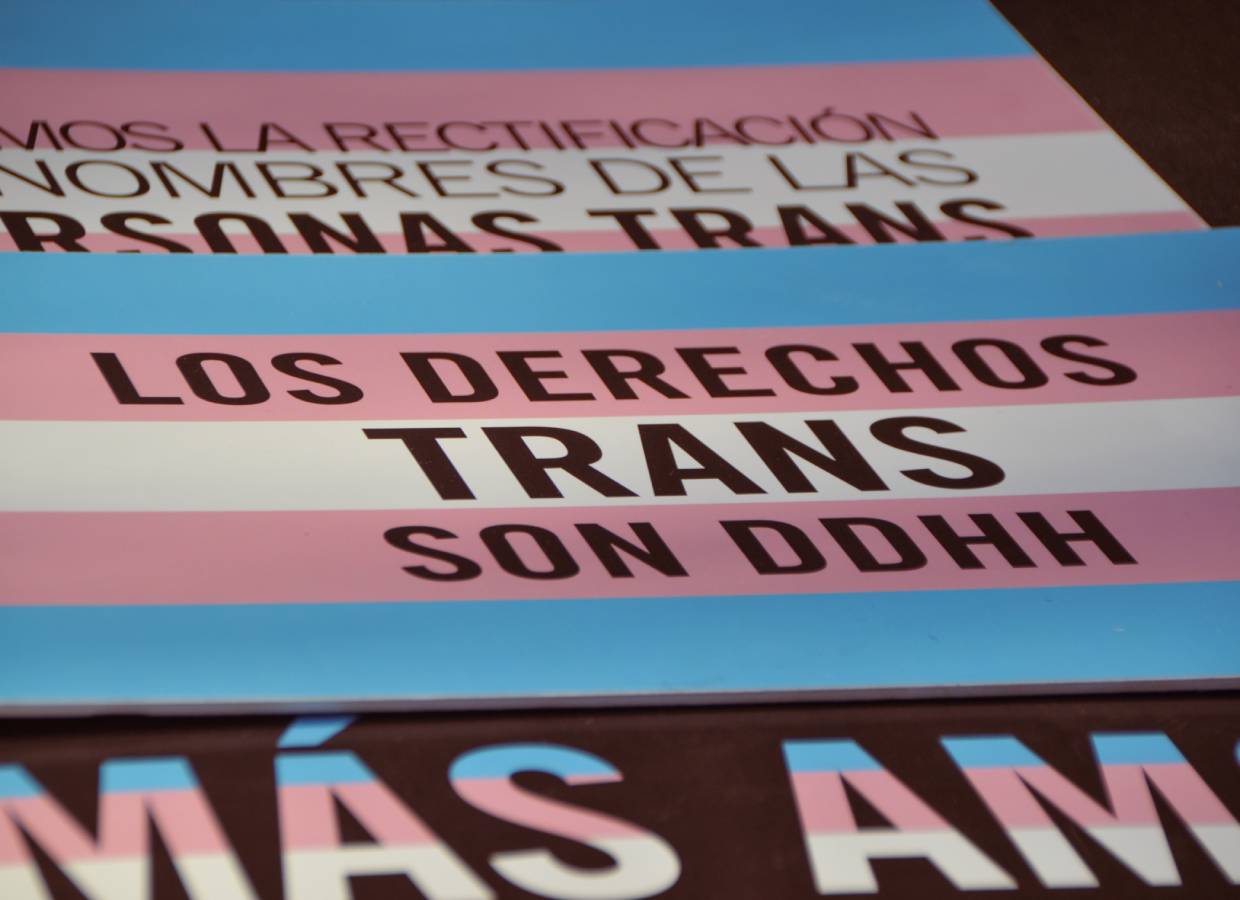
Praxedes alleged that "El Bambino" Veira raped her in the 1980s; she also alleged that she suffered institutional violence for being trans and media violence for speaking about it on television. The Argentine justice system did not listen to her.


Share

If Praxedes—which means she who is determined, she who gathers strength—is the chosen name, the archaeology of that decision reveals a solitude impervious to activism. Why? Because the journeys of the woman who was raped by soccer coach Héctor “El Bambino” Veira in 1987, when she was a teenager named Sebastián Candelmo, are silent journeys, with the sober volume and trained tenacity of someone who understands her destiny as a matter to be resolved beyond the confines of bureaucracy, without any ally who can match her pain.
The recent report by the Inter-American Commission on Human Rights, which admits that the Argentine state failed to protect the victim on at least two of the countless occasions on which his rights were violated , is an institutional earthquake. It is the brutal and shameful acknowledgment that the Argentine judiciary has operated with Candelmo like stadium crowds or radio and television commentators who, to this day, laugh uproariously at Veira's escapades. Justice has the face, body, and mind of a champion. Its landslide victories confirm its impunity.
The abandonment of justice
While the news is now that the Inter-American Commission on Human Rights (IACHR) issued a ruling in October 2021 on media violence and lack of access to healthcare—not on the rape suffered by Praxedes in the late 1980s—it cites that crime in its considerations to emphasize how the local legal system has abandoned a woman who was subjected to public vilification and ignominy for over four decades. Not a single national court has accepted any of the complaints filed by the victim over more than 20 years, a period dominated by humiliation, brutality, and extreme transphobia in the media. And in hospitals. Of the numerous complaints filed by Praxedes, the body of the Organization of American States (OAS) determined that it was on the program “Aunque usted no lo viera” (Even If You Didn't See It), broadcast by Telefé in the early 2000s, and at the Durand Hospital in Buenos Aires, where Candelmo was most clearly denied any dignified treatment.
Beyond its complex intertwining with ongoing (but buried) cases in the country, what truly defines this report from the Inter-American Commission on Human Rights is its powerfully symbolic nature, the alarming wake-up call it constitutes, issued from a higher continental body. It is an inquisitorial document, capable of sparking reflection, reigniting legal cases, and dispelling complacency. Just a few days ago, it resonated with the Ministry of Justice and Human Rights, which was compelled to publish it on the SAIJ (Argentine Legal Information System) website.
In early 2000s Argentina, Candelmo was known as Malena and appeared on entertainment programs. She was also studying law at the University of Buenos Aires. Her contact with a human rights course was the decisive factor in her realizing that while the bright lights of television welcomed her with paid cheerleaders, her own sense of self was crumbling. Her grandmother's illness led her to care for her, and that caregiving led her to a career in nursing. When, in 2014, during a job interview at Rawson Hospital, a doctor forced her to undress as part of the process, Praxedes contacted the radio program I've hosted for the past ten years, and from then on, that became her platform for communication. Last Tuesday, she returned to those studios to provide context for the news story in question.
No ministry, official, activist, LGBT+ organization, or INADI (National Institute Against Discrimination, Xenophobia and Racism) in any administration supported Praxedes in this feat. Why? The answers go beyond the tenderness and smile with which, despite everything, Candelmo lowers her head and takes the bus every day to work at Argerich Hospital, where shortly after starting, she saved the life of a baby abandoned in a bathroom and where she currently works in the nephrology department. Blood transfusions and the recovery ward. A life given to others and an adolescence shattered, of which she has no memory. At the same time, an aggressor who has been stalking her for some years, duly reported for gender-based violence, keeps her awake at night.
Praxedes is a He-Man fan and a Star Wars devotee; she collects action figures and now declares that this escape to the stars is the only interstellar war she would have wanted to be in. She has plenty of weapons, though weapons should never be individual.
We are present
We are committed to journalism that delves into the territories and conducts thorough investigations, combined with new technologies and narrative formats. We want the protagonists, their stories, and their struggles to be present.
SUPPORT US

FOLLOW US
Related notes
We are present
This and other stories are not usually on the media agenda. Together we can bring them to light.