

A report reveals the characteristics of the victims and perpetrators of hate crimes in Peru
The study revealed the criminological characteristics of each case. The victims were between 25 and 44 years old and knew their killers.


Share

Lima, Peru. In the context of the National Day of Struggle Against Violence and Hate Crimes against LGBT People, the results of a study were presented that revealed the profile of the victims, perpetrators, and the motivations behind the killings of people who identified as LGBT or were perceived as such .
According to the study, of the total number of intentional homicides, 55.8% were against gay men , 36.4% against trans women, 3.4% against lesbians, and 2.2% involved bisexuals , or were perceived as such.
Regarding the age range of the victims, 72.8% were between 25 and 44 years old, while 34.6% were stylists.
For their part, the figures on the characteristics of the accused or perpetrators of the crimes specify that 94.4% were men, 26.4% were acquaintances or relatives of the victims, and in 26.4% of the cases the murderers were their partners or ex-partners.
In 47.7% of cases, the victims were murdered in their own homes . 29.6% of homicides were committed with a sharp object, 25% with a restraint, and 15.9% with a firearm.
A joint study
The exploratory-descriptive research was carried out by a joint effort of the Public Ministry (MP) , the Ministry of Justice and Human Rights (MINJUSDH) , and the Peruvian University Cayetano Heredia (UPCH) , for which they reviewed, one by one, the fiscal files of 88 cases of violent deaths associated with intentional crimes.
“We present this report in commemoration of that barbaric act committed by the MRTA (terrorist group) against some of our colleagues at the Las Gardenias bar in Tarapoto, on May 31, 1989. This event invites us to remember all those people who were violently murdered because of their sexual orientation or gender identity,” recalled Congresswoman Susel Paredes , organizer of the Forum “Hate Crimes in Peru, the Invisible Records,” where the study by the Public Prosecutor's Office's Observatory of Crime .
In Peru, no state entity keeps a record of all cases of human rights violations against LGBT people. The study was based on an underreporting of data obtained by the LGBT Human Rights Observatory of UPCH .
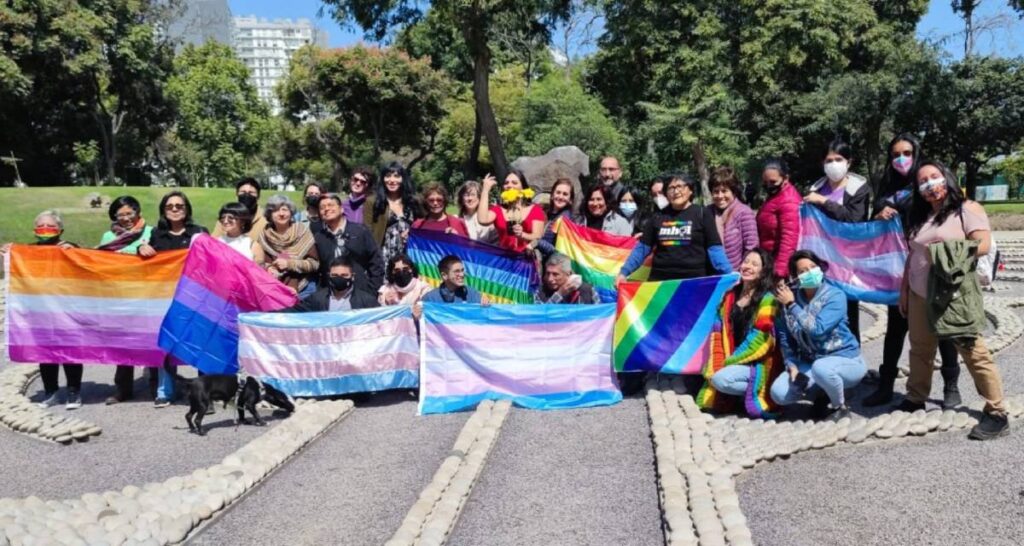
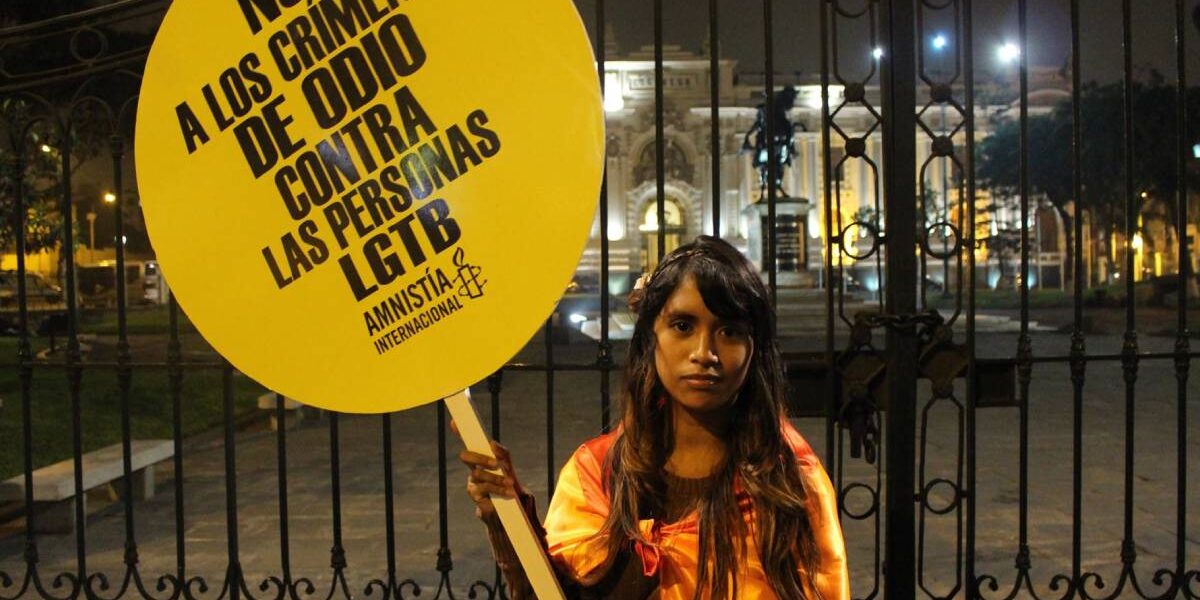
Photo: Amnesty International.
Analyze the context
Knowing details of the crimes, the victims, and the perpetrators allows us to establish patterns of behavior in the context of violence perpetrated on the grounds of gender identity or sexual orientation.
The Peruvian justice system does not recognize or even acknowledge the legal concepts of hate crimes or prejudice-based crimes . Therefore, the results of this study are crucial, as they demonstrate to justice system officials that the lives of LGBT people are indeed being threatened.
“To understand the reasons behind the crimes, we need to know the motivation the prosecutor presents in the case file to explain the deaths. To understand this, the review of the case files was also supplemented with news reports detailing the cases, as well as statements from some witnesses to these crimes, which we considered when compiling the sample,” explained Rosa María Huanes of the Public Prosecutor's Office's Crime Observatory.
For many prosecutors, there is no gender-based motivation.
Currently , prosecutors do not take into account that murders can be motivated by a person's gender identity or sexual orientation. Therefore, they record other motivations in their case files , as the study indicates.
For them, common crime (21.6%) is the most frequently cited alleged motive in the case files , followed by refusal to have sex (8%) and settling scores (4.5%) . It is important to note that in 45% of the cases reviewed, no details regarding the causes of the crimes were recorded.
Other data found revealed that 94.3% of the victims were of Peruvian nationality and 5.7% were of foreign nationality, while in the case of the nationality of the murderers, 77.8% were Peruvian and 20.8% were foreigners (19.4% Venezuelan and 1.4% Argentinian) .
In addition, it was discovered that 35.2% of the murders occurred in the early morning, between 1 and 6 a.m.
Hate crimes or prejudice-based crimes
Although in 45% of the 88 cases reviewed the prosecutors did not classify the crime, with the data obtained from witnesses and the defendants themselves, those familiar with the situation of vulnerability of LGBT people in Peru could deduce that they were homophobic or transphobic crimes.
“There are standards from the Inter-American Court of Human Rights . There are also criminologists who work on this issue, which allow us to identify what could be a hate crime based on prejudice against sexual orientation or gender identity. Therefore, one of the things we did was analyze all the facts recorded in each case that occurred before, during, and after, to see if there were indications of crimes motivated by these reasons,” explains Alfonso Silva Santisteban, representative of UPCH.
The evaluation took into account the cruelty shown towards the victim, whether discriminatory insults were used before the attack, gender expression, among other features that a police officer or prosecutor would not take into account when developing their investigation.
Of the total cases, 69% showed evidence of prejudice-based acts. Of the 21% classified as common crime, 81% showed evidence of violence based on gender identity or sexual orientation. and it could be presumed that the prosecutors handling those cases did have the necessary knowledge about sexual diversity and the realities of LGBT people, which allowed them to classify them as such.
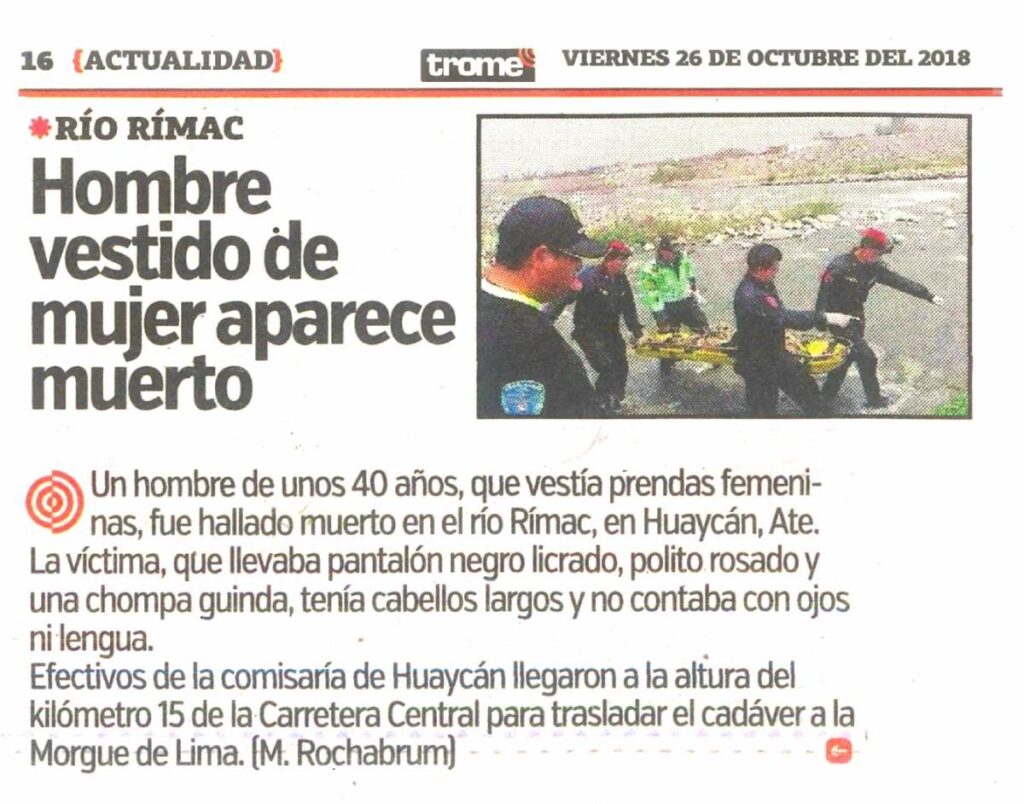
“The main conclusion of this study is that the phenomenon exists socially but not for the justice system. In other words, crimes motivated by gender identity or sexual orientation are not on the radar of justice system operators. For example, a news headline once reported that 'man dressed as a woman found dead,' and from the description of the story we can deduce that it was the possible murder of a trans woman,” the doctor also explained.
“In our country, it is more accurate to speak of prejudice-based crimes than to use hate crimes, which comes from the United States. The latter tends to be ridiculed. Let us remember that we had a congresswoman who said that, just as there are hate crimes, there are also love crimes, failing to understand the depth and seriousness of the acts behind this phenomenon,” Silva Santisteban concluded.
Much work needs to be done by civil society.
For activist and hate crime survivor Azul Rojas Marín, this type of research is important. But even more important is the creation of protocols and public policies that ensure our rights are not violated, and above all, that punish those who attack, abuse, or murder us.
“This report is very interesting, but what good is a report when the authorities themselves do nothing? I mean, we can just sit here and say that there are a hundred deaths every year, but what have the authorities done to repair the damage? What have they done to reduce these cases? So what good are the reports ? None. Excuse me for these words because I have mixed feelings, but I'm not just speaking for myself, but for everyone. Please don't stigmatize us,” the trans survivor demanded.
In Azul's case, she did not find justice in Peru and had to take her complaint to the Inter-American Commission on Human Rights, which found the Peruvian State guilty . But when she saw that the State was not fulfilling its obligation to provide redress, she took her case to the Inter-American Court of Human Rights.
Two years ago he obtained a favorable ruling , but to date the Peruvian State has only published the ruling, but has not complied with the other mandates of the ruling.
To review the published study “Criminological Characteristics of the Intentional Deaths of LGBT People in Peru 2012 – 2021” go to https://bit.ly/3D1auY1
We are present
We are committed to journalism that delves into the territories and conducts thorough investigations, combined with new technologies and narrative formats. We want the protagonists, their stories, and their struggles to be present.
SUPPORT US

FOLLOW US
Related notes

We are present
This and other stories are not usually on the media agenda. Together we can bring them to light.