

The struggles of Octorina Zamora, a Wichí woman
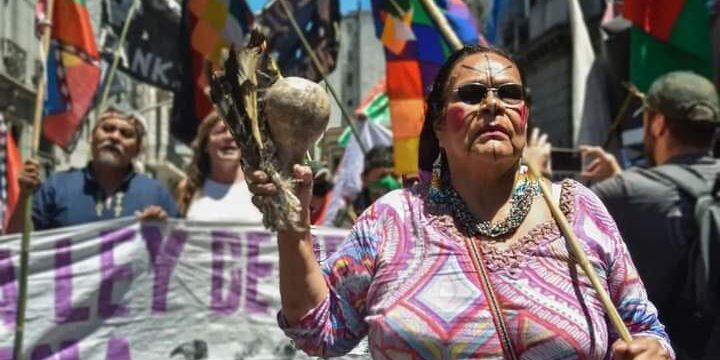
Octorina Zamora described herself as a “Wichí woman.” For years she was an essential, and sometimes controversial, figure for the Indigenous peoples of Salta, and for the fight against violence against women.


Share

Octorina Zamora, a Wichí woman, passed away this morning at the clinic where she was hospitalized in Salta. “ Octorina i leiyejh hohnat ( Octorina departed from this world/left the earth/passed away ),” reported her daughter, Dr. Tujuayliya Gea Zamora, who was with her at that time.
“Yhil nech'efwalamhati k'ajyenteyha(Octorina) atsinha Wichí, il'eyhej honhat, yhiknatchoyhehen . This morning k'ajyenteyha Octorina, a Wichí woman, passed away, she left the earth, she is gone, the radio station La Voz Indígena , which broadcasts from Tartagal,
from northern Salta
Wichí woman
Octorina was 64 years old and a native of the town now called Embarcación , more than 260 kilometers from the city of Salta, where she was the niyat (leader) of the Honhat Le Les Community. But she had long traveled throughout the region and the country, always highlighting the human rights violations against Indigenous peoples. Although she described herself as simply a “Wichí woman ,” for years she had been an essential, and sometimes controversial, voice when discussing the situation of Indigenous peoples in Salta.
In 1992, she came to the attention of the provincial capital's media when she confronted Governor Roberto Augusto Ulloa, a naval captain serving his constitutional term after having been the de facto governor during the country's last civic-military dictatorship. Octorina and ten other members of the Wichí nation were demanding the land titles to their ancestral territory.
Right to territories, to health and to education
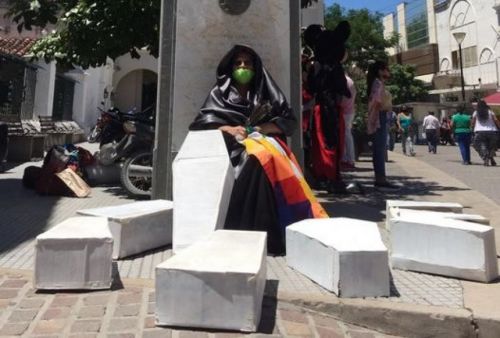
In the years that followed, Octorina was involved in claims for the right to ancestral territories; she demanded that public health be respectful of indigenous culture ; she demanded an education that took into account her worldview . And she denounced sexual abuses , both by Creoles and by caciques and other indigenous men.
Along that path, in 2007 she incurred the ire of some Wichí leaders when she filed a complaint with the National Institute Against Discrimination and Xenophobia (INADI) against the Salta Court of Justice for overturning the prosecution of a Wichí man accused of raping a girl, arguing that it was “a custom of the community.” “It is an aberration to think that the Wichí people accept the sexual abuse of girls as an ancestral custom ,” Octorina said at the time.
In 2016, Octorina asked the National University of La Plata to return the remains of three men from the Wichí people, a restitution that was approved in 2020. Octorina planned to hold a ceremony to deposit these remains in the territory.
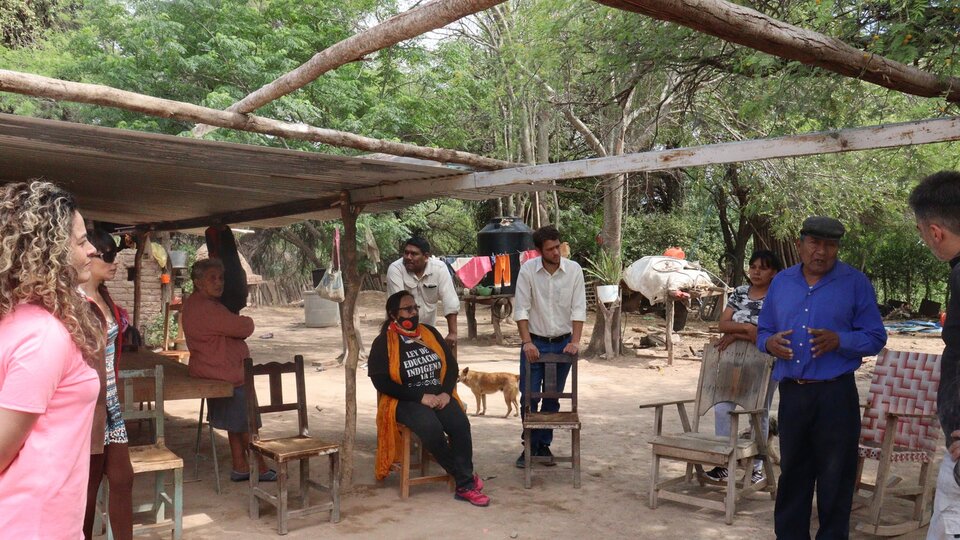
In 2020, amidst a series of deaths of Indigenous children from malnutrition or related causes, Octorina spearheaded a series of actions demanding the return of the original building to the Nutritional Recovery Center of the Juan Domingo Perón Hospital in the city of Tartagal. This city serves as the referral center for the Salta health system from the departments of San Martín and Rivadavia, where the largest Indigenous populations reside.
Last year, Octorina ventured into politics. She ran for national deputy for Felicidad, a provincial party within the Peronist movement. “I believe it’s time for us to be the protagonists,” she stated. “ When we talk about the disappeared, we also want to talk about our disappeared; when we talk about territory, we also want to be the voices within the National Congress, speaking about the recovery of our territories and the exercise of our rights .” She also criticized racism in Argentine public policy : “There are more than 40 Indigenous peoples, and it’s unacceptable that there isn’t a direct voice for them in the National Congress.”
Against sexual violence towards indigenous girls and women
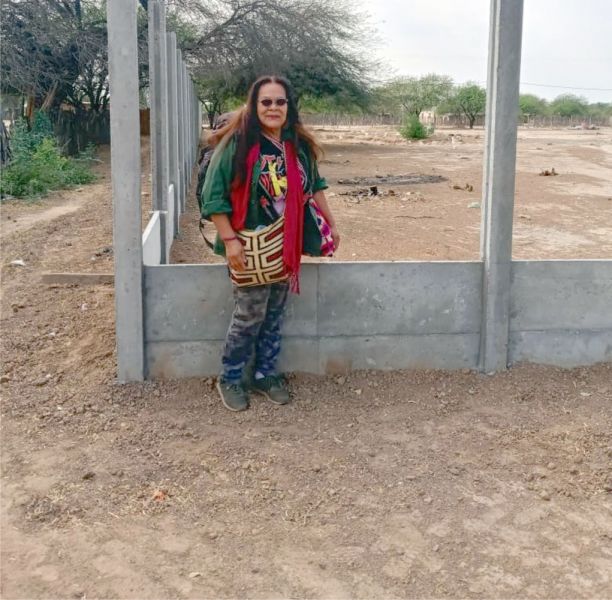
In 2021, Octorina denounced the state's abandonment of Juana, the Wichí girl with developmental delays who was raped by a group of non-Indigenous men in 2015, when she was 12 years old, in Alto La Sierra, on the tri-border area shared by Argentina, Bolivia, and Paraguay. Violence against Indigenous girls and women was a constant source of concern and focus for Octorina. She traveled frequently to visit sisters or attend to emergencies. Just to give an example, the data from this year alone is overwhelming.
On January 15, the small body of 12-year-old Pamela Julia Flores was found beside National Route 81, near Pluma de Pato, in the Salta Chaco region. On March 5, 14-year-old Florencia Isabel Torrez was murdered in the Ava Guaraní community of Misión San Francisco, in Pichanal, also in northern Salta. On March 20, in El Sauzalito, in the Chaco Impenetrable region, the body of 16-year-old Jorgelina Reynoso, from the Wichí people, was found.
These deaths, and the many accounts she received almost daily about repeated sexual abuse of girls and women by non-Indigenous men—a practice she refused to call “chineo”—provoked great indignation in her. They spurred her to action, back to the territories and the cities, to confront the authorities, whom she criticized for their lack of respect for the Indigenous worldview.
In February of this year, she supported the claim of some thirty women from the Wichí Nation who publicly demanded that "the damage caused by the sexual abuses committed by "creole" men against indigenous girls and adult women be repaired.
In an effort to draw attention to the ongoing serious human rights violations, Octorina confronted state officials and authorities, such as Marcelo Córdova, the delegate for Indigenous Affairs in the province of Salta, whom she criticized for his lack of understanding of the realities faced by Indigenous peoples. “He thinks we’re a ball. He comes from the Directorate of Sports; we’re not a ball. Indigenous people are human beings, and we need respect,” she asserted.
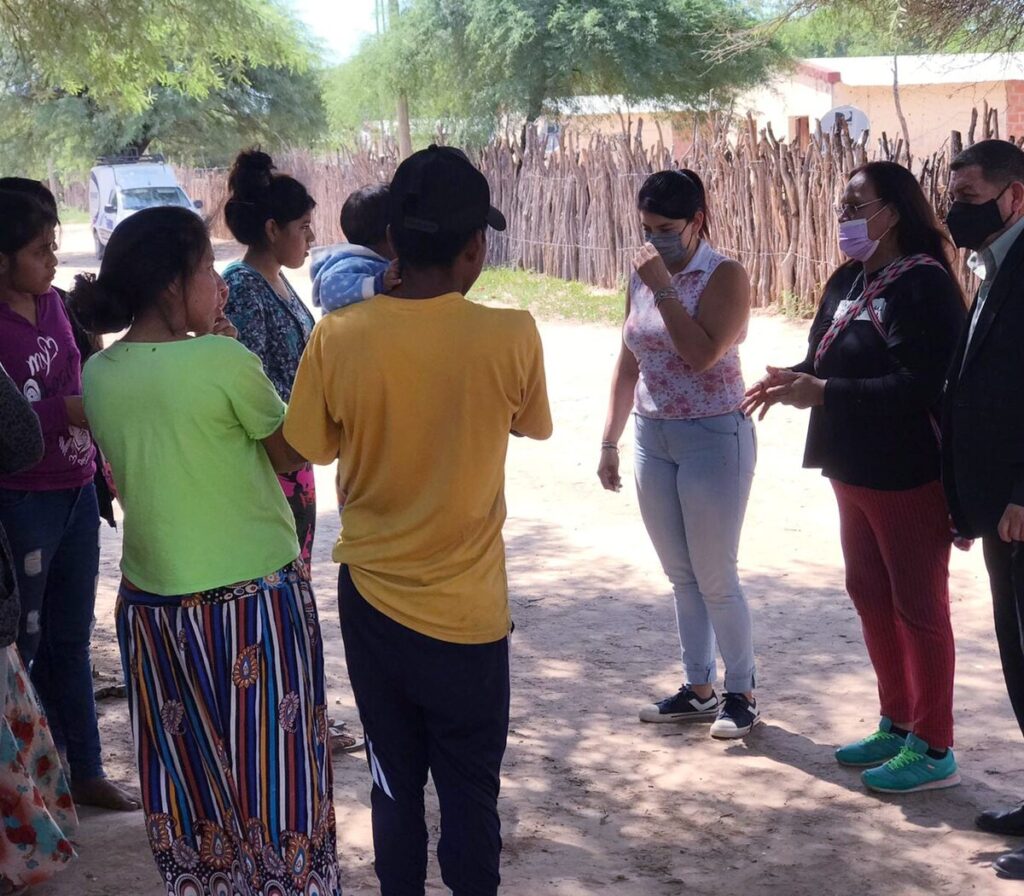
In recent months, she had expressed her disappointment with the Ministry of Women, Gender, and Diversity. She felt they had done nothing to stop the ongoing violence against Indigenous girls. Octorina repeatedly spoke out about, among other cases, a woman who had been raped as a child and was still being harassed by her rapist, but said she received no help.
On April 29, she requested a meeting with President Alberto Fernández, stating that “Indigenous women are the first victims of state terrorism.” It was one of her last public statements, almost a farewell. In other, more private communications, she reiterated her concern about the vulnerability of Indigenous girls, emphasizing the need to reach more communities, providing information about their rights and sex education, and expressing her hope that governments and more people would embrace the fight to end violence against Indigenous girls and women.
We are present
We are committed to journalism that delves into the territories and conducts thorough investigations, combined with new technologies and narrative formats. We want the protagonists, their stories, and their struggles to be present.
SUPPORT US

FOLLOW US
Related notes


We are present
This and other stories are not usually on the media agenda. Together we can bring them to light.