

The court declared that the indigenous massacre of Napalpí is a crime against humanity
This was the conclusion after a month-long trial, 7 hearings and many years of investigation almost a century after the massacre.


Share

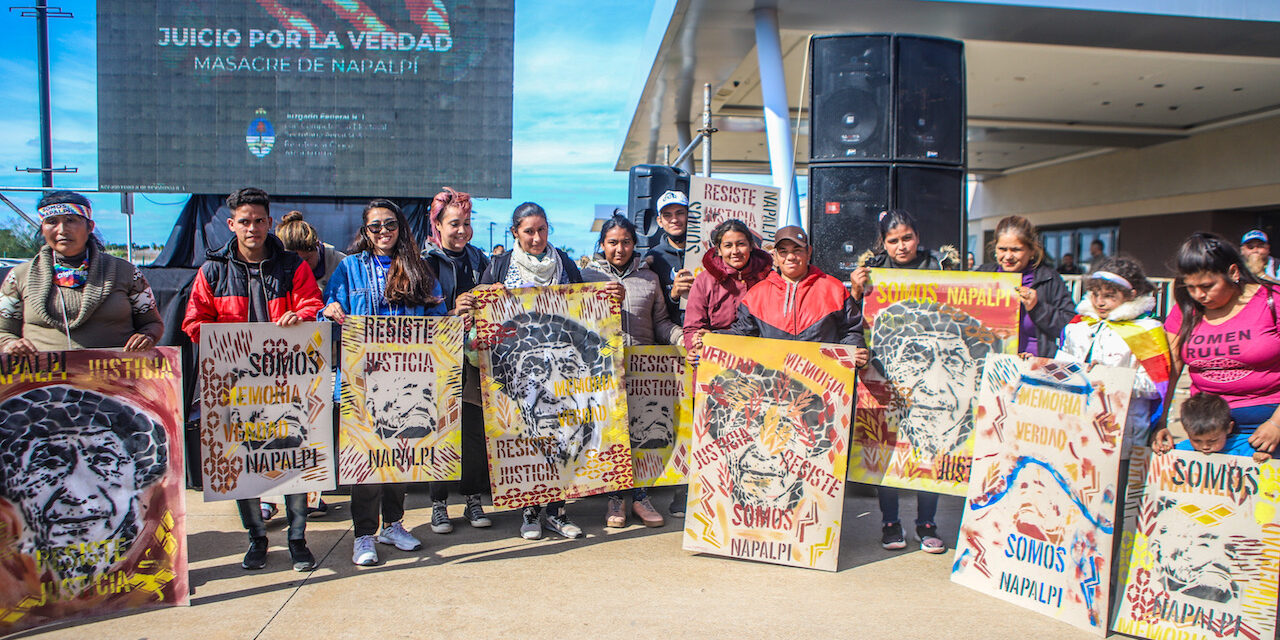
The Napalpí Massacre was a crime against humanity, committed within the framework of a genocide against Indigenous peoples. This was the conclusion reached after a month-long trial, seven hearings, many years of investigation, and almost a century after the massacre. It is a historical event for the Indigenous communities inhabiting what is now Argentine territory.
At noon, Judge Zunilda Niremperger, presiding over Federal Court No. 1 in Resistencia, Chaco Province, began reading the verdict in the case entitled “Napalpí Massacre on the Truth Trial,” with simultaneous translation into the Qom and Moqoit languages. “To declare that the Napalpí massacre, as well as subsequent events, are crimes against humanity, committed within the framework of a process of genocide against indigenous peoples.”
The ruling acknowledges the responsibility of the national government in the planning, execution, and cover-up of the crime of aggravated homicide with cruelty and enslavement . Between 400 and 500 people from the Moqoit and Qom communities were murdered in the Napalpí Reduction, located in what was then the national territory of Chaco.
“The Reduction was created by the Argentine state.”
On Saturday, July 19, 1924, “around one hundred police officers from national territories, gendarmes, and some armed civilians, supported by air transport, arrived in the Guará area” and carried out the massacre. It was perpetrated on the orders of the then-governor of the Chaco National Territory, Fernando Centeno. Centeno was acting under the government of President Marcelo Torcuato de Alvear, of the Radical Civic Union.
The attack was against a group of “approximately 1,000 people made up of Moqoit and Qom families and some laborers from Corrientes and Santiago del Estero (who) were carrying out a concerted strike in encampments to protest the conditions to which they were subjected,” the judge stated in the ruling.
“ The Reduction was created by the Argentine state. The objective was to complete the process of occupying the territory of the indigenous populations and their subjugation. Living conditions were extremely poor. They worked on a piece-rate basis. They couldn't move from the place. All of this led to discontent, and a meeting of a thousand indigenous people took place, culminating in a strike,” stated Federal Prosecutor Federico Garniel during the closing arguments.
This trial was the first criminal proceeding to investigate the truth about crimes against humanity committed by the Argentine state against Indigenous people. Since there are no living defendants, the sentence reconstructs the events and seeks to provide redress.
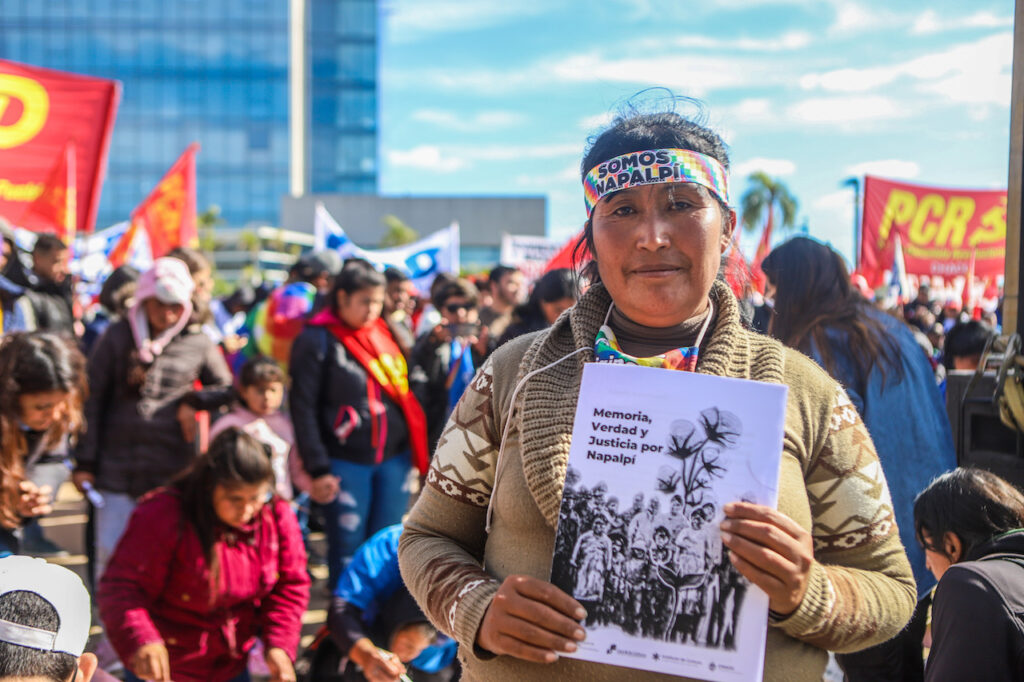
In the operative part of the judgment, the requests for reparation made by the Attorney General's Office in the arguments were taken into account.
These demands include ordering the national government to hold a public act acknowledging its responsibility for the massacre. Furthermore, the court must publish the ruling on the official websites of the National Secretariat for Human Rights and the province of Chaco, along with translations into the Qom and Moqoit languages, and its operative part in the Official Gazette.
Among other reparative measures, the sentence also resolves that the Ministry of Education of the Nation include within the national curricular designs of the primary, secondary, tertiary and university levels the study of the facts proven in the trial.
It also resolves that the Ministry of Security of the Nation and of the Province of Chaco incorporate into the instruction and training of federal and provincial forces a module on respect for the Human Rights of Indigenous Peoples.
The court also ordered the Argentine Forensic Anthropology Team to continue excavating, searching for, and exhuming the victims' mass graves. In this regard, the State must provide the necessary resources to return any skeletal remains found to the community.
Day of Remembrance
The ruling urges the National Congress to designate July 19 as the National Day of Commemoration of the Napalpí Massacre; at the same time, it requests that the name of the community of Colonia Aborigen be changed through prior consultation.
Throughout the trial it was established that the indigenous reductions, such as Napalpí, were systems of labor exploitation and discipline, which served the process of indigenous genocide carried out by the national State.
In this sense, the Napalpí Massacre was not an isolated event: in 1933 the Zapallar Massacre occurred in the current territory of Chaco and the massacres of Mora Marcada, in 1933, and Rincón Bomba, in 1947, which took place in the territory of Formosa.
It was also noted during the trial hearings that this massacre marked the first time in Argentine history that an airplane was used against civilians with weapons of war.
At the fifth hearing, aviator Alejandro Covello, who testified, stated that “1924 marked the beginning of reprisals, punishment, and terror from the air in Argentina.” “We need truth and justice, so we don't end up like we did with the death flights,” he emphasized.
The evidence presented throughout the trial consisted of testimonies from survivors, descendants, and researchers, in addition to documentation provided by various public, provincial, and national bodies, such as the General Archive of the Nation , the Historical Archive of Chaco , and the Chamber of Deputies.
The testimony of Rosa Grilo
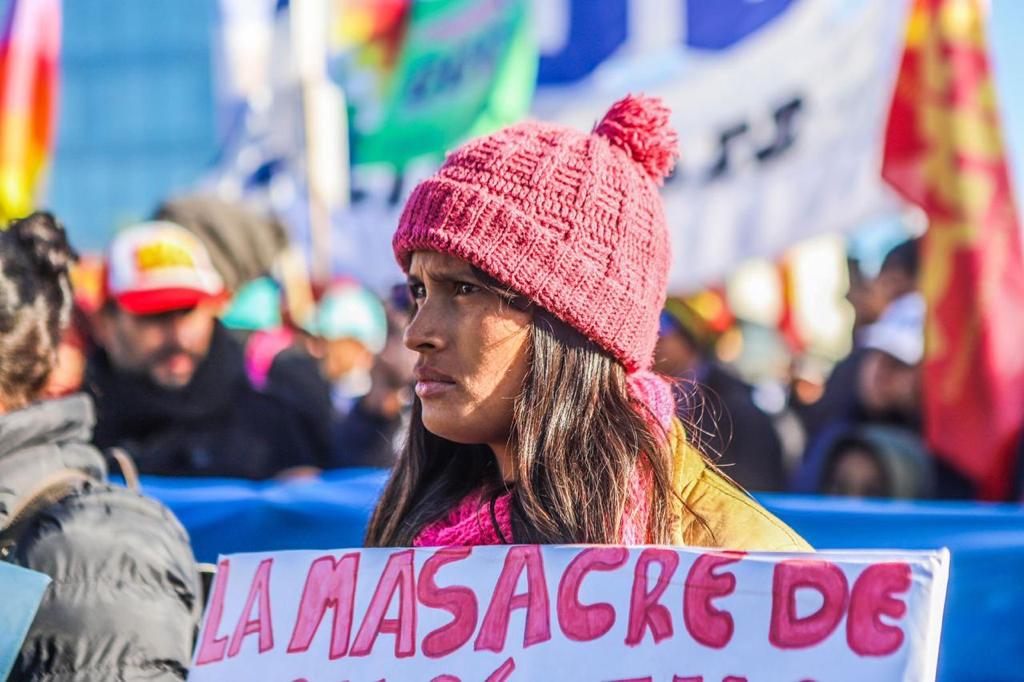
One of the testimonies was that of the only living survivor, Rosa Grilo, 114 years old and belonging to the Qom community.
“It’s very sad for me because they killed my dad, and I almost don’t want to remember it because it breaks my heart. A plane was dropping bags from above, and they would fall to the ground and be killed there. My grandfather and my mother were shouting, ‘Shoot, shoot!’ I don’t know why they killed so many children and adults; there was so much suffering,” the survivor recounted in an interview conducted by the Human Rights Unit of the Federal Prosecutor’s Office of Resistencia , which was reproduced in the trial.
Finally, the sentence proved that the massacre caused serious consequences for the survivors and their descendants.
“As a result of this and systematic oppression, subsequent generations of the Moqoit and Qom peoples suffered the trauma of terror, displacement, and the loss of their language and culture,” said Judge Niremperger.
We are present
We are committed to journalism that delves into the territories and conducts thorough investigations, combined with new technologies and narrative formats. We want the protagonists, their stories, and their struggles to be present.
SUPPORT US

FOLLOW US
Related notes
We are present
This and other stories are not usually on the media agenda. Together we can bring them to light.