

Lesbian Visibility: the story of the oldest lesbian feminist group in Chile
The group was born from a digital publication that marked a milestone in LGBT history in Chile.


Share

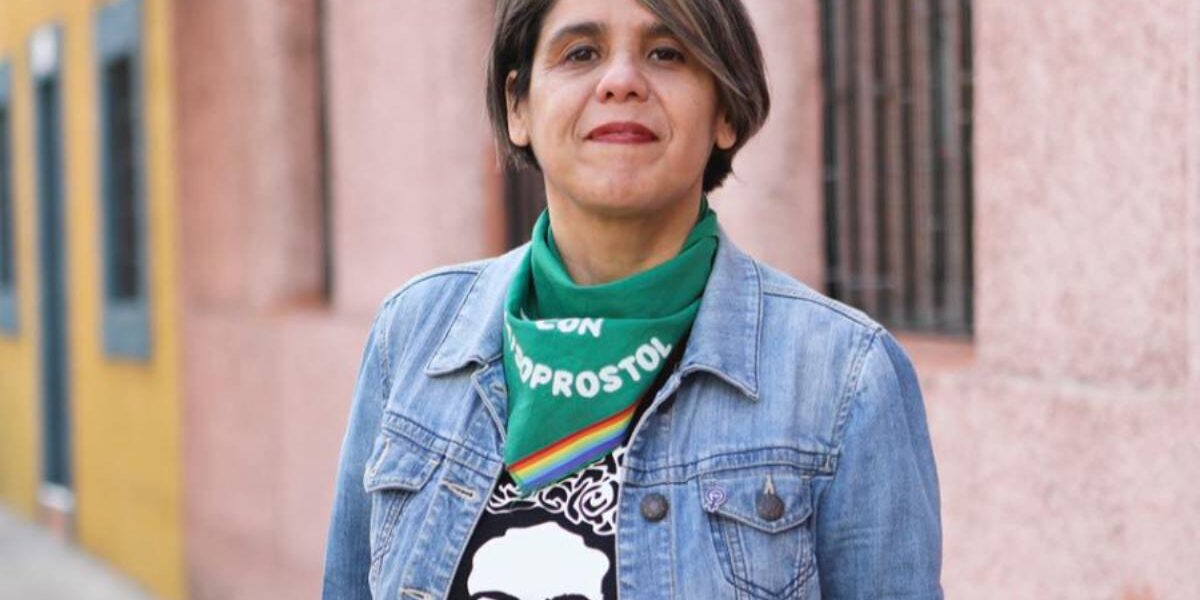
SANTIAGO, Chile. Going to the corner newsstand to buy a lesbian visibility magazine wasn't exactly acceptable in Chile in 2008. Débora Cofré did it when she was 19. Almost secretly, behind her family's back and with the help of her then-partner, she would leave her house to find RS Magazine. It started as a digital publication, and after nine print issues, it became the Lesbian Group Breaking the Silence (RS) , the oldest lesbian feminist organization in the country. Today they celebrate their 20th anniversary.
The cover photo of two women and a headline revealing singer Javiera Mena marked the first publication and a milestone in Chile's LGBTQ+ history. Débora, now 34, remembers it well. Within its pages, she found a guide to better understand the path she had begun to travel in 2004, when she came out. The only response her evangelical family had given her was to subject her to various conversion therapies to rid her of the "spirit" of lesbianism.
“The magazine was a space where I could look at what was happening to me and understand that it wasn’t anything bad,” Débora tells Presentes . First, she was a regular reader. Then she wanted to be an activist, and when there was no longer glossy magazine but a small organization with open doors for all lesbians in the country, visible or not, she got involved. Today, she is the management coordinator for RS, a role she shares with her work as a psychologist at a school in Santiago.
The beginnings
It all began as an idea of journalist Érika Montecinos. The magazine was first launched online on May 14, 2002, at the height of the internet boom. Érika borrowed the name from a radio program she hosted in 1998. She then not only managed to print and distribute it in Chile, but also took it to several Latin American countries, until it ceased publication in 2010. In 2014, along with other activists, she relaunched it as an organization dedicated to political advocacy and raising awareness of the needs and demands of lesbians and bisexuals. The right to parentage included in the Equal Marriage Law is due, in part, to the work of RS and the lesbian feminist struggle.
Erika currently works in the Sub-Directorate of Gender Equality, Sexual Diversity, and Inclusion for the Municipality of Santiago. Her career as an activist led her to become part of Chile's first feminist government, and she is proud of that. “Breaking the Silence marked a turning point in my life. It was the path I took not only thinking about a personal milestone, but also about helping many people navigate their lives,” she tells Presentes .
She cherishes memories and anecdotes from the magazine's heyday, but one in particular illustrates what it was like to be a lesbian in Chile then and what it's like now. To distribute it and ensure it reached every corner of the country, they had to negotiate with a company, and there were obstacles from day one. A large sticker was placed on the cover of each magazine warning that the content was for readers over 18, simply because it explicitly stated that it was a magazine about lesbian culture and visibility.
“Lesbianism was linked to pornography, imagine that. Of course, I asked to speak with the general manager of the distributor and explained why that wasn't the case. Since then, we haven't stopped working to break down prejudices ingrained in society,” says Erika.
Network of female colleagues
Débora says the magazine also had an impact in terms of role models, at a time when the only mainstream acts were the Russian singers t.A.T.u. and the TV series The L Word : “Everything was very underground, very hidden. We owe a lot to Érika's courage at the time in expanding this, in being able to stand up and say not only 'here we lesbians are,' but also, 'here I am, and I am visible.' Twenty years ago in a country like Chile, it wasn't easy to do that, and Érika did it. We owe her a lot.”
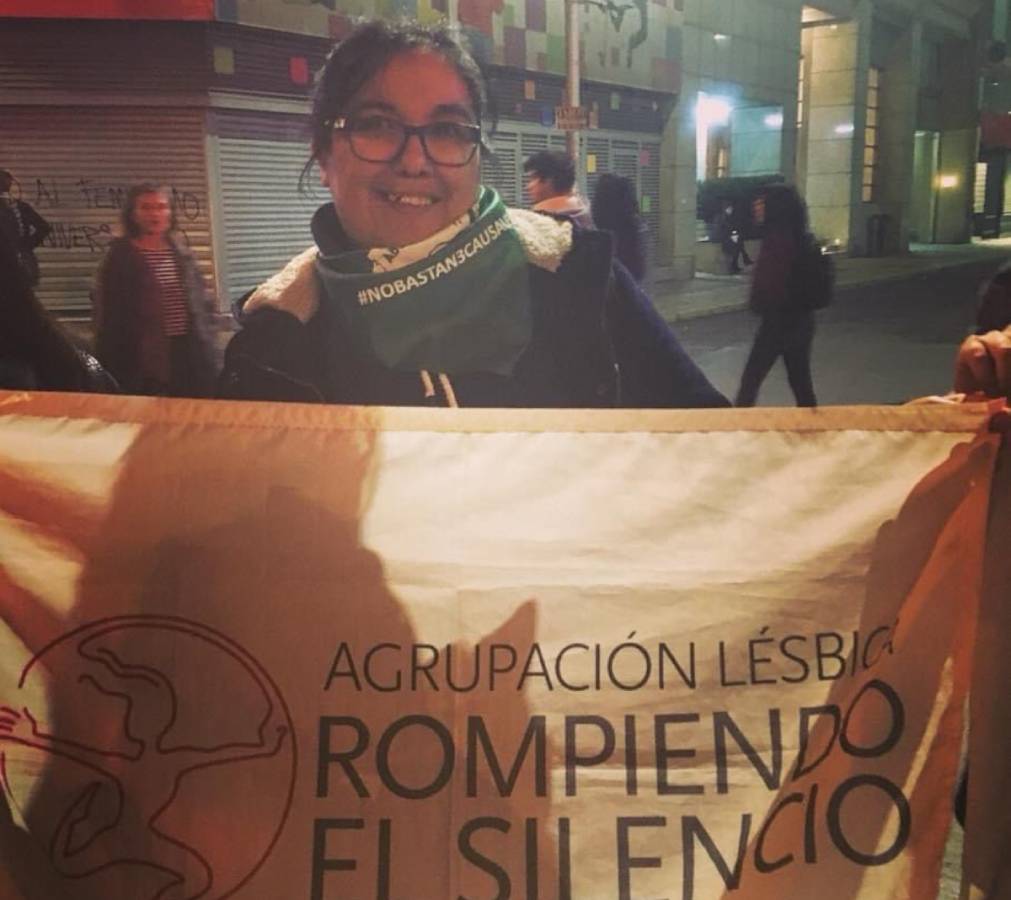
For Débora, RS is a safe space where she can be herself, a source of support and an unconditional network of help. In 2020, she contracted Covid-19 and doesn't hesitate to say that she's alive thanks to one of her colleagues. “During the curfew, one of them drove across the city with a white t-shirt hanging from the window so everyone would know she was out on the street breaking the rules for an emergency. I live very far away, and she came to my house to take me to the emergency room because my blood pressure was very high. Of course, you have family and lifelong friends, but I don't know if anyone other than a fellow activist would make that level of sacrifice for me,” she says, her voice filled with emotion.
The impact
In these 20 years they have managed to positively impact the lives of many women, offering that same support network that Débora feels sustained by, with fundraising activities for lesbians and bisexuals in crisis contexts, spaces for coexistence, communication campaigns, support in mental health and sexual health.
Erika says that sometimes the platform acted as Cupid. In fact, she knows couples who are now married after meeting 18 years later through the RS chat room, back when the magazine was online.
In 2019 they published the study "Being a lesbian in Chile", the first of its kind carried out in the country to understand the social and cultural situation experienced by this part of sexual diversity, with results obtained from a sample of 436 responses from lesbian and bisexual women of all ages and regions.
He revealed, among other things, that 32.8% received psychological or psychiatric care because of their sexual orientation, almost always in a forced manner; and that the streets, the religious environment and health services are the places where they mostly experience situations of discrimination and violence.
Debts
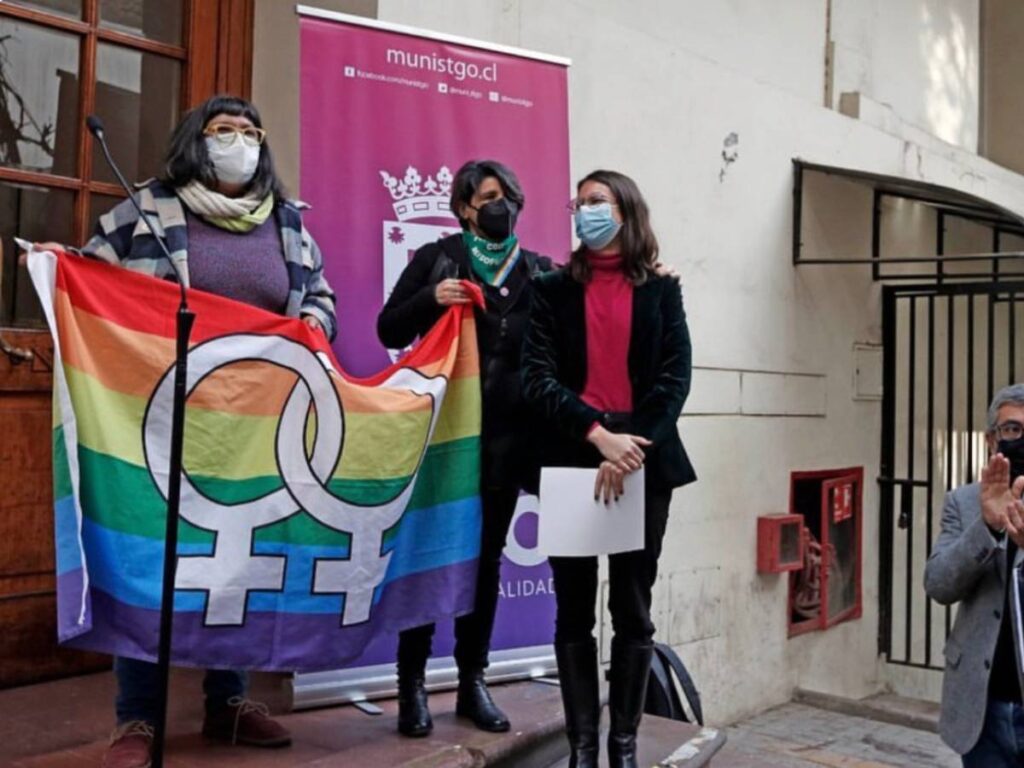
Although there have been 20 years of significant progress for the community, Erika believes there is still much to be done in terms of freedoms and visibility: “There is still resistance in public, political, and social discourse. And although it may not seem like it, lesbians are still part of a catch-all term that doesn't have much of a voice. Yes, we have made great strides; we have openly lesbian members of parliament and political authorities, but we are still referred to as women of dissident groups or women of diversity, not as lesbians,” she says.
Débora adds the element of violence. “They keep killing us. Some of us have more privileges than others, some of us were able to study, but being a visible lesbian in Chile is still very difficult ,” she says.
Débora leads an organization that once had three activists, but now has 15. Part of RS's work is to make things a little easier for the generations to come, just as that magazine paved the way for her.
We are present
We are committed to journalism that delves into the territories and conducts thorough investigations, combined with new technologies and narrative formats. We want the protagonists, their stories, and their struggles to be present.
SUPPORT US

FOLLOW US
Related notes


We are present
This and other stories are not usually on the media agenda. Together we can bring them to light.