

Terricide and violence against women are the central themes of the 3rd Parliament of Indigenous Women and Diversities
The next meeting, organized by the Indigenous Women for Good Living movement, will take place on May 22nd in Salta.


Share

BUENOS AIRES, Argentina. The Third Plurinational Parliament of Indigenous Women and Diversities for Good Living will take place this year in the province of Salta from May 22 to 25.
“We will raise our voices, debate, and embrace our spirituality to continue our struggle as territorial defenders,” said the Indigenous Women’s Movement for Good Living .
After “two years of active resistance in our territories,” approximately 300 Indigenous women and people from diverse backgrounds, representing the 36 nations of the country's original peoples, will arrive in the village of Chicoana, located 40 kilometers from the city of Salta. The journey is costly, so they are carrying out various activities, such as raffles and fundraising , to finance it.
The necessary debates
Stop Chineo campaign , the fight against terricide, intercultural education, pluridiversity, self-management, and the participation of indigenous women and diverse groups in the media.
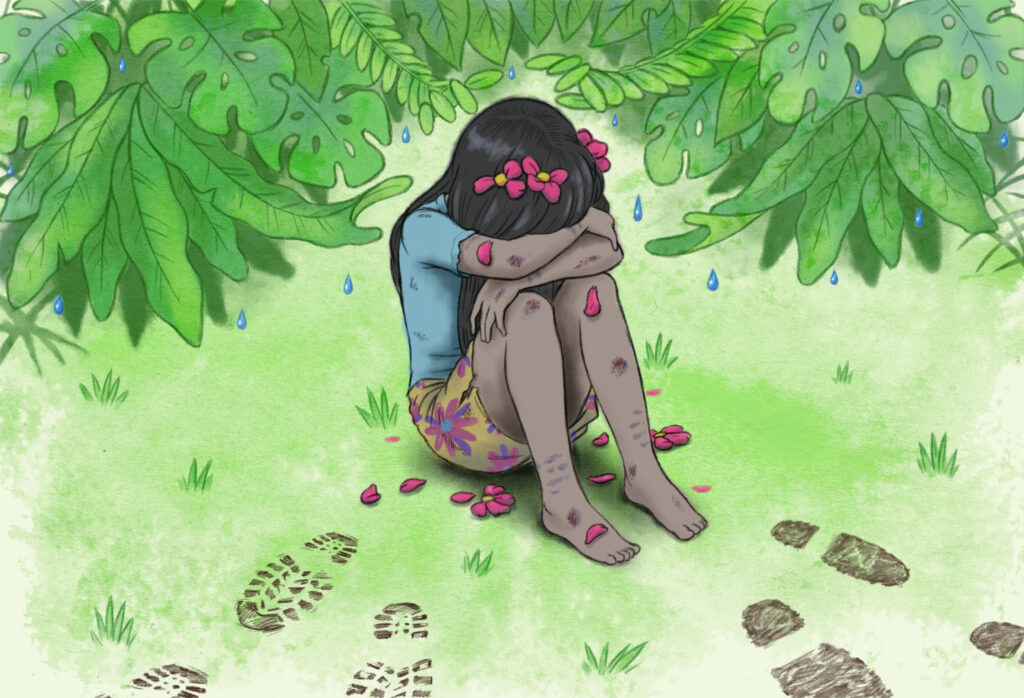
“Chineo is an abhorrent practice that began with the invasion. They started trying to colonize and began with gang rapes of Indigenous girls. This was called 'chinear' because they went out as if hunting 'chinitas' (little Chinese girls). It's a very harsh term, which we maintain so that people know it's ancient, that it comes from before, and so that we don't forget it,” Nélida Curia, a Mapuche potter who lives in the town of El Bolsón in Río Negro province, explains to Presentes .
The movement seeks to establish the idea that child molestation is a racially motivated hate crime. “It’s a crime that affects the girl’s body and the entire soul of the mothers and families. It creates an emotional imbalance and a breakdown within communities,” Nélida explains.
The complexities of Salta
The sisters' decision to choose the province of Salta to host the parliament stems from their conviction to eradicate this practice, which is still present in the territories.
“More than one of our older sisters who belong to the movement experienced it, suffered it. There are sisters who haven't wanted to learn Spanish so that the language doesn't repeat the trauma they have suffered,” says Nélida, adding that “lately more incidents of this type have come to light, always with the complicity of those who don't take the sisters' complaints seriously.”
“Salta, the beautiful,” reads the advertisements enticing tourists to travel to the northern Argentine province. “Salta, the oligarchic, the evicted, the devastated.” That should be the slogan for Seila Pérez, who belongs to the Simba Guaraní people and lives in the town of Tartagal in Salta.
To Nélida's words about the province, she adds: “Our territory is devastated by monoculture, all genetically modified: they contaminate our environment, our water, our medicinal herbs, our food. Nobody investigates. We cannot practice our spirituality because planes are spraying us.”
Educating in the territory
Seila teaches in the Higher Technical Program in Intercultural Bilingual Nursing, which she co-authored. This semester she is teaching the subject "Public Health" and next semester "Traditional Knowledge and Practices in the Field of Health" at the Higher Institute of Teacher Training No. 6015.
When she's going to teach, she gets up very early to head to Carboncito , a town 150 kilometers from Tartagal. At 8 a.m., she takes the first bus that drops her off in Embarcación . If the road isn't blocked and she arrives on time, she takes another bus from there at 12:30 p.m. to get to Carboncito between 2 and 3 p.m., and at 4 p.m. she teaches 124 students. "We arrive covered in dirt," she tells Presentes .
As she travels, Seila sees out the window “the land ravaged by the monoculture of extractive companies.” “That’s the genocidal Salta,” she says. After classes, at 10:30 p.m., the return trip begins: two hours to get to Embarcación and another two to her house. She arrives between 3 and 4 a.m.
Although Seila does it “with great joy,” she acknowledges that travel is difficult for people living in the territories. Reaching Chicoana —where the 3rd Parliament will be held—is a significant undertaking for many of the women and diverse groups attending.
“For us from the south, it has been and continues to be a great sacrifice to be able to get here. We are doing everything we can from all over the country to raise money, peso by peso, so we can meet and hug each other. There are about 300 of us sisters: we have to eat, many of us are traveling with our children, and we travel many kilometers,” Nélida explains.
They make all that effort to meet, share knowledge and ideas, and discuss how to continue the struggles they are carrying out.

Collective communication
Among the topics to be discussed is intercultural education.
“We want a different model of education. We don’t want this hegemonic model that comes pre-designed, packaged, and doesn’t take into account the knowledge and wisdom of different cultures. In Salta, we have 14 distinct Indigenous groups, and there is a complete lack of awareness about them. We want to strengthen our Indigenous education and showcase our Indigenous intellectuals,” says Seila.
The discussion will also focus on Indigenous participation in the media. The Indigenous Women's Movement for Good Living has been preparing to launch a news agency, and Presentes has been contributing its experience and training to this project.
“When it comes to being able to tell the story and make known what is happening in the territories, it is important to have an agency. Sometimes there are media outlets that don't cover us and our news always arrives late, after the events have already occurred. With this agency, the events would be reported immediately,” says Nélida.
In this sense, she says that sometimes even they themselves have found out about things that happened weeks later because the sisters themselves had no way of communicating it.
“The communicators are already being trained; they have been taking classes for quite some time to later develop the different topics that will occur in the territories,” she says.
Self-management
In addition, during the four days of the meeting there will be workshops created by and for indigenous women and diverse groups.
One of them will be about self-management to develop the "Makers for good living" platform, a fair price market that will soon have a virtual operation.
“This platform will include all of us women who create art and possess knowledge, so we can have access to sales. It's fair marketing, which is what our sisters need. Often, shops buy all their work for next to nothing, and then we see it in huge galleries at exorbitant prices. This platform would put us on equal footing,” Nélida explains.
Finally, they will discuss the best strategies they have to fight against land destruction, child exploitation, and all violations of the rights of Indigenous women and LGBTQ+ people. But one thing they are certain of: they are not alone.
“We are all together. We will no longer feel alone; we will be united and able to denounce everything that is happening to us,” Seila concluded.
We are present
We are committed to journalism that delves into the territories and conducts thorough investigations, combined with new technologies and narrative formats. We want the protagonists, their stories, and their struggles to be present.
SUPPORT US

FOLLOW US
Related notes


We are present
This and other stories are not usually on the media agenda. Together we can bring them to light.