

The perpetrators of Fabiola Ramírez's murder were convicted of simple homicide.
Following a summary trial, the murderers of the young trans woman received sentences of 16 and 19 years. The family is satisfied with the court's decision.


Share

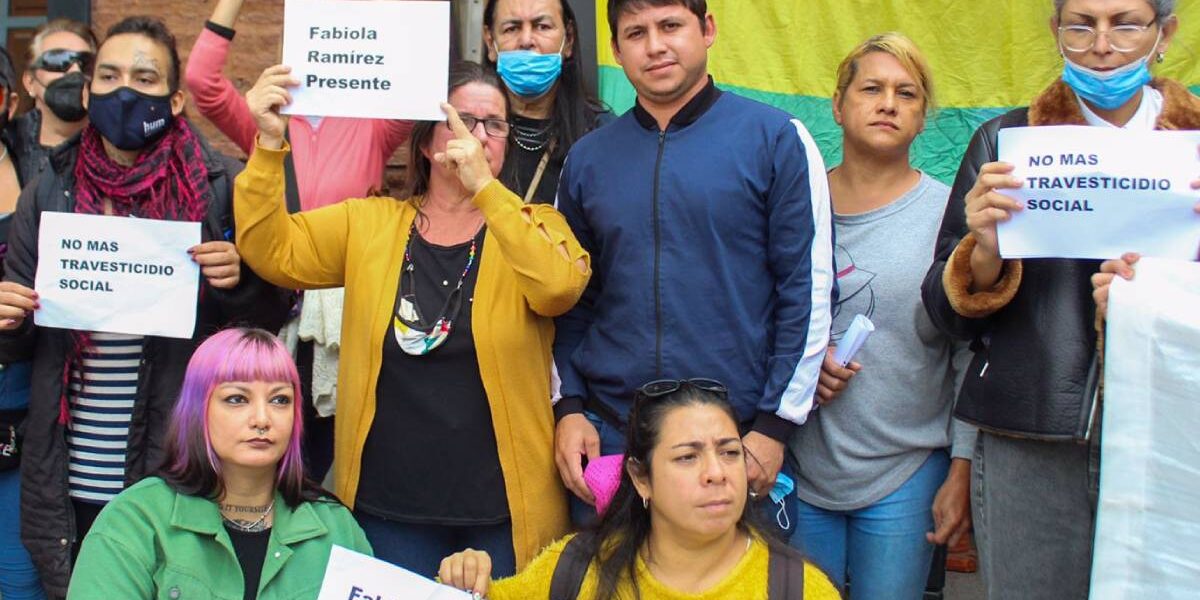
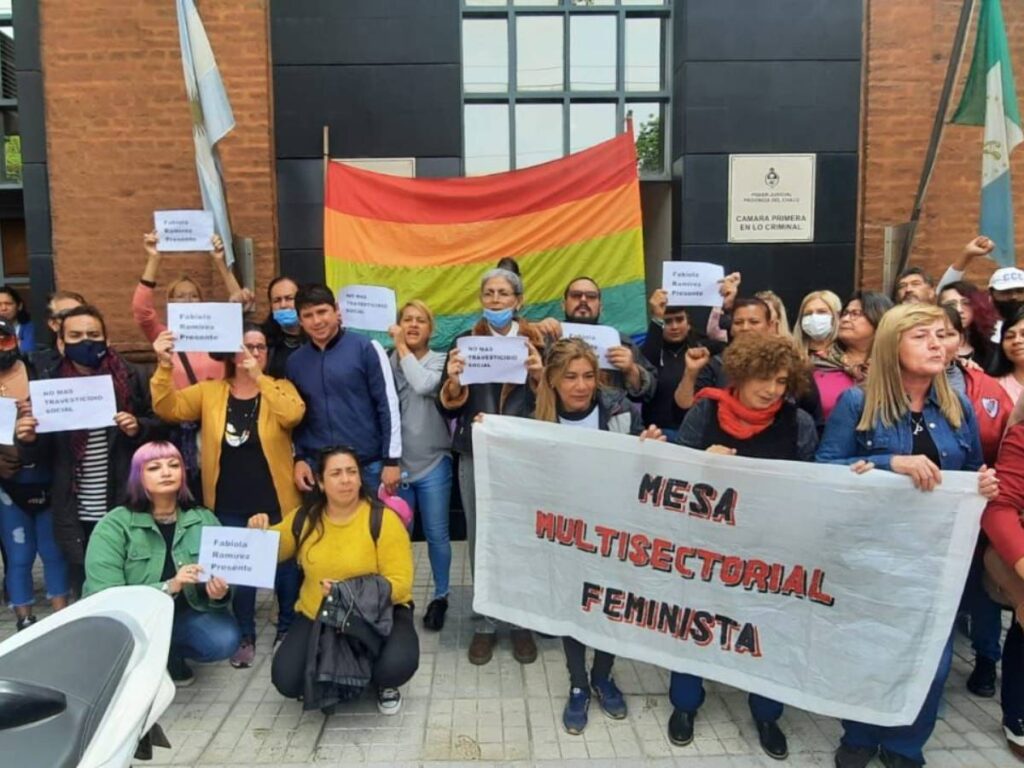
BUENOS AIRES, Argentina. The First Criminal and Correctional Court of Resistencia, in the province of Chaco, sentenced Ramiro and Hernán Rodríguez to 16 and 19 years in prison this Tuesday for the murder of Fabiola Ramírez, a young trans woman and LGBTIQ+ activist.
The young woman's family is satisfied with the "simple homicide" conviction handed down by Judge Natalia Kuray. Social movements and the Provincial Secretariat of Human Rights and Gender
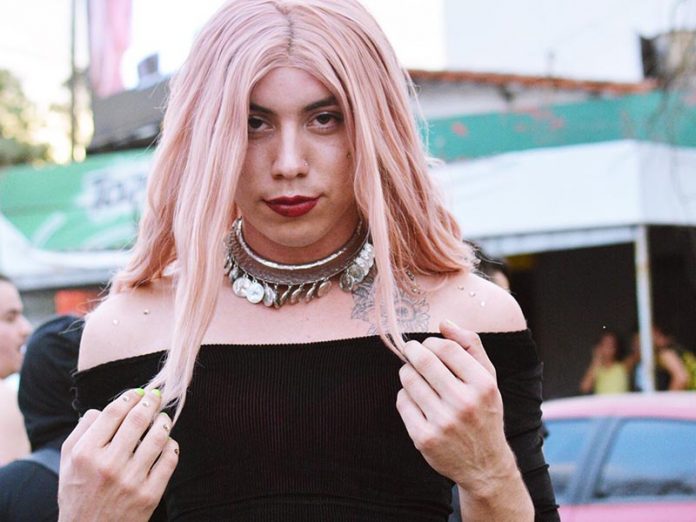
Fabiola Ramírez was 22 years old on the day she received brothers Ramiro (now 19 years old) and Hernán Rodríguez (22 years old) at her home in the Rawson neighborhood on March 3, 2021. Both ended up murdering her in what was a "quite bloody crime," described the family's lawyer, Nahir Barud.
On Friday, March 5, at 3:30 p.m., the police found his body after neighbors called the Fifth Metropolitan Police Station to report that strong, repulsive odors were coming from the house on Leandro Alem Street at 1800.
The criminal investigation was handled by Prosecutor's Office No. 5 of Resistencia. In the indictment, which took place six months after the murder, the plaintiffs—represented by the family—and the prosecution argued that it was a case of aggravated homicide motivated by hatred of gender identity, as stipulated in Article 80, paragraph 4, of the National Penal Code .
It was transfemicide
“From the Secretariat of Human Rights and Gender, we maintained and continue to maintain that this was a hate crime, that it was indeed a transfemicide. That is why we also succeeded in bringing the case to trial under that classification at the time,” lawyer Barud told Presentes .
In the pre-trial hearings, the public defender proposed a summary trial. During this process, the defendants would be tried for simple homicide, thus avoiding a jury trial.
“This was interesting to Fabiola’s family. There’s a whole symbolic process of not being able to close the door on mourning until the legal process is over. Going to a jury trial would have been longer and could have resulted in a different kind of sentence than transvesticide/transfemicide, since it would have depended on the 12 people selected,” Barud explained.
Finally, Judge Kuray summoned the family this Tuesday and allowed the social movements that accompanied the demand for justice to enter the courtroom.
There she read the operative part of the sentence "so that they can also feel that the Justice system did not treat it as a mere formality, but was available to them," the lawyer indicated.
Although both Hernán and Ramiro participated in the crime, the sentences are different (16 and 19 years, respectively) since Hernán had a suspended sentence, which was added to his prison years.
The call for judicial reform
The organization 100% Diversity and Rights told Presentes that, although they are not happy with the sentence, they support Fabiola's family.
“We are not satisfied with the sentence because we believe it was a transfemicide. Our comrade was harassed because of her trans identity,” said Miguel Szabó, a long-time activist for the rights of the LGBT+ population and a member of 100% Diversity and Rights in Chaco.
She added: “We urgently need a reform of the Judiciary. Judges should be elected by popular vote, and juries should receive training on the Micaela Law, with a gender perspective.”
Regarding the trial's progress, Barud considered that the gender perspective was taken into account in "the penal scale given to the accused, taking into account that simple homicide ranges from 8 to 25 years and both exceed 15 years of effective prison sentence."
Furthermore, it was considered that it was not “just a death,” but “the murder of a trans girl, an activist, who had her whole life ahead of her and dreams that she couldn't see fulfilled. For example, she couldn't see the passage of the transvestite and transgender employment quota that she had campaigned for,” the lawyer added.
And he summarized: “I think all of this was taken into account when 'negotiating' the sentence we agreed upon.”
The memory of Fabiola
Her peers in the LGBTIQ+ community of Chaco had described Fabiola Pamela Ramírez as "a girl like any other" .
“There wasn’t a feminist, Pride, or Human Rights march where you didn’t see her raising a flag for Justice and Equality. With immense talent, solidarity, and tenderness, 'La Fabi' was also a passionate candombe dancer, a member of the Chacoan group Aguara Chacú,” they said.
Fabiola's image, materialized in graffiti, is found throughout the streets of Resistencia. "They serve, and have served, as catalysts for discussing policies toward trans and gender-diverse women and for understanding all that we still need to do as a society to prevent this from happening again," Barud concluded.
We are present
We are committed to journalism that delves into the territories and conducts thorough investigations, combined with new technologies and narrative formats. We want the protagonists, their stories, and their struggles to be present.
SUPPORT US

FOLLOW US
Related notes



We are present
This and other stories are not usually on the media agenda. Together we can bring them to light.