

Argentina: A line of economic support was announced for transvestites and trans people over 50 years of age.
During the event commemorating the tenth anniversary of the Gender Identity Law, aid was announced for transvestite and trans people who do not have registered employment, until the historical reparation law is addressed.


Share

BUENOS AIRES, Argentina. Transvestite and trans people over 50 years of age who are in a vulnerable situation will be able to access a line of economic support for social protection.
The initiative was announced by the Minister of Women, Gender and Diversity, Elizabeth Gómez Alcorta, on Monday, May 9, marking ten years since the enactment of the Gender Identity Law.
The public policy includes the delivery of six minimum living and mobile wages for transvestite and trans people over 50 years of age who do not have a registered job.
It was managed by the Undersecretariat of Diversity Policies, headed by Greta Pena, and is part of the Program for Strengthening Access to Rights for Transvestite, Transsexual and Transgender People .
The measure is intended to reach approximately one thousand people. It will be offered once, and the registration form will be published in two weeks, according to estimates from the Undersecretariat of Diversity Policies .
“The goal is to improve the quality of life until Congress can pass legislation or a structural solution can be achieved for transgender elderly people,” Greta Pena Presentes
Along these lines, she warned that “we need to reverse the brutally low life expectancy compared to the average experienced by the trans population. This requires not only financial support, but also ongoing support.” Therefore, the measure includes financial assistance and contemplates “comprehensive support and assistance from our interdisciplinary team,” Pena explained.
The initiative will be compatible with social programs but not with registered employment.
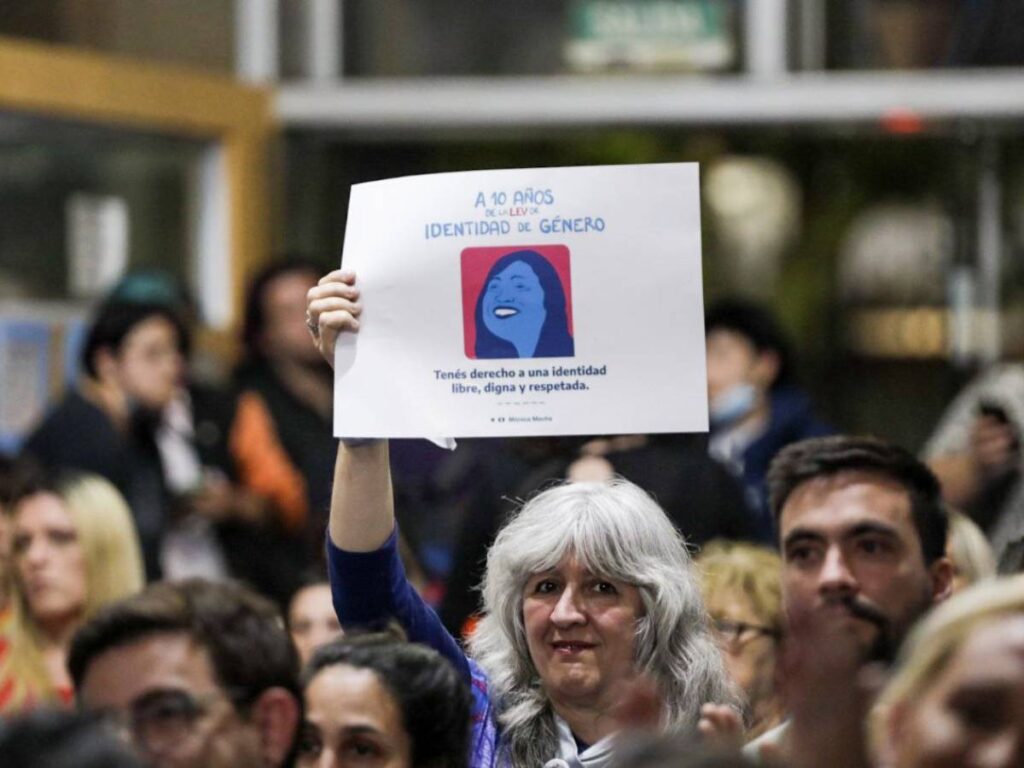
Photo: Ministry of Women, Gender and Diversity of the Nation.
An urgent need to repair
Claudia Vásquez Haro president of OTRANS Argentina and PhD in Social Communication, enthusiastically welcomed the initiative.
“There are people who think this is a band-aid solution. I think those of us who come from activism know that we have to build consensus. We know that precedents and jurisprudence are always established,” he told Presentes .
She added: “Of course these are years of neglect, years that the State has to make amends for, and there is no more time to wait because our transvestite and trans sisters are dying.”
In this regard, Pena considered that it is not a matter of reparations because reparations “involve many other issues.” However, she maintained that the initiative “does imply understanding that we urgently need to implement public policies for transgender seniors to guarantee a minimum level of autonomy in economic matters and in access to assistance.”
“From the Ministry we support and encourage the National Congress to hopefully find a solution, a pension or an early retirement,” he added.

The project
In May of last year, National Deputy Gabriela Estévez presented in Congress the bill called “Reparative Pension for Elderly Transvestites and Trans People”.
The initiative was promoted by the LGBTIQ+ League of the Provinces and the Federal Trans and Travesti Call of Argentina .
Its objective is to promote the inclusion of transgender and transvestite people over 40 years of age in the social security system. It seeks to guarantee them the receipt of "reparative" income, equivalent at least to the Universal Pension for Older Adults of $16,456.80.
The project, called the “ Reparation Law for Transgender and Transvestite Elderly People ,” establishes the creation of a “Reparation Pension for Transgender and Transvestite Elderly People.” This means it would grant a lifetime pension to all transgender and transvestite people over 40 years of age, regardless of whether they have legally changed their birth certificate or national identity document (DNI).
Thus, the project "seeks to repair the violation of basic human rights that implies a life expectancy of 35 to 40 years (among the people who make up these groups); norms that criminalized and 'pathologized' these identities; the systematic institutional violence and the lack of access to health, education, housing and registered work," as detailed in its considerations.
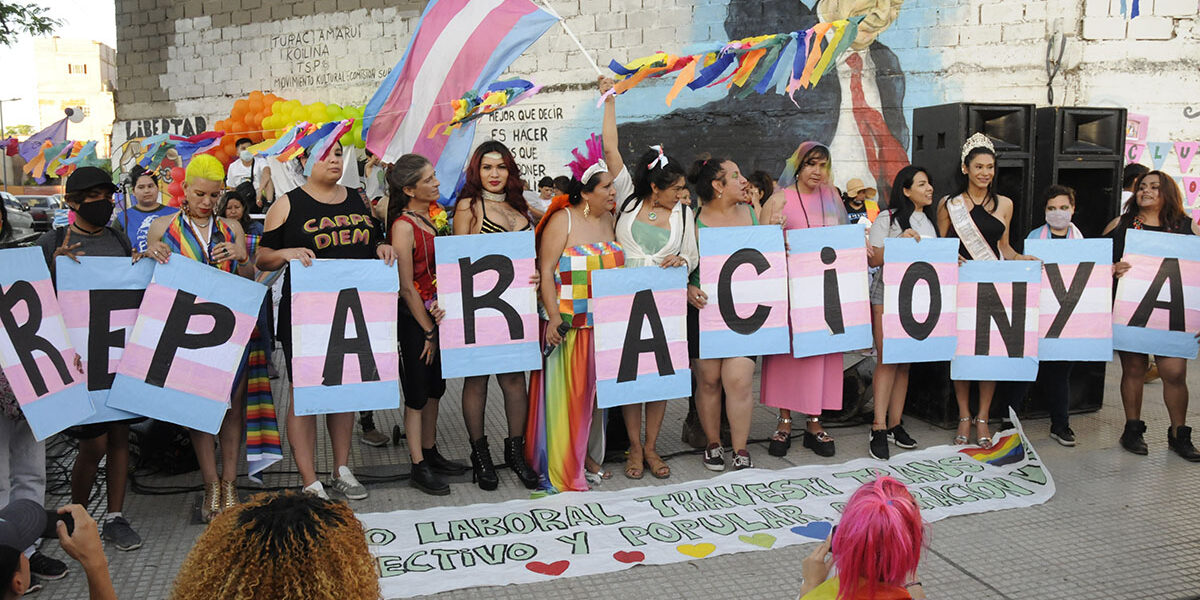
Furthermore, sexual diversity organizations have been demanding compensation for transvestite and trans people over 50 years of age for the rights violated by the Nation State.
In September of last year, self-organized transvestites held a demonstration in front of the Casa Rosada to present a letter requesting a meeting with President Alberto Fernández to demand compensation and reparations.
“We are demanding compensation for women over 50 years old for state terrorism and the crime against humanity aggravated by its duration. Furthermore, we demand historical reparations that address the damages already inflicted and those yet to be inflicted on the transvestite, transgender, and transsexual population,” transvestite activist Lara Bertolini Presentes

Photo: Ministry of Women, Gender and Diversity of the Nation.
We are present
We are committed to journalism that delves into the territories and conducts thorough investigations, combined with new technologies and narrative formats. We want the protagonists, their stories, and their struggles to be present.
SUPPORT US

FOLLOW US
Related notes


We are present
This and other stories are not usually on the media agenda. Together we can bring them to light.