

Mexican immigration authorities deported Keila Simpson, a Brazilian trans activist.
She was one of the guests at the World Social Forum. She was isolated at the airport and then deported because her document did not match her gender expression.


Share

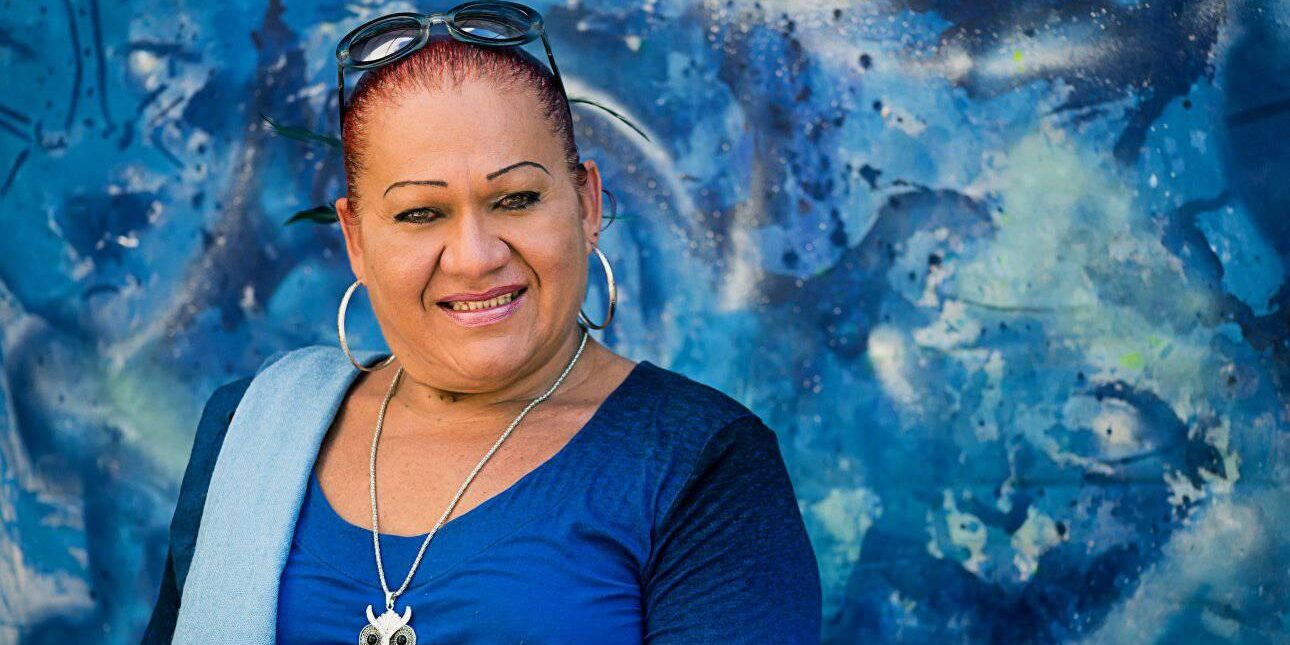
Keila Simpson, a 55-year-old Brazilian trans activist, traveled to Mexico on May 1st to participate in the World Social Forum as a human rights advocate. Activists reported that upon her arrival, Mexican authorities from the National Institute of Migration detained and isolated her in Terminal 2 of Mexico City International Airport. She was ultimately deported that same afternoon.
Activists and civil organizations claimed that Simpson was isolated for 10 hours and that her detention was motivated by prejudice against her gender expression because it did not match the registered name on her passport and because, without internet on her cell phone or in the airport facilities, she could not access the documents that proved the reasons for her visit and her return trip.
Keila Simpson is president of the National Association of Transvestites and Transsexuals (ANTRA) of Brazil, a national network of trans activism founded in 1992. She came to Mexico because she was invited to participate in the forum, which is being held from May 1 to 6, to talk about human rights.
“Keila, a trans woman of African descent, had her integrity violated through several actions, including ten hours of isolation, the confiscation of her passport and cell phone—without allowing her to speak to anyone—and when they finally addressed her, it was without a translator. She was essentially kept isolated for ten hours. We cannot ignore this situation because it also occurs within a context where Mexican authorities criminalize migrants from Central and South America,” Jessica Marjane, a lawyer and coordinator of the Trans Youth Network, explained to Presentes. Marjane went to the airport to follow up on Simpson's experience.
"It's never easy for transvestites."
“It was shameful, but, as I always say, nothing is easy for trans women. It was a long and arduous process (…) I am certain it was because I am a trans woman and because I don't hide my identity. I had the hotel reservation, my return ticket, the brochure for the Social Forum. I explained several times that I was going for an event and I still wasn't allowed in. I was detained for almost ten hours in an airport room, I ate bread with bean dough, the worst thing I have ever eaten. They didn't mistreat me, other than what they did, which is already an abuse, but I also understand the situation. The country (Mexico), in my opinion, is still very behind in terms of taking action in this regard (…) The struggle continues, first by defeating the fascism that exists here in Brazil and then by spreading this freedom that we so desperately want to the rest of the world,” Keila Simpson narrated in a video released by ANTRA upon her arrival in Brazil after being deported from Mexico City. Mexico.
Agencia Presentes sought, through various means, to establish communication with the National Institute of Migration (INM) and its representation at the airport; so far there has been no response.
Complaint before the National Human Rights Commission
Jessica Marjane filed a complaint with the National Human Rights Commission (CNDH) requesting its intervention. Following this, a CNDH representative went to the airport, and Keila Simpson was then able to access an interpreter. However, neither the complaint to the CNDH nor the presence of one of its representatives prevented the Brazilian activist's deportation.
Marjane also tried to file another complaint with the National Council to Prevent and Eliminate Discrimination (CONAPRED) seeking protective measures for Simpson. However, the online complaint system did not generate a case number.
“CONAPRED did not act in a timely manner. When we called, the numbers didn't answer; the online complaint didn't generate a case number, and without a case number, there's no complaint. This meant that our colleague Keila was unable to access the precautionary measures we're seeking because we're facing a serious case of human rights violations,” Marjane commented in an interview.
In Mexico, CONAPRED has the power to issue precautionary measures and intervene when it comes to serious human rights violations committed by individuals, legal entities, public officials, and state and federal institutions; with the objective of "seeking to prevent irreparable damage and preserve the exercise of human rights."
Furthermore, the Mexican activist commented that communication with INM personnel inside Terminal 2 of the airport was “impossible.” “They just kept telling us, ‘Ask the airline,’ and it was the airline that confirmed to us that Keila was going to be deported.”
Differential treatment
Following Keila's interview with the CNDH, Jessica Marjane was informed that the reason for her deportation was because she "did not meet the 'tourist profile'."
The reason given for classifying her that way is that she did not provide documentation proving her return to Brazil. Marjane adds that this reason “contradicts” what she was able to document during her accompaniment.
Marjane explained to Presentes that a Brazilian delegation of 20 people was invited to the World Social Forum event, which is held from May 1 to 6. They arrived in Mexico on different flights, and one woman from that group, besides Keila, also had problems proving her invitation and her return flight to Brazil, but she was not deported.
“The person who was allowed entry, who wasn’t denied access to Mexico, was allowed in because she is a white, cisgender woman, and her tourist profile was verified. Of the twenty people in the Brazilian delegation, the only one who was suspected was Keila because she is a trans woman of African descent,” Marjane denounces.
The Trans Youth Network (an organization coordinated by Marjane) will follow up on the complaint filed with the National Human Rights Commission (CNDH) and hopes that the Commission's recommendation will open the door to: evaluating the omissions and responsibilities of the National Migration Institute and other agencies; declaring the human rights violations committed against Keila Simpson; and establishing the highest human rights standard for trans people in situations of mobility under any administrative status.
Currently, the National Institute of Migration lacks criteria, formats, and protocols within the Migration Law and its Regulations that would allow for dignified treatment of transgender people under any migratory status (tourist; asylum/refugee seeker; migrant with regular or irregular administrative status) from the first contact.
For Marjane, it is also important to point out that Keila Simpson's deportation occurs in a context where Mexican authorities have made known the criminalization of migrants from Central and South America who are deported under practices they call 'humanitarian returns'.
According to Human Rights Watch (HRW), so-called 'humanitarian returns' are part of the euphemisms that abound in the current Mexican migration system.
“Migrants are not apprehended, but ‘rescued.’ They are not detained, but ‘presented.’ And they are not held in detention centers, but in ‘immigration stations.’ Thus, deportations are simply transformed into ‘humanitarian return flights.’ But it is important to remember that they are not,” notes José Miguel Vivanco, director of the Americas division of HRW, in an article .
They demand a public apology and protocols
The Trans Youth Network and ANTRA will seek to guarantee the reparation of damages requested by Keila Simpson: a public apology from a Mexican authority, primarily from the Secretary of the Interior, Alejandro Encinas; the head of the INM,
Francisco Garduño Yáñez and the representative of the INM in Mexico City, Carmen Yadira De Los Santos Robledo.
Finally, the Brazilian organization ANTRA demands reparations for its president and calls on the Brazilian Ministry of Foreign Affairs to intervene so that the Mexican State retracts its decision.
“The institutional, symbolic, and psychological violence suffered by Keila must be redressed (…) It is urgent to establish a protocol. It is essential that immigration agents and States receive training and implement policies to recognize the gender identity of trans people and ensure appropriate interpersonal treatment, such as asking for their pronouns, chosen name, and how they wish to be addressed. It should be noted that the right to rectification does not nullify the right to a chosen name, and furthermore, even rectification cannot prevent trans people from being victims of transphobia, racism, xenophobia, and violations of the rights of people in transit between countries,” ANTRA stated in a press release .
We are present
We are committed to journalism that delves into the territories and conducts thorough investigations, combined with new technologies and narrative formats. We want the protagonists, their stories, and their struggles to be present.
SUPPORT US

FOLLOW US
Related notes


We are present
This and other stories are not usually on the media agenda. Together we can bring them to light.