

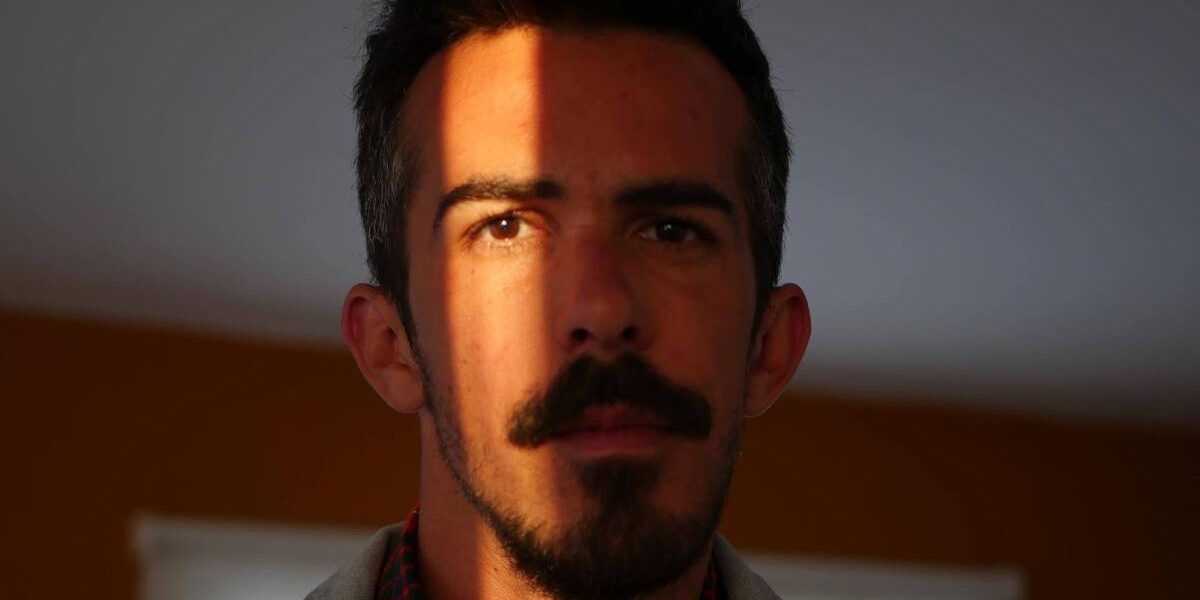
Agustín Romero: “Being young is constantly searching for something you don't know what it is.”
The author published Youth, his second novel. With an intense plot, it explores the romantic, friendly, and erotic relationships of a group of friends.


Share

BUENOS AIRES, Argentina. “Every house is full of ghosts,” Esteban says. Agustín Romero knows this well: every home, every family, every friendship is permeated by a certain darkness. All youth, pure life force, is defined by a certain death drive.
These are some of the concepts the author explores in his latest book, Youth . After his first novel, The Paradise of the Lonely , Romero revisits certain settings from his childhood – specifically, Trelew – but he does so stripped of the lyrical, “almost baroque,” as he puts it, narrative style he previously employed.
In Youth , the action takes center stage. Through a fast-paced plot that follows a group of friends on the streets of Buenos Aires, with their violence, camaraderie, and sexual encounters defined by varying degrees of love and affection, Romero attempts to capture a pivotal moment in life, document the process of grief, and photograph the essence of friendship. And he succeeds.
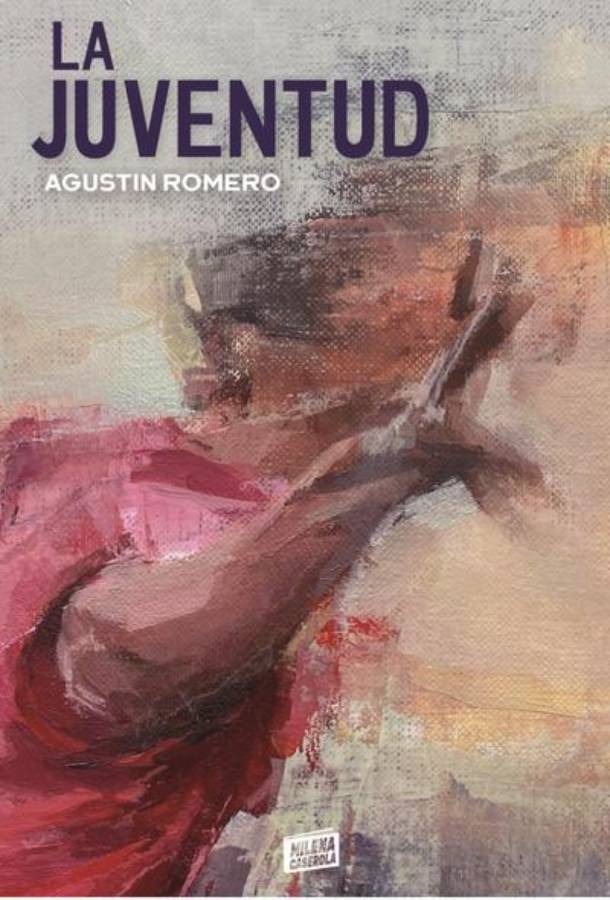
– How did the idea for La Juventud ?
"I worked with some real triggers from my own experience—especially regarding my father—although I distort them later. It has some autobiographical elements, but they're more related to certain climates and atmospheres I've experienced; they're more emotional than factual. My father's letter at the end is real; I used the one he wrote. In fact, there are also some subtle allusions to his activism in the 1970s. The novel had fifty more pages that were torn out, and there you could see a bit more of my father's past. In a way, the novel is like a farewell to my father. I was particularly interested in narrating certain effects I experienced from being the son of someone who was an activist in the 1970s and the very strong consequences that had, especially in terms of a great deal of melancholy. That's where it starts, and then it expands. I also wanted to talk a bit about friendship, to show that it's also full of jealousy, of everything. It's a very strong bond of love."
– What unites these characters, this group of friends?
"Some of the pain, it seems to me, and some pretty intense experiences they've had to live through. That's their common ground. There's one who's upper class, but he has this father who's quite perverse, very violent. In the novel, there are different kinds of violence. El Tigre has a mother who leaves and never comes back, and he's left with this very complicated father. Esteban's relationship with his father also has its share of violence. There's something about the father figures there that's quite intense and strong, something that also unites them. Besides, in the town, in the South, you go to public school and the classes mix a bit. Here, it's more segregated."
-The characters' lives are kind of trashy, marked by a lot of violence and a search for something they don't even know what it is. How much of that is influenced by being LGBT?
I think it's very pervasive, or at least in the circles I move in, there's this more potent sexuality that happens in more underground spaces. Now some things are more normalized and it's more out in the open, but before there was more mystery. I feel that now, with normalization, some of that has been lost, which is still great. There's something about us gay guys having clandestine sexual encounters that I think has had consequences for how we connect with each other. There's something very dismissive, almost neoliberal, about sexual and emotional relationships, especially. In fact, I see it in myself too. I always thought it was awful in other people, but I realized it was inside me as well.
– What are the differences between being part of the LGBT community in Buenos Aires and in Trelew?
-In the novel, there's something very different about the rhythm. The Buenos Aires part is much more fast-paced, but in Trelew, there's a tremendous darkness. It's obviously difficult to be homosexual there. I'm from there, I lived there until I was 18, and it was hard. Especially because you can't even name what you're going through, your desires, your sexuality, and people are already calling you accusingly in the street, "faggot, faggot." It's terrible. I imagine it must be different now, but I think it still happens in small towns.
-The families in the novel are quite receptive to their children's sexuality.
Yes, the conflict isn't about the sexuality of these children; it's about other things. I wasn't interested in moralizing about sexuality or framing it as a conflict. At another time, it was a good political decision to put that at the forefront, but now I don't think so.
-Being a writer, publishing a book, and being openly gay, do you think that's already activism?
I think there's a political gesture that's important in speaking out openly about sexuality. I don't think that's nearly enough, though. There are people who are fighting and actively fighting for rights. I have trans friends who are truly fighting. I think speaking out is good, it's important. I even think it's good that the work doesn't moralize, that the characters' sexuality is portrayed more naturally, that it's not a source of conflict. That's what comes naturally to me and what I want. But it's not enough; there are people who are truly fighting and who, in fact, suffer much more. My trans friends have problems, for example, with renting, even with all their paperwork in order. That's when you realize how much more struggle there is.
– What does youth mean to you?
-I thought about it partly in relation to my father in the 70s, and the effects of that time, on Esteban being the son of that. Partly in relation to an insatiable search; that's part of being young; the idea of constantly searching for something you don't quite know what it is. It also came about when I once asked my aunt, who's like a mother to me, what was nice about getting old, and she said, "having lost the urgency of youth." Something of that more urgent nature, a certain drive that's also deadly at the same time.
We are present
We are committed to journalism that delves into the territories and conducts thorough investigations, combined with new technologies and narrative formats. We want the protagonists, their stories, and their struggles to be present.
SUPPORT US

FOLLOW US
Related notes


We are present
This and other stories are not usually on the media agenda. Together we can bring them to light.