

Pregnant Bodies: The Experience of Trans Men in the Guatemalan Health System
Discrimination and poor treatment are common factors for trans men in health settings.


Share

GUATEMALA CITY, Guatemala . In 2015, Guatemala's Ministry of Public Health and Social Assistance (MSPAS) approved the "Comprehensive Differentiated Health Strategy for Trans People," which had been shelved for four years. That same year, due to a lack of information on healthcare services for trans people, the Ocote Agency conducted a survey to gather more information about gynecological and obstetric care for cisgender women and trans men in northern Central America. The results show that pregnant people in Guatemala reported having experienced some form of obstetric violence.
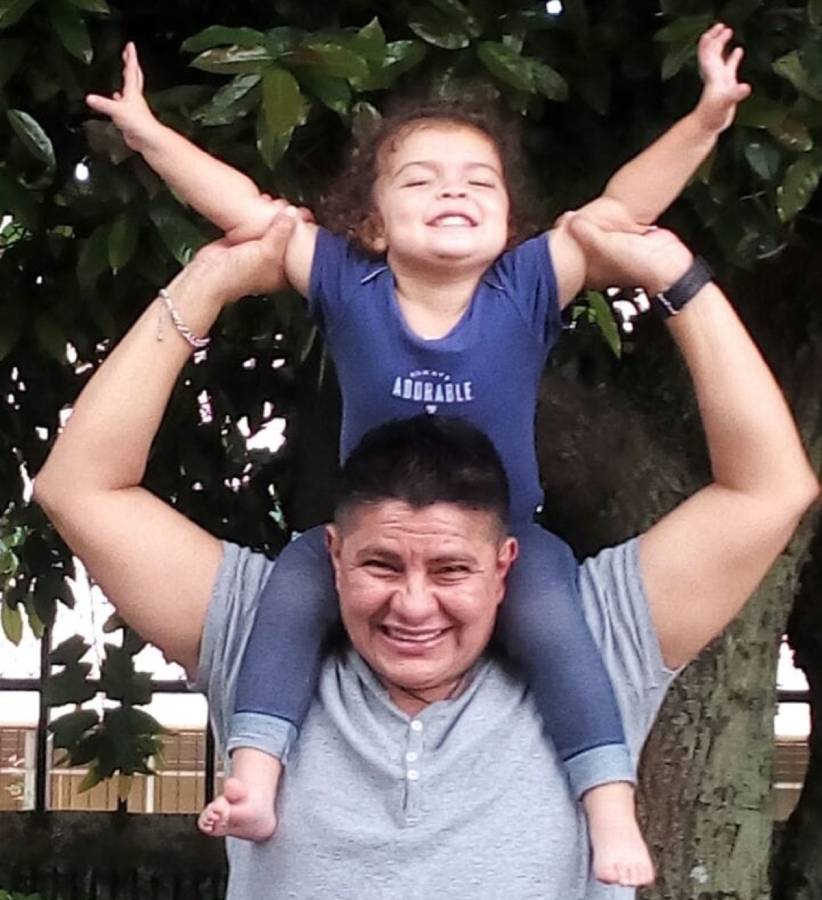
Presentes spoke with Alex Castillo, a 50-year-old transgender man, business administrator, and human rights advocate. He is the co-founder of Trans-Transformación established in 2013 in Guatemala. The collective is the first organization in Central America and the Caribbean dedicated to providing comprehensive support and guidance to transgender men and non-binary people assigned female at birth.
For Alex, her transition process was initially very confusing, as she began it at age 43. At that time, there was virtually no information available about gender identity and health. Furthermore, it was very difficult to give up part of her history, such as her work record, she explains in this interview.
Imposed motherhood
Alex experienced forced motherhood . At that time, she had very strong inner conflicts, because, as she says, she went through a pregnancy by force, not by choice.
“I feel it was one of the toughest trials I’ve ever had to endure. I don’t talk about it much. Because I was assigned female at birth, saying that this stage was awful for me has only brought me criticism and a lot of punishment, because they tell you that a child is a blessing and I don’t know what else… That’s why I don’t talk much about how badly I suffered.”
The Guatemalan Social Security Institute (IGSS) denied him gynecological services for a health problem caused by testosterone use. IGSS staff argued that he "brought it on himself" and that they lacked the experience to treat him.
Alex Castillo - Have you documented cases of medical violence from within the collective?
-Yes, they have been documented. Through the studies we conduct, we can gather information, since most young people don't like to report it because the main aggressor is a member of their family.
– How would you describe the care provided to people who do not identify with the female gender assigned at birth in the public health system?
Although we have been fighting for the implementation of the "Differentiated Health Strategy for Trans People" since 2013, it remains completely inoperative in both the public and private health systems. Most people prefer not to attend because of the type of violence they face in these settings.
The data on violence
A recent exploratory study by the Trans-Formación collective, involving a sample of 50 trans men, revealed that 88% of respondents stated that their gender identity makes them prone to experiencing violence and discrimination. The most common forms of violence, the study indicates, are verbal abuse (65%) and disrespect for their name and pronouns (63%). However, street harassment, bullying, sexual harassment, and rape are also reported.
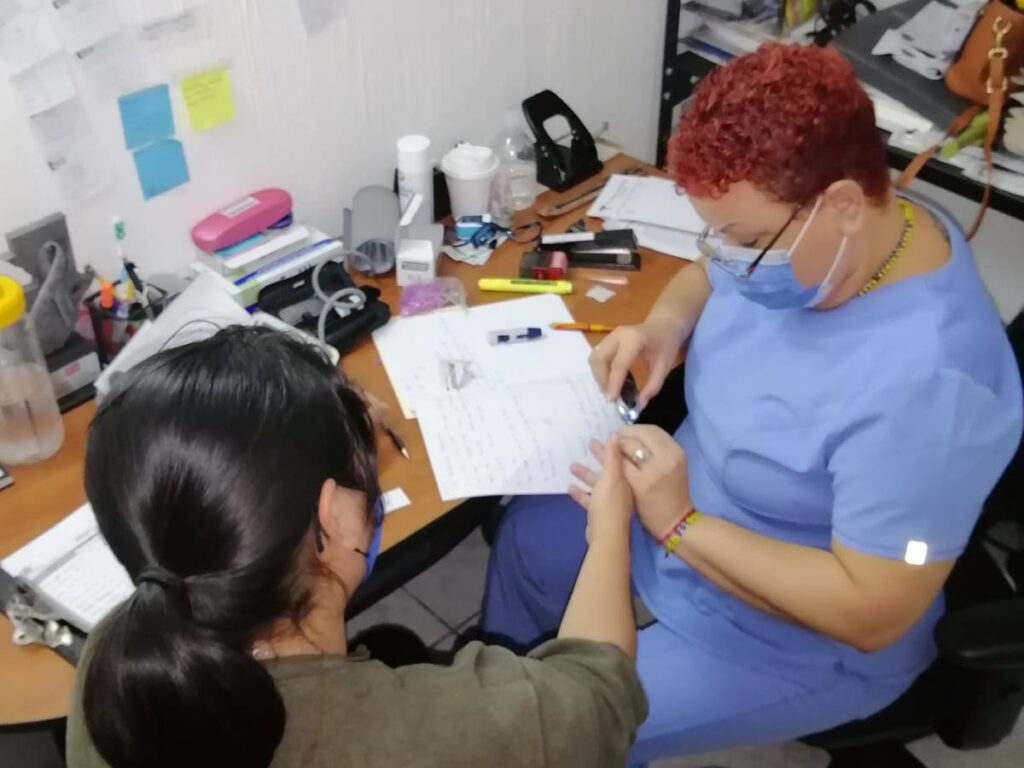
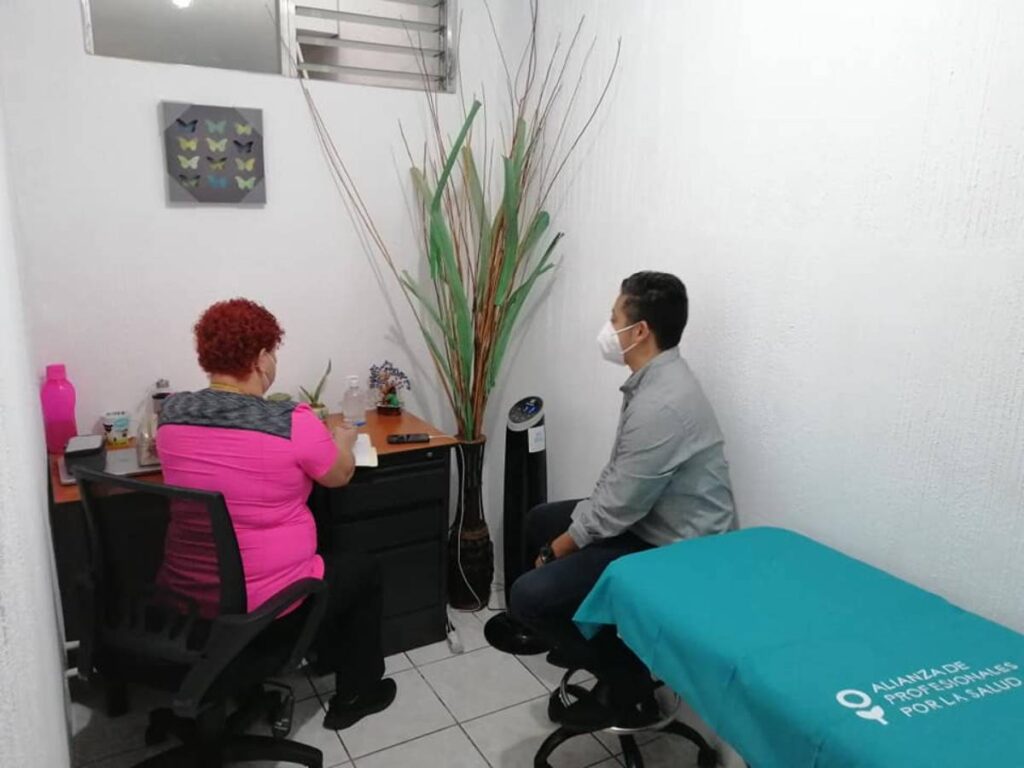
This publication also spoke with Dr. Yusimil Carranza Hernández. The doctor, originally from Cuba, arrived in Guatemala with the Cuban Medical Brigade and now runs the clinic of the Trans-Formación collective.
She studied a specialty in Primary and Comprehensive Health Care and is also an active member since 2019 of the World Partnership for Comprehensive Health of Transgender, Transsexual and Gender Non-Conforming People (WPATH) , which promotes the highest standards of medical care for these populations.
““I learned about the existence of the group through its coordinator Alex Castillo Hernández, a trans man who breaks down all kinds of existing barriers,” says Dr. Yusimil.
“He highlighted the need for a clinic where this population is not discriminated against, stigmatized, or subjected to violence. This is a very common occurrence in state institutions due to a lack of scientific information and ignorance on the subject. My involvement in providing care to gender non-conforming individuals assigned female at birth stems from this same need. This population lacks welcoming spaces, only frameworks imposed by society .”
A professional and empathetic approach
The healthcare professional serves a diverse group of people who are part of the "wide spectrum of sexual diversity," she says. She works with lesbians, gay men, bisexuals, intersex people, queer people, and more.
Presentes inquired about their experience of providing care in general and in the gynecological and obstetric areas to people who dissident from the female gender assigned at birth, in general in Guatemala.
“As a specialist in Primary and Comprehensive Health Care at the clinic, I not only handle the transition to the gender with which they identify, but also the management of acute and chronic communicable and non-communicable diseases , with the respective laboratory tests or other studies if necessary. Emphasizing that the care provided is free of charge at all times,” she states.
“We cannot forget that trans men have vaginas. In most cases, even with hormone replacement therapy, they still have their uterus and ovaries. Therefore, as part of their gynecological care, they should have a Pap smear once a year, and, depending on the needs identified in the speculum exam and the VIA exam (visual inspection of the cervix with acetic acid).”
Violence in the health system
The Guatemalan Public Prosecutor's Office indicated to this media outlet, through a request for access to public information, that from 2019 to 2021 only 200 complaints were registered against health professionals.
Of that total: 143 complaints against doctors and surgeons where negligent injuries and violence against women predominate, while in the specialty of gynecology only nine were registered.
The health of trans men in Guatemala
The exploratory study found that within access to health, it is reported that 32% go to a private doctor when they get sick; 24% go to private hospitals; 28% go to public hospitals, while the remaining 20% do not receive any medical attention (Martínez & López 2019:26).
These data reflect the general deficiencies of the public health system in Guatemala. Of 31 reports from trans men who claim to have experienced discrimination in health centers, 65% of this population reported having faced it in public services (Martínez & López 2019:26).
The study shows that of all the trans men surveyed, 37% considered that they experienced greater discrimination from other patients, 35% confirmed that the discrimination came from nursing staff, and 28% stated that it came from doctors in the public system.
Giulia's experience
Presentes also spoke with Giulia Maero who has trained as a Doula (Professional assistant for labor who provides emotional and physical support during pregnancy, childbirth and the postpartum period also available for non-cisgender people).
She recounted that going to a public hospital in Huehuetenango because she suspected she was pregnant had negative repercussions on the care she received, including a poor experience. There was a lack of certainty in the laboratory test to confirm her pregnancy, and the medical staff's confidentiality led her to take medications contraindicated for her condition.
She was later seen by a gynecologist who performed a supposed medical examination that Giulia considered unnecessary and experienced as a rape.
“There are subtle forms of violence exerted on pregnant bodies, and I will refer to women because in this society other pregnant bodies are not considered bodies. A whole host of other experiences intersect. Apart from these forms of violence,” she indicates.
"What is demanded of pregnant and postpartum women is a total sacrifice of their bodies for this new life. It doesn't matter what you are feeling, physical or emotional, but rather the well-being and health of the fetus."
“Everyone feels entitled to touch your belly because it’s no longer your belly, but because there’s a baby in there. Everyone has an opinion, and they already know that you’re going to have a hard time giving birth and that you won’t have a normal delivery (everyone becomes an expert on childbirth).”
“Motherhood needs to be extended to other pregnant bodies.”
Giulia mentions that the doctor dictated how she would deliver the baby "because her pelvis wasn't big enough for the baby to come out," a claim that has no basis in medical or scientific knowledge. Furthermore, he forced her to have an epidural (an injection placed in the spinal cord area to relieve pain), which, according to Giulia, blocks the entire physiological process.
– How can we deconstruct the concept of motherhood, especially when we talk about pregnant bodies?
– It's important and urgent to deconstruct motherhood. The idea of motherhood is completely idealized; no one fits that ideal. The violence lies in idealizing motherhood, which has nothing to do with the bodies, emotions, and physiological processes involved. When women are expected to feel happy and fulfilled, that nothing matters more than their child, that is violence. And it's so subtle, yet it generates so much suffering, because no one can truly grasp the concept of sacrificing their own existence to be at the service of another being. It's neither sustainable nor just.
– How does society view pregnant bodies?
Not only do we need to shake things up a bit more regarding this issue, but we also need to take a more radical stance on what motherhood can and should be. Furthermore, we do need to extend the concept of motherhood to other pregnant bodies. Social institutions are completely rendering other pregnant bodies invisible, and the entire system is built around this vision of a woman's body with its feminine fragility, its total self-sacrifice, its body entirely at the service of others.
It's not something to be deconstructed, but rather a massive apparatus that sustains an entire system, because ultimately, the reproduction of life is an industry. It's a natural phenomenon that has become hyper-technological, super-controlled by a biomedical power system allied with the entire global political and economic system that controls these bodies.
Homes are the healthiest and safest places under normal circumstances. People are convinced that they can't give birth alone and that they should be afraid of childbirth. That it will be painful and that they have to endure that suffering to be worthy women and mothers. That they can't do it alone and need to pay a doctor.
Here, the obstetrician-gynecologist is the authority to intervene in childbirth. Medicine has standardized interventions in childbirth when, in reality, life cannot be standardized; needs are very different. Deconstructing motherhood involves deconstructing the needs during childbirth and the type of care people require.
We are present
We are committed to journalism that delves into the territories and conducts thorough investigations, combined with new technologies and narrative formats. We want the protagonists, their stories, and their struggles to be present.
SUPPORT US

FOLLOW US
Related notes

We are present
This and other stories are not usually on the media agenda. Together we can bring them to light.