

She survived an attempted transfemicide in Mexico City and police intimidated her to prevent her from reporting it.
A sex worker was attacked in a hotel in downtown Mexico City. She alleges that police released her attacker and intimidated her to prevent her from reporting the crime.



Share

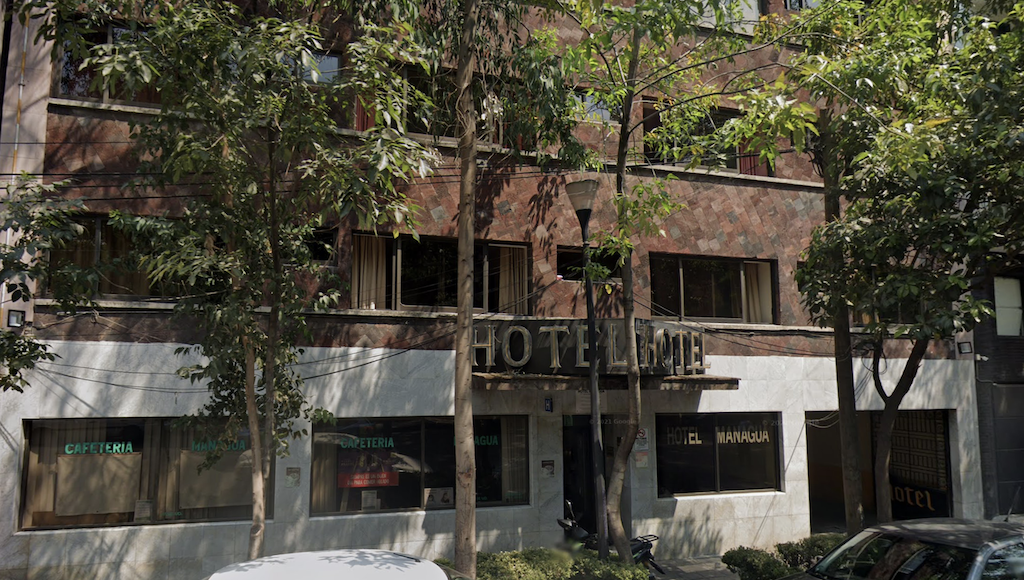
MEXICO CITY, Mexico. On the night of April 22, a transgender sex worker was the victim of an attempted femicide in a hotel in downtown Mexico City. A client attacked and stabbed her. Sex workers in the area and human rights defenders responded to the call for support and denounced the police for intimidating the young woman to obstruct her right to safety and justice, and for releasing her attacker. For her safety, Presentes is withholding the name of the woman attacked. The news was confirmed by the two organizations that supported the victim.
“The woman said she felt like he was going to kill her at any moment. She told us they started arguing, and the guy started hitting and attacking her. He put a pillow over her face, she turned her head to breathe, defended herself, and threw him off with her legs. She escaped, screamed, and someone helped her,” Victoria Sámano, founder of LLECA Presentes . LLECA is a collective that works with LGBT+ homeless populations. Victoria was one of the people who accompanied the young woman that night.
Rocío Suárez is the coordinator of the Center for Support of Trans Identities ( CAIT ). In an interview with this agency, she told this agency that the young woman was wounded in the neck and abdomen with a sharp weapon, “without causing damage to any organs.” She also stated that police officers from patrol unit MX-132-D2 of the Buenavista sector of the Secretariat of Citizen Security intimidated the woman to prevent her from reporting her attacker.
Intimidation of sex workers
“ Police actions, especially against sex workers, follow a pattern of intimidation. The police began to limit the complaint by stating that she was being held as a “detainee,” trying to justify that the aggressor was an elderly man who also had injuries,” Suárez said.
She also clarifies: being over 60 years old does not justify her aggression. “Furthermore, since it happened in a hotel where sex workers live and work (including the young woman who survived the violence), the police intimidated her, saying that this could get her into trouble, in the sense that they could close the hotel for investigation.”
In Mexico, police intimidation of female sex workers is not an isolated incident. In Mexico City alone, 64.9% of female sex workers have experienced violence at the hands of some authority figure, and only 22% have filed a complaint , according to the survey "Sex Work, Rights and Non-Discrimination ," conducted in 2019 by the Council to Prevent and Eliminate Discrimination (COPRED).
Another finding: trans women are the group that most distrusts the justice system . This is according to data from the National Diagnosis on Discrimination Against LGBTI People , prepared by the Arcoíris Foundation and the Executive Commission for Victim Assistance. The report states that the most common reasons why LGBTI people in Mexico do not report crimes are distrust, impunity, and fear. They fear being blamed for the crime and have even been advised against it. The document indicates that when they do report crimes, they face violence, discrimination, and the erasure of their identity as LGBTI+ people.
“They intimidated her to prevent her from reporting it.”
Victoria Sámano recounts that when she arrived at the scene, the attacker was inside patrol car MX-132-D2, while paramedics were attending to the young woman's injuries.
Sámano noted that the victim was “very distressed” because “the police threatened to arrest her and intimidated her into not filing a report (…) She kept saying, ‘ Who will take care of my things? If I don’t have a place to work, how am I going to eat ? I’m going to lose everything.’ She was truly very worried.” The young woman also lives in the hotel where she was attacked.
Sámano and Esther (a human rights defender and sex worker who also accompanied the young woman) tried to prevent her arrest. They were unsuccessful. The police told them they would take her to Agency 50 of the Public Prosecutor's Office of Mexico City, three kilometers from the hotel where the events took place.
“The police did not follow protocols”
When Victoria and Esther arrived at the Public Prosecutor's Office to provide support, the police officer at the door told them simply: "He's already gone, he granted forgiveness."
Rocío Suárez emphasizes: it is important to note that the word "forgiveness" should be put in quotation marks due to the context of police intimidation. "We believe that, once again, before arriving at the Public Prosecutor's Office, she may have been intimidated in the patrol car to prevent her from filing a report. We know that she never entered the Public Prosecutor's Office, we know that the police released the aggressor, and that they didn't even take her back to the hotel; she had to return on her own."
According to the Mexico City Penal Code, forgiveness must be granted before the Public Prosecutor's Office. It states: “The right to prosecute crimes prosecuted by complaint (such as certain types of assault) is extinguished, provided that the victim grants forgiveness before the Public Prosecutor's Office if it has not initiated criminal proceedings, or before the court before the sentence becomes final.”
also states that aggravated injuries are those committed with: “advantage, treachery, premeditation, retribution, by the means employed, cruelty, in a state of voluntary alteration or hatred . This last aggravating circumstance takes into account the victim's gender identity, occupation or activity, among other factors.
“The police officers violated protocols. This is serious because they are the first responders to any situation. They assess the situation, transport the victim, file the initial report, and secure the evidence. (…) Their actions go against the protocols for handling cases involving people of diverse sexual orientations and gender identities, just to name one of the protocols they violated. And that's without even mentioning the protocol for handling a complaint, because it is the Public Prosecutor's Office that, depending on how they classify the crime, determines the appropriate course of action, whether it's a formal complaint—which applies to some types of injuries—or attempted homicide.”
According to Rocío Suárez's explanation, the police inhibited this woman's rights to security and access to justice.
She warns: “This situation is connected to other recent events, such as the attempted femicide of Natalia ( Natalia Lane, human rights defender and sex worker ); and the murder of a cisgender sex worker just eight days ago. These are events that foster impunity . They also send the message that it is easy to attack a trans person or a sex worker and that there will be no consequences .”
“The State is responsible for the actions of the police.”
In response to the police actions, the Center for Support of Trans Identities will request a meeting with the Mexico City Citizen Secretariat to demonstrate that "these are not isolated incidents" and that there is a pattern of police conduct "that goes against access to security and justice."
Furthermore, they will seek out the woman who survived the attack to reiterate their support and solidarity. Rocío shared that the city's Femicide Prosecutor's Office contacted her to inform her that the woman who survived the attempted transfemicide can file a report there regarding the assault she suffered . She can also file a complaint about the police officers' actions with the local Human Rights Commission.
“Following the meeting with the Secretariat, we want to reiterate that the State is responsible for the actions of the police . It is not the fault of an individual police officer, but rather the fault of the institution itself, whose members are not following existing protocols,” the activist emphasized.
Rocío Suárez reiterated that beyond training, improving protocols requires collaborative work between institutions. The CAIT (Center for Attention to Victims of Sexual Exploitation) has proposed reactivating the Women's Lawyers program , a strategy under the Secretariat for Women, to advise and support women in initiating investigations, appearing before the Public Prosecutor's Office, and obtaining protective measures. She believes that creating a specific area within the Prosecutor's Office to serve sex workers "could empower these communities to report abuse and become a decisive factor in preventing acts of discrimination ."
We are present
We are committed to journalism that delves into the territories and conducts thorough investigations, combined with new technologies and narrative formats. We want the protagonists, their stories, and their struggles to be present.
SUPPORT US

FOLLOW US
Related notes


We are present
This and other stories are not usually on the media agenda. Together we can bring them to light.