

The Chilean state is condemned for discriminating against a Catholic teacher because of her sexual orientation.
The Inter-American Commission on Human Rights ruled in favor of Professor Sandra Pávez of Chile, who was removed from her position after acknowledging that she is a lesbian. The case of Argentina.



Share

The Inter-American Court of Human Rights (IACHR) ruled this Wednesday that the Chilean State is responsible for the discrimination suffered by religion teacher Sandra Cecilia Pavez.
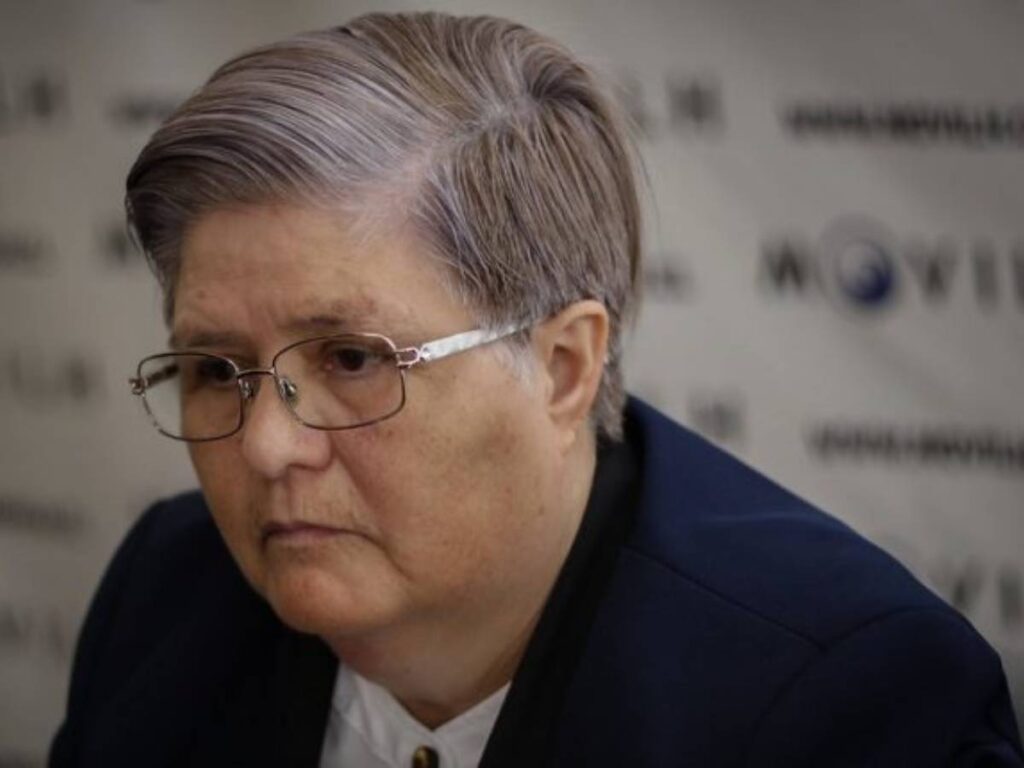
Since July 2007, the lesbian teacher had to stop teaching the classes she had taught for 21 years because the Diocese of San Bernardo revoked her teaching certificate based on her sexual orientation. Pavez initiated legal proceedings to demand protection, and in April 2008, the Supreme Court of the Republic of Chile rejected her requests. Following this refusal, she and her representatives began the process of seeking a ruling from the Inter-American Court of Human Rights.
“I am so happy, so excited. I’m overwhelmed with joy and emotion. Justice has finally been served. It’s not just justice for me, it’s justice for everyone in my country who has suffered discrimination,” of the IACHR ruling
Sandra's Story
Since 1985, Sandra Pavez, now 63, taught religion classes at the "Cardenal Antonio Samoré " Municipal School, a public school. She did so based on her professional qualifications and in accordance with certificates of competence endorsed by the corresponding religious authority, which in Chile are regulated by Decree 924. The last one she obtained was granted on April 30, 2006.
The following year, in 2007, rumors began circulating that Pavez was a lesbian. When Sandra was questioned by a local church authority about the rumors surrounding her homosexuality, she confirmed them. She was offered 'conversion therapy' and told to deny who she was. Pavez declined all these offers, and on July 25, 2007, the Vicariate for Education of the Diocese of San Bernardo finally revoked the certificate of suitability she required to continue working as a religion teacher.
As a result, Pavez was unable to teach Catholic religion classes at any national educational institution. Instead, she was offered the position of interim general inspector, which she held from 2011 to 2020.
“As you know, as a priest and Vicar of this diocese, I have tried to do everything possible to prevent this difficult decision from being made, noting that the spiritual and medical help offered was rejected by you, which I deeply regret,” the vicar stated in July 2007 in a letter addressed to the teacher.
That year, Pavez, the Movement for Homosexual Integration and Liberation (MOVILH), and the Teachers' Union filed a writ of protection with the San Miguel Court of Appeals. In it, they alleged the arbitrariness and illegality of the Vicariate's actions. They also pointed out that it violated several constitutional guarantees, such as those related to respect for and protection of private and public life and honor, freedom of work and its protection, and equality before the law.
However, in November, the San Miguel Court of Appeals rejected the appeal, ruling that the Vicariate's decision was neither illegal nor arbitrary. In this regard, it relied on Chilean law, specifically Decree 924, which empowers the religious body to grant or revoke authorizations in accordance with its principles. Thus, the State maintained that it has no "interference whatsoever" in this process.
Although Pávez filed an appeal, the Supreme Court of the Republic of Chile opted to uphold the San Martín Court's ruling. Thus, the case was presented to the Inter-American Commission on Human Rights in October 2008, and on September 11, 2019—eleven years later—it was submitted to the Court.
The IACHR's final response
The president of the IACHR, Elizabeth Odio Benito; the judges Patricio Pazmiño Freire, Humberto Antonio Sierra Porto, Eduardo Ferrer Mac-Gregor Poisot, Eugenio Raúl Zaffaroni, Ricardo Pérez Manrique; and the deputy secretary Romina Sijniensky issued the sentence - unanimously - that held the Chilean State responsible for the discrimination experienced by Sandra Pavez.
In its ruling, the IACHR determined that the State is responsible “for the violation of the right to equality and non-discrimination” and “for the violation of the rights to personal liberty, privacy, and work” to the detriment of Pávez. This was due to the “discriminatory treatment she suffered when she was dismissed from her position as a Catholic religion teacher and assigned duties different from those she had previously held.”
The Court ruled that the State is responsible “for the violation of the rights to judicial guarantees and judicial protection.” It based this on the obligation to respect rights established in Article 1.1 of the American Convention , which the Chilean judicial authorities failed to uphold by not conducting an adequate review of the case to ensure its conformity with the Convention. Furthermore, the Court found that Sandra Pávez did not have “adequate and effective remedies to challenge the effects of the decision to revoke her certificate of competence to teach Catholic religion.”
A public reparation
The court also ordered a series of reparations for Pavez. Among them, it urged the Chilean state to make a public acknowledgment of its international responsibility and to publish a summary of the judgment in the Official Gazette and in a newspaper of wide circulation in the country, as well as on the state's official website.
Regarding monetary reparations, the IACHR ruled that the State must provide a sum of money to cover the costs of psychological and/or psychiatric treatment required by Pávez. It also awarded Sandra $5,000 in damages for material losses and $30,000 for non-material losses, plus an additional $30,000 for expenses incurred by Sandra in connection with the case.
Furthermore, it ordered the State to guarantee a mechanism for challenging decisions made by public educational institutions regarding the appointment or removal of religion teachers. Finally, it deemed it advisable for the State to create, within two years, a training plan for those responsible for evaluating the suitability of teaching staff in public educational institutions, taking into account the right to equality and non-discrimination.
The Court will monitor compliance with these provisions and the State must submit a report after one year notifying the measures implemented.
As soon as he learned of the IACHR's decision, the President of Chile, Gabriel Boric, contacted Sandra to congratulate her for all the years of struggle .
Discrimination based on religious grounds
sets precedent , obviously. It is a very important ruling for the entire region,” Julieta Arosteguy, one of the representatives of Alba Rueda, the trans activist and Argentine public official who filed an Amicus Curiae brief in the case “Sandra Pavez Pavez Vs. Republic of Chile,” told Presentes.
In 2018, the Archdiocese of Salta in Argentina refused to rectify Rueda's sacramental records , as mandated by the Gender Identity Law , enacted almost 10 years prior in the country. Due to the similarity of the cases, coupled with Rueda's own history and experiences relevant to the litigation, Rueda decided to support Pávez.
Alba told Presentes that she received the ruling with great joy. “It is an important step in the recognition of gender identity and sexual diversity for us within religious spaces. We hope that it will also allow us all to move forward so that our justice systems also adopt this criterion ,” she stated.
In Rueda's Amicus Curiae, one of the 30 presented in support of Pavez, the activist requested that the Court reject "the grounds of the defense put forward by the State of Chile in terms of respect for the autonomy of the Catholic Church and respect for its religious freedom."
He also argued that the decision made by the Catholic Church and accepted by the Chilean State to revoke Pavez's certificate of competence disregards and violates his own right to freedom of belief and religion. Therefore, Rueda emphasized that the discrimination has a "religious basis" and is not merely a labor issue.
The case of Alba Rueda
Pávez's case entered the Inter-American Court of Human Rights in the same year that Alba Rueda's case entered the Supreme Court of Justice.
In 2018, Alba requested the Archdiocese of Salta, where she was baptized, to rectify her sacramental records in accordance with the Gender Identity Law and the Personal Data Law, which establishes that any personal data that is inaccurate must be rectified.
“It was a demand that began as a personal quest. After the Gender Identity Law, I started all the procedures to modify my registration data,” Rueda explained regarding the reason that led her to make the request.
However, the Archdiocese of Salta denied the request, stating that “legal fictions are foreign to Canon Law. The historical fact of his baptism with the name corresponding to his sex [male] is not fiction and, as such, is immutable.” Thus, the Catholic, Apostolic, and Roman Church considered the information recorded in the sacraments to be a “historical reality,” unlike the “legal fictions” of civil law, and asserted that it could not modify them.
“From a material point of view, they obviously can,” said lawyer Arosteguy, adding: “But, in addition, from the legal point of view of canon law they can also because they have rules that allow them to change the sacrament records, as is the case, for example, of children who are adopted after baptism.”
In response, Alba and her representatives argued that "the Church's refusal of the request was unfounded and should be presumed to be discriminatory based on her gender identity."
“We reached the first instance ruling and the judge refused to rule. She said she was not going to address this issue because she considers it a religious matter and, respecting state neutrality and the relationship between church and state, she has to respect the autonomy of the church in this sphere that belongs to them,” Arosteguy recounted.
In 2019, they appealed, and the case reached the Supreme Court, which has yet to issue a ruling. “We argued that this is not a religious issue; it is a matter of human rights, of equal and respectful treatment for Alba. It is a matter of non-discrimination against LGBT people who are part of the religious community,” stated the newly appointed lawyer.
Therefore, Alba and its representatives argue the unconstitutionality of the "Concordat" with the Holy See, an agreement between the State and the Church that recognizes the autonomy of the Catholic Church in all matters relating to the administration of worship and its internal affairs.
The right to be Catholic
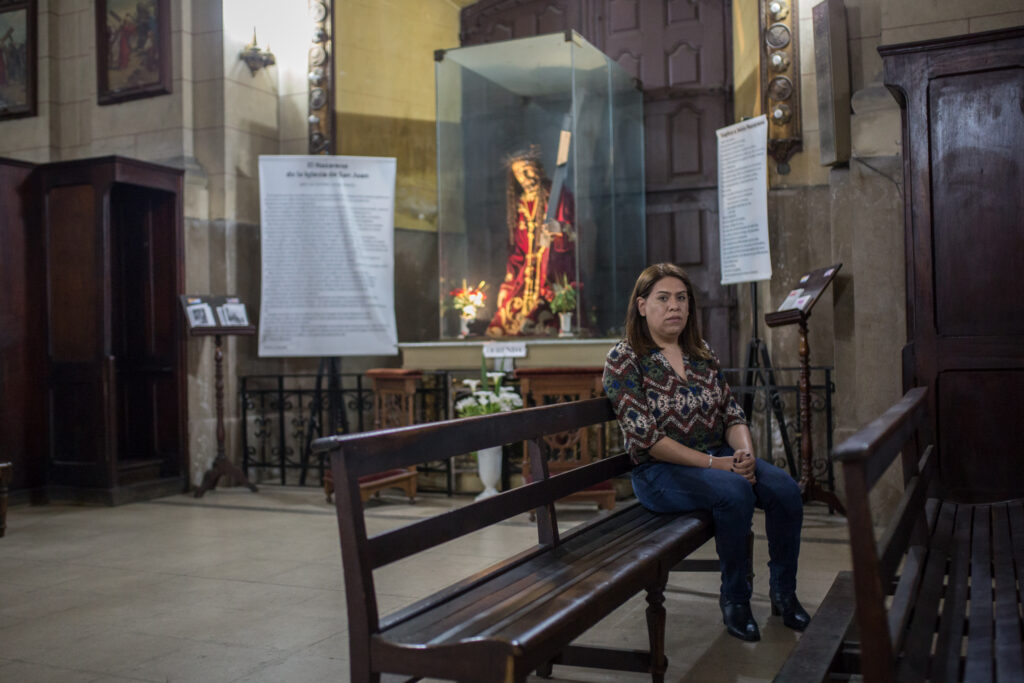
Alba identifies as Catholic. “I wasn’t going to initiate the process of disassociating myself from the Church, I hadn’t even considered it,” she said. Furthermore, she believes that there is “a plurality of voices” within the Church.
“There are many Catholic people who are part of our community or accompany it and recognize the rights we have as a fundamental part of the development of our society, our culture, our belonging within these ecclesiastical spheres,” he said.
Father Francisco "Paco" Olveira, of the Diocese of Merlo-Moreno and a member of the Priests for the Option for the Poor group , expressed throughout his life positions contrary to those of the Catholic Church, such as supporting same-sex marriage and abortion. The latter was one of the reasons why his ministerial faculties to celebrate the sacraments were revoked in the Diocese of Avellaneda-Lanús.
The priest told Presentes that he underwent a process of “deconstruction” in which the exchange with the organization Catholics for Choice . When asked about these cases, he agreed with the arguments of Alba and Pavez.
“Before the church, what I want to be faithful to is the gospel of Jesus. He never, for any reason whatsoever, discriminated against anyone; quite the contrary, he always sided with the marginalized and excluded groups of his time. In fact, that is what generated the conflict that led to his death,” he explained.
“What worries me,” he added, “is the problem within the church: how do we update Jesus’ message for these times?” He also stated that “the State must intervene when human rights are being violated.”
In her role as a public official, Alba echoed Father Paco's words: “Neutrality is not an option. Neutrality means playing into the hands of the historically most powerful. Committing to our rights means taking a critical stance against practices that continue to foster discrimination, stigma, and above all, prevent us from exercising our fundamental rights.”
We are present
We are committed to journalism that delves into the territories and conducts thorough investigations, combined with new technologies and narrative formats. We want the protagonists, their stories, and their struggles to be present.
SUPPORT US

FOLLOW US
Related notes


We are present
This and other stories are not usually on the media agenda. Together we can bring them to light.