

Paul Preciado: “I am interested in alliances that are not generated by identity but by social transformation projects”
Queer philosopher Paul B. Preciado curates Cabello/Carceller's exhibition 'A Voice for Erauso: Epilogue for a Trans Time'. Preciado draws on the historical figure known as the Lieutenant Nun to advocate for a complex, multifaceted, and contradictory understanding of sexual and gender dissidence.


Share

Paul B. Preciado, a leading international queer philosopher, humorously recalls being born in Burgos, “deep in the heart of fascism.” The grandson of a woman from Barakaldo, his family often recounted the legend of the Lieutenant Nun, the one who escaped from the convent dressed as a man and participated in the colonization of Abya Yala (the Americas). “When you’ve been assigned female at birth and have another identity, as is my case, you somehow know that Erauso’s extraordinary journey is connected to your own life,” he explains.
The author of * Countersexual Manifesto *, *Testo Junkie* , and * Apartment on Uranus* had completely forgotten about Catalina/Antonio, until he received a proposal from the artists Cabello/Carceller to curate an exhibition at Azkuna Zentroa (Bilbao) that offers a contemporary perspective on this historical figure: 'A Voice for Erauso. Epilogue for a Trans Time'. Helena Cabello and Ana Carceller form a collective that has been making queer art since 1992, before Judith Butler was translated into Spanish. They had already addressed other historical Spanish figures in their work, such as Eleno de Céspedes and Agustina González, the Shoemaker. Preciado values this exercise in finding narratives of gender transgression in local history, because he believes that the reliance on North American genealogies of sexual dissidence is one of the reasons why queer art is labeled neoliberal and postmodern.
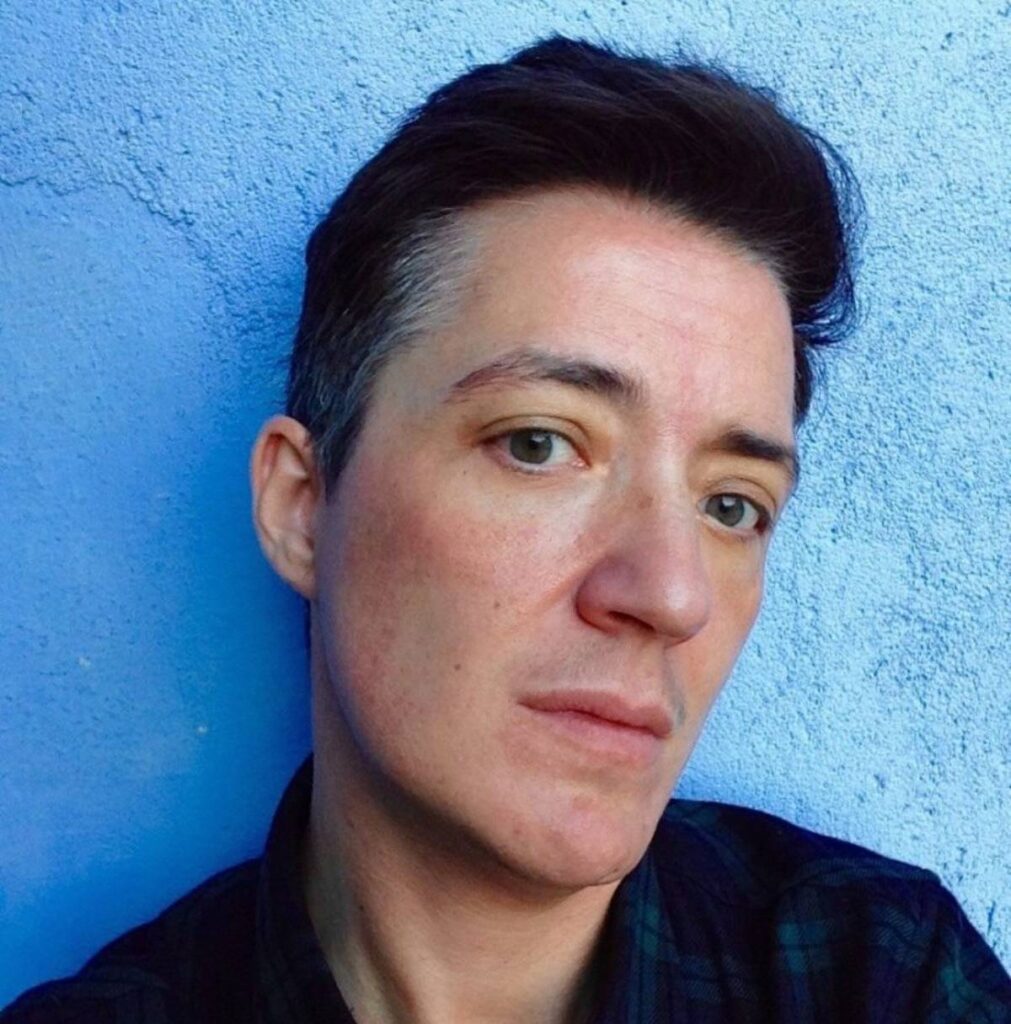
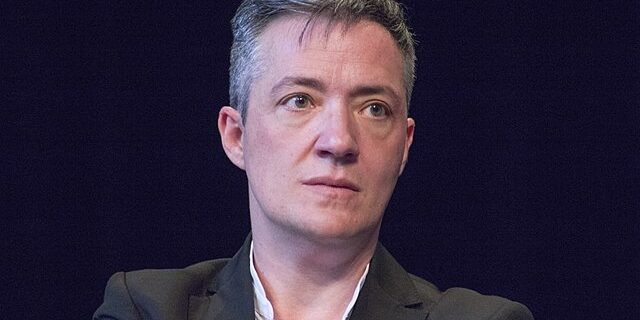
Having Preciado as curator guarantees media attention, but he sets his conditions for the press: no photos, much less for social media, and he asks that interviews focus on the exhibition. However, the enthusiasm with which he speaks about Erauso's contradictions and the exhibition's contemporary approach allows for discussion of current debates such as trans children or the rise of trans-exclusionary feminism.
-There is some debate about whether to consider Erauso a feminist, lesbian, or trans role model. Does this argument make sense?
Erauso was all of that and none of it at the same time. There's no single, definitive story; her story is open to interpretation in various ways. We now think of sexual and gender identities in a segmented way. Clearly, her escape from the convent can be understood as a process of gender emancipation. As for lesbianism, it's curious because biographies present her as a kind of Don Juan, but she never married, and no specific women were ever known to be involved with her. Talking about trans identity is even more complicated because the concept of gender didn't even exist in her time. However, she used plasters to flatten her breasts, a practice reminiscent of the binder . We're not interested in assigning Erauso a definitive identity, but rather in transforming our relationship with history and the present. That's why the Cabello/Carceller video doesn't proclaim that she was trans, but rather her figure is addressed by contemporary, unconventional trans people. Anyone who wants to defend Erauso is going to have a problem, because he is a shadowy figure who took advantage of the power networks of his upper-class environment to get involved in a process full of violence, racism, and misogyny.
–In fact, he constantly sought the protection of the Crown and the Church…
"Well, that can serve as a lens through which we can see things, can't it? In the 17th century, there were no female admirals, and therefore, that appointment is a form of gender verification. In contemporary society, the spheres of validation have shifted toward the medico-legal realm. I myself, however much of a dissident I may want to present myself, have gone through a validation process to obtain an updated passport with which to travel. Erauso is interesting because his practices are both antagonistic to and assimilated by the more normative practices of masculinity."
-Other historical figures who are trans and intersex, such as Colonel
Amelio Robles and Florencio Plá Messeguer , also distinguished themselves in the army or in armed struggle. How do you explain this trend? -There were probably many more gender-dissident practices, but those that have gone down in history, those we recognize and that have been officially certified, are those related to military spheres or that have had contact with the judicial system. Essentially, there has been little historical research on sexual and gender dissidents. In the same way that the expansion of feminism has brought forth a wave of women scientists and artists, the methodology of historical research needs to change so that other subjects can emerge.
– What interests you about Erauso from a contemporary perspective?
– One of the things I find most interesting is understanding how sexuality has shifted from being conceived within a theological-political paradigm to a scientific-medical-pharmacological one. Erauso had gender practices that weren't fixed, even if it was as a survival strategy; when he returned to Europe, before he could obtain papal dispensation, he re-identified as a woman, only to later identify as a man. Today, activist groups are proposing to move beyond the binary, male/female system and invent an administrative-legal paradigm of representation in which we would practically not have to request gender reassignment.
– Have you included a perspective from Abya Yala? –
We commissioned a text for the catalog from Susana Vargas, a Mexican writer and activist who has researched pre-Columbian gender dissidence practices. She also published a book about women who participated in men's wrestling under male names. In a few months, we will organize a colloquium that will also include this perspective.
– Last year, Mag de Santos and Duen Sacchi included Erauso in
an anti-colonial exhibition at La Virreina in Barcelona . They point out that the authorities accepted Erauso's masculinity as a reward for his bloody role in the conquest. – I had never read an autobiography in which the author boasts so much about their violent acts. It really struck me, because there's even a degree of exaggeration in the number of people he kills. Obviously, it seems that violence is one of the practices that legitimizes him as a man. If Erauso weren't a military figure, involved in the conquest, and from the upper class, he would have had virtually no chance of obtaining a legal name change or a papal bull.
-Certain feminist discourses continue to link male transsexuality with patriarchal privilege. Is this a prejudice?
-I think it's a mistake, because a trans man can never be accepted as a man in heteropatriarchal society. It's always said that transitioning means accessing a position of privilege, but that's not true. You have a male passport, but if something happens that requires you to undress in front of the police, you're immediately in a vulnerable position. Just as looking at the male past of trans women is a form of transphobia, so is thinking that trans men fully integrate into a patriarchal society and a violent masculinity. I wonder to what extent Erauso's display of violence isn't also a response to that extreme vulnerability in the context of a woman in the Navy in the 17th century.

-If a trans man will never be accepted as a man, how should we approach intervention with trans children?
-Currently, gender-constructing techniques are chemical; any girl going through puberty leaves the doctor's office with her pill in hand. However, a boy of the same age who doesn't identify with his birth-assigned gender needs to see a psychologist and wait 18 months to be prescribed hormones. It seems to me that trans children shouldn't be deprived of gender reassignment practices simply under the pretext that they are normalizing, because the alternative is to normalize them in their birth gender. I have many relationships with heterosexual families who tell me they have become queer and have read my books to understand their children. One mother tells me that, now that her 13-year-old son is taking hormone blockers, he has started saying he is non-binary: he has dyed his hair pink, paints his nails, and wears a skirt! But he still wants to have his breasts removed. In other words, he has a much more sophisticated view of how he constructs his gender; She realizes that intervening in her body hormonally does not prevent her from having practices connoted as feminine or gay.
"In my circle, I hear the lament that there are no more gay boys or lesbian girls, because now everyone is trans.
" "That's false. And besides, even if it were true, what would be the problem? On the other hand, trans girls can be lesbians and trans boys can be gay. I'm trans, but deep down, I'm still a lesbian. I wouldn't be sad at all if homosexuality as such ceased to exist, to be replaced by other forms of gender dissidence. I see heterosexuality and homosexuality as aesthetics of gender, rather kitsch, by the way. Lesbians are less so, because they've moved further away from that circuit of normalization. The interesting thing is to multiply dissident aesthetics, to see them as something malleable, something that can be transformed."
– I understand you see identity politics as a problem? Are they affecting the construction of transformative political subjects?
– I don't know if I'd call it a problem, but identity politics are heirs to a 20th-century taxonomy, with very rigid and naturalized categories that generate a great deal of conflict and exclusion. We saw it in the March 8th demonstration: I wouldn't mind if there were 50 feminist demonstrations in Madrid, but that division is related to the worrying consolidation of a feminism dedicated to preserving female identity. I'm much more interested in practices of dissent than in identity; and these are most intense precisely in those issues that create points of fracture within feminism, such as sex work, pornography, or transsexuality. Identity is ultimately a political fiction that isn't as strategic as it seems; the more violence (let's think about racialized people) and normativity there is, the more difficult it is to carry out those exercises of disidentification that can generate processes of emancipation. In the context we are in, I am more interested in what I call synthetic alliances, which are not generated by identity but by social transformation projects.
-So what's your take on the current of thought that speaks of the erasure of women? One theory is that it has served women close to power to sabotage the feminist movement's project of social transformation.
-I think that's a good interpretation. The truth is that there is a conservative and neoliberal feminism that, unfortunately, is even very well represented and entrenched within the left. For this feminism, sexual and gender dissidence are practices of social disruption, and they try to exclude them from normative feminism. I find that sad. We organized the Feminismopornopunk congress in San Sebastián at a time [2008] of effervescence of dissident practices, and back then I didn't see much feminism around. Now that feminism has become fashionable, now that everyone can be or has to be a feminist, the cursor has shifted to the right. A feminism that everyone can access has to be a much more conservative feminism. I don't feel at all identified with or challenged by that feminism.
-Anti-queer feminist voices label this current as neoliberal and postmodern.
-I think queer is identified as neoliberal because it's associated with something that comes from the North American context, but it's overlooked that it emerged precisely as a critique of the class, racial, and gender normalization practices that were taking place within the gay movement itself in the United States, when Spain was still emerging from Franco's regime. If there's anything neoliberal, it's the more normalized gay practices within the neoliberal capitalist lifestyle, but queer practices have always been dissident. What's striking is that this anti-queer front remains largely university-based, upper-class, and hasn't participated in activist social transformation. I see both a generational and class divide in that Enlightenment feminism represented by people like Amelia Valcárcel.
"Can this exhibition help us answer that?"
"The historical figure of Erauso doesn't help us legitimize anything, because there isn't much to recover from that history of colonization and national Catholicism; it could serve a hypothetical far-right trans movement. That's what's interesting: since he's not a heroic figure, it allows us to have a more complex reading of history."
*This article was originally published in Pikara . To learn more about our partnership with this publication, click here .
We are present
We are committed to journalism that delves into the territories and conducts thorough investigations, combined with new technologies and narrative formats. We want the protagonists, their stories, and their struggles to be present.
SUPPORT US

FOLLOW US
Related notes

We are present
This and other stories are not usually on the media agenda. Together we can bring them to light.