

Hate crime against a stylist in Peru: authorities are searching for the fourth suspect
Javier Pauca Serna, 56, was tied up and stabbed in the La Molina district of Lima.


Share

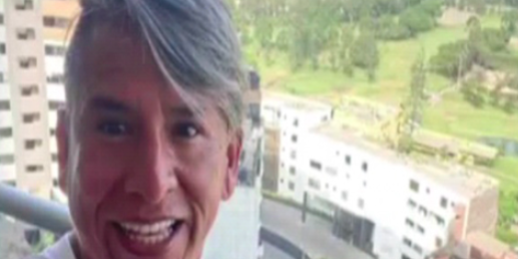
LIMA, Peru. Hairstylist Javier Pauca Serna, 56, was stabbed to death in the La Molina district of Lima. He was found on April 7 in his home, showing signs of torture. The National Police arrested three suspects in the murder. They were in possession of Serna's cell phone, credit cards, and documents, police sources told Presentes. Javier was well-loved by his family and neighbors.
The suspects Omar Huamán Ángeles (19), Luis Humberto Popayán (19), and Manuel Ocaña Morote (29) accused a fourth man, “Jordi,” of planning the robbery and murder. According to their statements, he was Serna's partner.
The three detainees have prior police records for drug micro-trafficking and physical violence.
On the night of April 10, the crime was reenacted at Serna's home. The operation ended with police firing eight shots into the air to disperse Javier Pauca Serna's family, friends, and clients. They were there to demand justice. Some attempted to lynch the suspects, who had been brought to the scene.
In Peru, hate crimes are not legally recognized. The LGBTIQ+ Movement of El Callao is advocating for local ordinances to help mitigate violence.
Stereotypes that end in crimes
“LGBTIQ people break the supposed social mandates, the norms of what it means to be a man and a woman, and when you break those rules you become more vulnerable. That's why the violence against us is more incisive; it's because we disrupt what everyone says is supposedly 'normal,' when we know that's a misconception,” explains Jonás Muñoz, coordinator of the LGBTIQ+ Movement of Callao.
According to Muñoz, awareness-raising work should be carried out from an early age, addressing the issues with the youngest people.
"We need to work from the community level; we must organize ourselves in our neighborhoods, districts, and regions to begin creating spaces for support, so that from there we can begin to strengthen and empower each other, since that could help prevent crimes like Javier's, because when you feel part of a community you help to raise awareness about the problems that occur within it," Muñoz added.
We are present
We are committed to journalism that delves into the territories and conducts thorough investigations, combined with new technologies and narrative formats. We want the protagonists, their stories, and their struggles to be present.
SUPPORT US

FOLLOW US
Related notes
We are present
This and other stories are not usually on the media agenda. Together we can bring them to light.