

A trans woman was abused in a Buenos Aires police station during a riot.
In the midst of a protest at a police station, a group of detainees sexually abused a trans woman, who should have been transferred to the women's jail.


Share

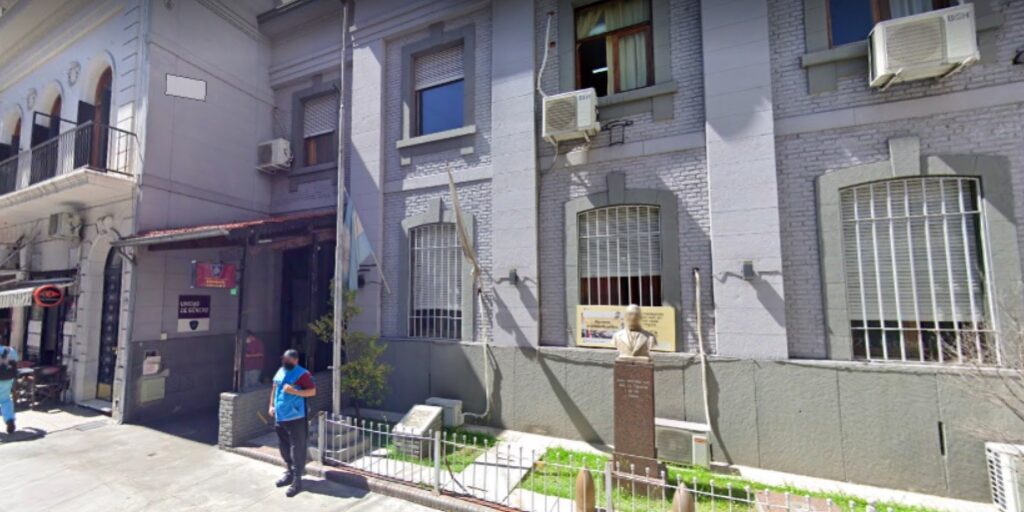
BUENOS AIRES, Argentina. In the early hours of March 24, amidst a protest inside police station number 3 in the Autonomous City of Buenos Aires, a group of men who were detained sexually abused a trans woman, who should have been transferred to the women's detention center.
The protest by 22 detainees had begun the previous day and lasted all day Thursday. But it turned more violent that night. They were demanding better conditions in their detention: there were only 11 mattresses, the place had no water, and the bathrooms were destroyed.
To that scenario, the police added another detainee: K, a trans woman who has lived in Argentina for seven years, originally from Ecuador. She had been arrested for an alleged misdemeanor and, according to sources who spoke to this publication, was taken to the police station when the conflict escalated. At no point did the officers who arrested her mention the possibility of taking her to the women's detention center.
“I arrived and all the cells were full,” K recalls in an interview with Presentes. “They put me with two gay guys, and the others were all crammed into the cells. There was no food, no water, no toilets. They had been causing trouble all day.”
The woman recounts that around 8:00 p.m. the atmosphere became even more violent. Around 10:00 p.m., the police turned off all the lights and the prisoners began to destroy everything. It was then that, among other things, they shouted that they were going to abuse K.
“The guys broke the locks and left. I didn’t move from my cell; I was the only trans woman in that police station. They came in, beat me, and threatened me with knives,” K. explains. When the police were able to more or less control the situation, the woman reported that she had been raped, and they then transferred her to a hospital, from where she was later released.
“The prisoners didn’t want to make any deals with the police. They were actually asking for their rights. They were asking for food, they were asking for water, they were asking to communicate. When the police started giving them all of that, they went back to their cells on their own,” says K. In recent weeks, she has been accompanied by the organizations Otrans and Abrigar Derechos .
“It is common for trans people to be abused in prisons and police stations.”
The area around the police station is familiar to K. She works as a sex worker in the vicinity and had never experienced anything like it. “The police are a nuisance, they harass us all night and don’t let us work. But we have to go out because otherwise, how would I live? The only way to survive is to work on the street, to earn my bread.”
“I’m recovering now. What happened to me was horrific, and I know I have to move forward; I have no other choice. But it’s common for us trans women to be abused in prisons and police stations ,” K told Presentes.
The City of Buenos Aires has to give explanations.
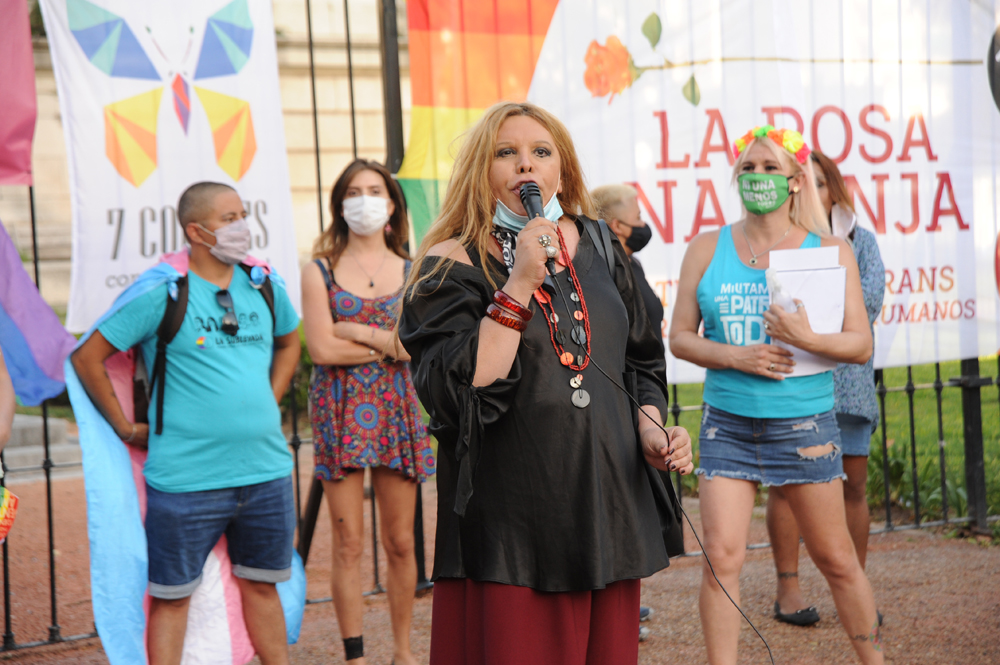
Marcela Tobaldi is the founder of the La Rosa Naranja Civil Association and a member of the Pride and Struggle Front . Upon learning what happened to K, she contacted various organizations.
“ Their gender identity was not respected ,” she tells Presentes . “It’s a disaster. We already know what goes on in the prison system; we can’t turn a blind eye. It seems this is going to keep happening. Organizations that work on behalf of trans and gender-diverse people in prison produce reports. There are some excellent reports out there, but we’re not getting any answers. The City of Buenos Aires has to provide explanations for these issues .”
Tobaldi emphasizes: “No matter how much effort we put in, and how much we are activists, and how much we are transvestites, we are trans… We continue to experience these things. Just recently, it was Trans Visibility Day , and look what we're talking about. And recently, a group of trans-exclusionary people (TERFs) filed an injunction against the 2022 Census to ask the organizers why they had included gender identity. It's terrible; they don't even want to register us,” Marcela laments.
Peak in arrests in Buenos Aires City
From the Center for Legal and Social Studies , Macarena Fernández Hofmann (a researcher with the Criminal Policy and Violence in Confinement team) says that the case reported by the detainees at Police Station 3 is neither unique nor new. “ In the Autonomous City of Buenos Aires, the number of people detained in jails and police stations is extremely high and has reached its peak: 811 people .”
One of the supposed reasons for this excessive number of cases is the reduction in federal prison admissions. But there is also an increase in arrests and excessive sentencing.
“ And it’s the City that has the biggest problem. People detained in police stations spend a lot of time in inhumane spaces . Spaces designed for only a few hours of detention. As a result of this collapse, the holding cells were created a few years ago, but today they too are overwhelmed,” says Fernández Hoffmann. “This is just the beginning of the discussion. From there, situations of violence begin against a group that is systematically criminalized, like transvestites and trans people, who must face this type of violence daily .”
The gender identity law is not being enforced
In addition to the abuse she suffered at the police station, K was also a victim of police abuse at the time of her arrest. Her gender identity, protected by a law that marks its 10th anniversary this year .
“On the one hand, there is non-compliance with the gender identity law, as well as the absence of measures to protect the physical integrity of trans and transvestite people, preventing situations of abuse and violence,” explains Josefina Alfonsín, a member of the Gender and Sexual Diversity Team of the Penitentiary Ombudsman of Argentina, Presentes
Alfonsín emphasizes that the right to consultation regarding accommodation should be guaranteed, in accordance with the Yogyakarta Principles , a set of principles on how international human rights law applies to issues of sexual orientation and gender identity. However, he explains that no institution within the criminal justice system guarantees this consultation.
“Furthermore, we understand that overcrowding and overpopulation in police stations must be questioned in terms of criminal policy, taking into account the judicial provisions of excessive and automatic application of pretrial detention. This is especially true in cases of incarceration of transgender people for drug-related offenses. As we have pointed out on several occasions, they disproportionately suffer the application of pretrial detention, with higher percentages than those seen in cisgender people, whether male or female ,” says Alfonsín.
The latter is the case of K, whose arrest did not have much basis for its realization.
Prison, the final link in the cycle of violence
The Gender and Sexual Diversity Team of the Penitentiary Ombudsman's Office states that over years of work they have detected that serious violations of the human rights of transvestite and trans people persist .
“It is important to highlight that, within the life trajectories of the vast majority of transvestite and trans people, prison is presented as the last link in the circuit of displacement, segregation, and structural state violence that affects this group . There is a lack of compliance with the gender identity law , limited access to comprehensive health care with a sexual diversity perspective, instances of institutional violence, and structural discrimination based on gender identity, among other things.”
Despite the improved legislative context, many shortcomings remain. “ Addressing prison policies that respect diversity and dissent requires a deeper change within institutions, one that should include a break from the cisnormative paradigm at all institutional levels ,” says Josefina Alfonsín.
“In our country, prison systems are very diverse. In the specific case of the Federal Penitentiary Service (SPF), in recent years, a series of measures and provisions have been adopted regarding the treatment of transgender people. But there is still no gender and sexual diversity policy that is integrated across the entire penal institution.”
Despite the limitations, Alfonsín assesses that the Federal Penitentiary Service (SPF) has made progress in best practices over the last ten years. “One example of this is that transvestite and trans identities can be housed in prisons originally designed for cisgender women, such as the Ezeiza Federal Penitentiary Complex IV,” he explains.
According to Alfonsín, since 2016, the SFP has had a specific treatment program for transgender people. “The creation of this program is a good institutional practice, although we continue to observe a number of limitations in its effective implementation.”
It remains to be seen whether the police personnel who transferred K to a cell where she was abused are being investigated, how the investigation is progressing, and what the chain of responsibility is for this violence against a trans person in the City of Buenos Aires.
We are present
We are committed to journalism that delves into the territories and conducts thorough investigations, combined with new technologies and narrative formats. We want the protagonists, their stories, and their struggles to be present.
SUPPORT US

FOLLOW US
Related notes



We are present
This and other stories are not usually on the media agenda. Together we can bring them to light.