

Río Negro: Police attempted to forcibly evict two Mapuche women from the Carrilafquen community
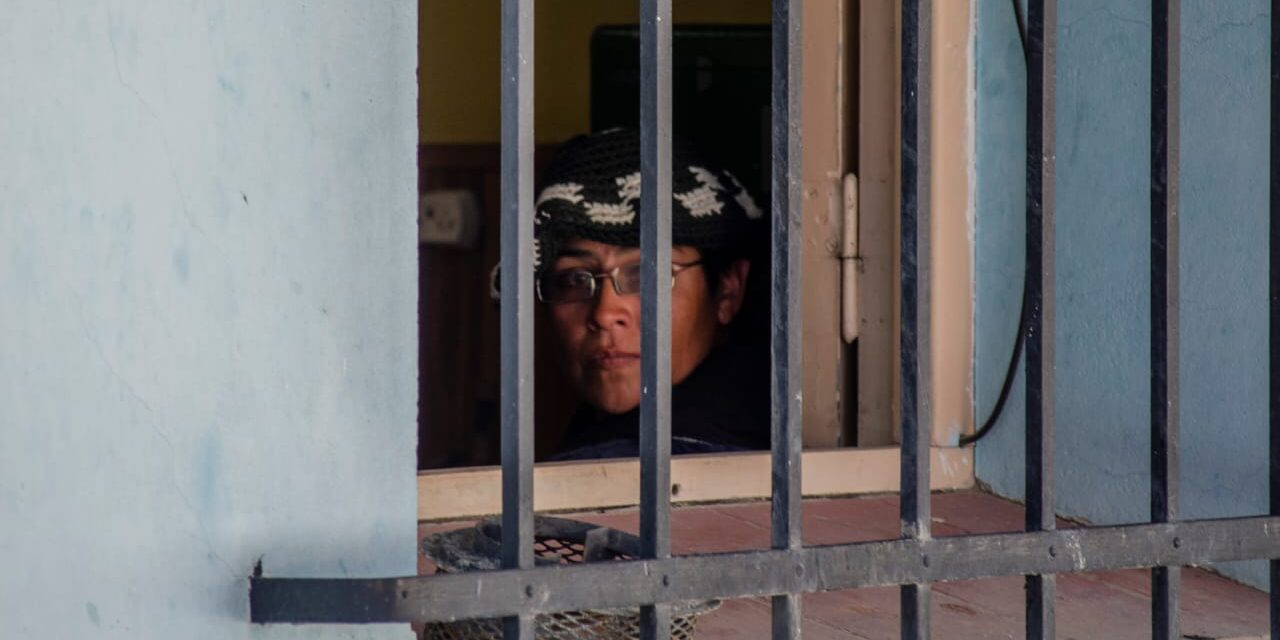
María Antual was taken to the police station and is not being allowed to return to her territory, where her injured sister remains. They are awaiting a hearing.


Share

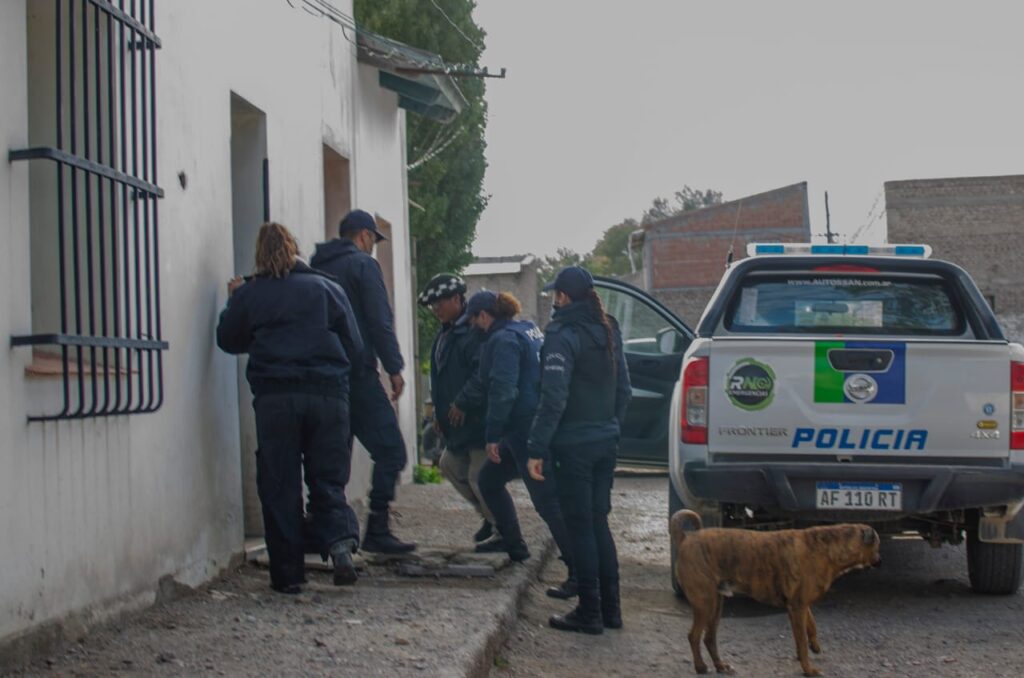
On the morning of April 1st, more than 30 police officers, including Mounted and Rural Police, forcibly entered the Lof Carrilafquen (Mapuche community) in the south of Río Negro province. The operation was accompanied by prosecutors Martín Lozada and Gerardo Miranda to evict María Antual. María is a Mapuche woman born and raised in the territory known as Laguna Verde, 15 km from the city of Jacobacci. Along with her sister Natividad, in May 2021 they decided to exercise their rights and carried out a territorial reaffirmation in the only part of the land where they still have water for their animals and access to the local road. They did so after years of waiting for the effective recognition of their territorial spaces and seeing them passed back and forth between the State and large landowners.
On April 1st, authorities attempted to carry out a surprise eviction order issued in November 2021.Since then, the women have reported that Bariloche criminal judge Juan Pablo Laurence has kept them isolated by police checkpoints that prevented them from entering or leaving the property.
“They broke down the gate, entered the rukita (house), we had locked it from the inside because we knew they would try to force their way in. At one point, a policeman kicked Natividad from outside, hitting her leg, the one she had surgery on, and the leader, struggling with the door, caught her hand against the metal plate and hurt her. The prosecutors were there watching everything. Right at that moment, Orlando Carriqueo, werken of the Mapuche Tehuelche Parliament of Rio Negro, called me; he was on his way. Prosecutor Martín Lozada came over and spoke to me and Carriqueo at the same time over speakerphone. The prosecutor then said, “Okay, I’ll take one of you so she can have the hearing with the lawyer, and then I’ll bring her back and take the other one.”
The hearing scheduled for 2 p.m. on April 1st never took place. It was suspended that afternoon, according to a notification sent to attorney Marcos Cicciarello, who was not present due to other commitments. María and her sister were denied their right to legal counsel. The eviction is currently suspended, but María is prevented from returning to her home.

Police and judicial violence
On Friday, April 1, María was taken to the Jacobacci police station, where she awaited the arrival of prosecutor Lozada, Orlando Carriqueo, and Newen Loncoman, president of the Council for the Development of Indigenous Communities (CODECI). There, they attempted to reach an agreement to halt the escalating violence they were experiencing, according to CODECI.
“Chief Prosecutor Martín Lozada intends to summarily execute an eviction order issued by Bariloche criminal judge Juan Pablo Laurence and upheld by Judge Marcelo Álvarez Melinger, disregarding the arguments of the defense, which invoked Indigenous Law, stating that the land in question is for communal use, and ignoring the legal effect of the appeals filed by that party. This arbitrary action was further upheld by the Appeals Court judges Carlos Mohamed Mussi, Rita Custet Llambí, and Adrián Zimmermann, and by the members of the Superior Court of Justice, where an Extraordinary Federal Appeal is currently pending, seeking the intervention of the Supreme Court of Justice of the Nation. The Center for Legal and Social Studies (CELS) also filed an amicus brief, which the Appeals Court rejected,” said attorney Cicciarello.
“Judge Laurence handed down the sentence, but he never listened to us. Every time we asked to speak, the connection was cut off, and we were left talking to ourselves. Every time the defense attorney said we were going to speak, the internet cut out. Seven hearings. I was only able to speak at one, and that was with the attorney for the plaintiff,” María told Presentes.
Business interests
Edgardo Adem, a businessman and cattle rancher, claims ownership of the land and accuses María of being a "squatter." "That place belongs to us, because it's where our grandparents and parents lived and where we grew up," says María.
In 2000, with the signature of the then governor of the province of Río Negro, the State sold those lands to Adem for the price of $9,344.90 for 9,787 hectares, according to the deed presented in this case, which Presentes was able to access.
The eviction was temporarily suspended thanks to the intervention of the Mapuche Tehuelche Parliament and the Codeci. The organizations contacted the Minister of Women, Gender and Diversity, Elizabeth Gomez Alcorta; the Secretary of Human Rights, Horacio Pietragalla; the National Institute of Indigenous Affairs (INAI); and their respective lawyers to establish a negotiation table, which is expected to be finalized this week.
Meanwhile, María Antual was prevented from returning to the territory, and her sister Natividad remained there alone. “My sister is experiencing a spike in blood pressure, alone in the rukita (traditional Mapuche dwelling). She has a bruise on her leg, a cut and swollen hand, and she suffers from hypertension. She is alone, surrounded by four patrol cars and police.”
Share
We are present
We are committed to journalism that delves into the territories and conducts thorough investigations, combined with new technologies and narrative formats. We want the protagonists, their stories, and their struggles to be present.
SUPPORT US

FOLLOW US
We are present
This and other stories are not usually on the media agenda. Together we can bring them to light.