

Peru: After five years of struggle, two lesbian mothers take their case to the IACHR
The refusal of the Peruvian justice system and state to recognize the co-maternity of Darling and Jenny violates a series of rights of them and the child.


Share

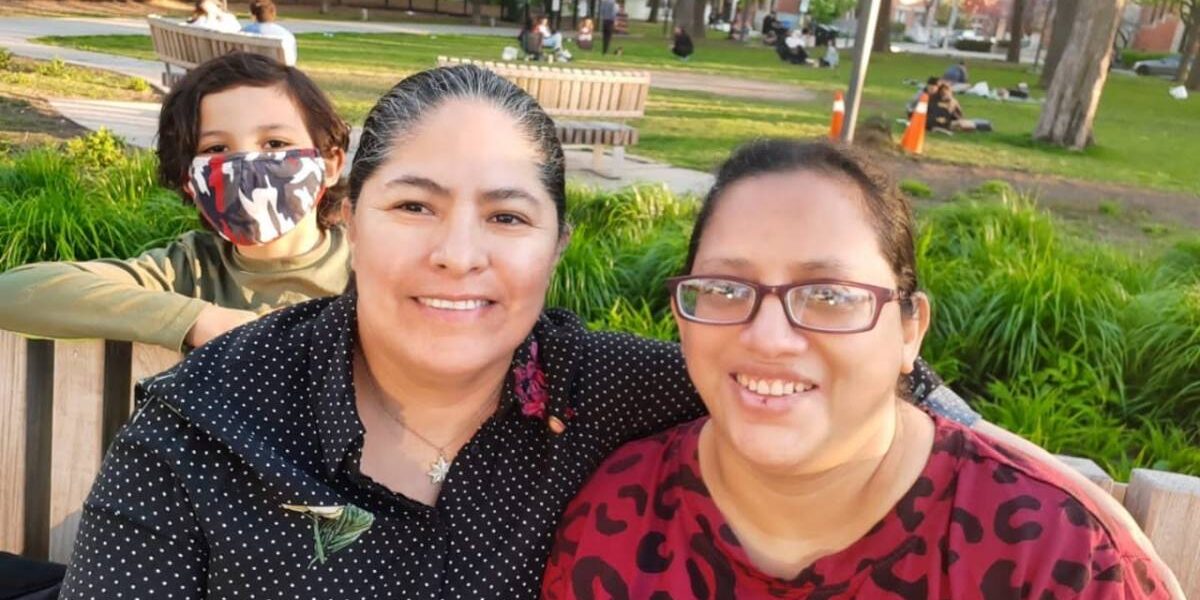
LIMA, Peru. After five years of battling in Peruvian courts, Jenny Trujillo and Darling Delfín, the two mothers fighting to be recognized as the mothers of their child , will go to international courts to demand the justice that their country does not give them.
Dakarai, their young son, is now 7 years old and still lacks a National Identity Document recognizing that his family consists of two mothers. For this reason, they have requested precautionary measures from the Inter-American Commission on Human Rights (IACHR) against the Peruvian State, which continues to violate his rights.
The two mothers experienced continuous discrimination from the Peruvian Judiciary and the National Registry of Identity and Civil Status, who have blocked the possibility of their son's right to name and identity being respected.
“Since December 2016, we have been demanding that Reniec treat our son and us, his mothers, like any other Peruvian. But both Reniec and the Peruvian Judiciary have been discriminating against us and violating our rights by keeping us in this process for more than five years for something as simple as issuing a national identity document (DNI) that registers our son's relationship with his two mothers. A procedure that shouldn't take more than two weeks is taking us several years, and that is discrimination and violence,” Darling Delfín stated at a press conference.
For her part, Jenny Trujillo added: “We demand fair treatment. The Judiciary and the National Registry of Identification and Civil Status (RENIEC) treat us like second-class citizens. It's unacceptable that we've been under so much stress, fear, and indignation all this time. It's making us sick, both emotionally and physically, and it robs us of our peace of mind. Simple things like taking him to the health center or the hospital, or enrolling him in school, or getting family insurance, are complicated for us because only Darling can represent our son.”
Children's rights
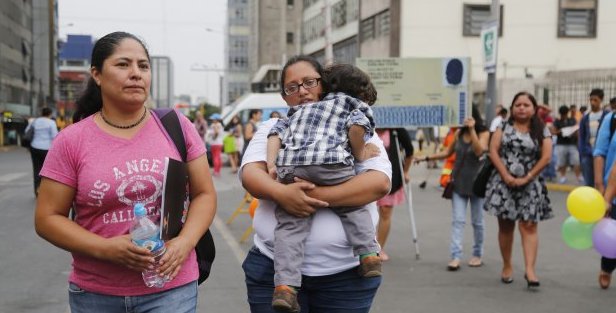
They describe the difficulties they face every time they have to complete any paperwork for their son . Jenny is denied legal representation when she goes to the hospital, as they won't allow her to be registered on the family record with her son. They also can't have private insurance for all three of them, and they aren't allowed to travel abroad because they need notarized permission from the father. If Darling gets sick, Jenny wouldn't be able to care for her son, and if she dies, Jenny wouldn't be able to obtain custody.
“They don’t know the fear, the pain, that I feel every time I have to face that kind of discrimination, having to endure it so my son doesn’t feel our pain. My little boy might think there’s something wrong with his family, and that’s not true. The Peruvian state abandons us for being lesbians; they don’t care about the well-being of children, as the head of Reniec, Carmen Velarde, says,” Jenny comments.
A chain of discrimination
Both women filed a writ of amparo (a constitutional protection action) against Reniec on July 21, 2017, four years and seven months ago. Such a writ should not take more than six months to resolve, but it took the Peruvian judiciary more than four years, despite the clear violation of their rights.
In October 2021, they received the sentence from Judge Jonathan Valencia ordering Reniec to deliver the child's ID card with both mothers registered , but Reniec's attorney, Marco Antonio Palomino, appealed this sentence.
Furthermore, Judge Valencia did not enforce his own decision and sent the lawsuit to the second instance, where it could remain for several more years until it is resolved.
The fact
A precautionary measure is a protection mechanism of the Inter-American Commission on Human Rights (IACHR), through which it requests a State to protect one or more persons who are in a serious and urgent situation of suffering irreparable harm. The two mothers hope that the IACHR will address their request promptly.
We are present
We are committed to journalism that delves into the territories and conducts thorough investigations, combined with new technologies and narrative formats. We want the protagonists, their stories, and their struggles to be present.
SUPPORT US

FOLLOW US
Related notes

We are present
This and other stories are not usually on the media agenda. Together we can bring them to light.