

What is the situation of women and the LGBT population in prisons after the pandemic?
They report an increase in violence and neglect. There is also a lack of access to healthcare.


Share

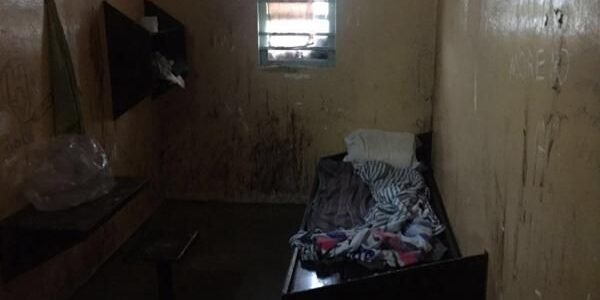
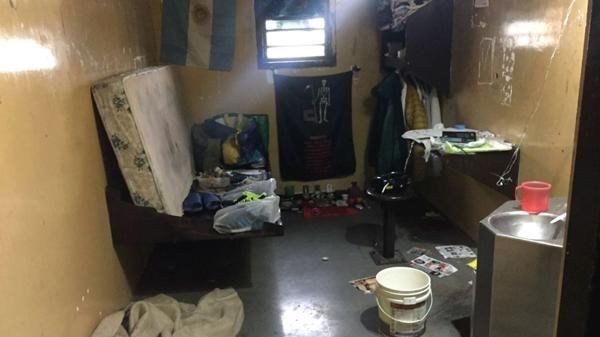
BUENOS AIRES, Argentina. The “new normal” left in the wake of the coronavirus pandemic also offers much to analyze in places of confinement. In prisons, the pandemic has only exacerbated pre-existing problems . And it has starkly exposed how these systematic practices disproportionately affect minorities within the prison walls: women and gender non-conforming individuals.
They are few in relation to the total prison population - 685 cis women and 31 trans women in the Federal Penitentiary Service, out of a total of 10,491 people imprisoned at the end of February. But they often bear the brunt of human rights violations.
Stigmatized like the rest of the prison population but even more invisible, women and gender-diverse individuals in various prisons have managed in recent months to raise awareness of specific demands in the face of pressing situations. This was the case for cisgender and transgender women imprisoned in Penitentiary Complex IV in Ezeiza, as well as intersex people detained in Los Hornos, Buenos Aires Province, and in Bouwer Prison, Córdoba. Lack of water, insufficient food, and lack of access to treatment and medical care—even when there were symptoms or confirmed diagnoses of Covid-19—were some of the issues they raised their voices about. The response, in cases like Córdoba, came in the form of repression.
Situations that are part of a whole about which there is still much to learn.
There is also a shortage of data
Only since 2015 has the National System of Statistics on the Execution of Sentences (SNEEP) registered the trans/travesti population deprived of their liberty.
The population increase since then has been significant: from 33 people that year to 124 in 2020. The Buenos Aires Penitentiary Service houses 77% of this population. And Law 23.737 – the Drug Law – is the main cause of incarceration for trans/travesti women, who are overrepresented in prisons compared to other groups.
In 2017, 43 percent of women (1,561) and 70 percent of all trans people (89) were imprisoned for these crimes, according to the Center for Legal and Social Studies (CELS) in its 2019 report: “War on Drug Trafficking, War on the Poor”.
According to the National Penitentiary Ombudsman's (PPN) presented in 2020, the number of incarcerated cisgender women and transgender people has shown a "clear increase" for decades . However, it remains a very small minority.
According to data from the National Directorate of Criminal Policy, under the Ministry of Justice and Human Rights of the Nation, towards the end of 2019 there were more than 4,500 cis women and trans people detained in Argentina: 5% of the total prison population.
This growth is occurring globally: between 2000 and 2017 the female prison population increased by 53.3 percent, while the male prison population increased by 19.7 percent, according to data cited in the report " Trans Women Deprived of Their Liberty: Invisibility Behind the Walls ," promoted by the PPN, together with regional organizations.
“Prison weighs heavily on the entire population, but especially on women and gender-diverse people,” emphasizes Josefina Ignacio of the National Committee for the Prevention of Torture (CNPT). “Because prisons are built, were conceived, for men. From the buildings themselves, to the treatments, to the prison system . Women have had to adapt to that. Prisons operate with a very patriarchal logic, governed by an absolutely top-down institution, which makes them very sexist. Trans or cis women who arrive in prison have generally already been violated, and in most cases, they have suffered gender-based violence. Almost all of them. You find it in each of their testimonies. And they continue to suffer it inside.”
Less health
“Everything is affected by the pandemic right now. Prisons have always had many structural problems, issues related to treatment. But the pandemic made them more visible and exacerbated many of these problems,” says Verónica Manquel, Coordinator of the Gender and Diversity Team at the National Penitentiary Ombudsman's Office (PPN).
She also highlights that a particularly worrying issue is access to healthcare. “In 2020 and 2021, the problem of access to healthcare became increasingly critical. And this affected different groups in different ways. For women and the trans population, access to checkups in general, and specifically to sexual and reproductive health care, were very sensitive issues. For a long time, the Federal Penitentiary Service (SPF) had no deaths of women and trans people, but in 2020 there were cases, not directly related to Covid but due to deficiencies and delays in access to care that resulted in critical situations.”
According to Manquel, “the pandemic was exacerbated by already critical in-prison healthcare systems, and this was compounded by the fact that all healthcare systems were in crisis nationwide. Access to interventions outside prison walls was cut off or became more difficult. Everything depended on care within the prison, and that was a problem.”
“Even when I said I had Covid symptoms and a high fever, they wouldn't take my temperature or test me,” a detainee, who preferred to remain anonymous, told reporters at the end of January from the Ezeiza Penitentiary Complex IV. The lack of sanitary guarantees described via WhatsApp included a lack of drinking water “since Christmas” and “a rat infestation that they haven't exterminated, their justification being that they don't have the budget to buy poison.” It wasn't until mid-February that the situation began to change.
“There is a difficulty with access to healthcare in all units, and even more so in women's units, which have more specific health needs: gynecological and obstetric care. With Covid and the pandemic, there was a high demand for psychological assistance. There were suicide attempts. For incarcerated people, especially women without visits from their children, the pandemic was very hard. They were without contact for much longer than we were,” compares Ignacio, from the CNPT.
According to Victoria Darraidou, Coordinator of the Democratic Security and Institutional Violence team at CELS, “this population suffers from health problems with a higher incidence than the general population. Among the most common pathologies is HIV/AIDS. Treatments and assistance are often interrupted or delayed during incarceration. Furthermore, in most cases, hormone treatments are suspended, causing physical and psychological health problems. In addition, trans/travesti people report unequal and discriminatory treatment by prison medical staff and excessive delays between requesting medical assistance and receiving the required care.”
More support
Adriana Revol, who identifies as an “anti-prison activist,” speaks from Córdoba to denounce the situation of cisgender and transgender women imprisoned in Bouwer, a prison under the jurisdiction of the provincial government. She agrees that “the pandemic has exacerbated long-standing problems” and warns that medical assistance “is not just scarce, it’s nonexistent.”
The January heat wave found the inmates at Bouwer prison almost without water. “The water was cut off at midday and returned at midnight, when they were locked in their cells, unable to go out to shower. The food wasn't enough, because it was meant for 10 people—the capacity of that isolation unit—but there were 19. They asked for paracetamol, ibuprofen, to bring down the women's fevers, because that's where the Covid-positive women were. They asked for the basics and they weren't given them. Medical assistance was nonexistent. That was the last straw. What was the state's response? Repression. The special security forces of the Penitentiary Service entered with rubber bullets.”
Revol recounts that, within the context of this repression, “some people were taken to restraint beds, where they are tied hand and foot, sometimes even torso. They are kept there for hours or days until they recover, they say, because the doctor signs this prescription. Córdoba is the only province where these practices exist. We are fighting against this, but it is endorsed by the Judiciary, which is complicit in the torture. It wouldn't exist if the Judiciary didn't endorse it.”
According to the anti-prison activist, "women suffer more from this restraint measure, like psychotropic drugs and chemical vests. Because we are considered crazy and hysterical, we suffer more from this type of repression."
It was on January 9th that the protests turned into restraints. The day before, a group of detainees had tested positive for coronavirus. To isolate them, they were sent to a small, unventilated area without a refrigerator, on days of sweltering heat. The quarantine did not include medical attention. After more than 24 hours in this confinement within a confinement, they burned a mattress in protest. Fire extinguishers were insufficient, and hoses arrived too late. One woman had to be hospitalized with severe burns. For the others, punishment awaited: restraints or transfers.
Fewer visits
Another form of “torture,” Revol says, is the transfers. Because, in the case of cis and trans women, and given the smaller number of detention facilities available to them, transfers mean greater distance. And greater distance means fewer visits, in groups that are already less visited than male groups.
“Studies show that there are fewer visits to women. In many cases, this is because women's prisons are far from urban centers, making access more difficult. Often, they don't have family members who can visit them—especially in the case of the trans community. That's where organizations fill that role,” explains Manquel, from the PPN.
These kinds of networks were established in Bouwer by the Anti-Prison Solidarity , of which Revol is a member. But she clarifies that those who are actually doing the work are “a group of young women who deliver packages to trans women who don't receive visitors, the most abandoned ones.” Since the pandemic began, they've been bringing them medicine, clothes, shoes, yerba mate, and cookies. “We go once or twice a month. The expense is enormous,” says Revol, adding that “the prison service puts up every obstacle imaginable. They only allow each person to leave enough for three people, so several of them have to travel. They're the ones putting their bodies on the line, buying things, enduring hours and hours of waiting.”
“Visits for detainees serve a dual purpose: not only providing contact and emotional support, but also material necessities. For women and trans people, who already receive fewer visits than men, the pandemic left them even more isolated. This significantly worsened their already difficult lives in prison. Visits gradually resumed in 2021, but they still face some challenges. This is also because Covid continues to circulate, and many cellblocks are being isolated. There is a significant resurgence of cases in many prisons, particularly women's prisons, such as Complex 4,” Manquel explains.
From there, one detainee describes how “the visiting room is not in suitable condition to receive our family and friends. The paperwork required to prove the relationship is an almost impossible bureaucracy to complete, and there are only three slots for friends.” The deterioration of the building conditions—such as those of the visiting room—also worsened during the pandemic, according to specialists who returned to tour the cellblocks in 2021.
“Women who go to prison are much more stigmatized within their families and neighborhoods than men who go to prison. They don't receive visits, food, or personal hygiene items. Incarceration is much more burdensome for women. Many were heads of households, the pillars of their families—their children, parents, and sick relatives. Going to prison breaks that bond, and it weighs heavily on them,” Ignacio explains. The destruction of the mother-child bond is described as an “added punishment,” extending the burden to the sons and daughters of incarcerated women.
The annual report presented in 2019 by the CNPT to the Bicameral Commission of the Ombudsman warned that “all these additional hardships suffered by incarcerated women are exacerbated in the case of an emerging group in Argentine prisons, namely foreign women, who represent a high percentage in federal prisons, the vast majority accused of drug law violations. Insofar as legislation and prison practices do not take into account their specific needs and problems, cisgender and transgender women suffer violations of their fundamental rights to a greater degree and constitute one of the most vulnerable groups.”
More discrimination
In September 2020, the Federal Oral Court of Posadas issued a favorable ruling so that a young trans woman housed in the CPF IV of Ezeiza could access house arrest, because she was in a situation of vulnerability within the framework of her detention conditions.
According to the PPN's statement at the time, the 19-year-old "systematically suffered discriminatory acts and psychological violence due to her gender identity. Furthermore, the central argument of the request was the lack of suitable accommodation , since "the SPF does not have a unit to house transgender women under the age of 18. Consequently, given the lack of options that respect the detainee's right to gender identity, the only available option, compatible with respect for personal integrity and that will allow for the cessation of discriminatory situations, will be through the use of house arrest."
The lack of housing options that align with gender identity, and the resulting discrimination and violence, are among the specific problems faced by this group in prison. The criteria are not uniform: in Argentina, trans women are generally housed with cis women, there are also specific cellblocks, and there is little clarity regarding situations such as the transition processes that occur within prison walls.
Josefina Alfonsín, head of the PPN's LGBT+ project in prison settings, is working on a diagnostic survey through interviews with incarcerated trans people. The process was initially planned before the pandemic, but Covid-19 forced its postponement and a revision of the survey's objectives. The survey now also analyzes the pandemic's effects on this community.
The analysis considers issues such as living conditions prior to arrest, the moment of arrest itself, situations of selective prosecution, and the impact of the Gender Identity Law in police stations. One of the aspects that emerges, although the work is still ongoing, concerns the “right to consultation” regarding the place of detention.
“There is a consensus: neither the Judiciary nor the Penitentiary Service consults about the place of accommodation. What ends up happening is that there are situations of discrimination by both prison staff and other inmates,” Alfonsín states. She maintains that “there should be more accommodations for LGBTQ+ individuals and a strengthened right to consultation regarding their living arrangements within the prison. A comprehensive approach to sexual diversity needs to be developed throughout the Federal Penitentiary Service.”
What happens to the trans population after the lockdown?
Another aspect of the diagnosis, linked to prior living conditions, also reveals a common experience for many of the detained trans people. Lack of job opportunities and family separation are part of a combination that has repercussions after incarceration. “We need to develop post-prison policies for this group,” urges Alfonsín, noting that the existing prejudices within the judiciary prevent them from granting house arrest, for example, because these women don't have a home. They face difficulties accessing alternatives to incarceration, and there is a lack of policies for when they regain their freedom,” she summarizes.
“It is very common for the self-perceived gender of transvestite and trans people to be disrespected. This act of discrimination is usually recorded in police reports and then carried over into court cases. The mistreatment and acts of torture perpetrated by prison staff, which are commonplace among the general population, take on a sexualized and more widespread connotation when it comes to the trans/travesti population,” explains Darraidou, from CELS.
None of this is unique to Argentina. And while each country in the region has its own particularities when analyzing the situation of transgender people, “the cultural pattern of criminalization is there,” Alfonsín states. “Only in recent years has information begun to emerge about what happens to these people in prisons. In each country, it varies according to local problems; in El Salvador or Mexico, there are problems with organized crime, but it is indeed a highly criminalized population . And if you analyze the living conditions before being captured by the penal system, you also find a reality very similar to that of Argentina. Here, the Gender Identity Law is cutting-edge, but within the prisons, although some progress has been made in considering a different approach to prison policy, it is not enough. There is still a long way to go.”
We are present
We are committed to journalism that delves into the territories and conducts thorough investigations, combined with new technologies and narrative formats. We want the protagonists, their stories, and their struggles to be present.
SUPPORT US

FOLLOW US
Related notes

We are present
This and other stories are not usually on the media agenda. Together we can bring them to light.