

Camps and prolonged struggle for access to indigenous and peasant rights in Paraguay
In a context of increasing criminalization of the struggle for access to land, organizations set up tents in the country's capital and in central locations in the departments to denounce evictions.


Share

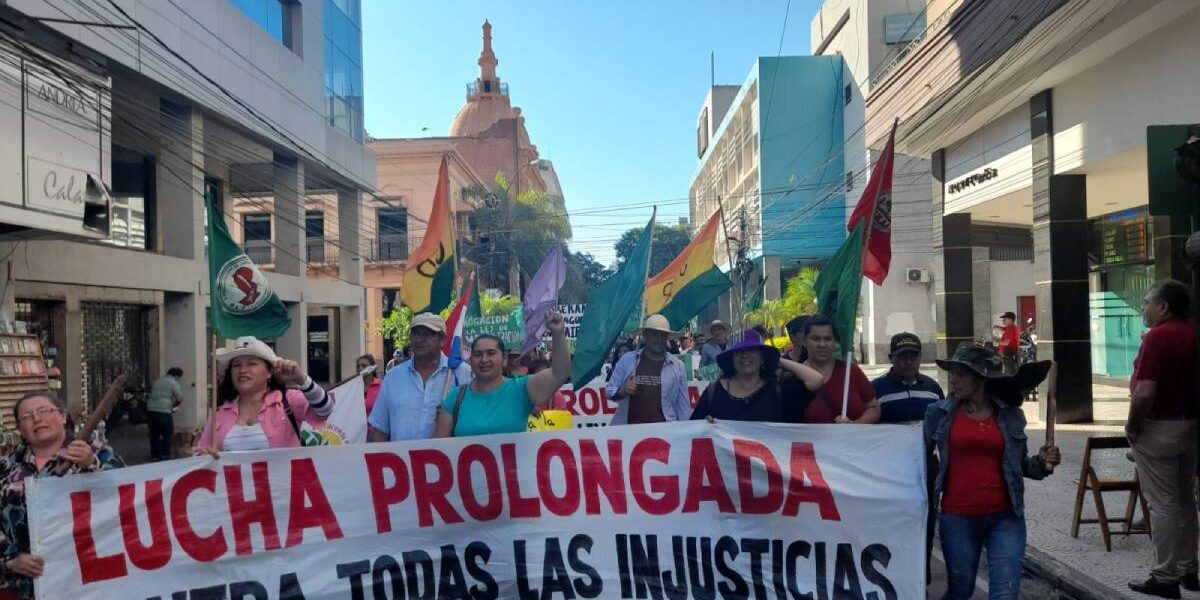
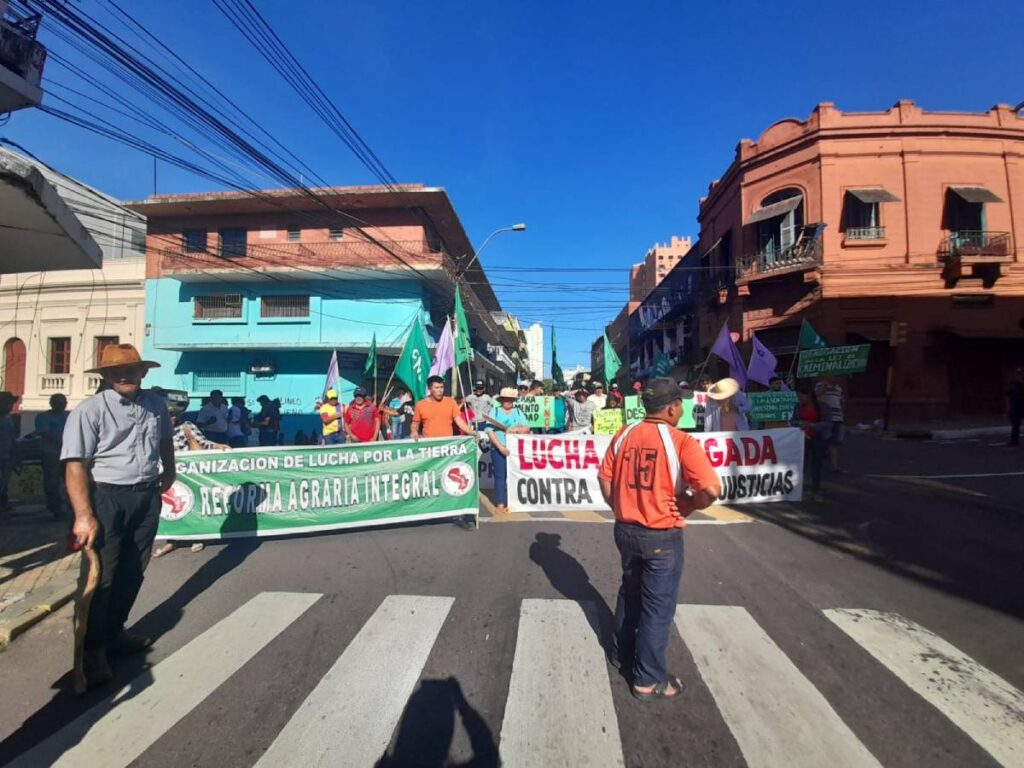
ASUNCIÓN, Paraguay. Fourteen days ago, the #ProlongedStruggle began setting up its tents in O'Leary Square in Asunción. There, the organizations are gathered with the national leadership, while pickets and road blockades are taking place in departments throughout the country.
In a context of increasing criminalization of the struggle for access to land, the organizations deployed in the country's capital and in central points of the departments, as the only way to denounce the persecution and evictions experienced by peasant and indigenous communities .
This constant violation of rights left families in a state of total vulnerability, denying them the right to decent housing, the right to food, the right to water and sanitation; that is, denying them the most basic human rights, which the State itself must guarantee.
Adding to this worrying situation for the countryside is the prolonged drought that has been affecting the country for 3 years, as well as hailstorms and some intense rains that destroyed what was produced during 2021.
Peasant and indigenous families lost almost all of their subsistence farming, which is their main source of livelihood. Consequently, they also have no produce to sell.
To date, the government of Mario Abdo has not proposed public policies that can truly help families cope with the crisis.
A country in protest
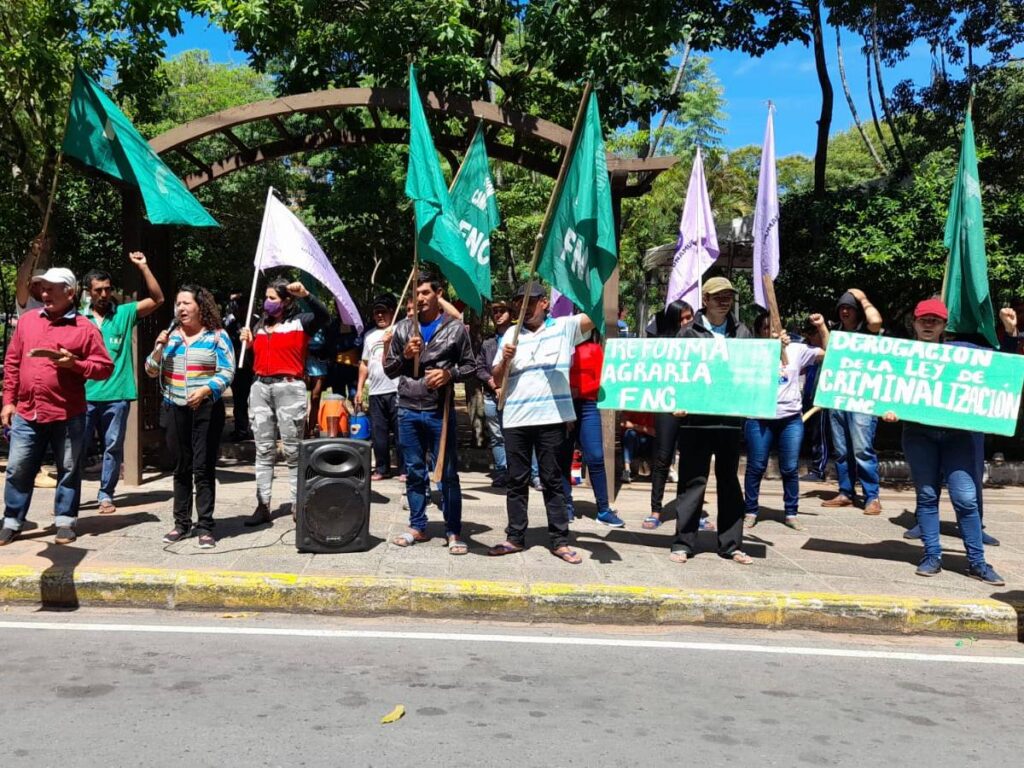
Alicia Amarilla is a peasant leader with Conamuri, Via Campesina Paraguay , and part of the national leadership of the #LuchaProlongada (Prolonged Struggle). She explained to Presentes that this struggle by rural and urban organizations is a commitment made last year following the amendment to Article 142 of the penal code, which criminalizes the fight for land, under the law known as Zavala-Riera.
At the end of November 2021, the National Peasant, Indigenous and Popular Plenary – formed as a result of the growing state violence towards the communities – decided to carry out the historic mobilization of December 10 , 2021, where 10,000 people marched.
also planned larger mobilizations in March 2022, all aimed at stopping the mass and violent evictions. The organizations showed solidarity with each other and reoccupied the Cristo Rey peasant community and the Hugua Po'i indigenous community, which had been violently evicted.
The national leadership is based in Asunción and from there directs the departmental mobilizations; San Pedro, Caaguazú, Itapúa, Alto Paraná.
In the city of Asunción, marches and rallies are held daily to inform citizens about the mobilizations taking place, in a conversation between rural and urban areas.
They also organize conversations in Ñomongueta Square about the injustices of the country, the consequences of climate change; all with the aim of explaining their presence while being so far from their homes/territories.
“For us, it’s a long struggle, because we don’t know when it will end. We decided to do it at the departmental, district, and community levels, because the economic conditions don’t allow us to come and resist in Asunción. People decided to demonstrate near their homes and contribute from there to make community kitchens,” Alicia explains when asked about the meaning of #LuchaProlongada (Prolonged Struggle).
The main demands of the organizations
The repeal of the Zavala-Riera Law criminalizing the struggle for land.
The trial of the Attorney General of the State, Sandra Quiñónez.
Public policies for agricultural production.
A patriotic and sovereign stance in the Itaipu negotiations.
Another key point of the petition is the trial of Attorney General Sandra Quiñonez, who is accused of favoring certain powerful groups, including mafiosos and criminals linked to drug trafficking and politics in the country. The official, moreover, targets the most vulnerable groups with accusations and imprisonment. She is also accused of authorizing the modification of the penal code.
On Wednesday, March 16, the impeachment motion was presented in the Chamber of Deputies, but no vote was taken because the session lacked a quorum after the reading. This was due to the actions of Colorado Party deputies from the Honor Colorado (Cartista) and Añetete (pro-government) factions, who were joined by the Llanista Liberal faction.
On the morning of Tuesday, March 22, the second and tense session took place. Amid heated discussions, a roll-call vote was finally held, and Sandra Quiñónez was saved by Colorado Party deputies from the Cartes, ruling party, and Llanista factions. The impeachment request was rejected in the Chamber of Deputies with 37 votes in favor, 32 against, 6 abstentions, and 5 absences.
Another issue the organizations are addressing is the debate on the sovereignty of the Itaipu Binational Dam. They demand that popular sectors have a say in drafting the treaty to benefit the people. The Itaipu treaty will be debated with Brazil in 2023.
Women's participation
Alicia's reflection highlights the struggle for land and resistance in Paraguay. Women are the most victims of violence and, at the same time, the most active participants in their communities, putting their bodies on the line in defense of their territory.
“ There is a lot of participation from women because we are the ones who are hardest hit by crises. Climate change affects us, the feminist economy comes from production; from selling eggs, corn, cheese at the departmental fairs, with our fresh products, and our Indigenous sisters with their handicrafts, and now nothing is selling. The fair is over and we women are in extreme poverty . Our children can't even go to school anymore because they don't even have shoes (sandals),” the leader stated with concern.
She added another growing social problem: the closure of rural schools . Only a few remain in the departmental capitals, meaning students must travel kilometers by motorcycle to reach one. And often, this means being denied the right to education because they lack the resources to attend. “Women, girls, and boys are condemned to live in ignorance; there are no development policies,” she stated.
So far, the government's best offer has been to hand out chicks, seeds, and some goods, which, according to the #ProlongedStruggle organizations, does not solve the root problems.
They have decided not to give in to the government's offers and to continue pressing for their demands, which they believe are the only way to solve the problems in the countryside and the country.
Self-management and solidarity
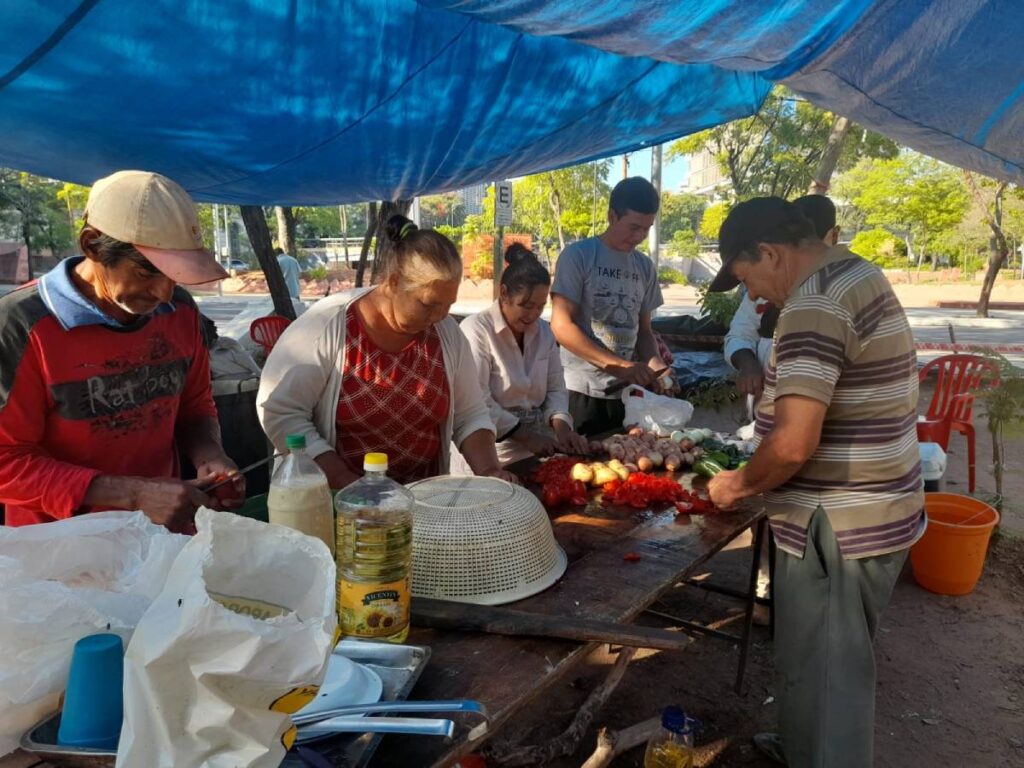
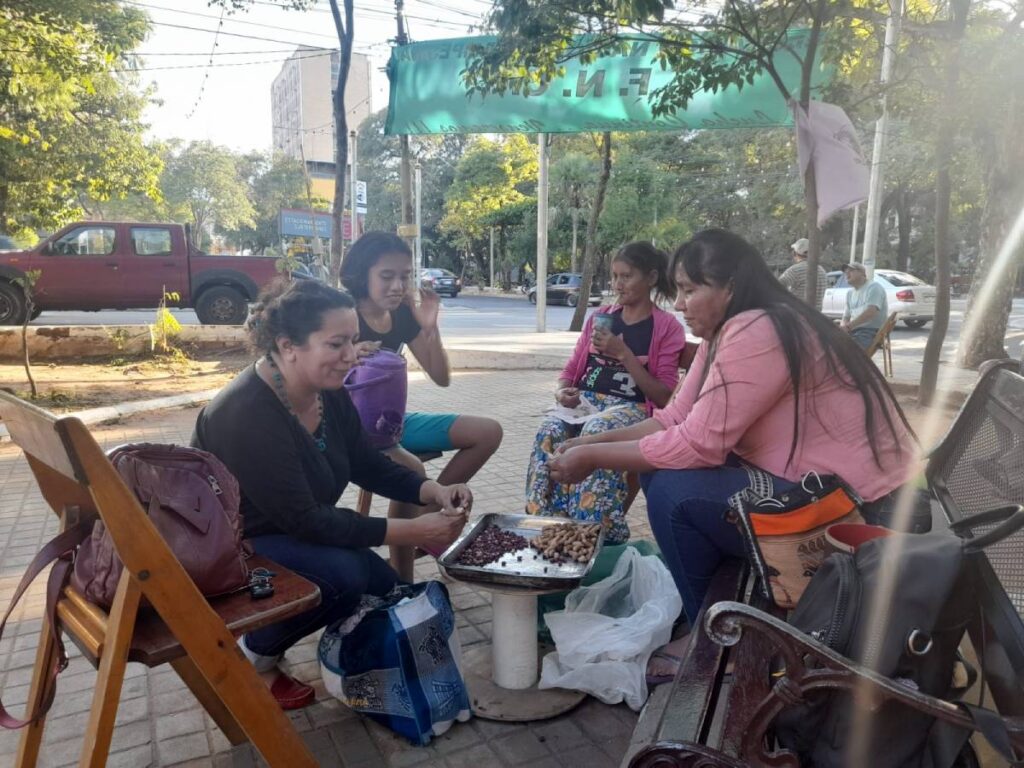
The organizations camped out in O'Leary Square are: Conamuri, OLT, FNC, ONAI, and MCP. The encampment includes a communal kitchen, which feeds all the activists. On a Sunday afternoon, you might see a group shelling peanuts for the next day's breakfast or preparing vori-vori for lunch. All tasks are divided among the campers: cleaning, food preparation, and security.
With the arrival of autumn and several days of rain, the organizations, and Conamuri in particular, are calling on the public to help sustain their struggle by donating coats and blankets. They are also requesting non-perishable food items for the community kitchen, as the supplies they arrived with are running out.
Furthermore, several organizations have expressed solidarity in support of the #ProlongedStruggle, such as Base Is, which held a seminar on the struggle for land, within the framework of the mobilizations, and the Peace and Justice Service (SERPAJ-Py)
#XXVIIIPeasantMarch Decades of struggle
The FNC is celebrating 28 years of marching. This year, the march is taking place within the framework of the #ProlongedStruggle of the Peasant, Indigenous, and Popular Assembly, and was convened from the space of alliance and resistance.
A large march is planned for Thursday, March 24th, at 7:00 a.m., starting from the Metropolitan Seminary and ending at Plaza O'Leary in downtown Asunción. Since Monday, March 21st, more people from various organizations have arrived to camp and join the protests.
“We invite all organized democratic sectors and the general public to join the great #PeasantMarch , which this year is expanding, to bring to Asunción the heartfelt demands of the country's most vulnerable communities and to demand compliance with all human rights, peasant rights, indigenous peoples' rights, and the social, cultural, and environmental rights of the entire Paraguayan population,” the FNC stated in its official communications.
We are present
We are committed to journalism that delves into the territories and conducts thorough investigations, combined with new technologies and narrative formats. We want the protagonists, their stories, and their struggles to be present.
SUPPORT US

FOLLOW US
Related notes

We are present
This and other stories are not usually on the media agenda. Together we can bring them to light.