

Higui de Jesús, who was attacked for being a lesbian and accused of defending herself, was acquitted.
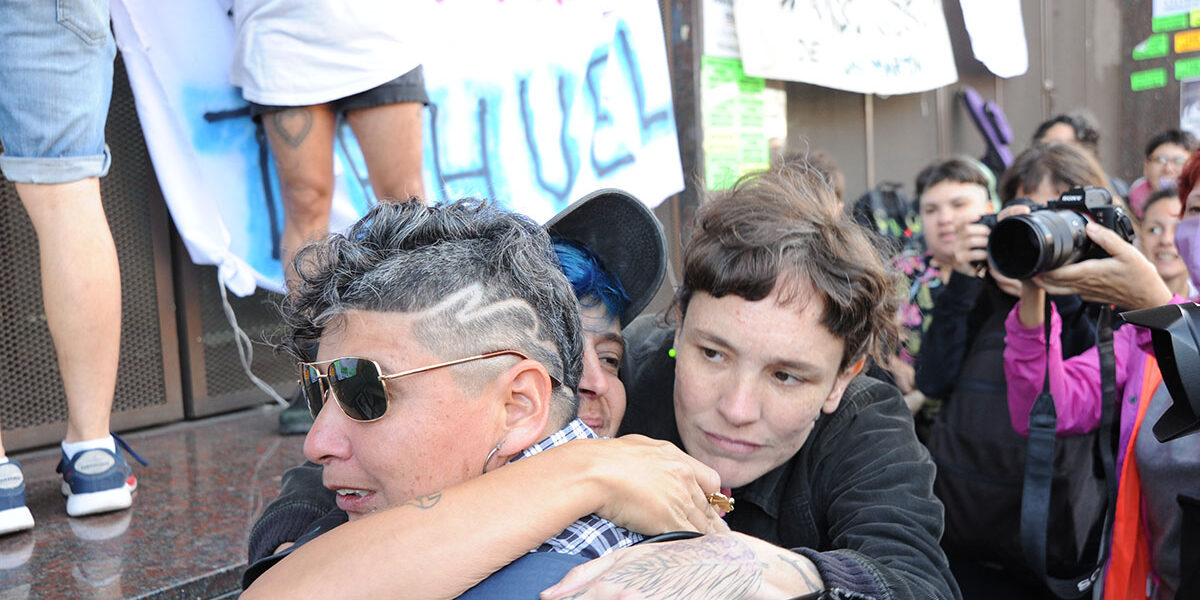
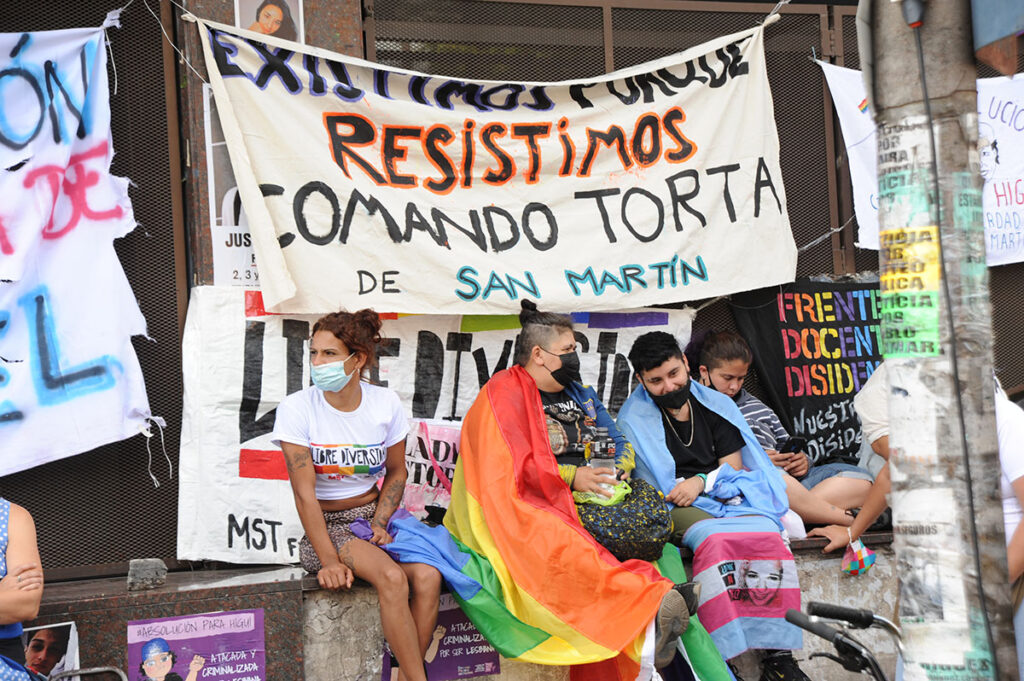
Activists celebrate in the streets of San Martín. The prosecution had requested a 10-year prison sentence.


Share

UPDATED NEWS*
Judges Gustavo Varvello, Germán Saint Martín, and Julián Descalzo of the Oral Criminal Court Number 7 of San Martín acquitted Higui de Jesús of the charge of "simple homicide." Higui is a 47-year-old lesbian. On October 16, 2016, she had gone to visit her sister Mariana in Lomas de Mariló (San Miguel) and was attacked in a neighborhood alley by a group of men who were harassing her because of her gender expression and sexual orientation. She defended herself and fatally wounded one of them. Without access to justice, she was imprisoned for eight months and then placed under house arrest, where she remained until today.

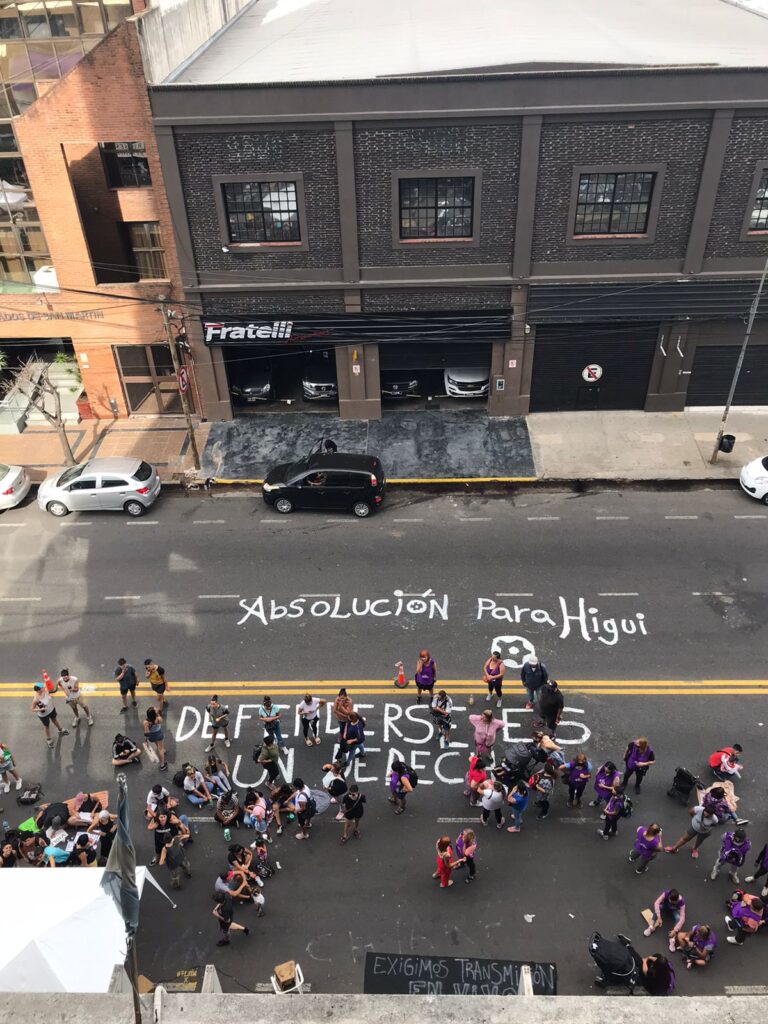
Today marked the third hearing, and no verdict was expected. The activists who have been supporting her for the past five years, since they began building the campaign for Higui's acquittal, have been camped outside the courthouse for the past three days. At the time of this update, they were celebrating in the streets with chants and drums in front of the courthouse, which throughout the entire process has denied media access to the courtroom.
Higui's lawyer, Chiqui Conder—a member of the Lawyers' Guild and a human rights activist—spoke with Presentes after the trial. " This is our victory, not the judicial system's. They have to believe us when we report abuse. Nothing was investigated here about what was done to Higui . The only thing the prosecutors seem to do is criminalize Higui for being a woman, Black, poor, and a lesbian. The first thing the State does to Higui, who has suffered multiple forms of violence, is lock her up and imprison her. That speaks to an absent State," Conder told Presentes.
The third hearing
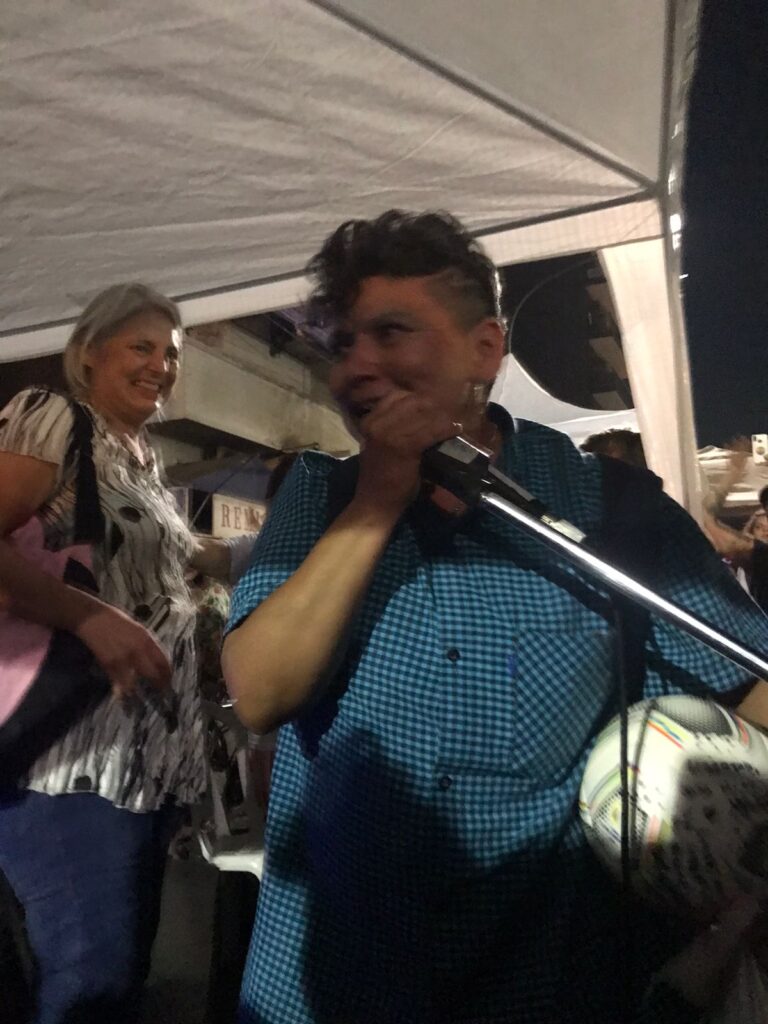
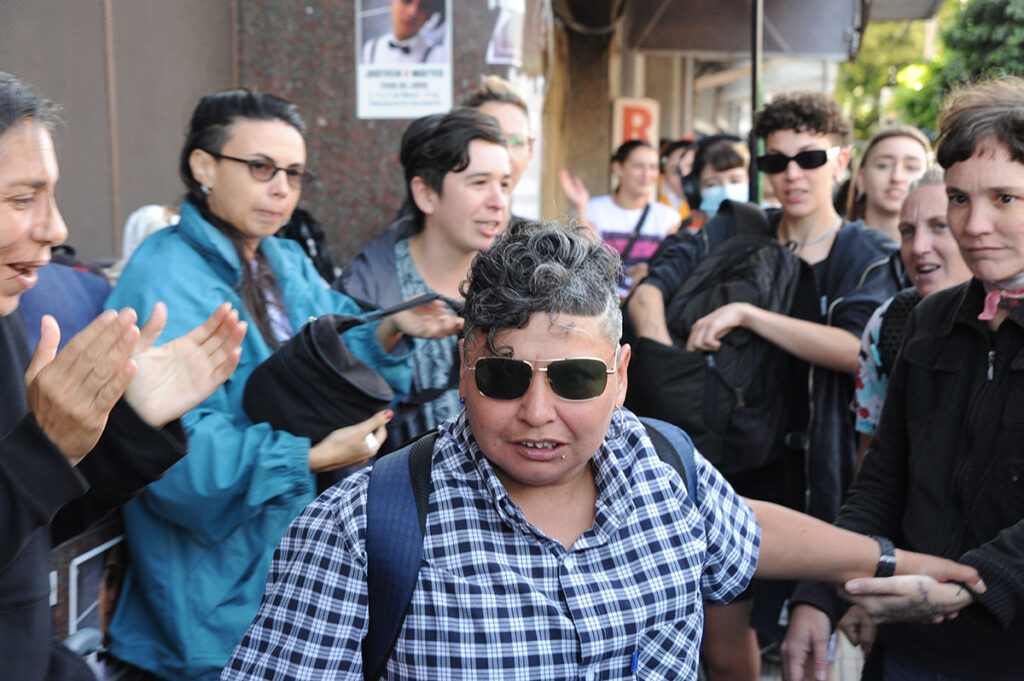
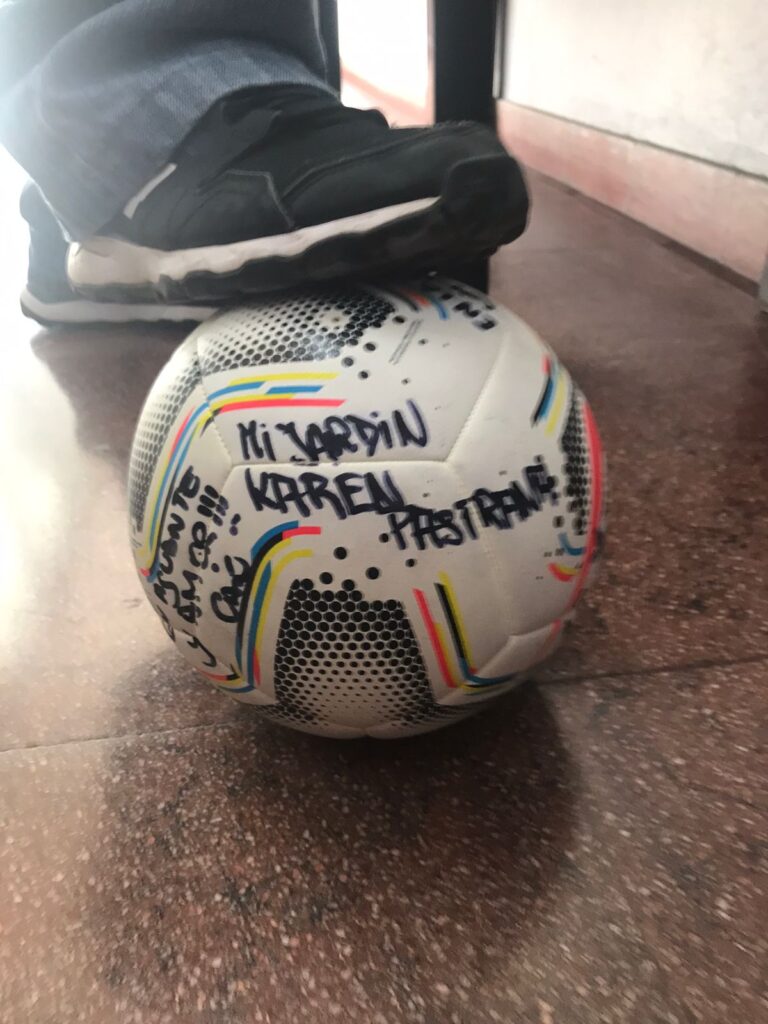
Higui arrives at the San Martín courthouse amidst applause and more chanting. In one hand she carries a soccer ball (covered with messages from the girls of Villa 31), like a lucky charm, and in the other a t-shirt with a picture of her dogs, which she occasionally covers with kisses. She takes the elevator up to the tenth floor, where she is to sit in the dock.
She is accused of simple homicide for defending herself in October 2016 against a sexual assault perpetrated by a group of men. They wanted to rape her to "correct" her lesbianism. Higui defended herself with a gardening knife she had on her: she had long suffered attacks because of her sexual orientation and gender expression.
Courtroom C, where the hearings are held, is tiny. There's room for four people from each side. The lack of space increases the tension. Higui is accompanied by her psychologist and her lawyers, Chiqui Conder and Claudia Spatocco. Also present is the other side, whose name no one quite knows, representing Cristian "Pino" Espósito, the deceased, 28, one of the aggressors who attacked Higui and whom she fatally wounded in self-defense.
She recounted the story again today in detail before the court that is trying her. It is the Oral Criminal Court Number 7, and its members are Gustavo Varvello, Germán Saint Martin, and Julián Descalzo.
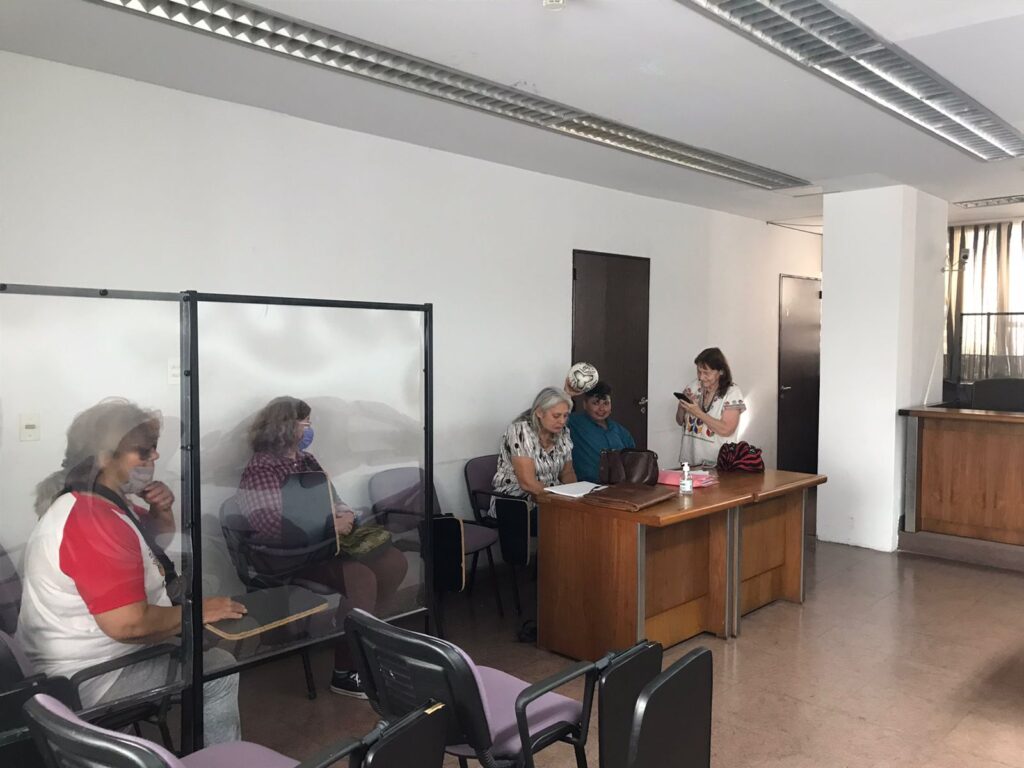
The deceased's family entered the courtroom with his mother, who uses crutches and wears a t-shirt with Espósito's face and the message: " See you in heaven, son ." The other women accompanying her wear t-shirts that read " Justice for Pino ." They have also posted signs in his defense around the building. On the courthouse walls, calls for Higui's acquittal are displayed alongside photos and demands for justice for dozens of other young people, all very young, all poor, all from the suburbs.
Also present at today's hearing were prosecutor Liliana Tricarico, founder and president of the Association of Prosecutors of the Province of Buenos Aires; observer Indiana Guereño from the Buenos Aires Province Ministry; and Romina Chiesa, director of protection for the Ministry of Women, Gender and Diversity. Viviana Figueroa, an activist with the lesbian organization Las Safinas, who traveled from Rosario with other members, was also in attendance. Higui remained close to her psychologist, Raquel Disenfeld, throughout the hearing. It was a difficult day.
They ask to change rooms
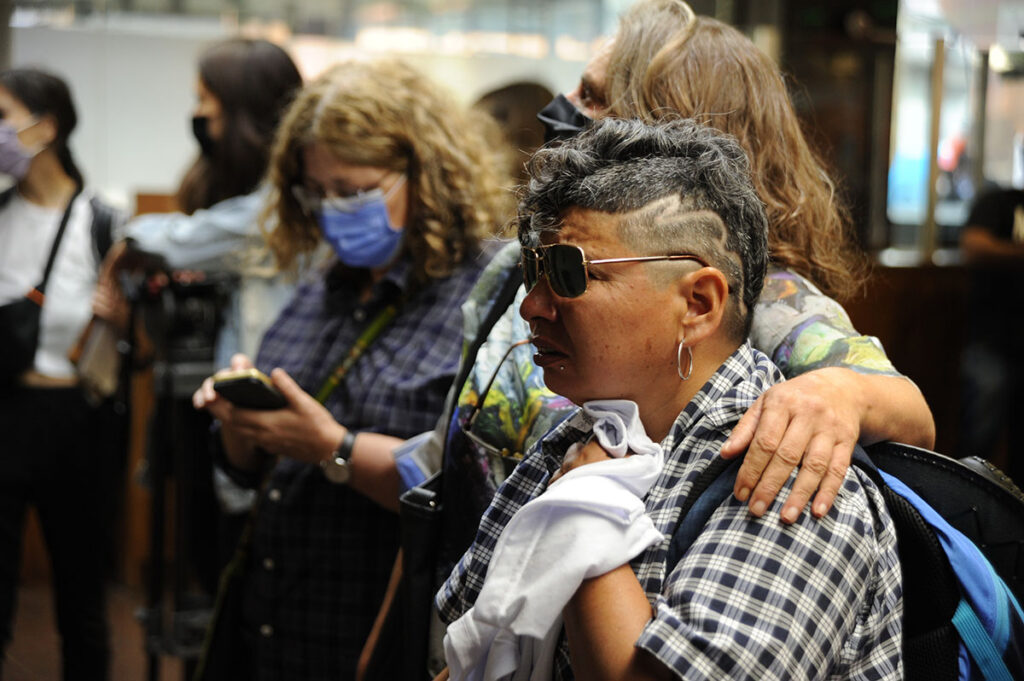
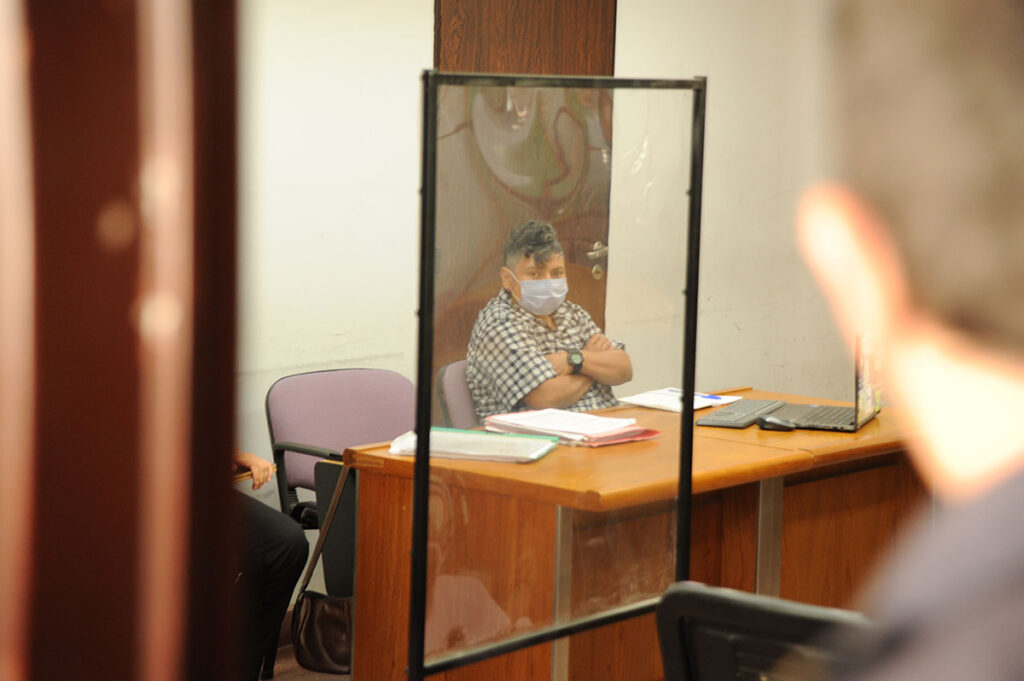
Journalists were barred from the courtroom for three days. This was due in part to lack of space, but also to a court order prohibiting the publication of witness statements. The court claimed to be protecting the proceedings, as if the years that had passed hadn't happened. Numerous media and human rights organizations have requested two things from the court: first, to move the proceedings to a larger courtroom so that the media , which is also limited, could cover them; and second, to televise the closing arguments. This also failed to materialize, as it was announced at the end of the hearing that the closing arguments would take place this afternoon starting at 5:00 PM.
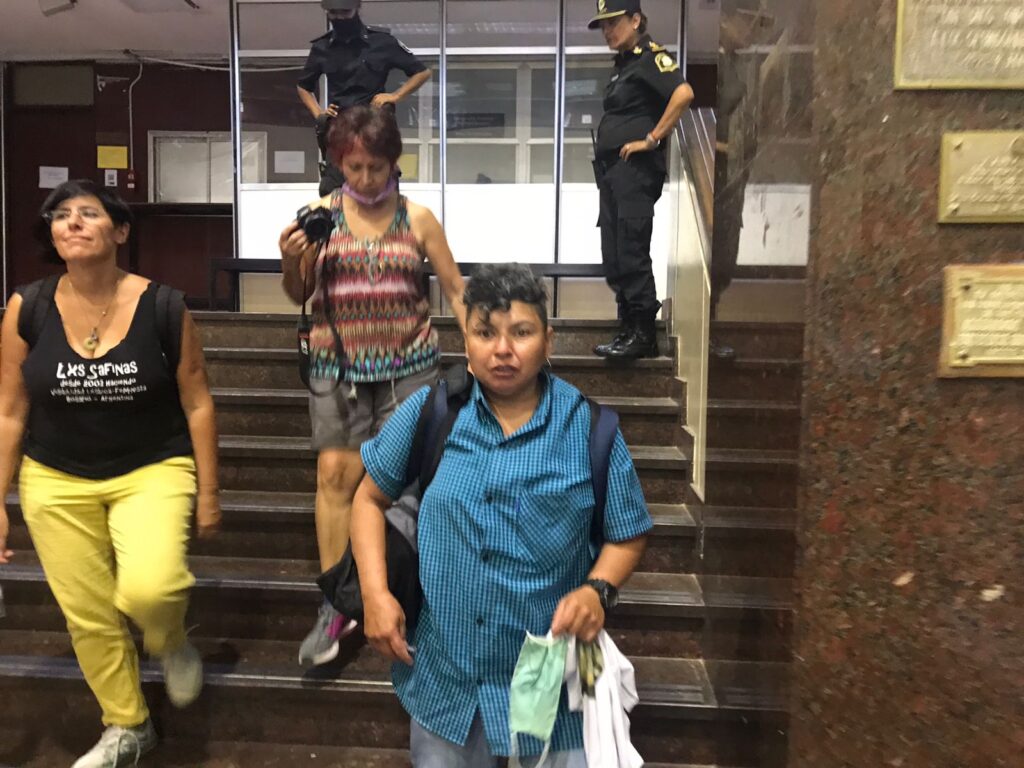
What those who attended to Higui said
Today, three people who attended to Higui testified. Their statements were compelling. The first was a police officer who arrived at the scene that night. She recounted that when she responded to a 911 call, she found Higui badly injured and beaten, her clothes torn and dirty, and smelling of alcohol. She was very frightened and had wet herself. The officer said she couldn't change her clothes because of how badly she was beaten, and that she believed she might have fractures. She also reported that a truck was at the scene taking Espósito to the hospital.
At today's hearing, several items of clothing collected as alleged evidence were taken from a bag. Among them were Higui's clothes from that night, which were displayed to the parties and the judges, such as the blue jogging pants she was wearing.
The second witness was the first psychologist who treated her after her arrest. All of the psychologist's statements pointed to one thing: "Higui isn't lying, what Higui is saying is true," she repeated. And she spoke based on the psychological evaluations conducted at that time. When the witness reached this point in her testimony, Higui suffered a panic attack and asked to leave the room. She went outside to get some fresh air and returned shortly afterward.
The third witness was a psychiatrist who treated her. Her testimony was very brief.
After a recess, Higui requested to testify, but only in private. Only her psychologist, her lawyers, the judges, the prosecutor, and court staff remained in the courtroom. Espósito's mother complained. "She has rights," a police officer guarding the entrance to the courtroom responded.
The statement was long. Very similar to what she said in her initial statement, where she recounted that violent night. But today she told it in great detail, vividly, illustrating before the court with her own body how each stage of the attack and her defense unfolded. "I almost broke down, but then I remembered my dogs," Higui told Presentes.
Next up was Enrique Stola. Called as a conceptual witness, Stola had previously served as an expert witness for the prosecution and testified today via video call from Spain. He focused on explaining what post-traumatic stress is.
Around 3:00 p.m., Higui left the courthouse. “I wanted to testify, I really wanted to. I feel better,” she told Presentes. She seemed more relieved. Her lawyers had just received the news that closing arguments would begin in two hours, at 5:00 p.m.
Higui acquitted
Higui was greeted with applause and chants in the street. Throughout the day, the sounds of that crucial accompaniment to organized LGBTQ+ and human rights activism—the chants, the music, the occasional drum, the shouts—reached the tenth-floor courtroom, distant yet persistent. It seemed to be the only thing that could filter down to the tenth floor. Higui heard it, and that was enough. These sounds were among the few connecting threads between what appear to be two different worlds. A self-contained, patriarchal justice system where one must stand when judges enter and obey. A justice system that decides a trial of this magnitude cannot be broadcast or covered by the press. A justice system without a gender perspective, which to this day has not investigated the attack on a lesbian as a hate crime.
And that same justice system decided to acquit her. Before the verdict was announced, as darkness fell, more and more people gathered at the courthouse. Initially, they came to listen to the closing arguments. The defense, naturally, requested acquittal. The prosecution, in a closing argument devoid of any gender perspective, demanded Higui's immediate arrest and a ten-year prison sentence. Then the rumor began to circulate that the verdict might be announced that day. There were drums and music broadcast on the open-air radio, a public assembly, and more and more people joining in.
The situation was unclear and the atmosphere was heavy. In courtroom C, before the court delivered its verdict, Higui said she was very sorry for what had happened.
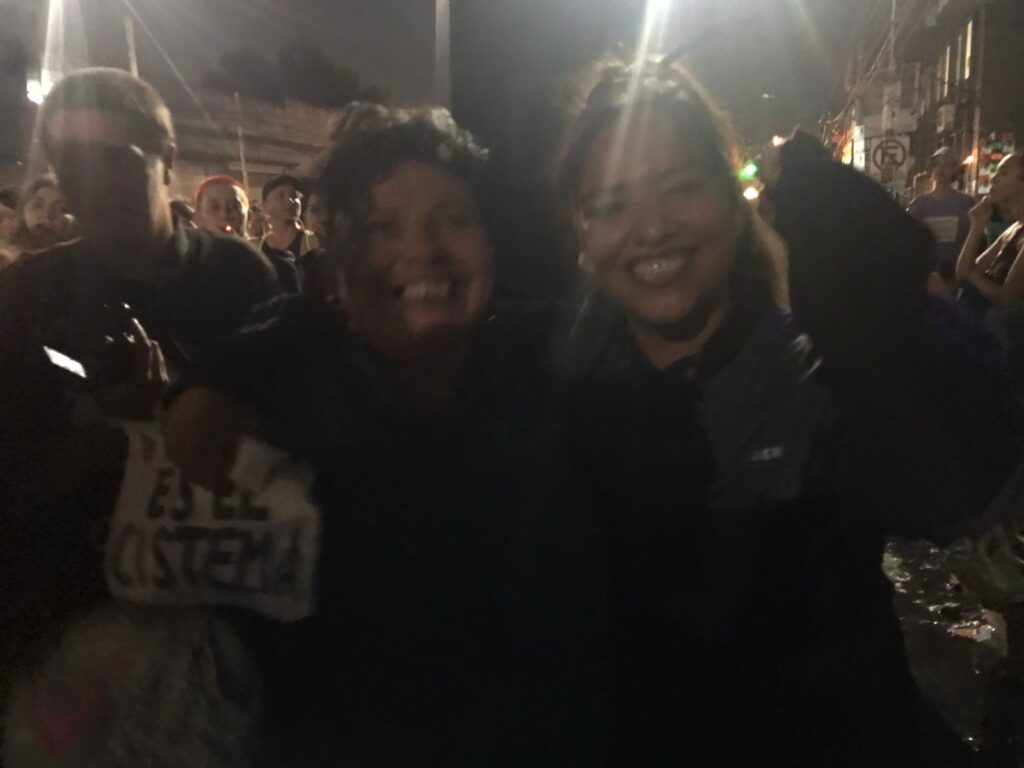
Around eight o'clock the news reached the street, where people were still arriving. Many of the activists had been there since before 9 a.m. "Acquittal!" they shouted, jumping, singing, and hugging. Finally, Higui emerged from the courthouse and ran smiling into the street, celebrating the victory after a struggle that had lasted more than five years. Higui's acquittal had gone from a slogan to a reality.
“I want to hug all of you,” she said. “Thank you, girls, for not giving up.” She walked quickly to the microphone waiting for her in a safe area set up inside a tent. She added: “Thanks to my lawyers. Inside the courtroom, they were calling me ‘Higuis,’ and they called the court’s attention to it. They taught me to respect my name.”
It was more than five years of struggle against a patriarchal, heteronormative, cis-sexist judicial system, unequal in its treatment, and at times absurd. A complex and difficult process, full of twists and turns, delays and injustices. And in each of these moments, when the support and organization of LGBTQ+ activists was crucial, Higui also forged herself into an activist. The one who demanded: "Justice for all: for trans boys, for trans women locked up in prisons, for poor kids killed by police. Let the grandchildren reappear! And tell us where Tehuel is!"
We are present
We are committed to journalism that delves into the territories and conducts thorough investigations, combined with new technologies and narrative formats. We want the protagonists, their stories, and their struggles to be present.
SUPPORT US

FOLLOW US
Related notes

We are present
This and other stories are not usually on the media agenda. Together we can bring them to light.
4 Comments