

Menstrual bodies: why we need to move beyond the binary to talk about menstruation
Two trans people and one non-binary person share their experiences with menstruation. “We need other menstrual narratives,” they say.

Share

GUADALAJARA, Mexico . “I was so embarrassed, but I didn’t know why. So I hid it, I hid it. Until one day when I was washing my clothes, because I washed my underwear, my mom saw it and said to me, ‘Why didn’t you tell me?’ It was a scolding. Then she told everyone, like, ‘I was a little woman now,’ and I was even more embarrassed.”
This is how Adonai remembers the first time he menstruated.
In Mexico, as in many parts of the world, menstruation is rarely discussed. And when it is, it's often done with shame, fear, and misinformation. There's even an assumption that all women menstruate and that all people who menstruate are women.
Presentes spoke with Adonai Urrea (32 years old), Raúl Cervera (27 years old) and Nad Matamoros (39 years old) to learn about their experience with menstruation as trans men and non-binary people.
Note 1: Not all trans men, transmasculine people, and non-binary people who were assigned female at birth experience gender dysphoria or dysmorphia due to menstruation.
Note 2 : What is gender dysphoria? It is the feeling of discomfort or conflict between the way a person wishes to present their gender to the world and the way their gender is perceived , especially due to secondary sex characteristics, such as menstruation.
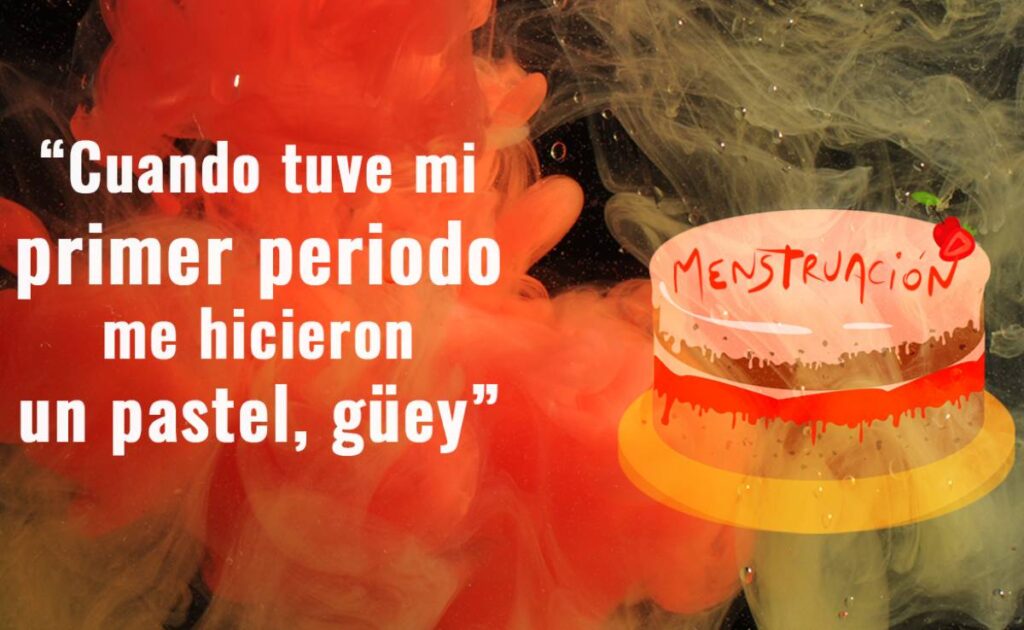
“When I got my first period they made me a cake, dude.”
Adonai Urrea grew up in Sonora, a state in northern Mexico , and recalls that her first information about menstruation came from her grandmother. “My mother inherited from my grandmother a rather crude way of talking about sex education, and that’s what my sisters and I received. In fifth grade, they showed us a video about reproduction, but it didn’t explain menstruation. My first real encounter with the topic was with my first period.”
The experience of Raúl Cervera, who grew up in Mexico City, isn't so different. “Before I started menstruating, my parents told me the basics, they gave me books, but it was hard for me to understand. When I started, I didn't even know I was menstruating. I would stain my clothes, hide them, wash them… until they realized and got excited, they told me, 'congratulations, you're becoming a young lady.'”
For Nad, who grew up in Baja California , her mother was the first person to give her information about sexuality . “I was really lucky because my mom never hid anything from me, she was very open, there was a vibe of trust and I’m grateful for that… but when I got my first period they made me a cake, dude. I wasn’t scared of bleeding, it didn’t disgust me, but it was embarrassing that they threw a party, I mean, what was the point? It’s like quinceañera parties, it’s the same thing, it’s about presenting yourself to society as a person who can reproduce.”
According to data from the United Nations Population Fund (UNFPA), only 16% of girls and adolescents have accurate knowledge and understanding of menstruation. That percentage drops to 5% for adolescent boys.
Furthermore, only 5% of mothers and fathers talk to their children about menstruation, and only 7% of health personnel address the topic with girls and adolescent women.
The testimonies of Nad, Raúl, and Adonai share the narrative that their menarche (first menstrual bleeding) was a kind of gateway or inauguration to “femininity” and that it is intrinsically linked to reproduction.
But then, what is menstruation?
“ It’s difficult to define menstruation outside of Western medicine and its androcentric perspective. For a long time, menstruation was considered a reproductive process, as well as a reproductive capacity of people called women. When we study menstruation, we realize that both menstruation and the menstrual cycle are not just a reproductive response, but rather another vital cycle, involving the interaction of organs, muscle function, joints, the heart, the intestines, and teamwork with sexual, physical, and mental health,” Danielle Orendain , psychologist and menstrual educator, Presentes .
“It is urgent to transgress sexual and menstrual education”
According to Orendain, sex education does exist in Mexico, but it is, in most cases, managed through "prohibition, punishment, censorship of pleasure, the imposition of binary thinking and gender roles."
In the country's public schools, information about menstruation is limited to small sections in science textbooks that link the menstrual cycle to reproduction and describe it as a regular and "sometimes painful" process. And nothing more.
According to Raúl and Adonai's experience, the explanations they received in their primary and secondary schools were given in gender-separated classes in which only girls were taught about menstruation and the pregnancy cycle, for example.
“It’s terrible how children and young people are bombarded once they reach menarche. If we start placing all these social burdens on these vital processes, like ‘you’re a woman now’ or ‘young lady’; or we’re forbidden from playing; or we’re forbidden from being with boys because now ‘you have to be careful,’ and that message implicitly includes ‘you’re going to get pregnant.’ And we’re burdened with responsibilities like housework and caregiving, then imagine, it has a huge impact on our mental health, on our socialization, on our understanding of the world around us, of our own individuality, and even, speaking of trans or non-binary people who menstruate, it will also impact their identity and transition processes. That’s why it’s urgent to transform sexual and menstrual education and move beyond just reproductive health,” adds Danielle Orendain.
The experiences
For Nad, from her experience as a non-binary person and therapist, transgressing knowledge about menstruation also implies ceasing to romanticize the menstrual cycle as a reconciling, painless, regular process.
“In feminist circles, red tents, and women's groups, I started to get upset when they talked about how if you're not regular, if you have cramps, or anything like that, it's because you don't accept yourself. Because you reject your feminine energy, and blah blah blah. Hearing that, as a non-binary person, really confronted me because it seemed like they were blaming you for what you feel, for who you are, because according to them, you don't accept yourself or because you undergo hormone treatments. For me, those discourses are very essentialist and binary; sometimes we think that what works for us will work for everyone. And no, there are a lot of things to consider, like class, rural or urban life, access to water, and a thousand other things. And that's why I create my own rituals and try to be careful because, just as there is a diversity of feminized bodies, there is also a diversity of contexts.”
Educator Danielle Orendain believes that menstrual support and education "should take place far removed from any logic that seeks to educate bodies," and explains it as follows:
“There is no single way to menstruate, nor is there a single correct way. There are people who experience painful periods, who live with physical pain that disrupts their daily routine; there are people for whom menstruation triggers gender dysphoria; there are experiences where menstruation can even be condemned or lead people to situations of ridicule, violence, and marginalization.”
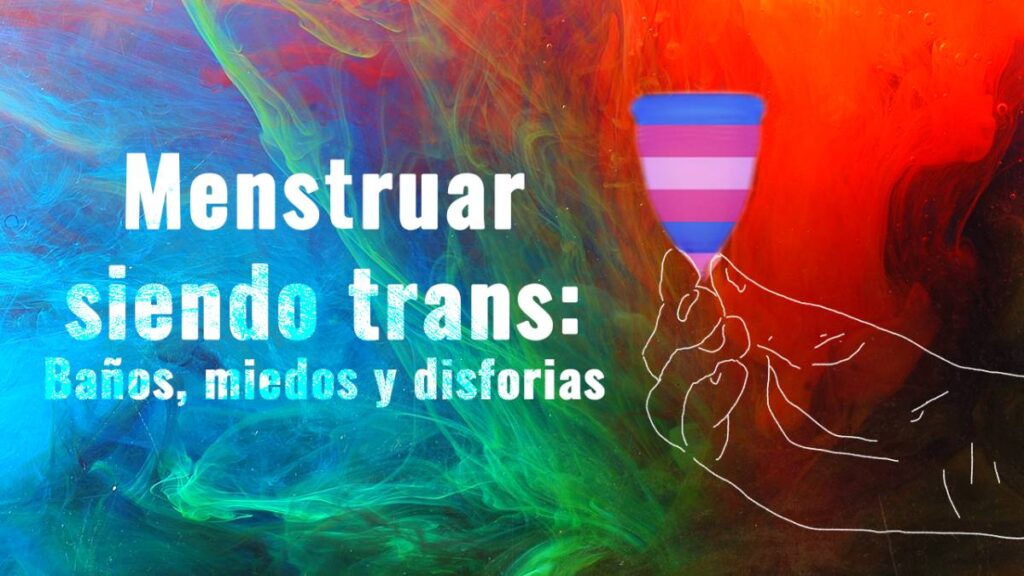
Menstruating as a trans person: Bathrooms, fears and dysphoria
Raúl Cervera, 27 years old, sports journalist.
“When I started hormone therapy, I think I was lucky. It wasn't that I had period dysphoria, but my period ended very, very quickly. But in that time (while my menstrual cycle was disappearing), I started going into men's restrooms, and if I was menstruating, I was terrified. I would hide everything, making sure no one heard me open my pad. I was very careful, but I even ended up avoiding changing my pad in public places and only doing it when I got home. I think my relationship with menstruation hasn't been positive, nor terrible, but I do think there's definitely fear. Not from myself, but from others and the reactions in places like the restroom.”
The bathroom, Raúl says, “is a space that often frightens trans people because many gender norms are established there, right? Like the idea that ‘men don’t menstruate,’ or even urinating standing up. And I think that fear and dysphoria comes from the reinforcement we receive from a young age: menstruation equals womanhood. So I think that after this bombardment, it’s perfectly valid for some trans men to experience that dysphoria or rejection of menstruation.”
Paul Preciado also underlines something similar in his article "Garbage and Gender. Peeing/Pooping. Masculine/Feminine. " "We don't go to the bathroom to defecate, but to perform our gendered functions. We don't go to pee, but to reaffirm the codes of masculinity and femininity in public spaces."
For Raúl, menstruating as a trans man also involves cramps. “Asking for a pill was, and sometimes still is, complicated, because I don’t want to come out as trans all the time. And yes, I don’t menstruate anymore, but I still get cramps.”
-Nad Matamoros, 39 years old, therapist
“When I had my first period, seeing my blood didn't cause dysphoria or any negative burden because, although my environment did carry the social pressure that it equates to 'being a woman,' it was irrelevant to me. Menstruating didn't make me a woman. Menstruation was just another bodily process, and to this day it doesn't cause me any conflict regarding my gender identity. But what I do find really tough is that before and during my period, my breasts sometimes get really swollen… and ugh, it feels awful because I do have breast dysphoria. So, you see, the dysphoria I have is about being perceived as a woman because I have breasts, not because I bleed.”
–Adonai Urrea, 32 years old, founder of Trans Pride World
“My relationship with menstruation was painful and shameful until I was 27, when I discovered the menstrual cup and was able to overcome the socially imposed disgust. I began my social transition at 23 and started hormone therapy at 25. But I paused my testosterone treatment for two years, and my period returned… Going back to the women's restroom was never an option, so I experienced what it was like to leave a sanitary pad in the men's restroom, a place where there are often no trash cans, no toilet paper, sometimes just a stall with a door, sometimes the lock doesn't work—in other words, the conditions are terrible. I was very surprised to experience that, but even more so by the fear of being discovered. It was very distressing; I felt that if something happened, it would be something bad. I still have that fear sometimes, because going to the bathroom and peeing sitting down sounds different than standing up, and I can play with both options if I want. But deep in my subconscious, the fear remains because I see the men's restroom as a space where anything can happen.” stuff".
What do we know about Mexican trans people who menstruate?
According to the United Nations Population Fund ( UNFPA ), four out of ten girls and adolescents prefer to stay at home rather than go to school during their menstrual period, leading to absenteeism due to "fear of harassment and the discomfort of not having adequate toilets or water to keep clean."
In Mexico, according to the latest survey on school infrastructure (2014), one in ten preschools and primary schools in the country lack toilets, as well as 3 out of 10 high schools.
Furthermore, 19% of schools lack toilets exclusively for students, only 62% have access to water, and 44% of students perceived their bathrooms as unclean . These figures are even more pronounced in schools located in rural areas.
And although there is no official data in Mexico on how trans men and non-binary people experience menstruation, the data above gives us an idea of how girls, adolescents, women and trans people who menstruate experience their menstrual period during their school life.
In addition, in 2020 the organization Menstruación Digna, together with UNICEF, the Copred (Council to Prevent and Eliminate Discrimination of Mexico City) and other organizations launched a survey on menstrual hygiene that sheds a little more light.
According to the survey, 170 respondents identified as men, and 10 of them currently menstruate. Additionally, 3 non-binary individuals responded to the survey, and all of them also menstruate . Regarding whether they had ever missed school due to menstruation, 56 men and one non-binary individual answered yes. The main reasons given were “fear of staining clothes or having it noticeable” and “associated pain.”
The main emotions felt by men and non-binary people the first time they menstruated, according to the survey, were surprise, disgust, and sadness.

“We need other menstruating narratives”
Presentes asked Raúl, Adonai and Nad what is needed to create a sense of security for trans people regarding the menstrual cycle?
Raúl Cervera
“I think there needs to be more sensitivity in gynecological settings, not just for us, but for all women, because we experience a lot of violence in those spaces. And speaking as a trans person, I think we also know we need these checkups, but not everyone is aware of the need. I've met trans guys who think that once you stop menstruating, you no longer need to get checked. With testosterone, the uterus changes, and we don't know that, which is why I think we urgently need sensitive and informative health spaces for us, so we don't just worry and instead take action, because in the years to come, how will we know about our body's health and what happens to testosterone in the long term?”
Adonai Urrea
“For me, the menstrual cup was a tool that helped me understand my period in a different way, and I think it’s important to share information about other ways to manage menstruation with trans men and non-binary people. Also, it would be cool to see ourselves in one of those commercials, right? Because when I had to buy sanitary pads, it was strange to be in an aisle where everything is pink and everything is cool with pink. But it’s pink because pads are designed for only one type of person. Another place where we need safety is during gynecological visits. Specialists in this branch of medicine need to see us not as men, but as trans men and non-binary people because that entails other needs.”
Nad Matamoros
“We need different narratives about menstruation in advertising, in educational spaces, in healthcare because everything is so whitewashed, both for women and for diversity. I mean, they even paint the blood blue and they're happy about it, no way. I think there's still a ton of disgust, from the medical field to the market. I think there are practices of body control and blatant body whitening there, and I think that if there were a chance to see diverse bodies and show that it's not just women who menstruate, there would be less painful identification and more understanding because it's a reality. I mean, they can't deny us anymore, or hide us anymore. We are here, we have always been here.”

We are present
We are committed to journalism that delves into the territories and conducts thorough investigations, combined with new technologies and narrative formats. We want the protagonists, their stories, and their struggles to be present.
SUPPORT US

FOLLOW US
Related notes
We are present
This and other stories are not usually on the media agenda. Together we can bring them to light.