

El Salvador: A television channel refused to interview a well-known trans activist live.
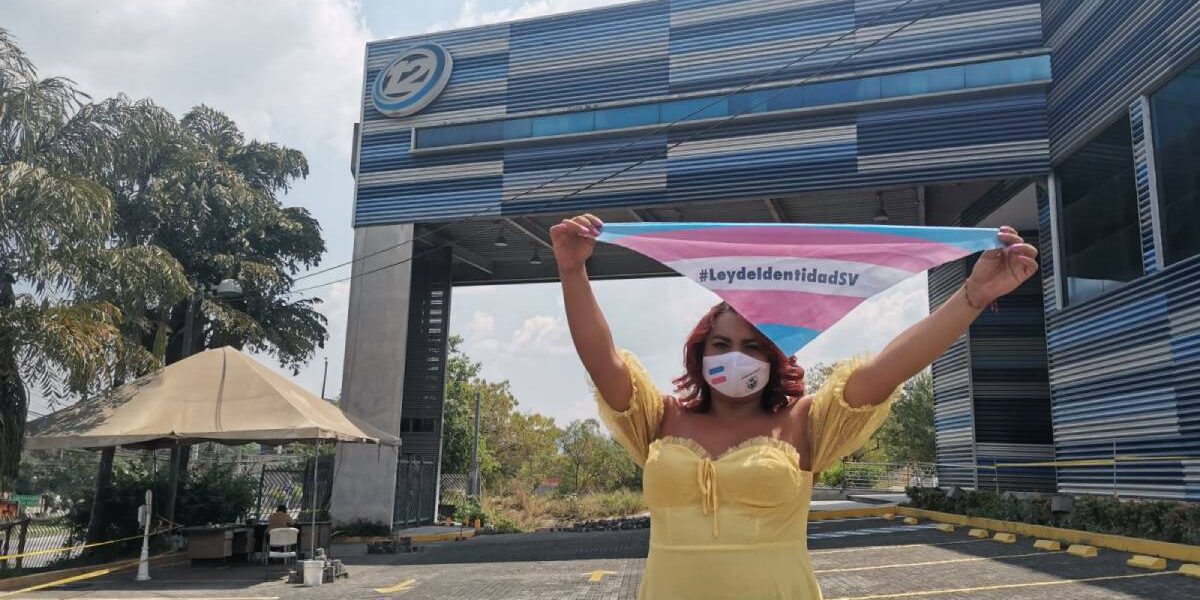
On International Women's Day, a TV program refused to interview trans activist Britany Castillo.


Share

SAN SALVADOR, El Salvador. In the context of International Women's Day, activists from the Feminist Assembly were invited to Channel 12 to participate in the morning show "Hola El Salvador ," but one of them was discriminated against because of her gender identity and was denied participation in the program.
Britany Castillo, a trans woman and renowned activist who is part of the Solidarity Association to Promote Human Development – ASPIDH Arcoiris Trans – arrived at the channel's facilities along with Sara García from the Feminist Assembly.
Both were scheduled to appear on the television program that airs every morning nationwide. The interview with the activists was arranged a week in advance, Castillo told Presentes .
According to their testimony, the activists were received at the channel's reception desk. They were asked to wait until the production team indicated it was time to go into the studio. Minutes later, a member of the team informed them that only one of them could participate in the fifteen-minute interview they had been granted days earlier.
“They told us that only one of us could go in for the photo shoot. Then they said they had sold the advertising and that there wasn't enough time. That only the person representing the women could participate, because the other person there wasn't a woman,” Britany told Presentes .
The channel did not respond.
The show's production team justified that both of them could not appear on camera, even though Britany observed on the waiting room monitor that five people participated in the previous interview.
“It is regrettable that she was denied the right to participate in an interview that had already been arranged and confirmed. To tell her that only the 'women's representative' could speak is to deny her recognition of her gender identity as a trans woman, in addition to violating her right to freedom of expression,” Angélica Carcamo, former president of the Association of Journalists of El Salvador – APES told Presentes .
Presentes requested comment from Channel 12's production team, but receptionists responded that "no one from the program was available at the moment , but they would pass the message on (to those in charge)." No response was received by the time of publication.
Discrimination, commonplace
“Today we denounce Channel 12, which has discriminated against us. It is unacceptable that on International Women's Day this channel closes its doors to feminist and trans-feminist activists. It is unacceptable that they continue to generate so much hatred, discrimination, and violence,” said Sara García in a video posted on her Twitter account.
The report “Case studies that demonstrate discrimination and violence against the LGBTI population in El Salvador” carried out by the organization Communicating and Training Trans Women – Comcavis Trans , indicates that 90 percent of the people consulted in the research have suffered discrimination because of their sexual orientation and gender identity.
“Today we denounce that Channel 12 did not allow our transfeminist colleague Britany Castillo to participate in an interview. We condemn this action, which represents violence, hatred, exclusion, and transphobia,” the Feminist Assembly stated on its official Twitter account.
The lack of law condones discriminatory acts
El Salvador does not have a gender identity law. On February 22, the Constitutional Chamber of the Supreme Court issued a partial ruling recognizing the right of transgender people to change their name on identity documents to reflect their self-perceived gender.
“We don’t have a gender identity law in this sexist and patriarchal country. I hope that there can finally be a gender identity law and that we will no longer be violated in these spaces where they cannot conceive that we exist as women who define ourselves based on our femininity,” Britany expressed.
Britany lamented that an unidentified man from the channel's production team had completely ignored her. While doing so, he was justifying to Sara García the reasons for the sudden change in the interview venue, after she had refused to participate due to discrimination.
“It was as if I didn’t exist at that moment, like I was a wall that couldn’t give my opinion because he wouldn’t even look at me. He said we could do whatever we wanted, that if we spoke out publicly it didn’t matter to them,” Britany added.
El Salvador, which reports high rates of discrimination and murders against the LGBTI population , had until June 2019 Presidential Decree No. 56, which prohibited discrimination based on gender identity and sexual orientation in all state institutions.
However, after Nayib Bukele's inauguration , the president eliminated the sexual diversity directorate where complaints of human rights violations against the LGBTI population were handled.
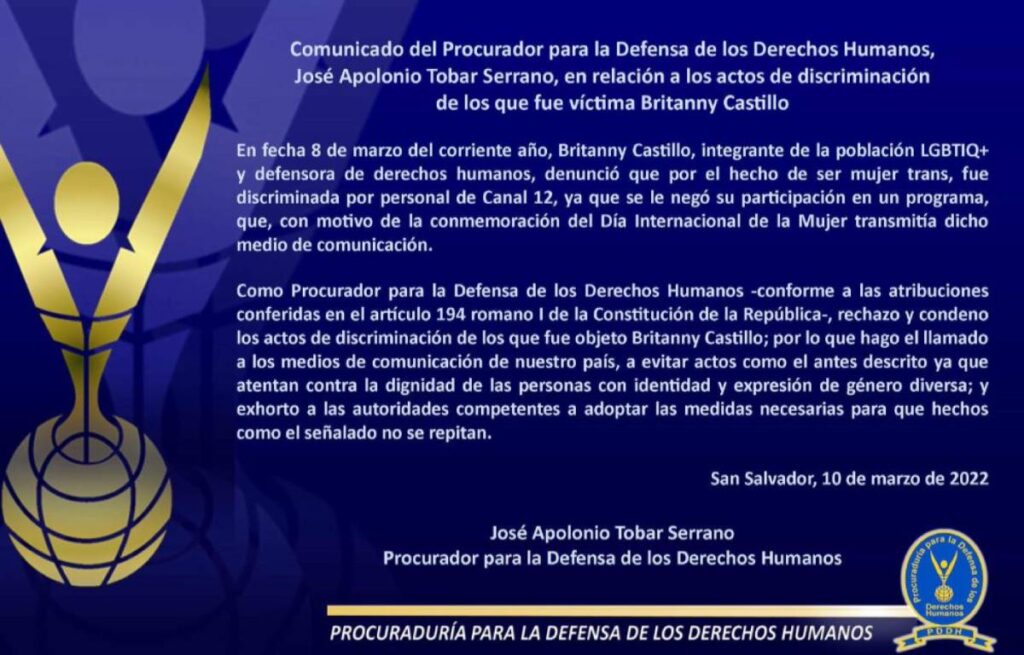
The role played by the media
Traditional media in El Salvador maintain a conservative agenda and limit openness to dissident identities in their programming.
Channel 12 is part of a media network that has a school for television presenters and broadcasters, without taking into account training in addressing gender and diversity content.
“Although there has been progress in community and digital media in opening up spaces for them, many challenges remain. For example, private media outlets continue to display a conservative and exclusionary stance toward the trans community. It is necessary for media outlets to implement non-exclusionary policies and guidelines for reporting on trans people. Journalists' associations and academia can also contribute to this,” Angélica added.
We are present
We are committed to journalism that delves into the territories and conducts thorough investigations, combined with new technologies and narrative formats. We want the protagonists, their stories, and their struggles to be present.
SUPPORT US

FOLLOW US
Related notes


We are present
This and other stories are not usually on the media agenda. Together we can bring them to light.