

The Mexican Supreme Court recognized transgender children
"This court decision is the most powerful step forward in our struggle," said the trans families movement.


Share

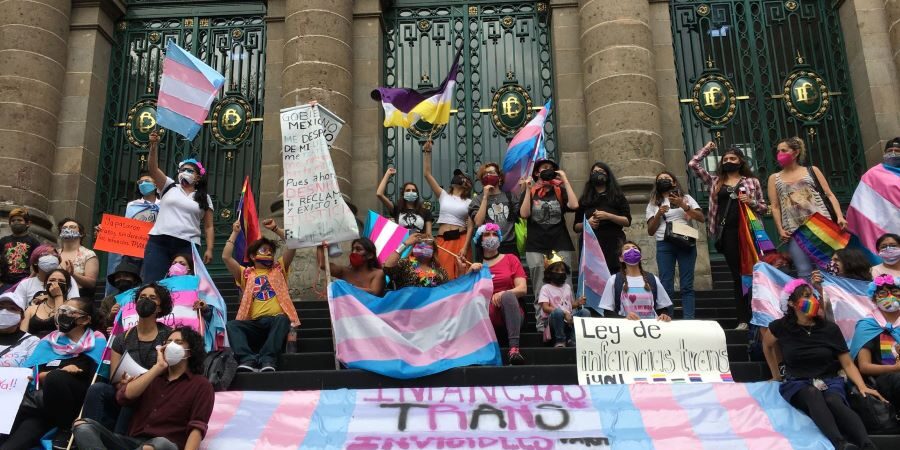
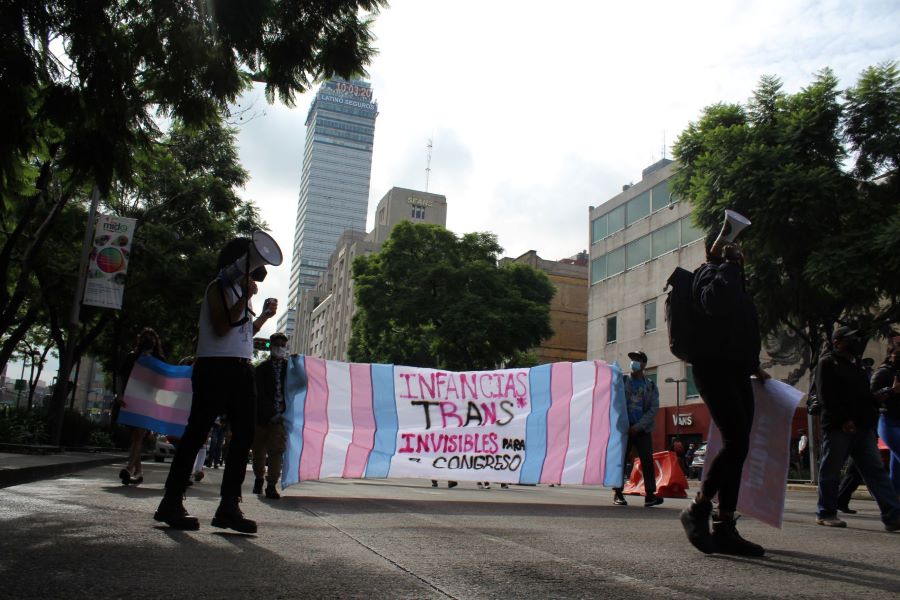
On Thursday, March 3, the Supreme Court of Justice of the Nation (SCJN) recognized the rights of transgender children by declaring unconstitutional the requirement of being 18 years old to request a new birth certificate that recognizes their gender identity. The transgender families movement celebrated the Court's decision.
Before the declaration of unconstitutionality made by the SCJN, the families of trans children and adolescents were protected in trials, civil registries and before legislative congresses using the advisory opinion 24/2017 of the Inter-American Court of Human Rights.
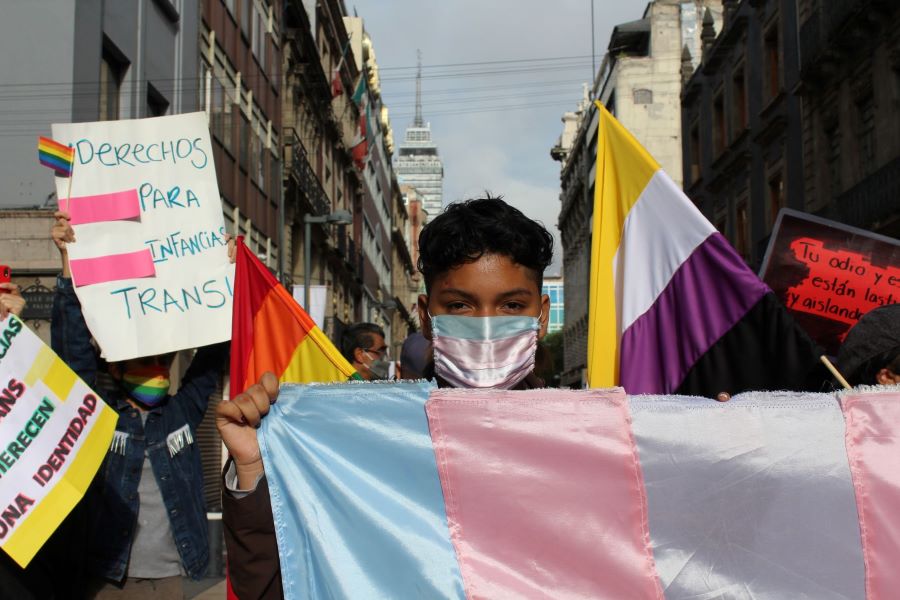
In Mexico, only the state of Jalisco has, since October 2020, the highest human rights standards for the recognition of the gender identity of transgender people, both minors and adults. In Mexico City, Morelos, and Oaxaca, the gender identity of transgender people is recognized from the age of 12.
“The Court’s ruling is very valuable and very important because now we can cite this precedent and not just the Inter-American Court’s advisory opinion. So, with the declaration of unconstitutionality, there will no longer be any possibility of transgender children and adolescents being denied their rights again,” commented Tania Morales, lawyer and co-founder of the Association for Transgender Children , the first Mexican organization defending the human rights of transgender children and adolescents, in an interview with Presentes.
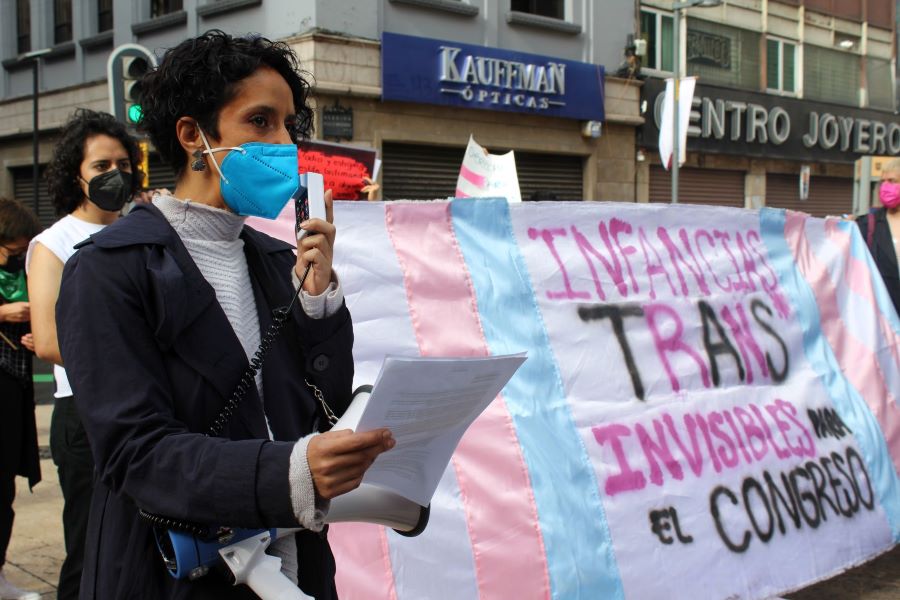
The declaration of unconstitutionality
The SCJN ruling stems from the unconstitutionality action 73/2021 promoted by the National Human Rights Commission (CNDH) in which it demands the invalidity of article 875 Ter, section II, of the Civil Code of Puebla (a state in the center of the country), for discriminating by age since currently only the raising of a new birth certificate is recognized for trans people with 18 years of age.
On April 26, 2021, the CNDH filed the unconstitutionality action with the Supreme Court of Justice, and on March 3, the ministers, in a unanimous vote of eleven, declared the unconstitutionality and maintained that the age limitation "violates the right to equality and non-discrimination of trans minors."
For Tania Morales, this outcome "demonstrates that the National Human Rights Commission works, that institutions like the Supreme Court are listening, and that its response has a very important national and social reach."
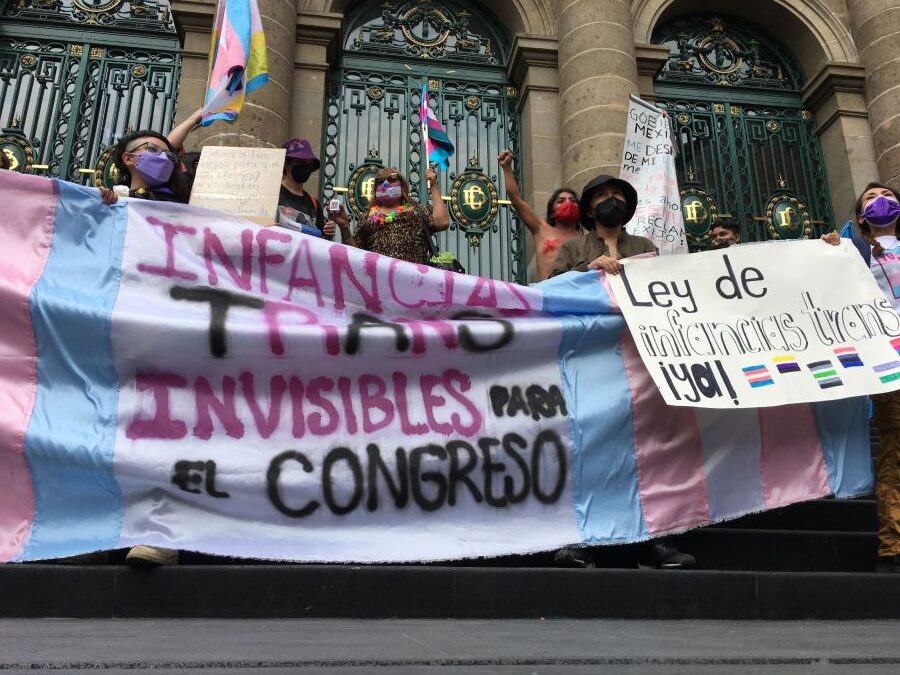
During the closing of the session on March 3, the president of the SCJN, Arturo Zaldivar, emphasized that the declaration of unconstitutionality goes beyond the age parameter and called for "not forgetting that what is at stake is existence itself, in the context of structural violence suffered by trans children, the norm perpetuates the violence against them."
In this regard, in the National Survey on Discrimination by Sexual Orientation and Gender Identity ( ENDOSIG 2018 ), 39.2% of trans people who responded said they had recognized their gender identity during their childhood; more than half faced family exclusion for being trans and 31.7% had to leave their home early due to rejection.
“Today we have the opportunity to reaffirm with one voice that the trans experience is not an illness but a reality that reflects human diversity, that trans children and adolescents know who they are and understand their place in the world, that they are not homogeneous, they are diverse and they construct their identity. That the gender identity of trans children and adolescents is as valuable as any other and therefore deserves the same constitutional protection,” the Chief Justice concluded.
“The most powerful advance in our fight”
“This court decision is the most powerful step forward in our struggle. It gives the trans family movement a platform to operate nationally. Legislatures will have to take it into account if they don't want to violate the constitution, and it provides us with protective tools in ongoing legal proceedings where there is no legislation in favor of children and where there are age restrictions,” Tania explains.
Specifically, on March 7, the ministers concluded that the Congress of the State of Puebla is obligated to reform article 875 Ter, section II of its Civil Code within a period of no more than twelve months and the legislation must follow guidelines that protect the best interests of trans children and adolescents.
The process must be streamlined, expedited, and free of charge, based on free and informed consent and designed with an intersectional perspective. Requirements based on prejudice should not be imposed. Children and adolescents must be accompanied by their mother and father, guardians, or legal representative, with the express consent of the minor, and a representative from the Office of the Attorney General for Children's Rights must be present during the process.
However, the SCJN did not determine a type of procedure, and instead left it open for the Congress of Puebla to decide whether the process will be through administrative or judicial channels.
“Nothing to prove”
For Tania Morales, the importance of the Supreme Court's declaration of unconstitutionality also has significant social effects on narratives, and she explains it as follows:
“The president of the Court commented that 'there is nothing to cure,' identity is not an illness. For us, it is about nothing to prove, and this ruling emphasizes that gender identity will no longer be something that needs to be proven to anyone,” she stresses.
Tania explains that the terms used by the ministers are part of “a discourse that the trans population and their families have created in recent years.” “A lawyer would have said ‘trans girls, boys, and adolescents,’ but the minister said ‘trans children,’ said ‘girls, boys, and children,’ and for that to come from the voice of a minister seems very important to me because then the world is listening, and I think that can help, in general terms, for trans populations to be recognized and seen without prejudice by society,” she adds.
The fight continues
The declaration of unconstitutionality will also have impacts on school environments, an area that the Association for Trans Children covers with support for families and exercises in good practices for educational staff.
“This is the next natural step, and it’s not so much about working with the SEP (Ministry of Public Education), because I have no doubt that the SEP and its officials are not resistant. The resistance comes from conservative family associations that interfere in education and have used various strategies to wear down families and their children.”
As a mother and co-founder of the Association for Trans Children, she says she feels happy about what the trans families movement has achieved.
“I feel that this whole journey has been worthwhile for so many people. As a mother, I think about Luis (a human rights defender and the first trans teenager to obtain his new birth certificate in Mexico City) and all the time it took for his legal protection, how today he uses his voice to support trans youth, and I find it incredible that he responds this way to the narratives of hateful people. As part of the Association, I can tell you that in the last three years there has been a radical change in the families. Before, they arrived with a lot of suffering, a lot of pain, and a lot of fear. Today they arrive knowing their rights, and now their children are arriving earlier, which means that teenagers are learning about their rights and are guiding their families.”
We are present
We are committed to journalism that delves into the territories and conducts thorough investigations, combined with new technologies and narrative formats. We want the protagonists, their stories, and their struggles to be present.
SUPPORT US

FOLLOW US
Related notes

We are present
This and other stories are not usually on the media agenda. Together we can bring them to light.