

What's happening with condoms for vulvas in Latin America?
What initiatives are underway in the region to create condoms for vulvas? And how are people with vulvas protecting themselves while having sex with each other?


Share

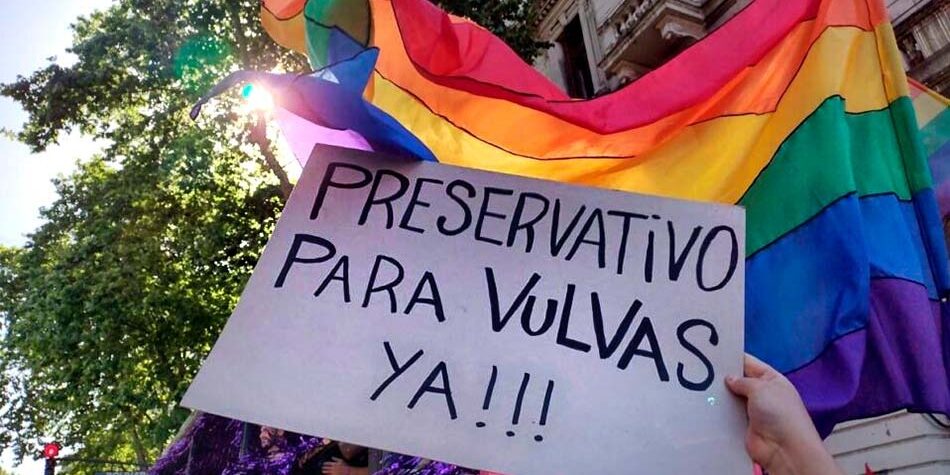
Latex sheets, field condoms, cling film, plastic wrap, dental dams, internal condoms. "Precarious" and "inefficient" options for sex between people with vulvas that are used "because there's nothing else," emphasize lesbian activists in Latin America. The common cry: the need for a safe condom for vulvas .
Andre (Chile/Mexico), Fabiola Baleón (Mexico), Indyra Mendoza (Honduras) and Sofía Fontana (Argentina) shared what barrier methods vulvoporting people use to have sex with each other, what happens in the common practice of rubbing, tribadism or scissoring; and what the initiatives for creating condoms for vulvas are in the region.
“Many vulvoportant people who have sex with other vulvoportant people generally report not using anything,” Andre says. This introduces one of the central issues regarding the sexual health of this group, which includes lesbians, bisexuals, non-binary people, intersex people, and trans men.
Transforming the perspective to transform condoms
Andre is a South American lesbian. She was born in Chile 27 years ago and currently lives in Mexico City. She is also a psychologist and has been running the self-managed project Alma de Fuego , where she sells erotic toys and conducts workshops on ejaculation and sexual health in her native country.
She believes that the methods they have to protect themselves—such as cutting the ends off a condom and creating a latex sheet or makeshift condom—"are very precarious." She speaks of " negligence on the part of the healthcare system."

“Any condom, whatever it may be, is made for birth control; it’s not made solely for sexual pleasure. A transformation of the heterosexual and cisgender perspective on the methods we can use to protect ourselves is needed. If we think of vulva-on-vulva sex practices, they are obviously not reproductive practices, and so we erase them; they don’t exist, they’re not necessary,” she emphasizes.
In this context, despite the "precarious situation," Andre clings to creativity. "If I want to have sex with someone and I need a barrier method to feel calm and safe, I'm probably going to go and use a latex rod or internal condom (for vagina) even though it's not designed for sex between two people with vulvas."
In addition, he mentioned other possibilities: "the use of gloves, finger condoms, and condoms from sex shops. The use of dental dams, available at any dental clinic, is also being promoted for oral sex or rubbing because they are much larger than a cut condom."
Inequality in access to methods and condoms
Fabiola Baleón is a lesbian feminist sociologist originally from the state of Puebla, Mexico, and currently living in Mexico City. She is also the director of Jóvenes por una salud integral (Youth for Comprehensive Health ), an organization that works "with, by, and for the lesbian and bisexual population." They promote sexual and reproductive rights, specifically focusing on LBT youth.
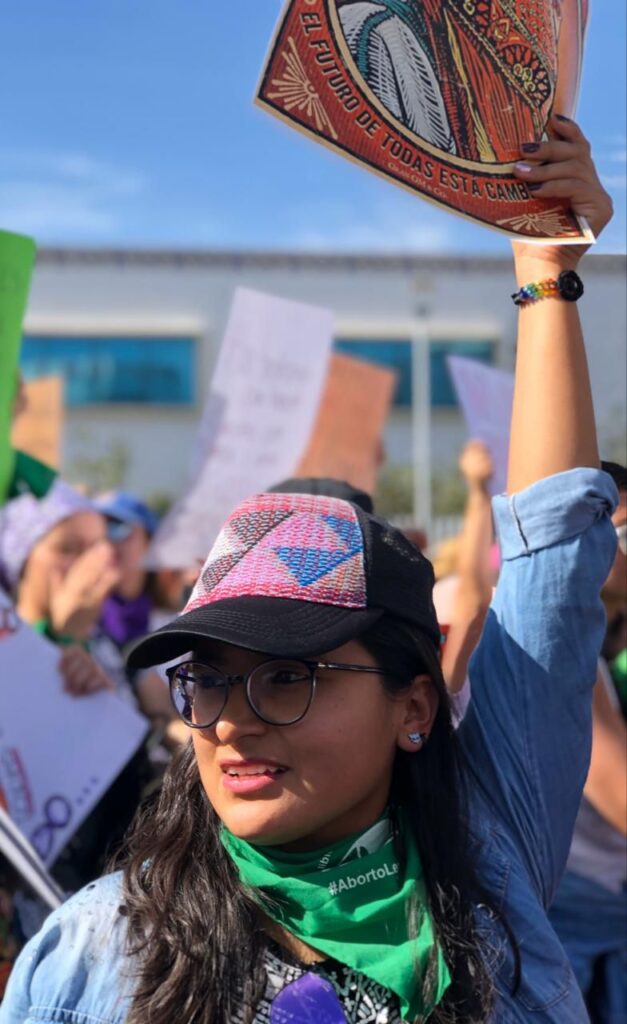
For Fabiola, there is a "great inequality" in access to widespread methods such as the penile condom versus the vaginal condom or the latex sheet .
"The most common one to find is the condom for the penis . The condom for the vagina has its limitations because maybe for every five condoms for the penis, they give you one for the vagina. They always tell you that they are no longer available, " she explains.
Another barrier is the price. "If we wanted to get them privately, the price is three or four times higher than the price of a condom for the penis . A flavored condom for the penis in a sex shop costs, on average, between 12 and 15 Mexican pesos. While a condom for the vulva costs at least 70 to 80 pesos."
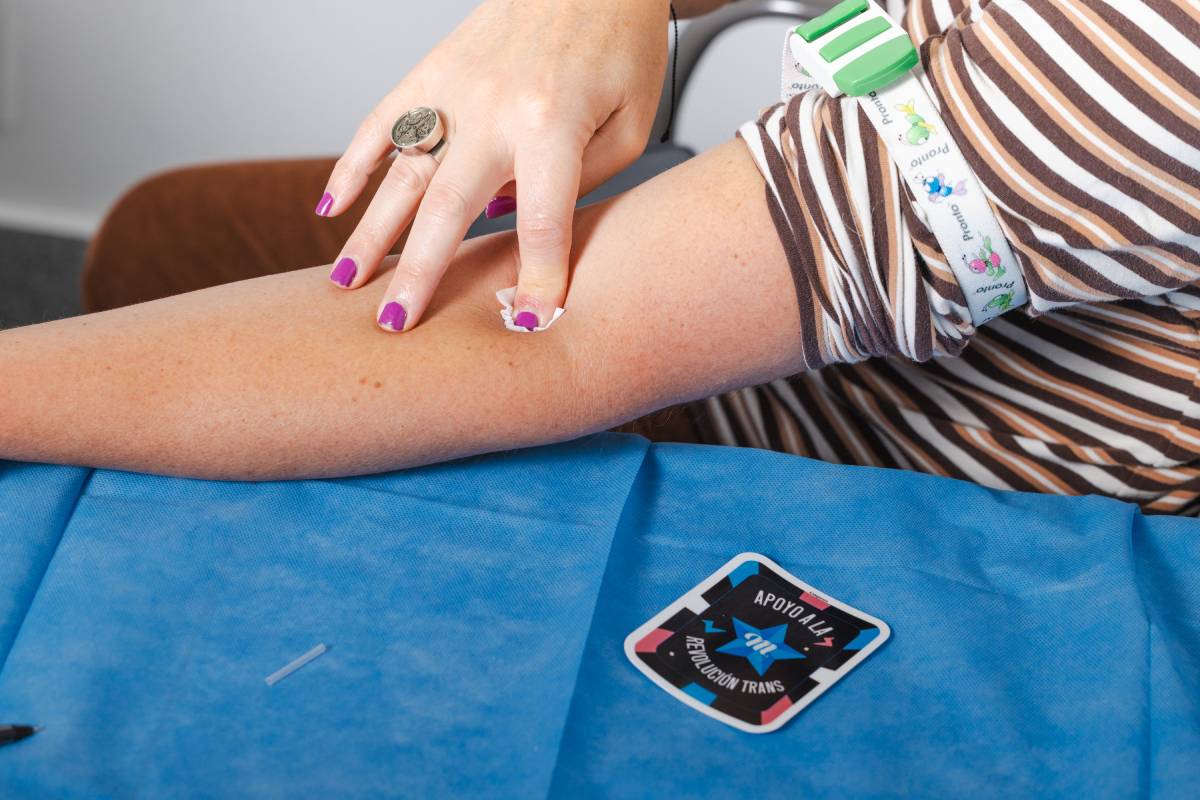
She also mentions that there are "latex sheets that can be made from a condom by cutting it at the ends. Or you can use latex sheets that are already sold in sex shops at a similar price to a condom for the vulva," Fabiola explains.
However, this barrier method is used for oral sex (mouth-vulva or mouth-anus) and not for tribadism, that is, vulva-to-vulva contact. "There is no method invented to date that can protect against and meet the requirements related to pleasure and safety in this sexual practice," she states.
Fabiola also mentioned other options she was aware of through her work with the organization. "Some people suggest using plastic wrap, which we call 'playo' here in Mexico (film in other countries), and they've suggested we make something like underwear with it. But it's super uncomfortable and kills the mood."
"Another thing we suggest," he adds, "is the use of plenty of lubricant for this type of tribadic practice: the more lubricant, the less chance there is of being in direct contact with vaginal fluids ."
condoms for vulvas researched?
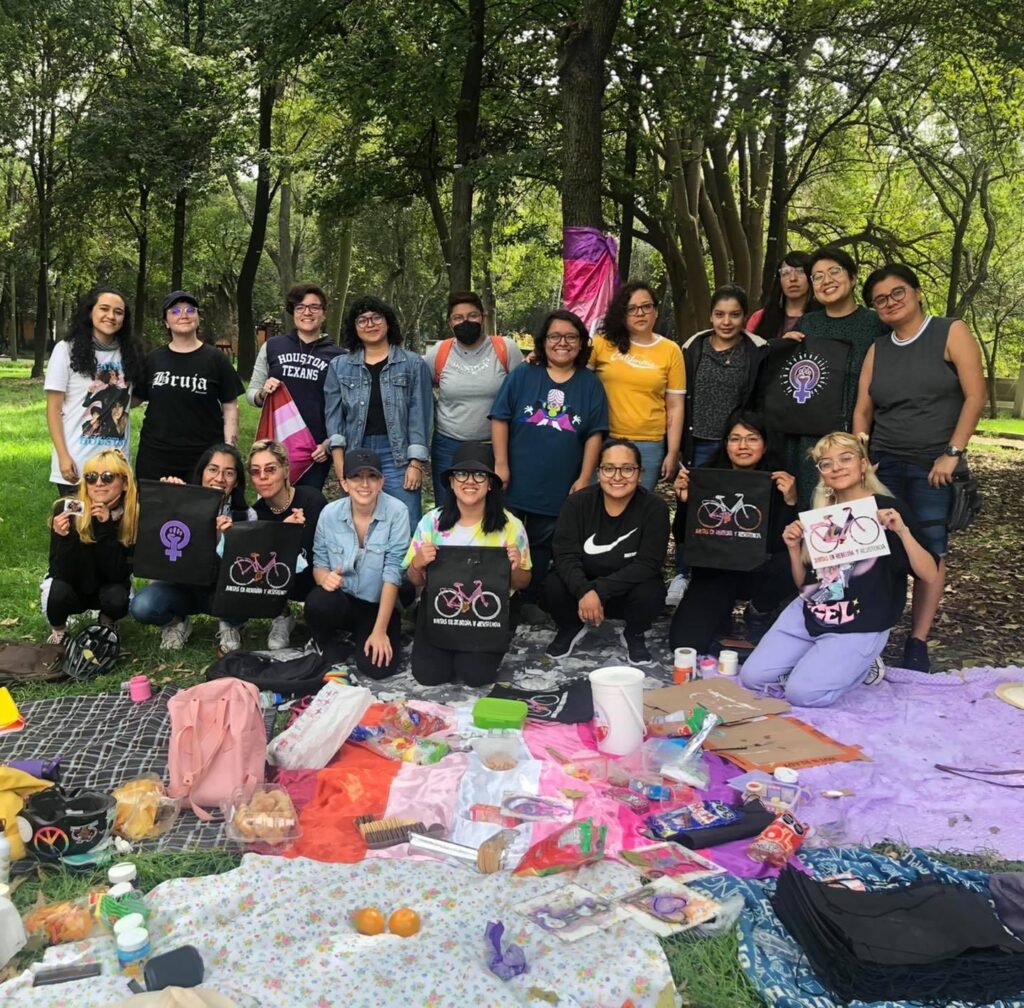
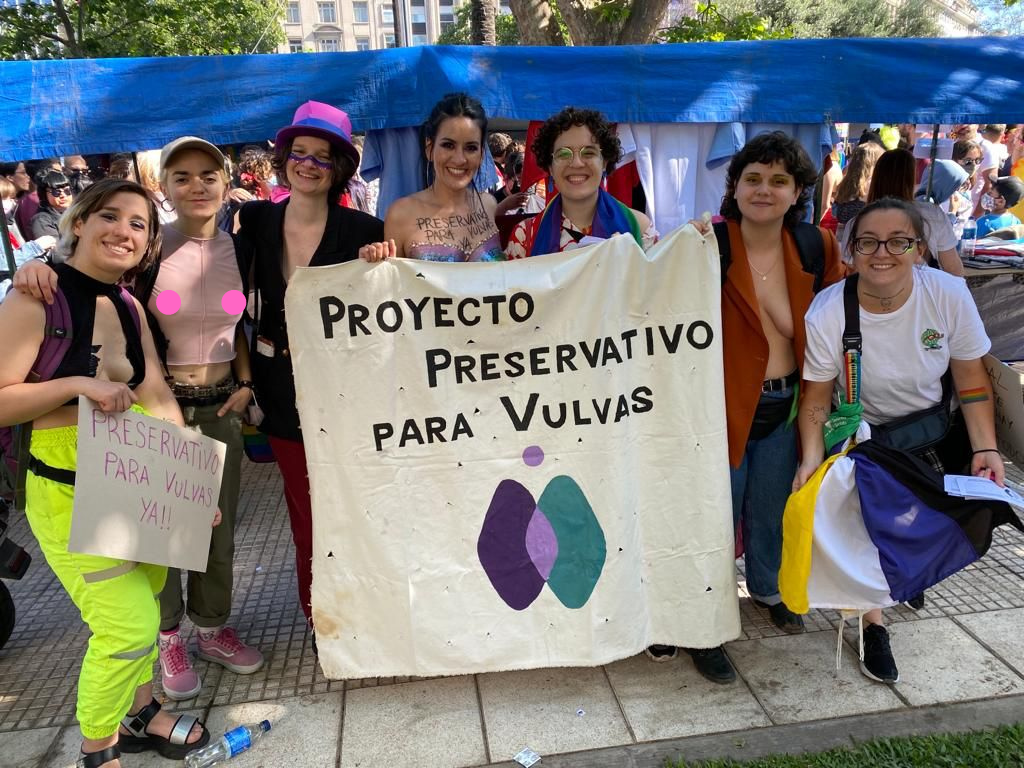
Sofía Helena Fontana is 23 years old, non-binary, and lesbian. She studies Creative Writing at the National University of the Arts in Buenos Aires, Argentina, and is an activist with the organization Proyecto Preservativo para Vulvas (Condom Project for Vulvas ).
“In our organization, we fight for the design, production, and free distribution of condoms that are suitable for all practices, especially for vulvar contact,” Sofía tells Presentes. “ For all sexual practices between people with or without vulvas (oral sex, anal sex, genital contact), we don’t have anything specifically designed for that purpose that we can buy at a pharmacy ,” she explains.
Regarding other methods of STI protection that are not condoms, Sofia lists "frequent serological checks (blood tests), as well as pre-exposure prophylaxis, better known as PREP, which is to prevent HIV."
Their organization is currently involved in two historical research projects for the creation of safe condoms that are primarily useful for rubbing practices, within the framework of the Ministry of Science and Technology of the Nation .
On the one hand, the work plan they developed together with scientists from Conicet and nicknamed “Research on condoms for all sexual practices” was presented in Challenge No. 53 of the ImpaCT.AR program and was selected .
“Its aim is to analyze and develop strategies to address the problem of the lack of condoms for all practices, especially those involving genital contact. This research aims to develop these analyses and take action accordingly. It also seeks to advise ministries and state organizations on the issue,” explains Sofía.
"We cannot decide because we do not have specifically designed methods."
The other research project they are involved in is within the framework of Collaborative Design Projects (PAD), alongside a team of industrial designers and a cooperative laboratory. “It is specifically for the design of condoms that can be used for contact between vulvas and other genitals.”
“Currently, we don’t have the option to decide because we don’t have methods specifically designed for the practice of rubbing vulvas together. Nor for oral sex,” says the activist from the Vulva Condom Project.
In addition to the need for condoms for these practices, the dissemination of relevant information is essential. “Public policy for developing condoms for vulvas must be accompanied by communication and education campaigns that aim to inform people about the purpose of these condoms and when it is essential to use them if they want to prevent STIs,” says Sofía from Argentina. “This way we can choose to protect ourselves and exercise our right to sexual health.”
Another side: no access to information or sex education
To get an overview of the situation in Honduras, we consulted Indyra Mendoza, coordinator of the lesbian network Cattrachas . Indyra says that she “hadn’t even heard of condoms for vulvas” and emphasizes: “There’s no debate about it at all here.” “Sexual life isn’t even discussed in Honduras, so one thing leads to the other. There are no sex education guides either because they’re prohibited. It’s a problem with the country: Honduras itself is a country that restricts sexual and reproductive rights ,” she emphasizes.
Share
We are present
We are committed to journalism that delves into the territories and conducts thorough investigations, combined with new technologies and narrative formats. We want the protagonists, their stories, and their struggles to be present.
SUPPORT US

FOLLOW US
Related notes

We are present
This and other stories are not usually on the media agenda. Together we can bring them to light.