

Why March 7th is Lesbian Visibility Day: the story of Pepa Gaitán
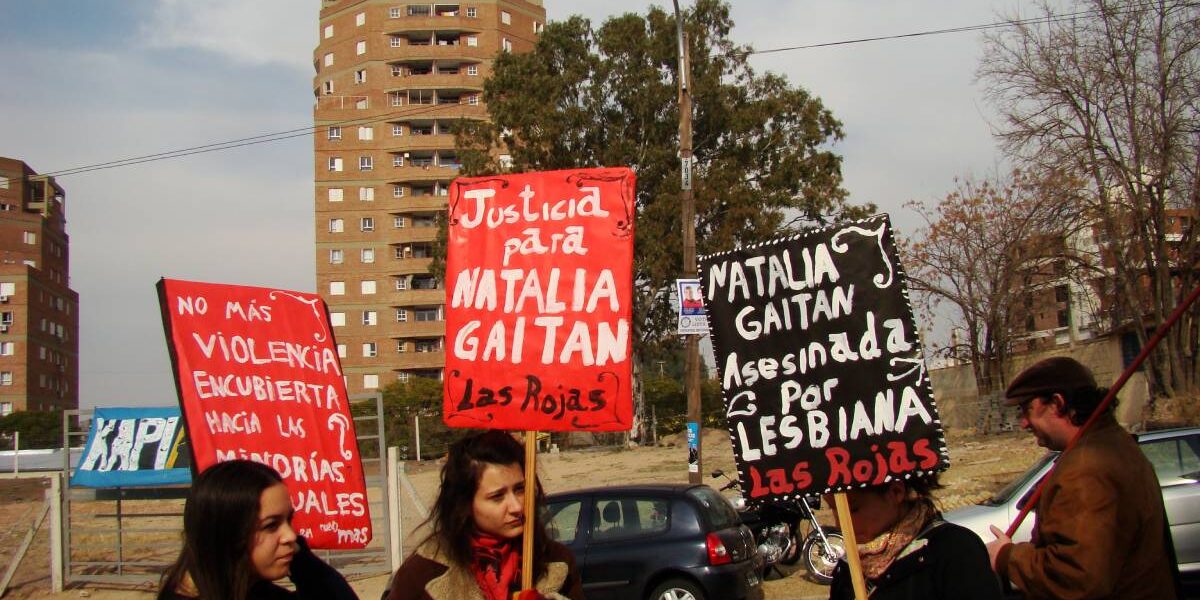
March 7th is Lesbian Visibility Day, in homage to Natalia Pepa Gaitán, who was murdered in 2010.


Share

CORDOBA, Argentina. Natalia Gaitán was 27 years old and in the Parque Liceo second section neighborhood she was known as Pepa . Her mother, Graciela Vázquez de Gaitán, ran the Lucía Pía , where the habit of solidarity towards the needy in that area of the northern outskirts of Cordoba was being fostered.
For example, they took in the married couple Daniel Torres and Silvia Suárez, giving them jobs at the NGO's community kitchen and daycare center. Silvia had a 16-year-old daughter from a previous relationship, who would later develop a romantic relationship with Pepa.
When the girl came out about the relationship at home, her mother and stepfather saw it as a declaration of war. The teenager had to leave home and went to live with an aunt who gave her shelter from July 2009 until January 2010, when she decided to stand by her choice and go live with Pepa in the small apartment her father had managed to build for her before he died, in the same building as Lucía Pía .
The afternoon of pain
It all began there, on the afternoon of Saturday, March 6, 2010, when, over mate, the couple was confiding their troubles to their friend Gabriela Cepeda. Indignant, Gabriela impulsively decided to intervene and headed to the teenager's family home, just three blocks away.
Upon arriving, she found the couple drinking mate on the sidewalk with their two young children. Gabriela got into an argument with Silvia; the dispute escalated, and there were even "a couple of shoves." Meanwhile, at the headquarters of the civil association, Pepa and her girlfriend were beginning to worry.
According to the court file, it was almost 7:30 p.m. when Pepa went alone to see what was happening and, upon witnessing the fight, tried to pull her friend away. But another skirmish broke out, this time between Silvia and Pepa , with Gabriela trying to separate them. At that moment, Torres —who had not participated in the argument or the scuffle—entered the house and came out with a 16-gauge shotgun. He walked over to where Pepa , “without saying a word, pointed it at her”… and fired at point-blank range.
The shotgun blast struck the young woman squarely in the right shoulder. She managed to walk a few steps before losing consciousness and lying there for over an hour. Her mother had time to reach her and hug her, until the ambulance finally ventured into the neighborhood.
Doctors at the Emergency Hospital were unable to stop the bleeding, caused by the "injury to the right subclavian artery and vein," and Natalia died at 2 a.m. on Sunday, March 7, 2010. Her attacker had tried to hide the weapon and flee, but ended up surrendering to the police.
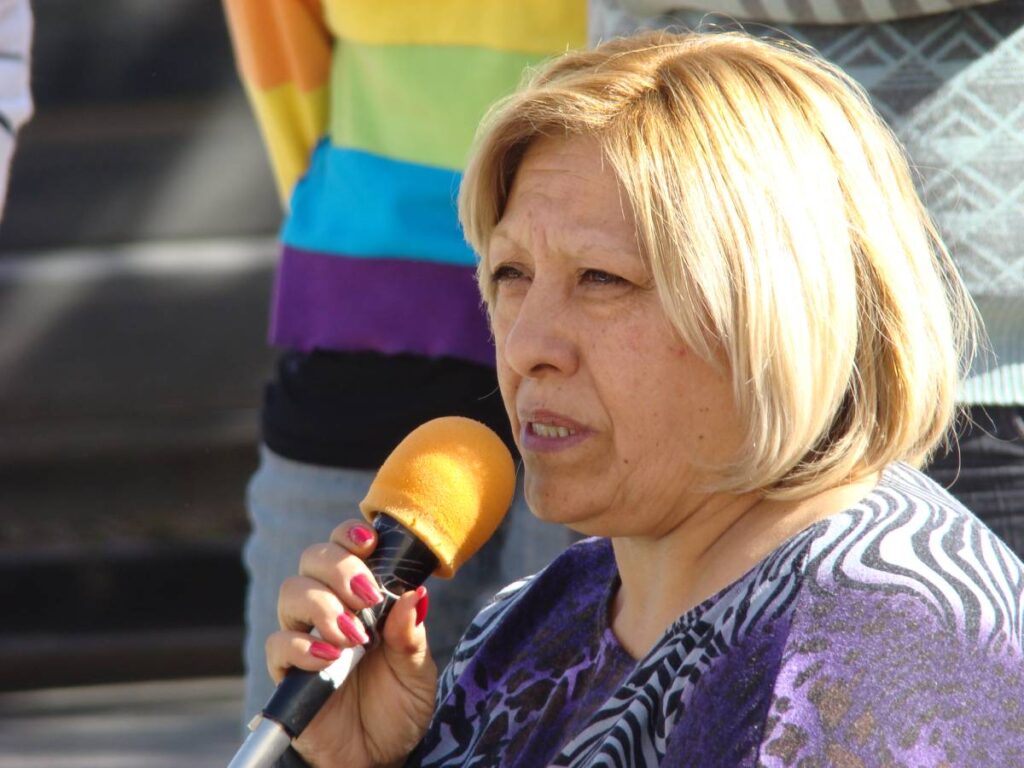
From the outset, when speaking to the first journalists who showed interest in the case, Graciela Vázquez described her daughter's murder: “They killed her like a dog. They shot her for being a lesbian.”
From microaggressions to death
From the outset, she also knew who would be joining her in her search for justice. The following day, a group of activists from Encuentro por la Diversidad (Encounter for Diversity) attended Natalia's wake, among them the young lawyer Natalia Milisenda.
“I didn’t seek out the case, but Graciela grabbed me and said, ‘Come here… I want you to meet Nati, so you know who you’re going to defend.’ She took me there and showed me the photo of Nati that was on the coffin. It was very powerful. For me, it’s an honor and a great challenge,” recounted Milisenda, who represented the victim’s mother.
“Nati isn’t the first girl to die for being a lesbian. These crimes happen every day and range from minor acts of violence to murder ,” the lawyer explained. “ It’s not just lesbians, but gay men too; and transvestite and transgender people suffer the most from this violence. But Nati’s case differs from others in that her family doesn’t hide the reason for the crime. It’s the family themselves who came forward and said it was because of her sexual orientation. Out of shame and prejudice, many of these crimes are treated as just another crime, and they’re not. Here, it’s thanks to Nati’s family that this can be seen as it is being seen.”
“For my daughter, vote for this law”
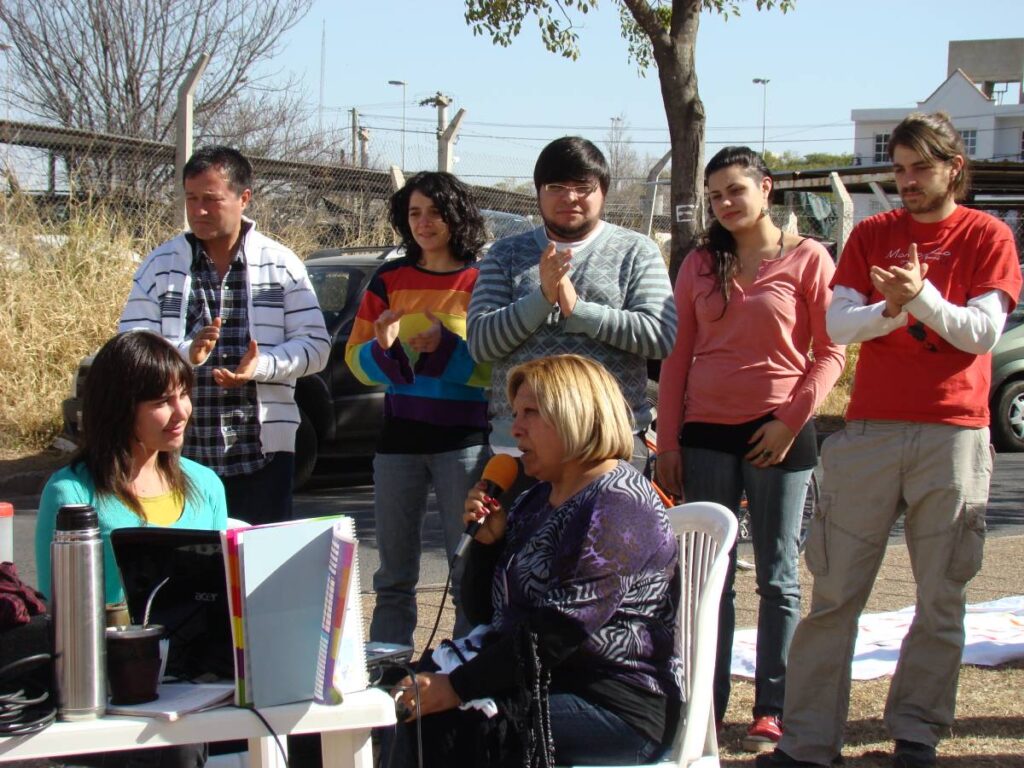
On June 24, 2010, the demonstration in support of the Equal Marriage Law took place in Córdoba in a festive atmosphere. Except for one moment during the event when the crowd fell into a profound silence for several minutes, which was broken by applause.
During that time, from the gallery, Graciela Vázquez spoke—or rather, cried out from the depths of her soul—words like these: “I understood my daughter, and every day I understand her more. (…) Today I live with the suffering of knowing she was killed like a dog, because the stepfather of my daughter's partner didn't accept her. He had the satisfaction of killing a lesbian, but he won't get away with it because he deserves punishment. (…) Senators, in my daughter's name, I ask you for the best justice you can do: I want you to vote for this law and for all of you here, the doves and pigeons, to fly away once and for all. Thank you very much.”
That's how many of those filling the Plaza de la Intendencia of a case that would become a symbol against discrimination and lesbophobic violence . Around that time, the Multisectoral Justice for Natalia Gaitán group was participating in a sit-in in front of the Archbishopric of Córdoba, and General Paz Avenue was renamed in her honor.
Shot for being a lesbian
Sexual diversity groups also questioned the media that "made it invisible that Natalia was a lesbian and thus legitimized hate crimes."
In response to that hegemonic view, the phrase "shot for being a lesbian" was established from day one as a rallying cry for the LGBTQI+ movement.
On the blog "Mujeres a bordo" (Women on Board), run by the Argentine Women's Information Network , one could read: “Neither prohibition nor taboos could quell Natalia's desire. Her desire that defied the heterosexual mandate. Her body, which neither insults nor daily discrimination could control. Her erotic and emotional life, which the subtle and silent procedures of institutions could not rectify. For being a lesbian. Natalia Gaitán, poor, 27 years old, a resident of the city of Córdoba, was shot with the phallic shotgun of her girlfriend's stepfather on Saturday, March 6. Executed. Her body executed, her desire executed, her life force executed. Executed for being a lesbian.”
But the search for culprits was not limited to the perpetrator of the crime and was also directed towards the institution they considered to be the inspiration: "The Church aims, lesbophobia shoots."
Thus the demand for justice grew, accompanied by numerous organizations representing sexual minorities, feminists, human rights, legislators – such as Cecilia Merchán, Carmen Nebreda, Silvia Storni and Liliana Olivero – and the National Institute against Discrimination, Xenophobia and Racism (INADI) .
The discrimination trial
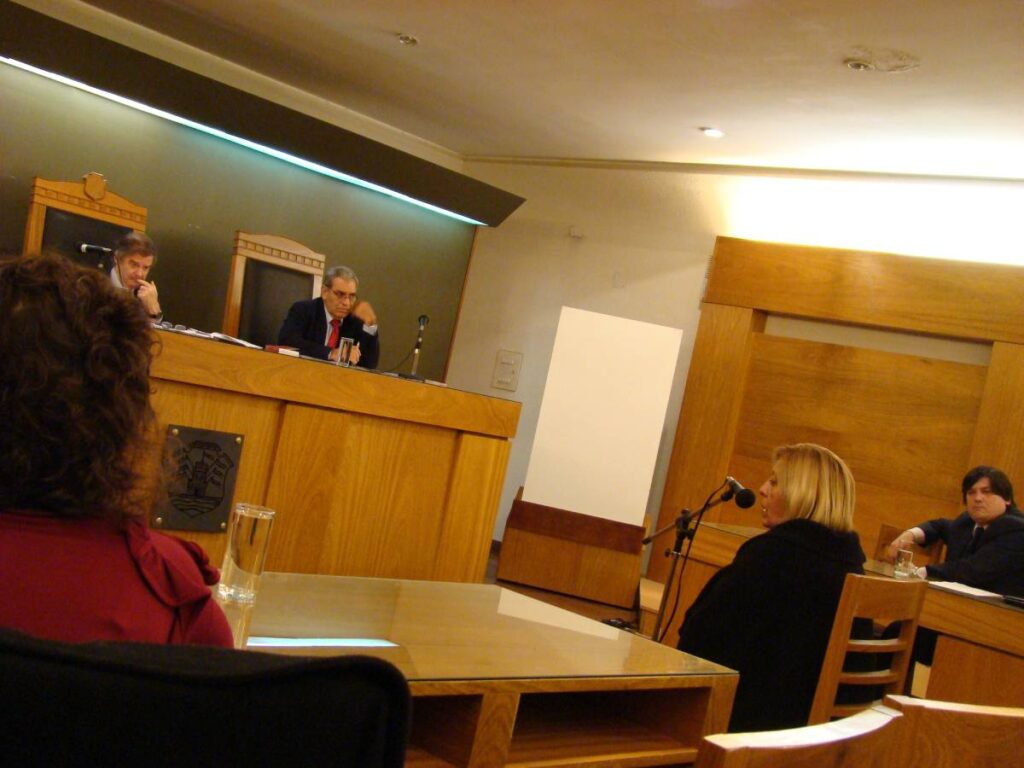
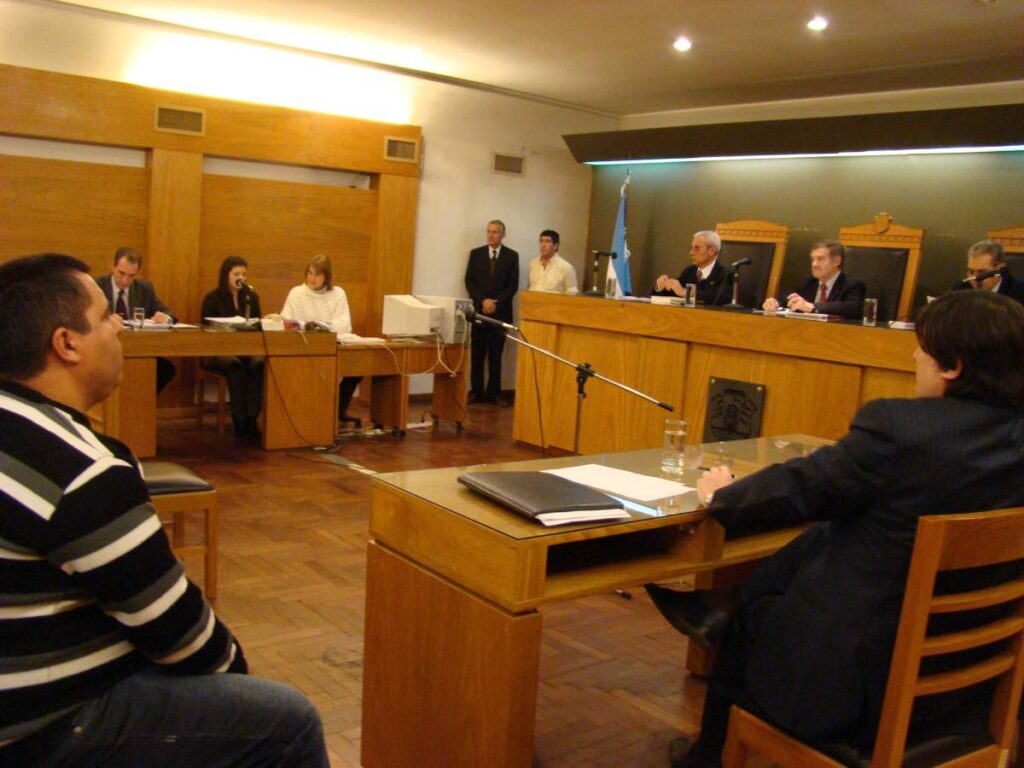
On July 26, 2011, the criminal trial against Daniel Esteban Torres, 40, accused of "aggravated homicide by the use of a firearm," began in the 7th Criminal Court of Córdoba.
Judges Víctor Vélez, Ricardo Iriarte and Carlos Ruiz presided over the debate, in which a dozen witnesses testified.
On the eve of the first hearing, the victim's mother stated: “What expectations can I have? What is the point of this trial? I wonder if those who are going to judge have ever suffered the pain I feel. There is no possible reparation, but I still have to seek justice. Because it wasn't a crime of passion; it was a gender-based tragedy. Because Natalia's case was a global catalyst. Because this is a trial about discrimination.”
The Anti-Discrimination Law 23592 only considered the motivation of any crime to be "persecution or hatred of a race, religion, or nationality," without including the victim's gender identity. For many years, the Argentine LGBT Federation and other LGBTQ+ groups have been demanding this inclusion. Currently, work is underway to amend the law.
However, for Milisenda, the accused should not be alone in the dock: “Nati’s sexual orientation was the cause of the crime, and we want to make that visible. It’s an important case and an opportunity to raise awareness in society that there is an entire social system that made it easier for Torres to shoot Nati.”
In similar terms, her mother posed another question: “ Who killed Natalia Gaitán? Society. He (Torres) is a discriminatory man who doesn't accept gays, lesbians, or transvestites because he hates them , and my children have witnessed that he already wanted to kill their sister. But I want the law to be applied so that there are no more Natalias Gaitáns murdered. It's worth it, because this is a fight for everyone, and little by little we're going to win.”
On August 9, 2011, Daniel Torres was sentenced to 14 years in prison for aggravated homicide with the use of a firearm against Natalia Pepa Gaitán . In its reasoning, the Court described her as “a 27-year-old woman who bore the burden of discrimination due to her sexual orientation and who fought for her rights.”
However, the judges noted that “no elements of conviction revealing a lesbophobic situation were presented as evident during the course of the debate (…) that would allow us to affirm that there is a cause-and-effect relationship between the crime and the victim's sexuality.”
In his name
But Pepa Gaitán was already becoming a symbol. On February 17 of that year, the Córdoba City Council approved Ordinance No. 11,906, which declared March 7 – the date of her murder – as Municipal Day Against Discrimination Based on Sexual Orientation and Gender Identity.
The initiative, proposed by the organization Devenir Diverse , aimed to "generate a preventive policy from the municipal State regarding acts of violence and discrimination towards the lesbian, gay, bisexual and trans community."
Since then, sexual diversity groups have commemorated that date in Córdoba and throughout the country as Lesbian Visibility Day.
In 2020, on the tenth anniversary of the crime, the Cordoba legislative body approved the project of councilwoman Soledad Ferraro to recognize March 7 as Municipal Day of Lesbian Visibility .
Graciela Vázquez de Gaitán passed away on April 10, 2018.
Daniel Torres regained his freedom in March 2019.
Yamila Gaitán, Pepa , continues with the Lucía Pía .
* The original version of the chronicle The day lesbophobia was a murder weapon was published in El Sur magazine, No. 66, July 2011, and is part of an anthology of stories of lives in conflict that will be published next month.
We are present
We are committed to journalism that delves into the territories and conducts thorough investigations, combined with new technologies and narrative formats. We want the protagonists, their stories, and their struggles to be present.
SUPPORT US

FOLLOW US
Related notes



We are present
This and other stories are not usually on the media agenda. Together we can bring them to light.