

What does the Salvadoran court's ruling in favor of recognizing the names of transgender people mean?
The Constitutional Court of El Salvador issued a ruling in favor of recognizing the names of transgender people. Repercussions.


Share

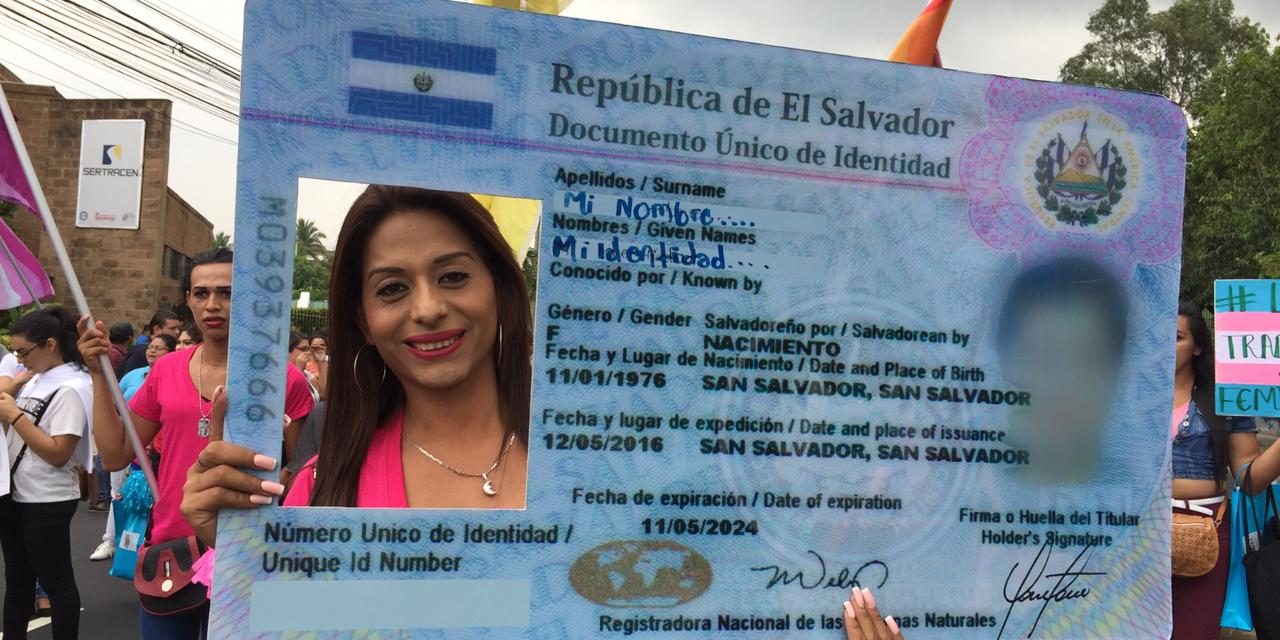
The Constitutional Chamber of El Salvador's Supreme Court issued a partial ruling on Tuesday, February 22, recognizing that transgender people can change their name on identity documents to reflect their self-perceived gender. " The Legislative Assembly must enact the necessary reform to establish the conditions that any person wishing to change their name to align with their gender identity must meet ," the ruling states.
The court ruling responds to a constitutional challenge filed in 2016 by human rights advocates. In it, they argued that Articles 11 and 23 of the Law on the Name of Natural Persons (LNPN) violate the right of transgender people to change their name.
"Congress will have to adapt the law."
The lawsuit argued that the law fails to recognize the identity of transgender people. “It omits the social condition of some individuals regarding the discrepancy between their biological sex and gender identity.” This violates their right to have a name that reflects their sex and self-perceived gender identity. In its ruling, the Court established that Congress must amend the law or enact legislation to comply with the ruling.
“ With this ruling, the court has recognized that our name is offensive to our human dignity as trans people . Because we are subjected to violence and lack of access to fundamental rights . It also establishes that this is something that must be regulated: there are forms of discrimination due to the inadequacy of this law because there is discriminatory and unjustified treatment,” said Bianka Rodríguez, director of the organization Communicating and Empowering Trans Women – COMCAVIS.

The ruling was not issued exclusively for transgender people. The constitutional judges also included claims regarding the removal of surnames in cases of family abandonment.
What was the basis of the lawsuit that prompted the ruling?
The lawsuit filed in 2016 referenced international law, specifically Advisory Opinion No. 24 of the Inter-American Court of Human Rights . This opinion urges states to adopt legal regulations that guarantee the protection and respect of the right to identity of transgender people; however, the ruling did not take it into account.
“This is an important point, because the court is not ruling on the right to gender recognition for transgender people. It is granting them the right to change their name. Therefore, it is imperative that the Legislative Assembly not only reform the name law, but also enact a comprehensive law, a comprehensive regulation. It establishes that the necessary reforms must be made. But it also allows for the adoption of specific regulations to ensure compatibility with the gender identity of transgender people,” Bianka pointed out.
Obstacles to gender identity law in El Salvador
El Salvador does not yet have a gender identity law . In May 2021, legislators from the ruling party, Nuevas Ideas, shelved the draft bill being studied by the Congressional Committee on Women and Gender . Marcela Pineda, a member of the ruling party, considered the bill, along with 30 other proposals under review, to be “obsolete and out of touch with reality.”
“It’s like a court order from the Constitutional Chamber requiring the Assembly to legislate on recognition in accordance with gender identity. It addresses a very important issue because the law regarding names only covers names . But when it comes to this recognition of identity, that’s where the representatives will have to create specific regulations for trans people ,” Bianka noted.
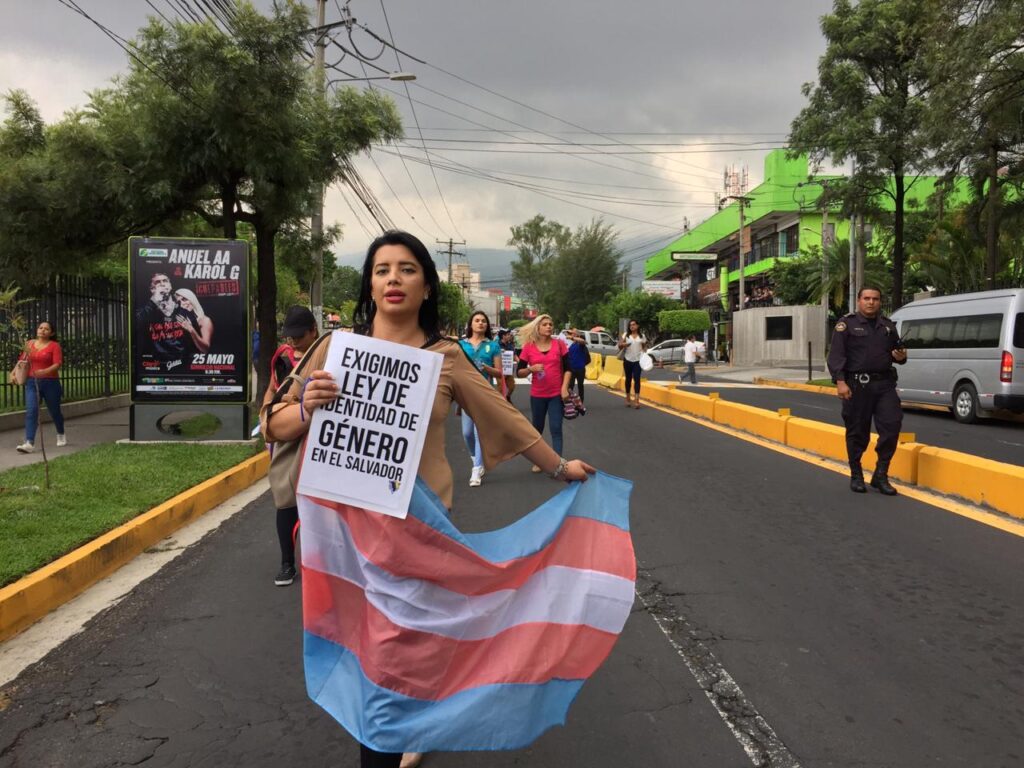
The preliminary bill, originally presented in 2018, was revived and resubmitted to Congress three months after it was shelved by the Permanent Committee for the Gender Identity Law. To date, its review by the relevant committee has not yet begun.
The new bill was received by the Farabundo Martí National Liberation Front (FMLN) and Nuestro Tiempo parties. Together they barely reach five votes out of the 84 in Congress.
"Trans people need legislation."
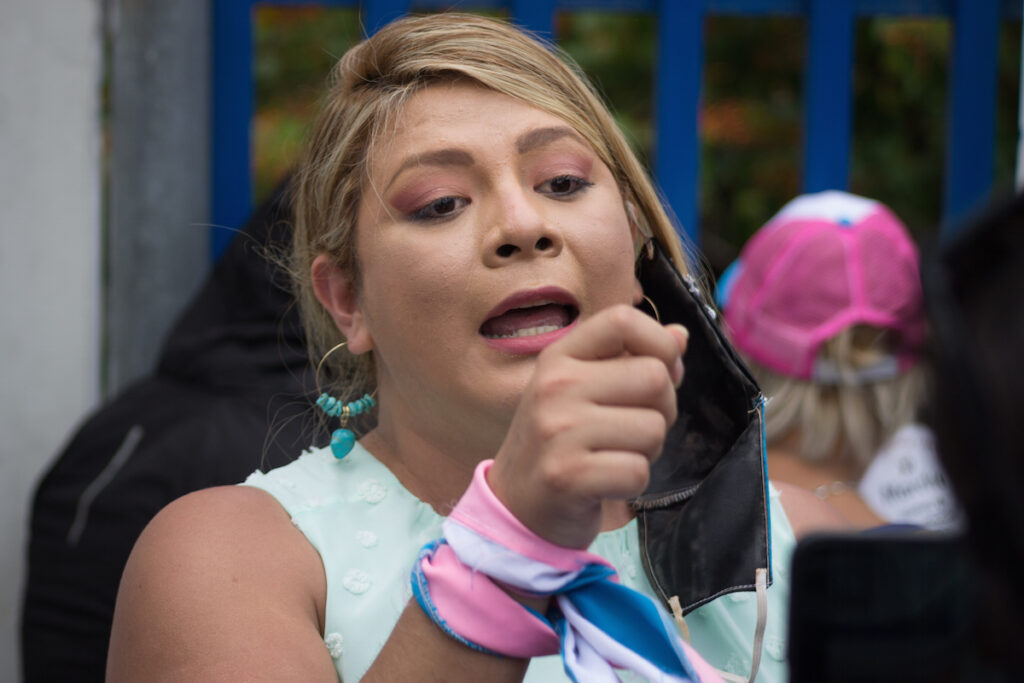
“Unfortunately, the commission hasn't responded to us. But we hope that with this ruling from the Court, they will recognize the need for legal protection for transgender people. Furthermore, it's important to send this message to the Legislative Assembly, which has a motto that they are serving the people. The people, in this sense, are everyone, and we are all people. Therefore, transgender people now need legislation that truly addresses this need ,” Bianka stated.
Congress has made controversial decisions since assuming the new legislative term (2021-2024). In its first session, it dismissed the Constitutional Chamber, the president of the Supreme Court, and the attorney general. They did so under the pretext of allegedly obstructing government measures during the Covid-19 pandemic.
“As public officials, we must comply with this ruling from the Constitutional Chamber. If the Legislative Assembly does not take a proactive approach, we will have to pursue international legal action due to the failure to legislate on this matter, because rights cannot be postponed,” Bianka added.
We are present
We are committed to journalism that delves into the territories and conducts thorough investigations, combined with new technologies and narrative formats. We want the protagonists, their stories, and their struggles to be present.
SUPPORT US

FOLLOW US
Related notes



We are present
This and other stories are not usually on the media agenda. Together we can bring them to light.