

Wichí women who have been sexually abused demand the right to identity for their daughters and sons
They are mothers from Mission Kilometer 2 demanding reparations for damages.


Share

SALTA, Argentina. For the first time in the history of the province of Salta, a group of women from the Wichí Nation publicly demanded reparations for the damage caused by sexual abuse committed by "criollo" men against indigenous girls and adult women, a practice that still continues.
On February 22, Octorina Zamora, a Wichí woman, formally delivered to the Ministry of Security and Justice of Salta a letter signed by about thirty women from the Misión Kilómetro 2 community, located in the Rivadavia department , in the jurisdiction of the small town of Pluma de Pato, almost 400 kilometers from the city of Salta.
“We, the women who have signed this letter, are mothers of children born from relationships with 'Creole' men, as they are commonly called in this area. Men who do not belong to our community,” they state in the letter. The aggravating factor is that “many of these relationships were not consensual, and many of them occurred at a very young age, under conditions that we now recognize as clear abuses.”
However, what moved them most was the situation of their sons and daughters. “These men have rejected their role as fathers, leaving all the responsibility to us who—as best we could—carried on with motherhood in contexts of extreme vulnerability.”
That is why they asked the Minister of Security and Justice, Abel Cornejo, to help them ensure that "the right to identity of our children is respected and the damage caused by the men who rejected their responsibilities as fathers is repaired."
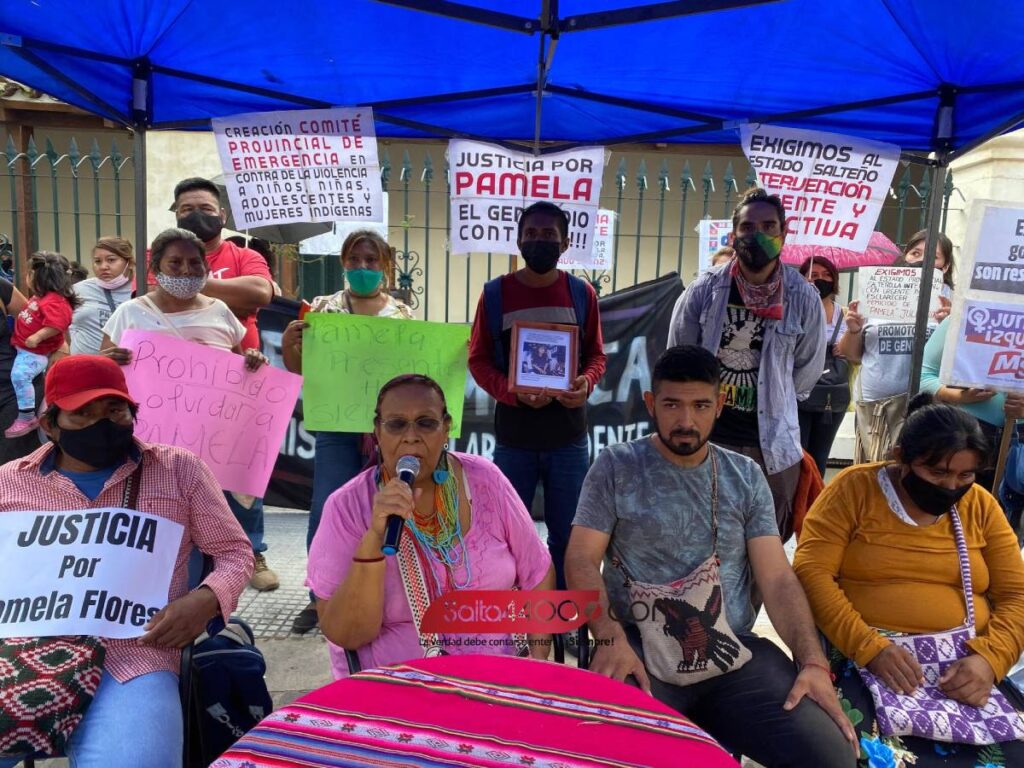
The actions of these women are one of the direct consequences of the unrest generated in Misión Kilómetro 2 by the femicide, in mid-January, of the girl Pamela Julia Flores , who at 12 years of age was stabbed by another teenager from the community.
The girl's body was abandoned among some bushes, near the same indigenous community and on the side of National Route 81, an artery that has much to do with these stories of abuse.
Amidst the grief, and the need to demand a thorough investigation into the context in which this crime was committed, which highlights the consumption of drugs and alcohol and the exploitation by local men who offer money in exchange for sex, Pamela's family asked Octorina Zamora for help.
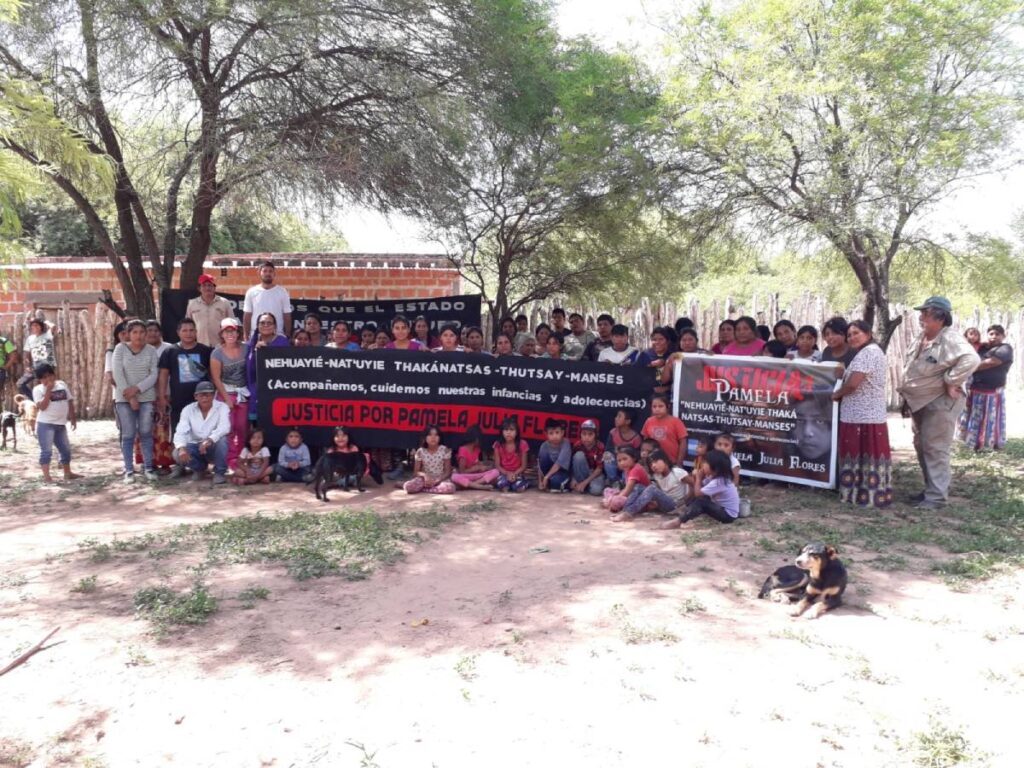
Thus, the First General Assembly of Indigenous Women of Route 81 was conceived, held under the slogan Nehuayiè-Na'tuyie thaká natsas-thutsay-manses (Let's accompany our children and adolescents), on February 11 and 12, in the same community. This meeting also gave rise to the exchange whose summary was presented in the letter.
Testimonials: “Our time has come”
The women state in the text that they feel the need to recount “all the pain” they have experienced and continue to experience in a “struggle that has been made invisible and silenced . This decision was not easy, but we feel that the time has come, that our moment has arrived” because “today we are strong, we are united, so we believe it is time to raise our voices.”
“We want to denounce all those men who never fulfilled their obligations as fathers, trampling on the identity rights of our children,” they state. These men, they denounce, “forever marked our lives and the lives of our children, causing irreparable damage to our Indigenous community.”
The testimonies, included in the letter, eloquently demonstrate the discrimination and racism exhibited by these practices:
– “The father of my child was a man who came to work on the road. I got pregnant when I was 14, he was 40. After a while he left, he left me alone and went to another province. Over time I also understood that I was abused and I didn't know it.”
– “My son is the son of a healthcare worker, a nurse. One day I took his son to meet him and he kicked us out like dogs. My son is suffering because of that.”
– “I worked cleaning a house in the village of Pluma (de Pato). My boss got me pregnant and never took responsibility, he rejects us, we are his shame. But he continues to do the same to other women, to other girls.”
– “My daughter is the daughter of a well-known butcher in the area. I tried to report him in Morillo (Coronel Juan Solá, about 25 kilometers away) so they would recognize my daughter, but the police mocked me and never took my report. It's even worse in Pluma.”
– “My son’s father has about five children with different women from this Mission, he hasn’t taken responsibility for any of them, but he keeps having children as if it were a game.”
– “My daughter’s father deceived me, today I cannot support a family, I cannot tell my children that their father never loved them.”
-“Many Creoles who have children in the Mission also have businesses; they often buy the silence of the women and the community by delivering merchandise.”
– “My child suffers because he knows who his father is, someone from the village, who has already started another family, but when he sees my son he rejects him, he insults him.”
– “It’s difficult to raise a child who is different, who is an unrecognized child; it’s hard to raise him with love, it’s very difficult. I’m afraid he’ll be an unhappy person.”
-“Our children feel like they don’t belong anywhere, since they feel Wichí but see themselves as Creoles, which is why they are victims of cruel teasing from other children. My son asks me, ‘Why are we different?’”
Return rights
The letter, the women say, is a plea for justice and a plea for reparations for themselves, for children, for families, and for the community.
“Many of us women carry this burden, this suffering. Suffering from being rejected, from being discriminated against, for our children, whose rights have been denied. Suffering for the future of our indigenous community, which will be made up of men and women without identity, men and women raised with rejection,” they assert.
"Our children are the children of the first workers on the route who came from other provinces, they are the children of storekeepers, butchers, police officers, gendarmes, teachers, nurses, and all those who at the time wanted to 'satisfy' their sexual desires with our bodies," they say.
They also emphasize that these events are repeated from generation to generation. “This is not a story of the past, as these practices, this behavior towards our women, continues to happen to this day.”
Silence, discrimination and subjugation
Regarding the testimonies, Octorina Zamora observes, “It's many years of subjugation, many years of silence on the part of us women. With this type of aberration that we had to suffer since our grandmothers and great-grandmothers.”
"The Argentine Army has also raped and abused our great-grandmothers, our grandmothers, our mothers, and that has always remained silent."
In the same vein, he recalled that in his childhood in Embarcación, “the 'turcada' (as the middle class is called in the town), who are Argentinians, white people, Creole people, would take girls or teenagers as employees and then have their own children deflowered. That was kept quiet, and it is still kept quiet today.”
She says her mother was terrified of her going to work in those kinds of jobs. “I have family members who had children with their employers, and their employers never took responsibility for their children. There are young people, there are adults, who look like their employers, and (the biological fathers) never took responsibility. And those employers also had children with other women, with different women who were employed in their homes. It all remained a secret.”
"It's not something that only happens in Embarcación," Octorina explains. "It happened in other towns, where they used us as sex objects. And that hurts (her voice breaks), and so the story will never end if I don't tell it."
The letter
The letter contains four specific requests to the provincial government, through the Ministry of Security and Justice. One of them is that it take the necessary steps to ensure that the Justice system investigates and intervenes to restore her rights and those of her children.
They also request "that the Ministry make available its interdisciplinary teams, including lawyers, psychologists, social workers, and other qualified personnel, to assist in filing our complaint" and that "it provide us with protection and support throughout the entire process to safeguard our identities, as well as the identities of our minor children."
Another request is that "they guarantee the safety of both mothers and children once this complaint is made public."
From woman to woman
The stories compiled in the letter did not originate from the Women's Assembly but from a specific request made by the community to Octorina Zamora. This is how the process that culminated in the letter began.
“A woman approached me to tell me about her situation, the situation of her children, and how to claim child support because she didn't have a job, she had no help, but the father of the children did have a job and a fixed salary. She told me, 'If you support me, if you help me, I'm going to report him.'”
Another woman overheard and also told her story of abuse, "And so, they were finding out and they were asking to talk to me alone," she says.
“As a woman, I know of many testimonies from other women who have suffered many hardships, always afraid to denounce the man, the macho, so I thought it was great that it comes from such a vulnerable and violated community as Kilometer 2,” Octorina reflected in conversation with Presente s.
At first, they hadn't considered writing a letter to the Minister of Security and Justice either. The woman who had asked for help reporting the father of her children and Octorina traveled to Embarcación, almost 130 kilometers away, intending to file a formal complaint, but they were told she had to go to mediation. That day, the mediation office was closed.
Back in her community, the woman shared her frustration, and they asked Octorina to consider other ways to report these incidents. That's how they came up with the letter.
The text began with four or five women, but the more they spoke, the more stories emerged. Even the community president, Raúl Manuel, and the chief, Porfirio Amado, approached, “supporting the women, so they were completely empowered.”
Octorina Zamora highlighted the cacique Porfirio Amado because on the first day of the Women's Assembly meeting, he proposed "a law to imprison men who abandon their children, who abandon their wives, who only go to find an indigenous woman to satisfy their sexual desires. Then, when the indigenous woman has the child, they disappear, they don't want to know anything about it."
“That’s common because there’s no penalty. So he was asking for a law. That stuck in my mind, and I think women also picked up on that idea.”
The legal question
In the letter, the women say they are appealing to the Minister of Security and Justice because they are receiving no answers from the local justice system. “They deny us any possibility of filing a complaint, deny us any possibility of taking action, making us feel that our struggle is in vain and that what happens to us is just part of everyday life. We constantly suffer discrimination and are constantly pressured to keep our cases from coming to light.”
How could these women get a response from the justice system? The Judiciary referred Presentes to the General Office for the Protection of Incapacitated Persons. There, they indicated that anyone wishing to claim parental filiation can contact an office to learn about the process.
José Cortez, the guardian ad litem for incapacitated persons in Embarcación, explained that they have “a protocol for action regarding the filiation of children”; the General Advisory Office for Incapacitated Persons signed an agreement with the Civil Registry of Salta and they share an integrated system that allows the Advisory Office to be informed of cases that have only maternal filiation.
The advisor said that in such cases, mothers are summoned to provide information about the other parents, and while he noted that this is voluntary, he emphasized that the children's right to their identity must also be taken into account. This process, in turn, could lead to legal action.
Furthermore, Cortez said that through this procedural protocol they became “aware of abuses,” noting that most of them occur within the family, both in indigenous and Creole groups.
Regarding Indigenous communities, she noted that there are cases of pregnant girls whose father is also a minor. She stated that her office has no record of lawsuits filed by Indigenous women against non-Indigenous men.
She also acknowledged the lack of information regarding their rights. “Fieldwork needs to be done; we need to reach out to the communities. We do this in the cases where we intervene, but the State should have a group or commissions working in the territory. This is especially important given the difficulties of leaving the areas where Indigenous women live: communication routes are very limited, and information is scarce. It doesn't reach them because, obviously, most don't have television, don't read newspapers, and don't use social media.”
The Ministry of Security and Justice informed Presentes that the minister ordered that "the collective complaint be referred and a copy be given" to the Public Prosecutor's Office, "so that it can determine if criminal offenses were committed, and especially those that threaten sexual integrity."
Also to the General Counsel, "because it intervenes in the protection of the rights of children and adolescents and of people affected in their mental health, both in extrajudicial and judicial processes", and to the General Defender's Office of the province, because "it is responsible for the free legal advice of people of limited resources, in compliance with the constitutional guarantee established by article 18 of the Provincial Constitution".
Furthermore, on March 3 and 4, a technical team from the Ministry of Justice, led by Carla Tiano, head of the Program for Assistance to Victims and/or Families of Victims of Serious Crimes, will be stationed in Pluma de Pato to train police officers in the region "on their obligations in receiving complaints and addressing victims of crimes against sexual integrity and other types of violence, avoiding revictimization," and the obligation of all public officials to report crimes, the ministry indicated.
He added that training will also be provided to the communities. He also stated that “accessible legal advice will be offered to guarantee access to justice” and that, to this end, “communities will be given a bilingual Guide to Intervention in Sexual Abuse, in Wichi and Spanish, which can serve as another tool for indigenous peoples to access justice.”
We are present
We are committed to journalism that delves into the territories and conducts thorough investigations, combined with new technologies and narrative formats. We want the protagonists, their stories, and their struggles to be present.
SUPPORT US

FOLLOW US
Related notes


We are present
This and other stories are not usually on the media agenda. Together we can bring them to light.