

A slap in the face in Córdoba: two days of camping, debates and dancing among lesbian identities
The "Tortazo" (a lesbian gathering) took place on the weekend of February 26th and 27th in La Bolsa, Córdoba. It was a gathering of lesbian identities organized by Alerta Torta.


Share

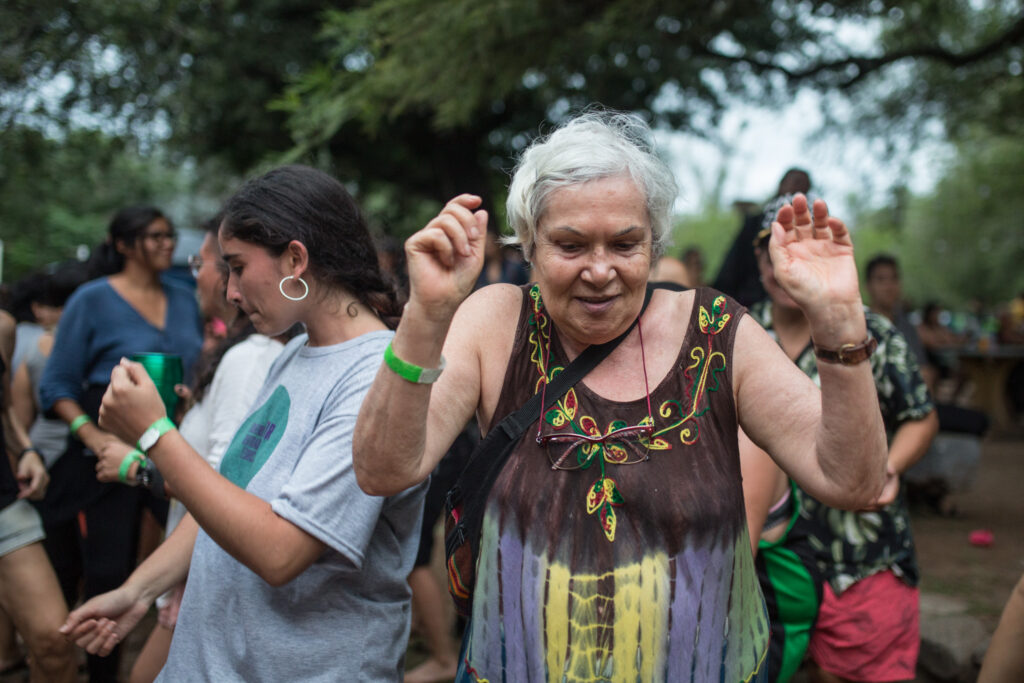
The "Tortazo" took place on the weekend of February 26th and 27th in La Bolsa, Córdoba. It was a gathering of lesbian identities organized by Alerta Torta, featuring two days of camping, debates, dancing, workshops, food, and swimming, with the goal of building a Tortx agenda.
Tortxs came from Santa Fe, Rosario, Viedma, Santiago del Estero, Tucumán, Salta, CABA, Buenos Aires Province, Uruguay, Comodoro Rivadavia, La Pampa, La Rioja, Jujuy, Necochea, San Juan, San Luis, Orán, Neuquén, Córdoba city and province - I hope I don't forget anyone - to the Transmitaxi campsite in La Bolsa, with an organizational system that guaranteed food and care for everyone.
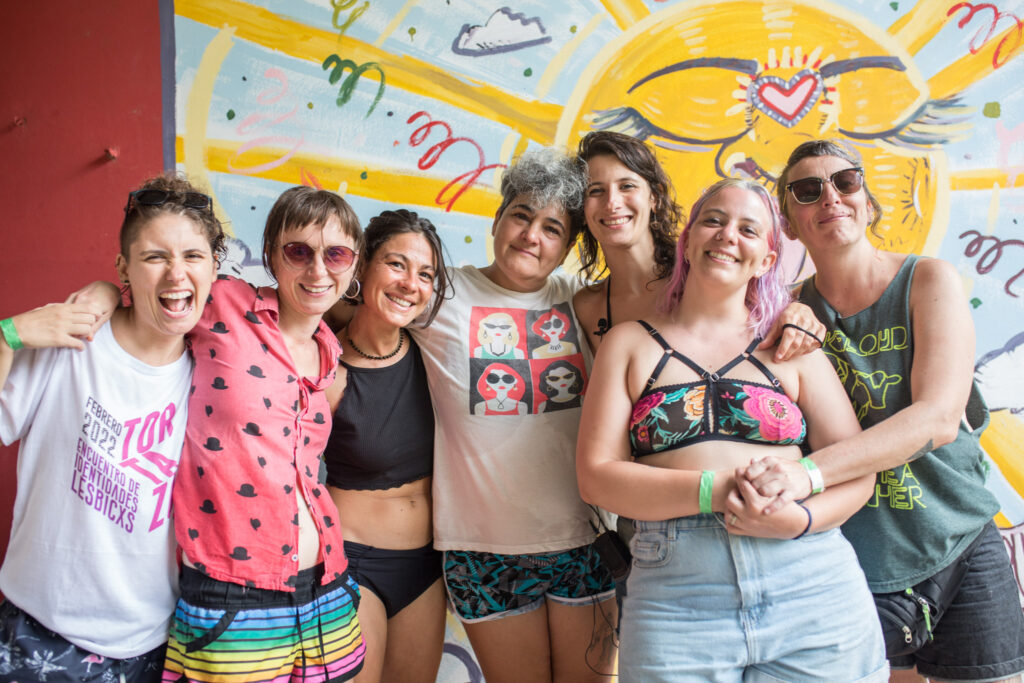
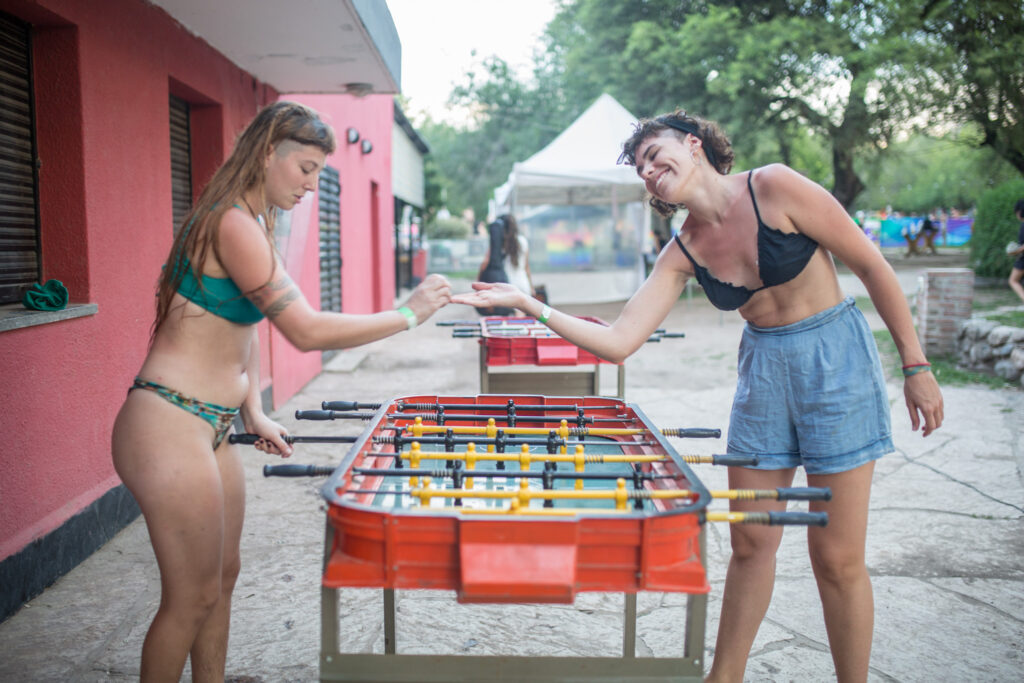
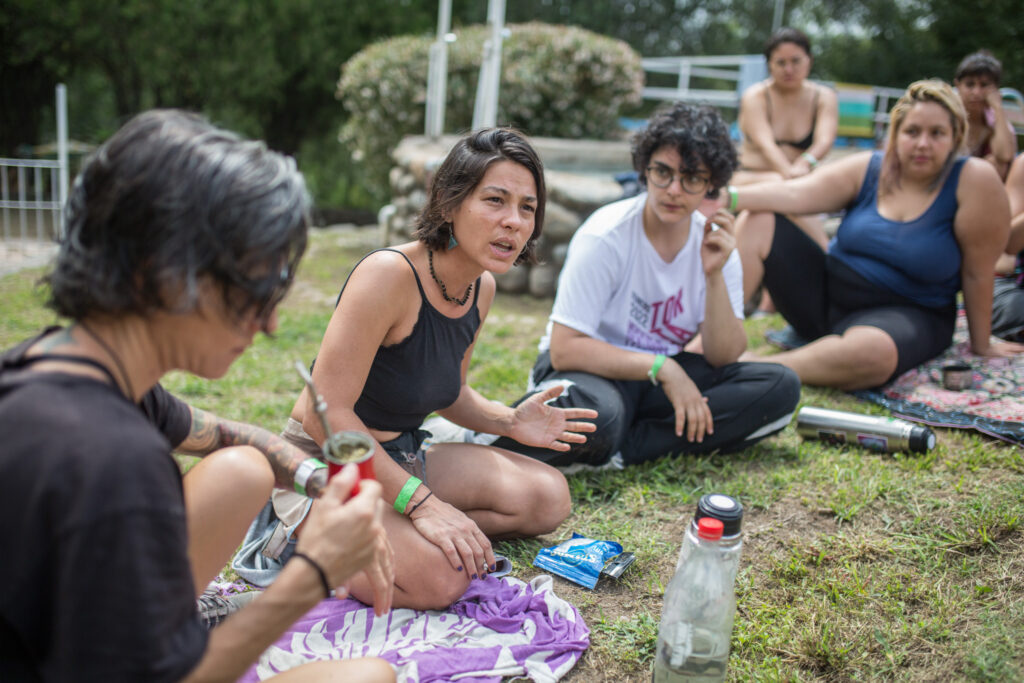
They cooked large pots of stew for everyone, kept the bathrooms clean, the microphone open, and the pool ready for the gathering. The campsite was overflowing, with 300 lesbians staying there; many stayed in rented houses nearby, and others of us traveled to and from the city both days. Nevertheless, we all shared time together at the tables, the barbecue area, and the foosball table. You could say there were a lot of us, and a collective memory of political praxis was activated in our bodies—the one we built so well in the plurinational gatherings.
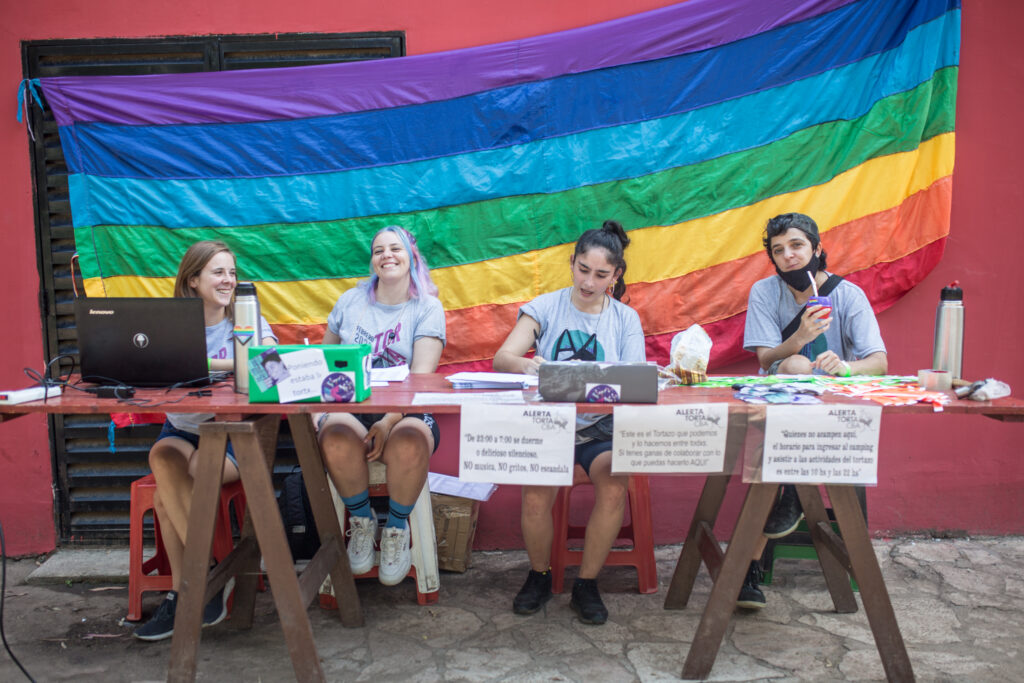
The organization Alerta Torta emerged organically in July 2019, with a broad call to action for lesbian identities across the city to collectively develop a political agenda for lesbians. Despite the pandemic, the assembly was formally established as an organization comprised of 17 lesbians, who undertook the task of organizing a lesbian identity gathering in Córdoba, scheduled for March 2020, which, for reasons we are aware of, could not take place.
Two years later we met again. Our lives had changed a lot, our problems had worsened with the economic crisis and the rightward shift of the world, our vulnerabilities were laid bare, as was our desire to meet, and that was reflected this weekend.
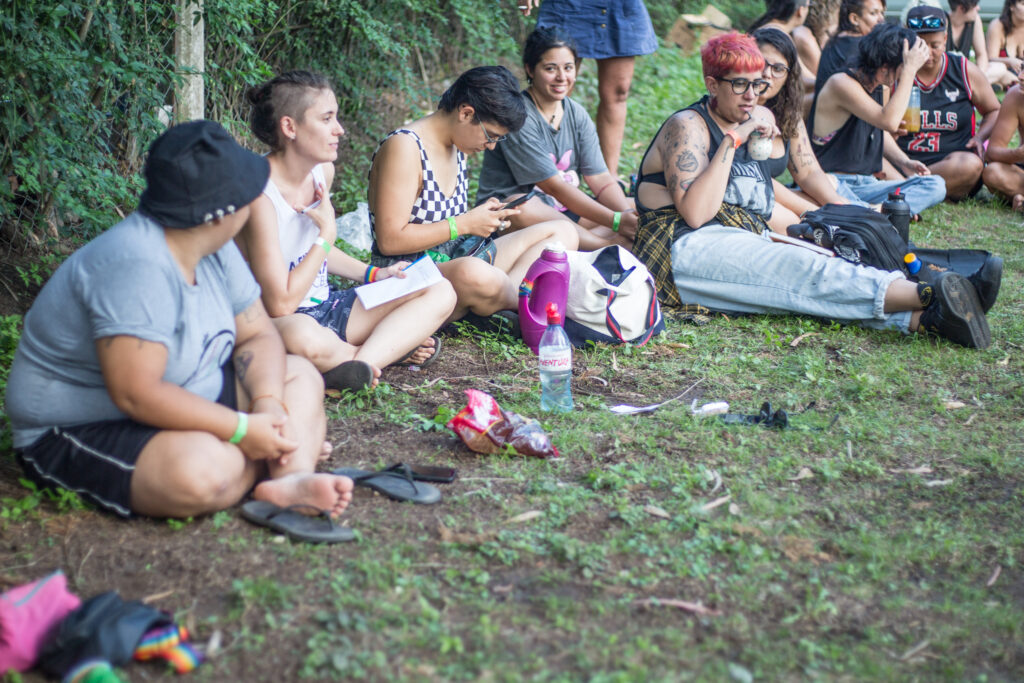
The workshops
The invitations to the workshops were marked by the names of influential figures, which in some way allowed for an interpretation from their perspective. The workshop on health and rights was named after Felipa de Souza , who was persecuted by the Holy Inquisition in 16th-century Brazil and expelled from the convent for sodomy.
Pepa Gaitán Workshop explored violence against lesbian identities. Alejandra Pizarnik gave a name to our practices and poetics of desire and pleasure. Gabriela Mistral framed our discussion of education; Nicole Saavedra guided us to discuss cis-hetero-patriarchal justice; Marielle Franco called upon us to speak about our activism and political practices.
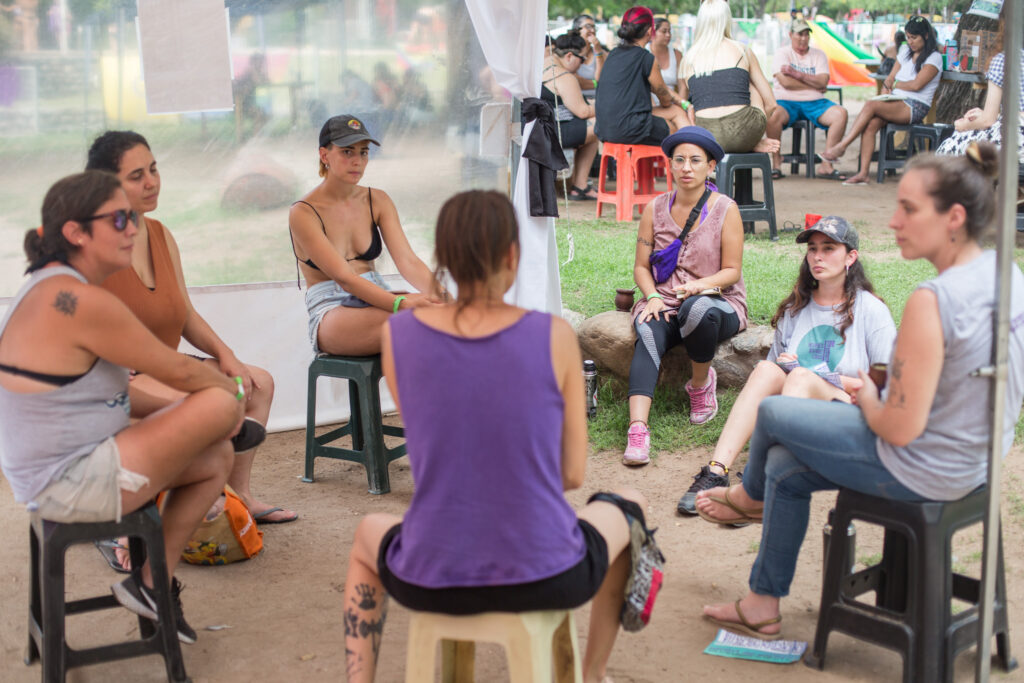
Chavela Vargas invited us to reflect on culture and communication; Gloria Anzaldúa was invoked for the workshop on work and rights; Cachita Arévalo led us to consider our family structures. And the last workshop with a proper name was Higui , which invited us to think about sports and rights. The only one without a proper name was the workshop that invited us to reflect on public shaming as a political tool; however, I will take the liberty of naming it: María Luz Baravalle, a lesbian who committed suicide in Chaco in 2019 after being publicly shamed for allegedly assaulting her partner.
Lesbian memory
An anachronistic, borderless, and highly diverse lesbian genealogy was constructed. The need to build a lesbian memory was a recurring theme that appeared in several workshops and to which it was returned time and again. Genealogies also produce cartographies, and Córdoba, without a doubt, is a city that has known how to attract lesbians for many decades.

The memory of Pepa makes Córdoba a meeting place, even for ourselves; many of us met in the streets marching in her name, at the courthouse demanding justice; we met activists who traveled from all over the country to witness the trial; the lesbian network that had been woven for decades became visible.

In 2012, a gathering of lesbian activists, called the Celebration of Lovers, was held in Córdoba. It was convened, planned, and organized by Potencia Tortillera and carried out by a group of lesbians from Córdoba who never had a name, but who tried to maintain the Lesbian Visibility Day for almost 10 years. That memory lingered in the air, like a murmur.
Lesbos, that promised land
La Bolsa is a small town, with a very old grove, plane trees and eucalyptus trees guard its little streets, the river is wide, with some nice stones to sit on in the sun, the river can be heard from afar.
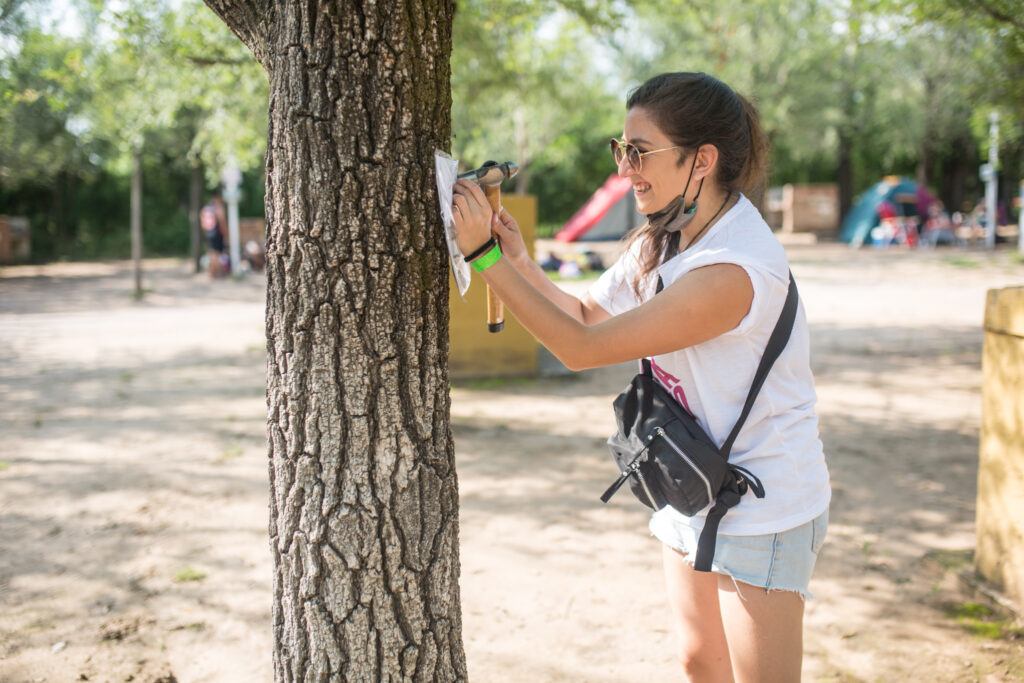
The entrance to the campsite is marked with a welcoming arch, a well-stocked supply store that catered to our needs with all kinds of food, a foosball table that hosted many matches, and the girls from the organization with their t-shirts, signs, directions, stickers, and a ready hug and smile, beyond any political differences or lesbian drama.
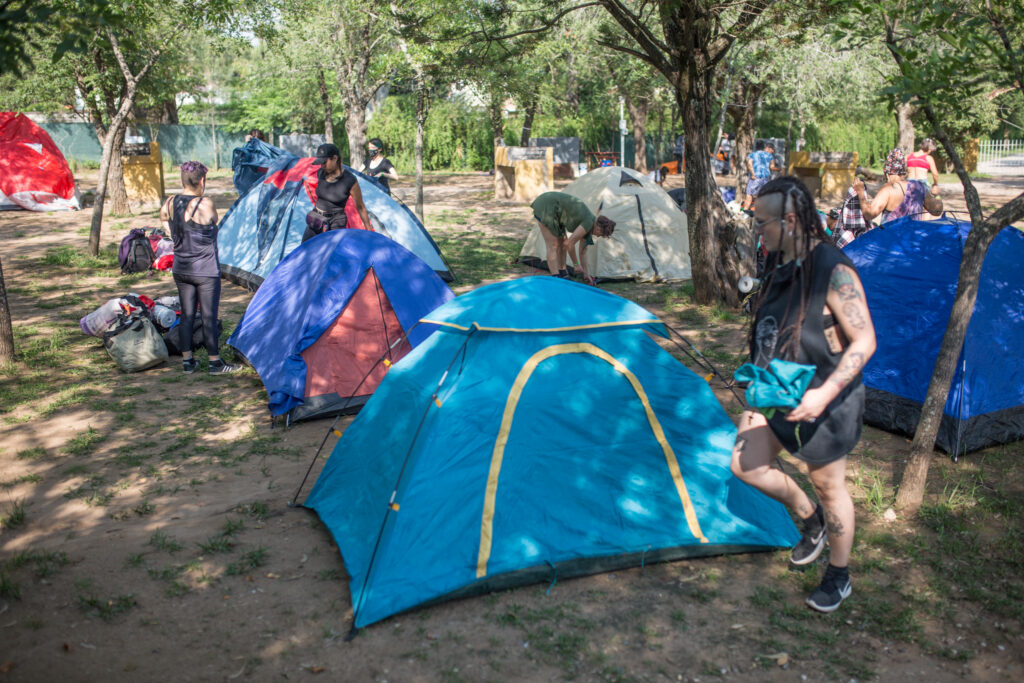
You kept walking and came across tables where the lesbians were gathered in groups. It was impossible not to stare at each other for a while and smile, greeting everyone as if we all knew each other. A friend would appear and the hug would just happen. You have to understand the emotion it meant for so many of us to meet without masks, outdoors, to hug each other without fear, to share again, to learn about each other's lives without the fictional narratives of social media.

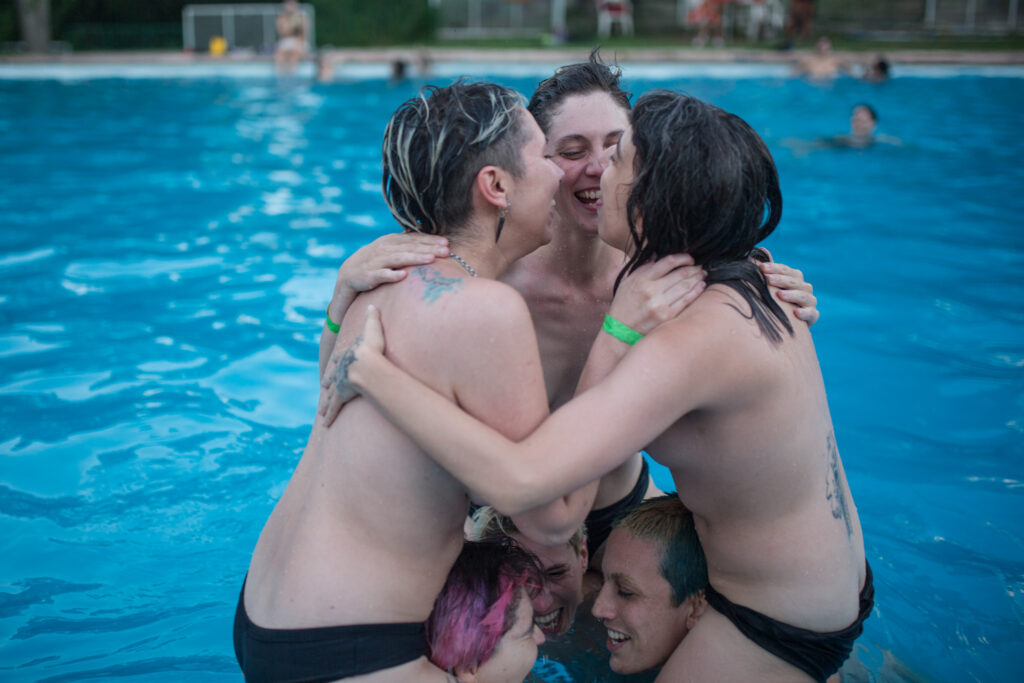
You passed the tables and there were the pool's railings where all the organizations' flags were hanging, beautiful, gigantic. Pepa's name was waving, Higui's too, the colors of pride, the cities, the banners guarding an enormous pool full of free lesbians—and understand freedom here as an exercise in pleasure—bodies in the sun, intertwined, dancing in the water, torsos exposed. The image challenged me; I stood for a while contemplating it. A scene I was used to being familiar with produced a sense of estrangement; it was too much to process. We lesbians were here, again, insisting on thinking about our existence, enjoying ourselves.
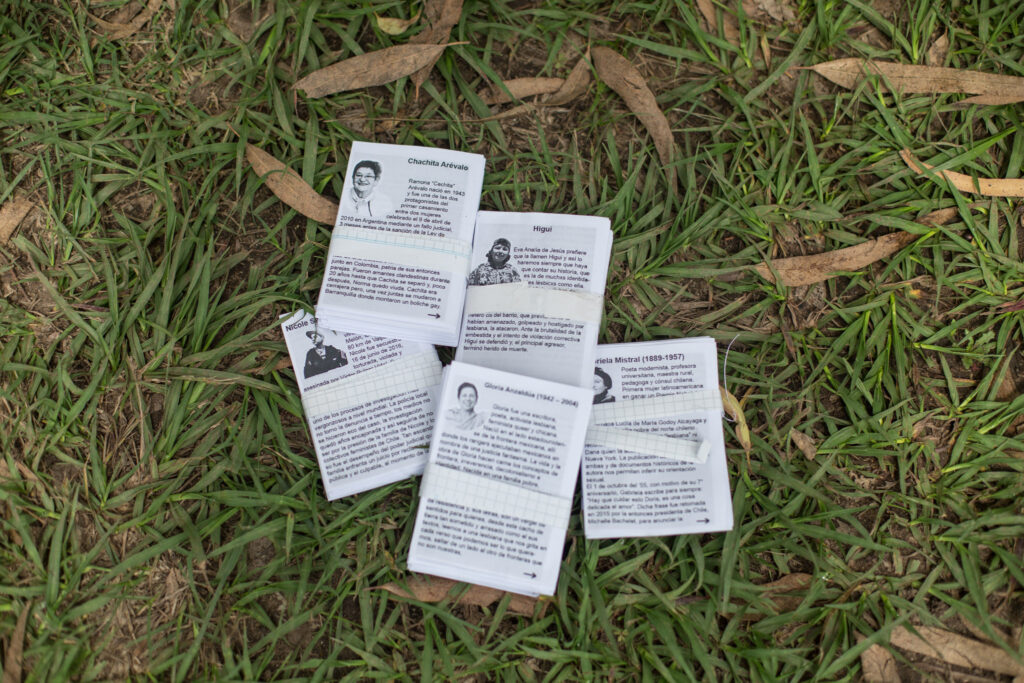
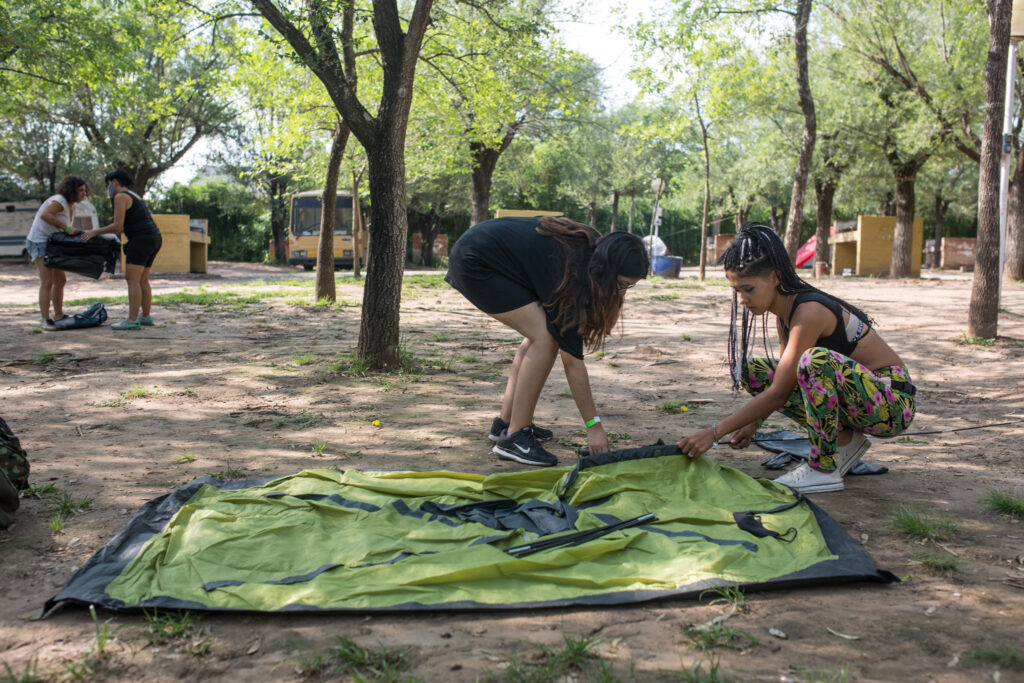
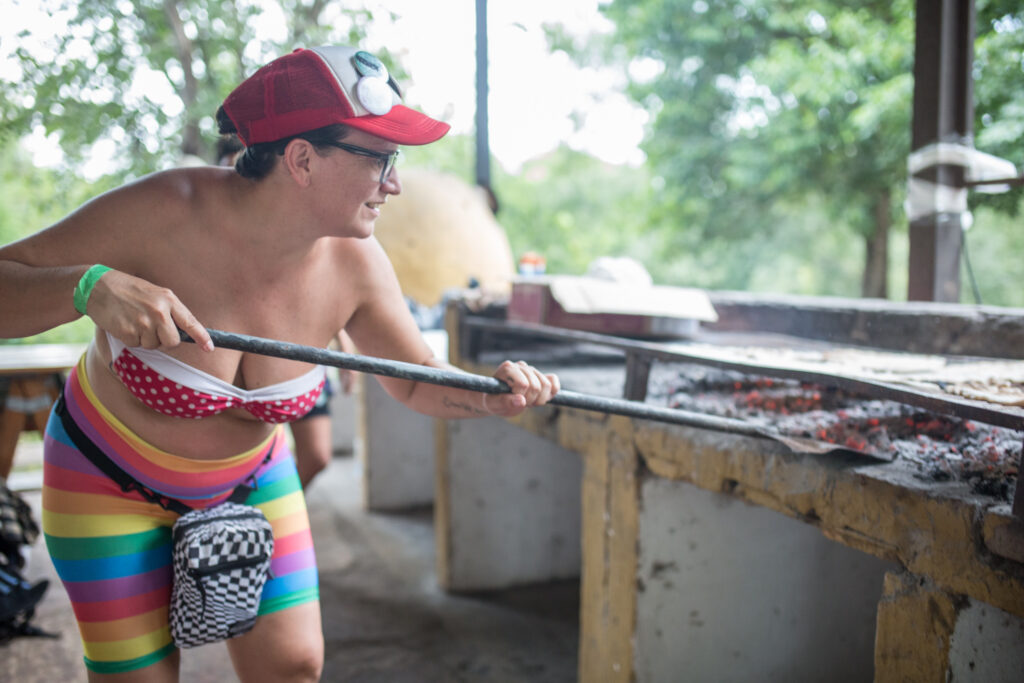
To the right were the tents, one next to the other; there were many, and on Sunday, with rain threatening, more than one person started digging the famous drainage ditch. Coolers, balls, guitars, caps, notebooks, fanzines, and t-shirts circulated from hand to hand, fostering encounters and conversations. In the tent area were the grills, keeping the coals burning for some grilled pizzas. There were also small yellow houses, the taxi drivers' union hall, where people who couldn't or didn't want to sleep in tents stayed. Everything was intertwined in an apparent harmony; at times, it was a portrait of Wittig's guerrillas, the promised land.
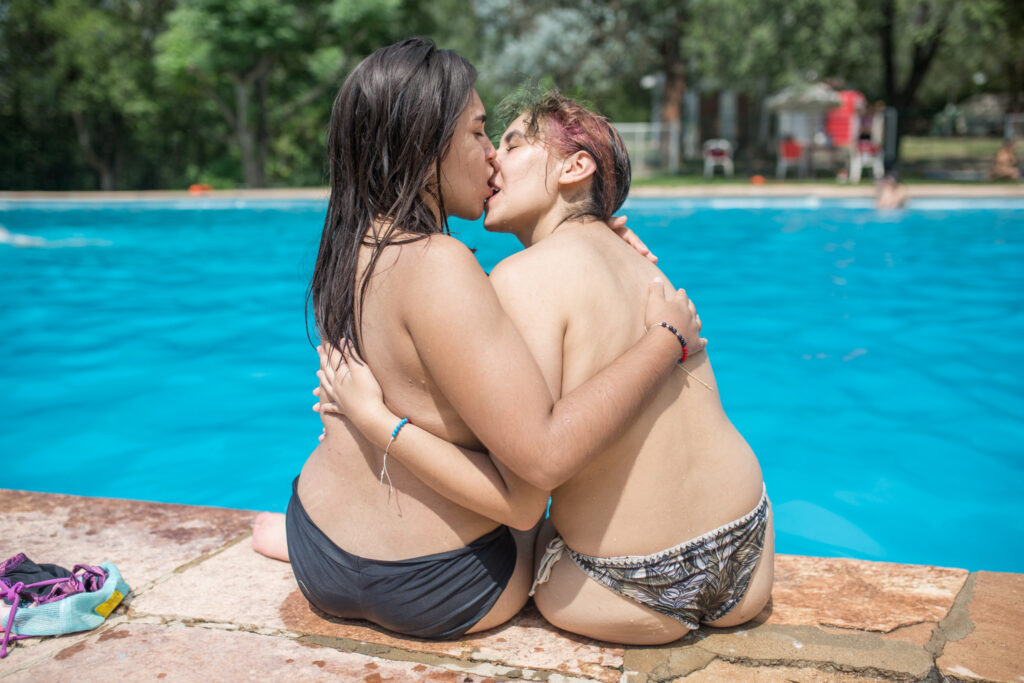
Lesbian eroticism seeped into your skin like the dampness of the air. Suddenly, someone turned on a small speaker, and bodies began to move silently. Another lesbian brought a portable light that changed color with touch. Bodies began to draw closer. The speaker was so small, the music was barely audible. The person holding the speaker started dancing among us. The music drifted between our bodies. More lesbians arrived, and they began to whisper the songs so everyone could dance. The torsos were still bare, surrounded by flowers, beer, red lights, and speakers.

Wet skin, speaking the language of lesbian bodies, that lesbian eroticism we produce when we come together and dance. It's no coincidence that more than 100 lesbians circulated through the workshop on the poetics of pleasure.
The discussions we were able to
Aside from the workshop conclusions, some interventions deserve special mention. One such intervention was that of Paulilla Sosilla, a non-binary intersex lesbian, who invited us to “experience firsthand what is said in books about gender notions.” She denounced how the notion of gender has served the feminism of sexual difference to perpetuate binary thinking as the only possible bodily identities, ultimately denying intersex bodily variations or butch and queer gender expressions. She urged the inclusion of intersex issues on the lesbian agenda in order to combat pathologization and female genital mutilation. To delve deeper into this topic, I recommend reading her blog .
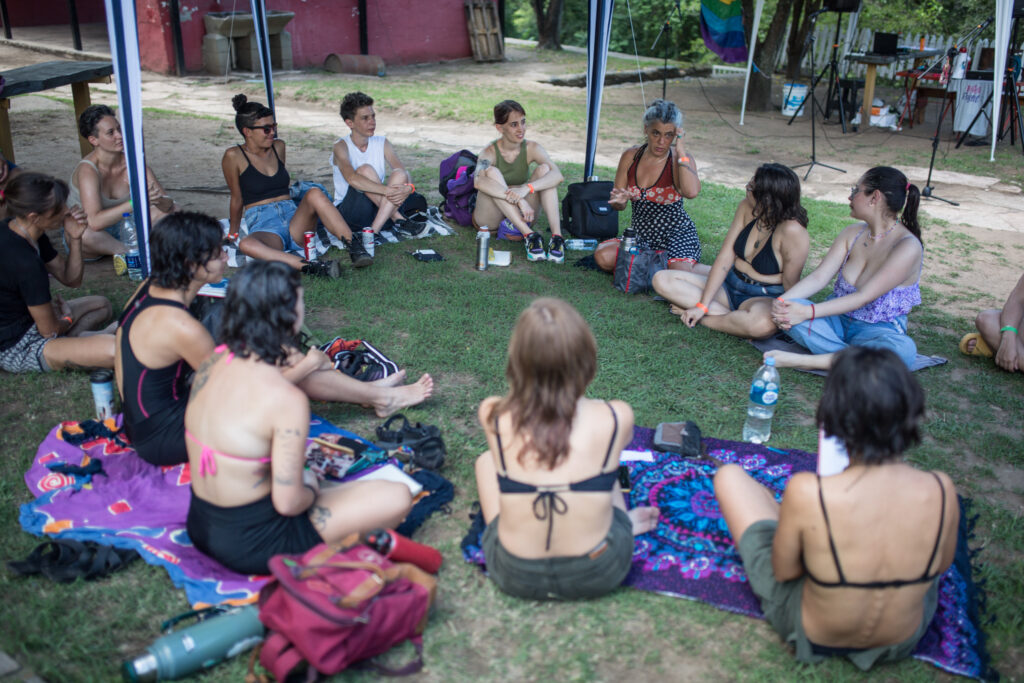
When addressing the conclusions of the workshop on violence between lesbians, the category of gender was also problematized again, asking ourselves if the notion of "gender violence" accounted for violence between lesbians , denouncing that public policies to address violence were designed with the heterosexual assumption, "we need public policies designed by lesbians, and not by feminism, as well as an observatory of violence between lesbians and spaces of support for lesbians who exercise violence."
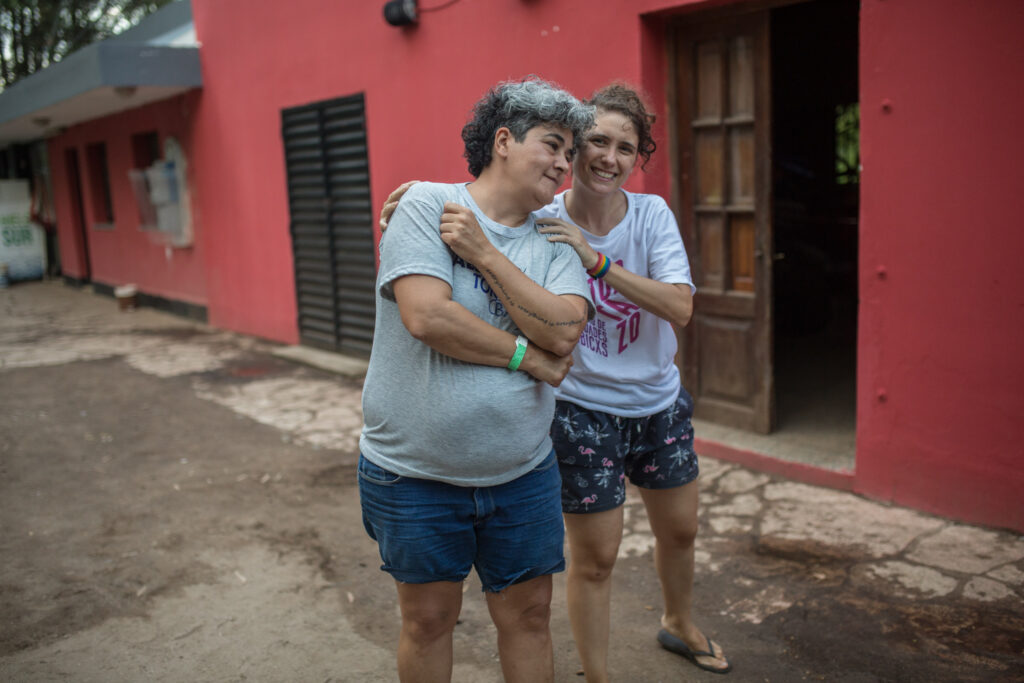
The discussion about feminisms was one of the first to emerge, brought up by the political activism workshop. Participants discussed the political power of continuing to identify as feminists or transfeminists, aiming to determine if lesbians are included in feminist political agendas . Under the question, "How do we feel in lesbian activism spaces?" the gender identity workshop invited us to reflect on cis-sexist practices that, without being explicitly TERF, end up excluding diverse ways of experiencing lesbianism.
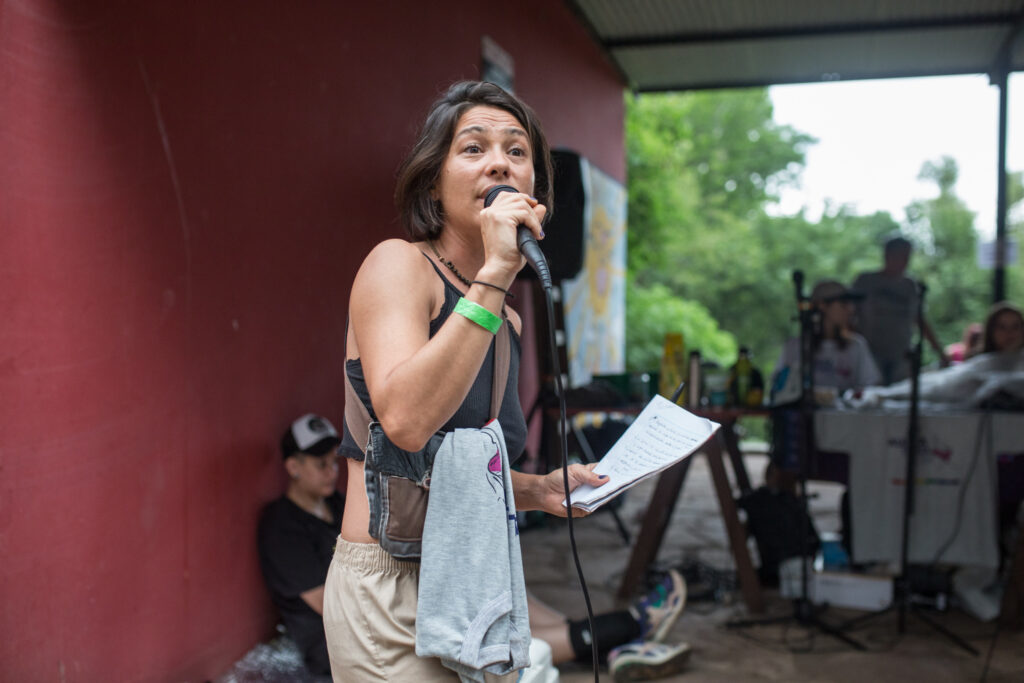
The need for public policies designed by us and for us was a recurring demand in all the workshops, from being able to think about access to housing and retirement for LGBTQ+ people, to thinking about access to health and education.
The issue of lesbian aging was addressed at various times. It should be noted that the age range that participated in the meeting was very broad, with a strong presence of adult lesbians. Thinking about our old age, for those who decided not to have children or form traditional families, is an urgent matter, because the system is still designed to recognize only a direct relative as the only person who can enter a nursing home or take care of you in a clinic.
Many of our forms of relationships are not recognized, beyond the possibility of marriage, which ultimately leads to unwanted loneliness. The lesbian community remains a promised land, increasingly close in our collective imagination but ever more distant in terms of public policy.
Health
In the area of health, the proposal was to abandon the rhetoric of illness and instead focus on care regarding our sexual health, emphasizing the urgent need for condoms for vulvas to be as readily available as they are for penises. Even today, access to gynecological healthcare for lesbians remains a problem within our community, and I want to pause here because non-lesbians might find it strange to consider why they don't seek gynecological care.
The healthcare system's narrative is heterosexual and reproductive; everything related to our uterus or breasts is linked to our reproductive capacity . This leads many women to either avoid seeking medical attention because they feel excluded from healthcare systems, or because they fear having to disclose their sexual orientation to a stranger. This results in death and illness, because our uteruses and breasts, both before and after childbirth, can turn against us.
Higui de Jesús
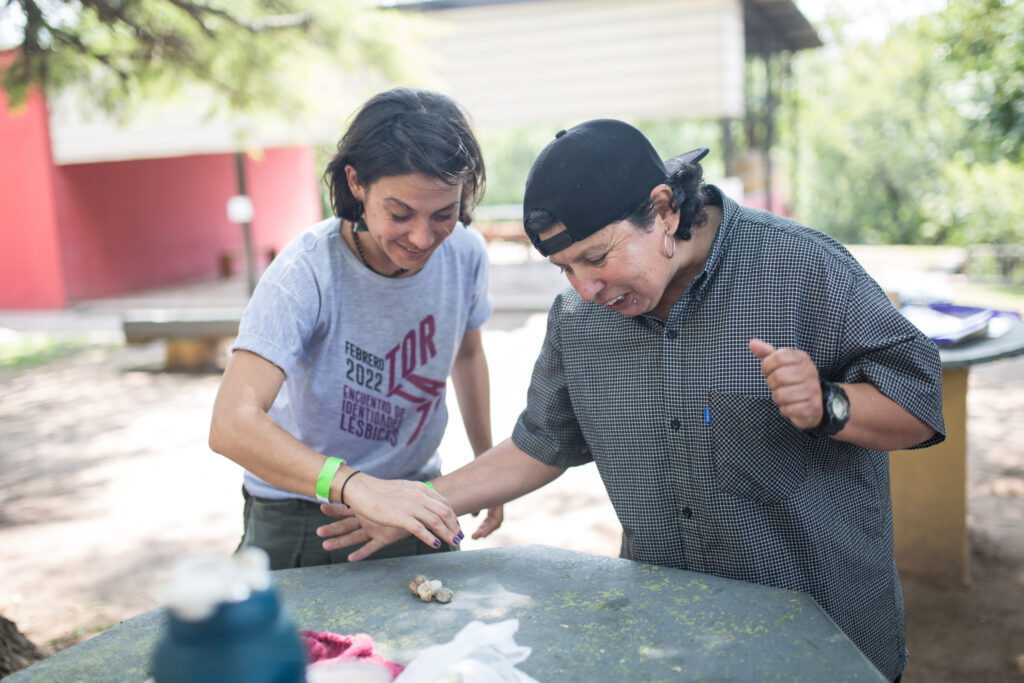
Weeks before her trial begins, Higui de Jesús witnessed the Tortazo incident, watching her play ball, run, sing, dance, tell jokes, and she couldn't stop thinking about Pepa. The cruelty directed at the bodies of lesbian women, at lesbian masculinities, continues unabated. Higui faces trial for defending herself against a gang rape, a "corrective rape" as they call it, as if our lesbianism could be eradicated through this form of violence.
Higui was able to defend herself, Pepa wasn't. Higui could go to jail for defending herself. We want to live; it's not just asking not to be killed, it's asking not to be imprisoned if we survive. The slogan "I would defend myself like Higui" isn't just a phrase, it's a political stance that we all embraced at the gathering and filled with strength to face what's coming. Higui is not alone, and we lesbians are organized.
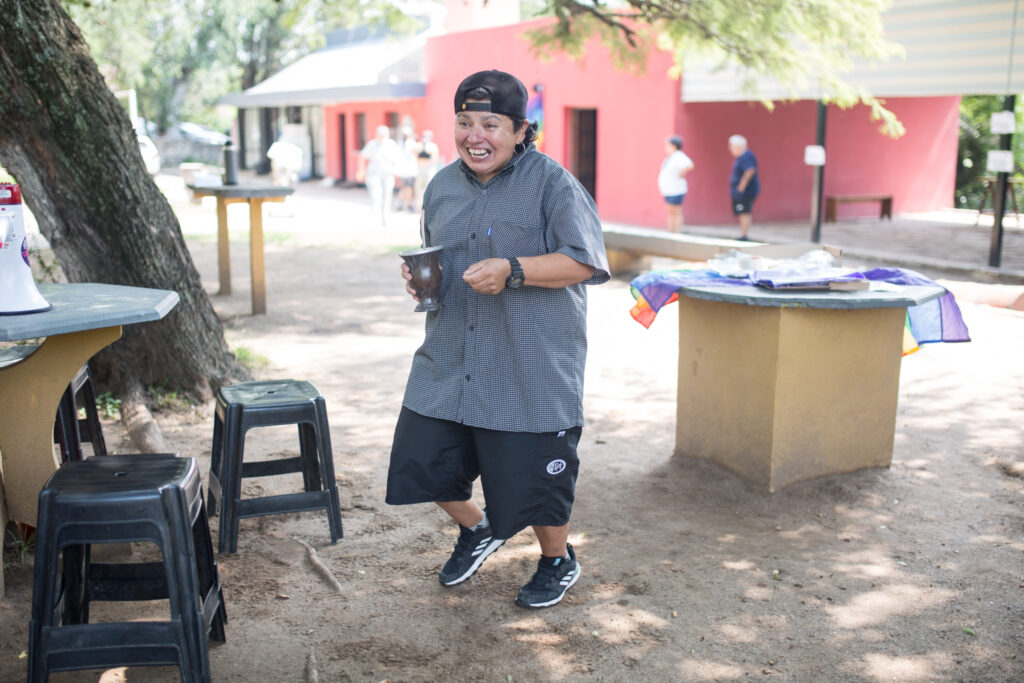
There was also a cultural program with batucada drumming, bands, singers, poetry readings, astrology workshops, a reggaeton dance workshop—it was impossible to cover everything; it was a lesbian extravaganza. A frenzy of encounters, a need for connection, while outside there's a war raging, the pandemic continues to rage, the right wing is relentless, and neoliberalism is gaining strength. But in that campsite, there was an oasis, a chance to create other worlds, other ways of being. For some, it left us wanting more; for others, it was a driving force to keep fighting against the normative routines of daily life. Thank you, Alerta Torta, for bringing us together, for taking care of us. Lesbian activism is here to stay.
March 7th marks another anniversary of the execution of Pepa Gaitán, and from the soup kitchen run by Yamila Gaitán, “Lucia Pia”, Alerta Torta and El Deleite de los Cuerpos, we are organizing a soccer tournament, open radio broadcast and live music, with the presence of Susy Shock, in memory of Pepa.
We are present
We are committed to journalism that delves into the territories and conducts thorough investigations, combined with new technologies and narrative formats. We want the protagonists, their stories, and their struggles to be present.
SUPPORT US

FOLLOW US
Related notes


We are present
This and other stories are not usually on the media agenda. Together we can bring them to light.