

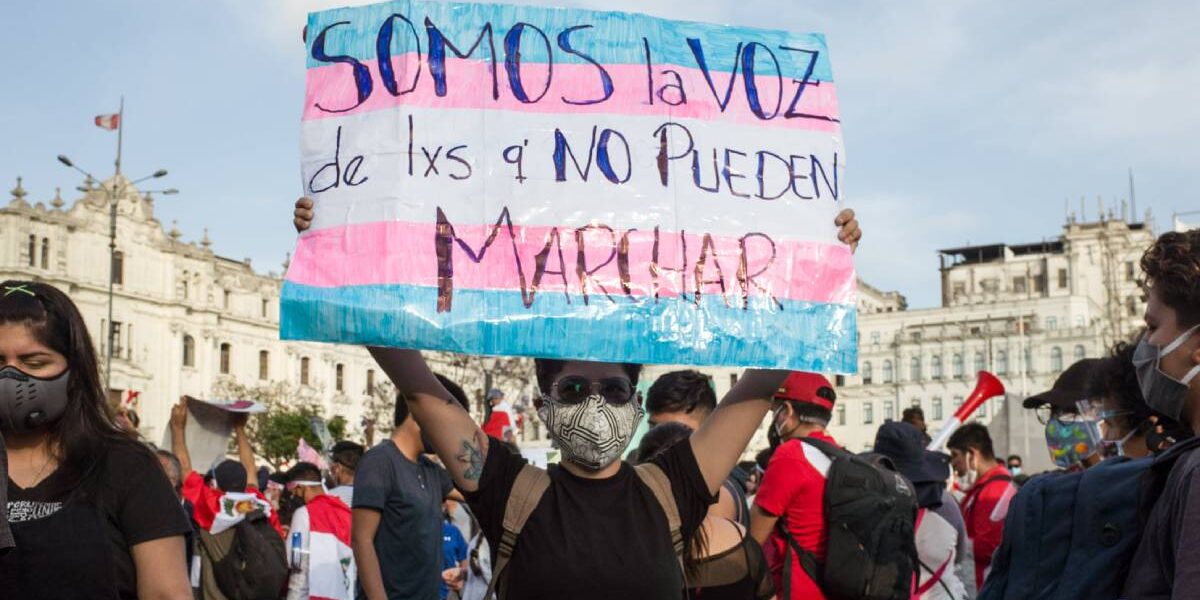
In 2022, the fight for the recognition of trans people in Peru returns with renewed momentum.
The most important advance was in 2016 when the Gender Identity Bill was presented to the Peruvian Congress.


Share

LIMA, Peru. Since President Pedro Castillo took office eight months ago, activists and transgender groups have expressed concern about the significant number of conservative and religious politicians in the executive and legislative branches who oppose the recognition of transgender identity. They argue that this is part of the imposition of what they call "gender ideology."
This represents a major barrier for the trans population, since, in recent years, after significant work with other public institutions, they concluded that the only way to access the fundamental right to their identity is through a law that stipulates it.
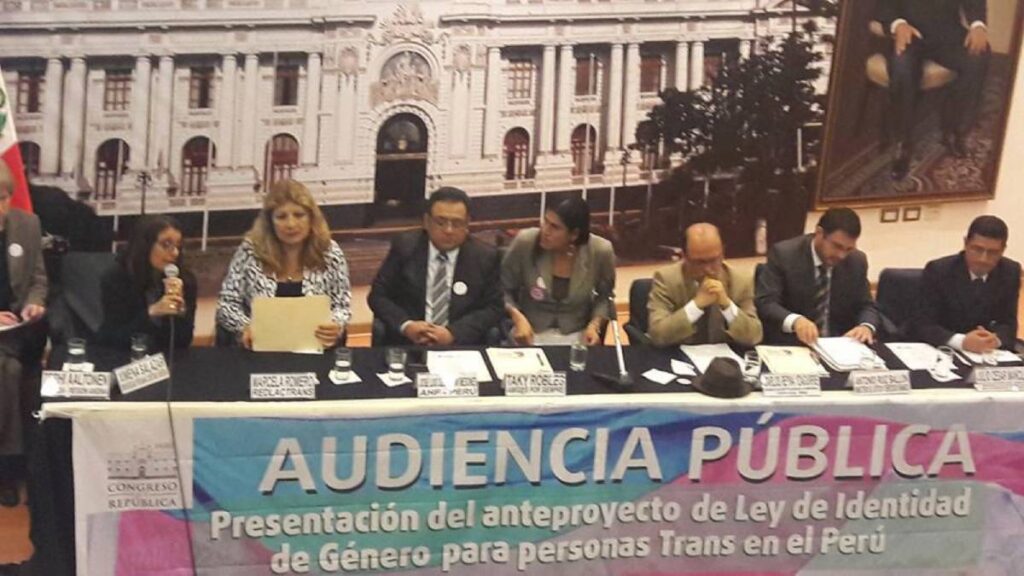
Presentation of the Gender Identity Bill in 2016
In November 2016, a group of trans women activists presented the draft of the Gender Identity Law to the Congress of the Republic, explaining that it was not a whim or a caprice, but rather a demand for the rights of a group of Peruvians who lived in historical exclusion.
A month and a half later, the activists, along with congresswomen Indira Huilca and Marisa Glave, supported by their colleagues Alberto de Belaunde, Tania Pariona, Gino Costa, Marco Arana, Richard Arce, among others, submitted the Gender Identity Bill 790/2016, which was referred to two committees, Constitution and Regulations, and Women and Family.
Since then, activists and groups have put all their energy and hopes into the debate, approval, and enactment of Bill 790. Until that happens, to change their first names or sex on the National Identity Document (DNI), trans citizens must continue to sue the State , pursue the legal process, and wait for a favorable ruling.
Given the socioeconomic situation of Peruvian trans men and women, it is difficult for them to have enough money to start and complete the process.
Furthermore, one of the major obstacles they will face is another public sector entity, the National Registry of Identification and Civil Registration (RENIEC) , which appeals favorable rulings issued by judges, further delaying applicants' access to identity.
Five years of political advocacy
When Bill 790 was introduced, its referral to the Constitution and Regulations Committee was questioned, since it did not request any constitutional changes. The reason for its referral to this committee was that its chair at the time, Fujimorist congresswoman Rosa Bartra, belonged to the "Don't Mess With My Children" movement. This meant the bill was relegated to the back of the queue.
In September 2018, the LGBT Human Rights Observatory and the UNICXS Project , of the Cayetano Heredia Peruvian University, denounced before the National Commission against Discrimination (CONACOD) of the Ministry of Justice, acts of transphobia by the public prosecutor of RENIEC in the processes of recognition of name and/or sex.
A month later, representatives from the LGBT Human Rights Observatory, as well as from the RENIEC public prosecutor's office, presented their positions during the CONACOD session on October 31.
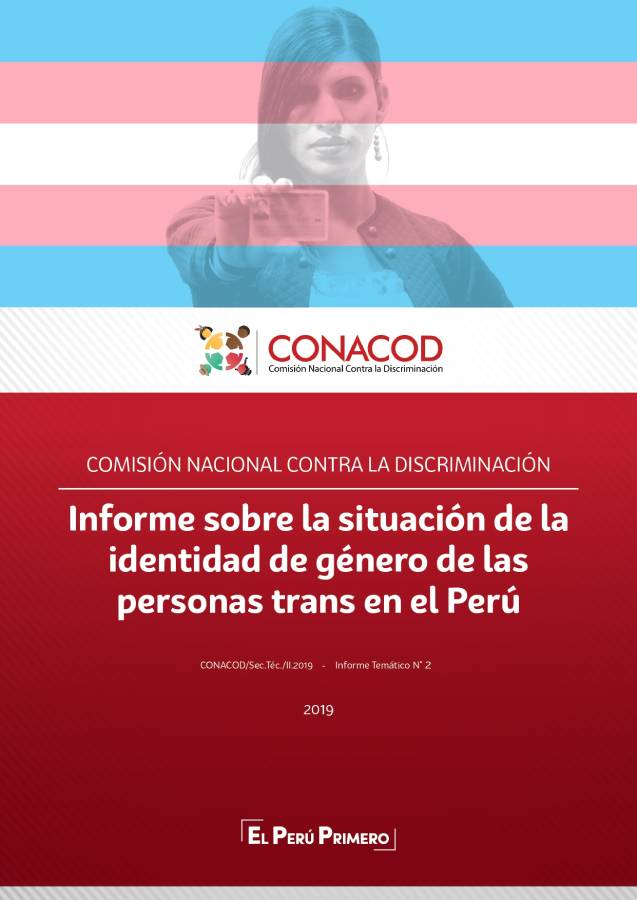
In January 2019, CONACOD presented the “Report on the Gender Identity Situation of Trans People in Peru.” In it, the commission argues that the Peruvian State has an obligation to legally recognize and allow trans people to change their name and gender , thereby guaranteeing the full exercise of their rights under equal conditions.
Four years after the presentation of PL 790, the political advocacy carried out by a group of trans activists, together with the Lima councilman Manuel Siccha, took another step forward.
In December 2020, they began holding meetings with congressmen from different political parties to raise awareness about the importance of a law that recognizes the gender identity of trans people.
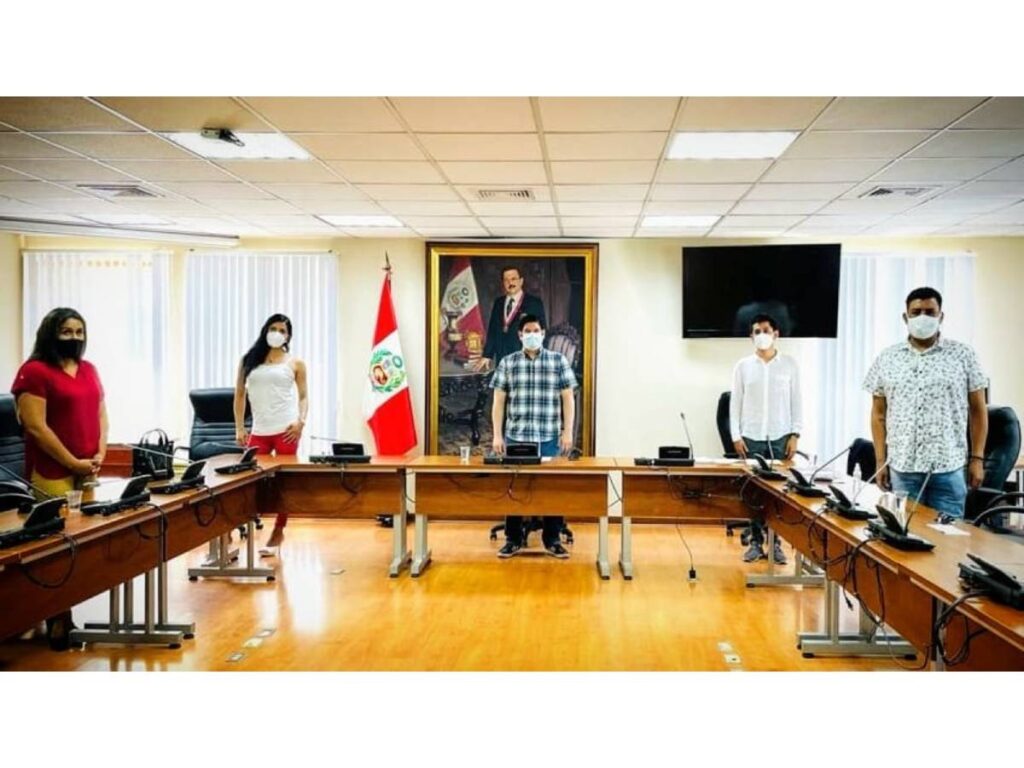
The first meetings were held with the regular and alternate members of the Women and Family Commission. There, they succeeded in having the debate on Bill 790 placed on the commission's agenda for March 15, 2021.
Unfortunately, the 'pro-life' group Royal Families carried out a campaign of political harassment and intimidation against the congresswomen of said commission, calling on the population to insult them through their personal telephone numbers, which they disseminated on their social networks.
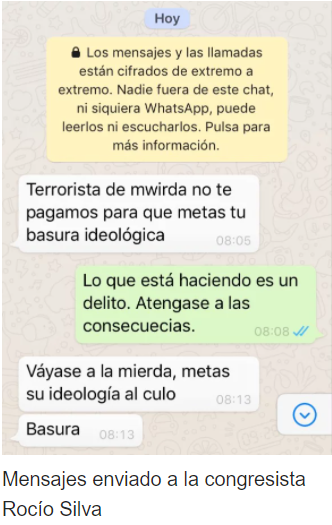
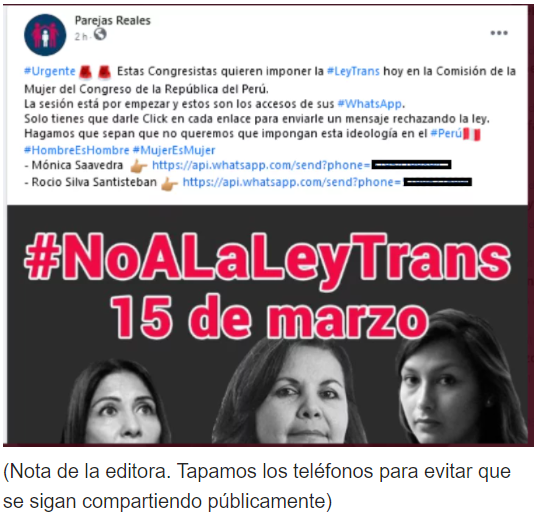
Despite the violence directed against the Gender Identity Bill, on March 29 of that same year, the Women's Commission approved the report that would allow it to proceed to debate in the plenary session. However, the debate and report from the Constitution and Regulations Commission were still pending.
Against the clock, meetings were held with the members of Congress on the relevant committee to explain the importance of the bill. However, despite the monitoring and pressure on social media, it could not be debated, and thus came the end of President Francisco Sagasti's transitional government in July 2021.
In 2022, the fight for the right to identity resumed.
The responsibility for passing a law recognizing the gender identity of transgender people rests entirely with the Congress of the Republic. In Peru, a simple majority is required for a law to pass. Therefore, concern has grown, since at least 85 of the 130 members of the current Congress belong to conservative parties that have already expressed their opposition to LGBT rights.
However, Susel Paredes Piqué, an openly lesbian congresswoman, has committed to being the main driving force behind the legislative demands of the trans population. Above all, because she fully understands the need to respect the right to identity.
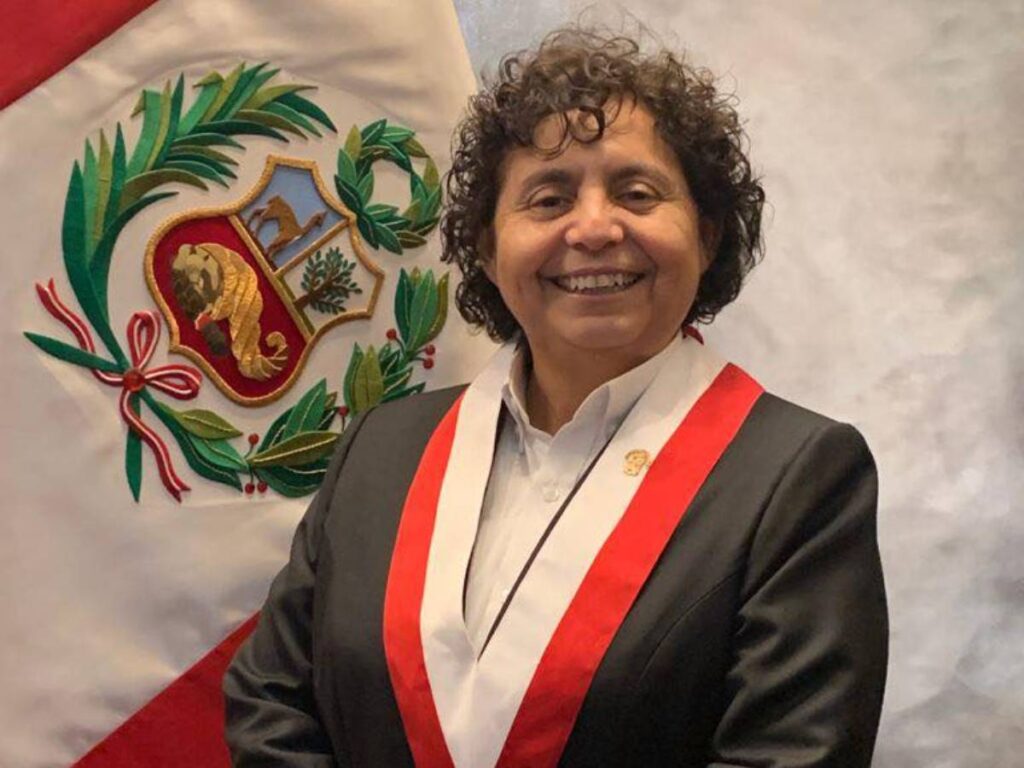
“This law is necessary because the right to identity is recognized in our Constitution. We all have the right to the free development of our personality, but also because we have signed international treaties, we have rulings from the Peruvian Constitutional Court, rulings from the Inter-American Court of Human Rights, and Advisory Opinions that recognize the right to identity . This is why we must insist and persist, even though we don't have a majority in Congress,” Paredes Piqué emphasizes.
The legislator has held meetings with representatives of the Peruvian trans community in recent weeks and together they will seek to resume the path taken by PL 790.
“I ’m not presenting a project from scratch; we’re updating a previously submitted project that has benefited from the input and participation of the trans community . Therefore, after holding several meetings with the community, we decided to update Bill 790 because it already has a favorable opinion from the Women’s Commission. This will save us many months of work,” the congresswoman explained.
She also expressed surprise at the internal debates within the trans community. Some argue that a bill should be introduced to include non-binary people. Another group suggests that the time is not yet right, given Peruvian culture.
“Everyone is welcome to participate in discussions because, in my opinion, laws are created by consulting those who you believe will benefit from them. I owe my allegiance to the people involved with the bills, and that's why I listened to them. I understood that they need a law that aims for administrative change but also reaffirms other rights,” the lawyer and LGBT activist pointed out.
Binary vs. Non-binary Bill
Among the recent discussions that have arisen within the Peruvian trans community is the question of how much they are willing to concede regarding the scope of this bill. So far, it only recognizes the change from female to male, and vice versa, nothing more.
“According to the Inter-American Court of Human Rights, within the LGBTIQ community there is the 'q' of queer, which refers to people who do not fit into or transcend the binary, that is, non-binary. I believe that non-binary identities are part of queer identity, and as such they have their own agendas; which must be fought for and made public, but there should be no confusion so that there is a differentiated treatment of agendas,” argues Ana Flavia Chávez.
According to the leader of the Trans Movement of Arequipa , the PGNB have a different agenda than trans people, in terms of needs and experiences.
“I’m not talking about binary and non-binary populations. I’m talking about making the fair and correct distinction between trans identities and queer identities, and I’m not the one saying this, the IACHR specifies it. Trans agendas are very different from queer agendas,” Ana Flavia emphasizes.
For his part, G Santos Salinas, from Fuerza No binarie , believes that PL 790 responds to the needs of the trans population from some years ago, but not to the current situation of the movement, where transgender people are gaining more and more visibility.
“I think the reality of trans people, and those of us who fall outside the cisgender norm—because not all trans people identify as trans—is showing greater diversity now. I do believe that a bill that originates at this time should address this more complex, but more diverse, reality in order to propose solutions,” G explains.
According to my comrade, the political game of the right has long neglected minority human groups, and by neglecting non-binary people, we would be falling into the same trap.
“While (PL 790) only covers two identities, the traditional binary of male and female, it still offers accessibility for change, which is a very important first step. There are transgender people who use female or male pronouns, with which they feel comfortable, (…) the great difficulty is that not all transgender people identify as trans, therefore, there will be a sector that will either have to make an effort to express that they are trans or simply will not access the benefits because it is not their identity and they will not force something that does not belong to them,” G explains.
The trans population in Peru is currently organizing and strengthening its struggle as a community. Therefore, many groups are focusing on creating spaces for learning and debate where ideas can be shared and, moreover, where solutions can be designed collaboratively with the greatest possible positive impact.
“I want trans children to know that they are not crazy, that they are not sick, they are just different. I want them to know that people like them exist and have always existed. We are fighting so that they don't have to go through what we have gone through. That's why I tell them to have a lot of faith and hope, so that instead of reaping tears and depression, they can reap smiles and respect. The fight is for them, first and foremost,” concludes Ana Flavia, an activist from Arequipa.
For his part, G Santos believes that “the way politics is done today is the same as it was 50 years ago. There is no perspective, and the same mechanism keeps repeating itself,” which is why he encourages young people to get more involved.
“I would like to encourage young people to get involved in politics. Whether it's informal politics like activism or formal politics like what happens in Congress , because I feel that political reform is necessary to avoid repeating the mechanisms that have marginalized people of diverse identities and ethnicities,” G. points out.
Finally, parliamentarian Susel Paredes left a message for those who are not involved in activism, but identify as trans people.
“As José Luis Rodríguez Zapatero said, a civilized society is one in which its members are not humiliated. That's why the law is important —so that you are not humiliated, so that you are recognized, so that when you want to travel, you can get on the bus without any mistreatment. Or when you want to go to the doctor, you don't abandon your treatment, so that you can be cured and healed,” Susel emphasizes regarding the scope of Bill 790, which she will update and present.
With this progress in recognizing the gender identity of trans people, it is hoped that Peru will join the list of countries in the region that already have a legal framework that recognizes them, and allows them to move towards enjoying full citizenship like all other citizens.
We are present
We are committed to journalism that delves into the territories and conducts thorough investigations, combined with new technologies and narrative formats. We want the protagonists, their stories, and their struggles to be present.
SUPPORT US

FOLLOW US
Related notes

We are present
This and other stories are not usually on the media agenda. Together we can bring them to light.