

A Mapuche peasant woman defends her community and is besieged by the business and judicial power of Río Negro.
The State is moving forward with the definitive expulsion of María Antual and the members of the Carrilafquen community from their territory.


Share

RIO NEGRO, Argentina . María Antual, a Mapuche woman, a land worker and mother of five children, is one of the one hundred people who, since May 2021, have been carrying out a process of territorial reaffirmation in the face of the advance of real estate speculators in Argentine Patagonia.
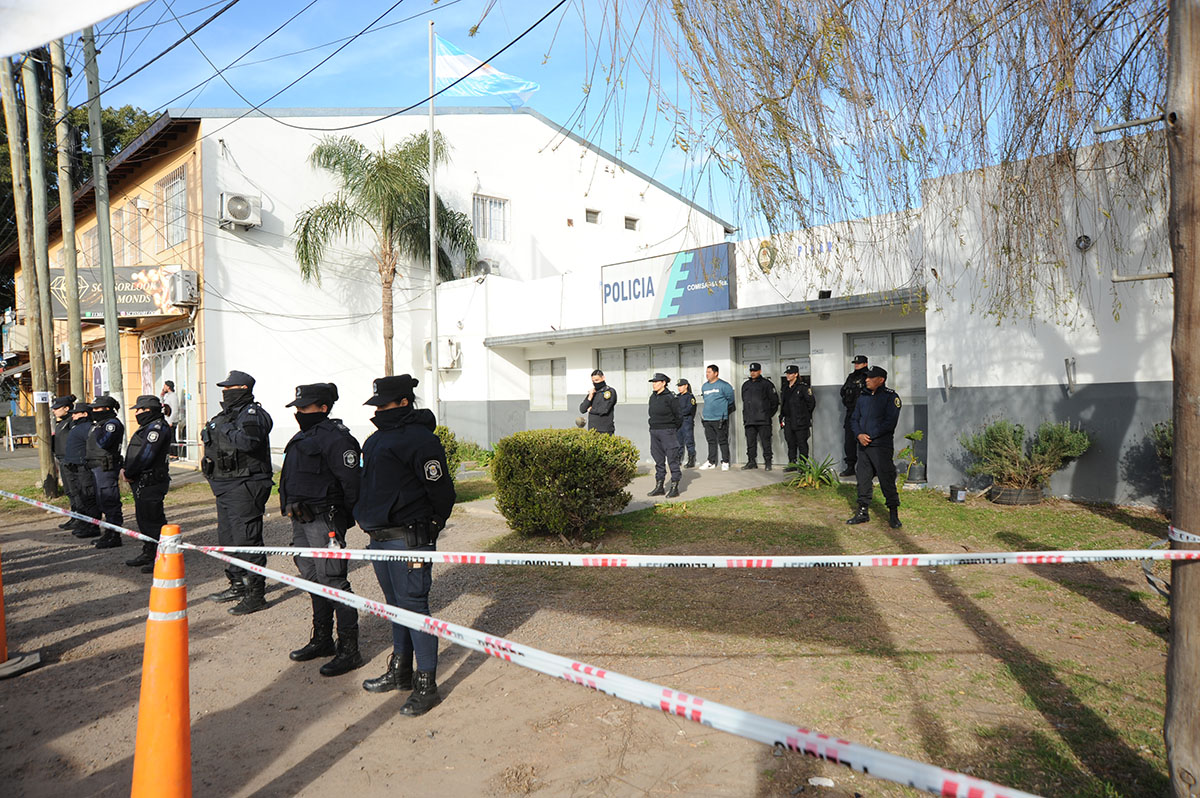
Since Judge Juan Pablo Laurence ordered the eviction in November, María has been isolated on her own land. She cannot leave and is guarded by two police checkpoints that are preventing food from being brought in. “I’m living worse than an animal in a stable,” María Antual told Presentes. Now the Superior Court of Justice of Río Negro must decide.
Along with Maria, five families report that for years "parachutists" (as they call them) have been arriving with alleged property titles, inherited rights or state permits to settle in their community.
The Carrilafquen community, which in Mapuzungun (Mapuche language) means "green lagoon", is located between plateaus and canyons of the Patagonian steppe, on National Route No. 23 just 15 km from the town of Ingeniero Jacobacci in the southern Rio Negro region.
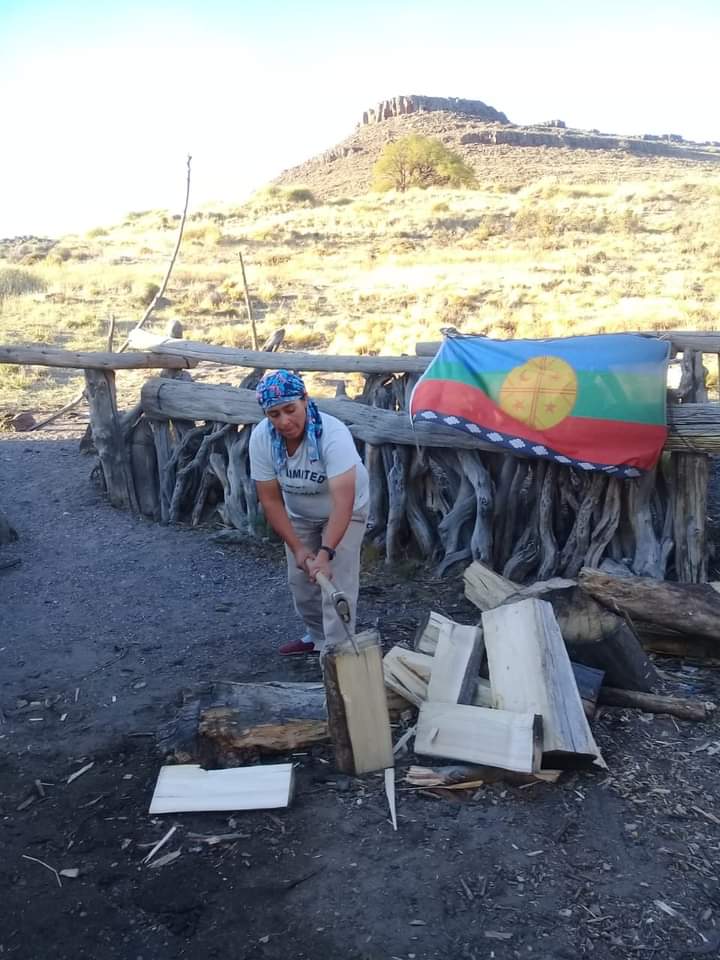
Why a territorial reaffirmation? “Because we never left the territory and our animals have been grazing on the property for more than 15 years. It is the only place where there is water and access to the local road,” María explains to Presentes.
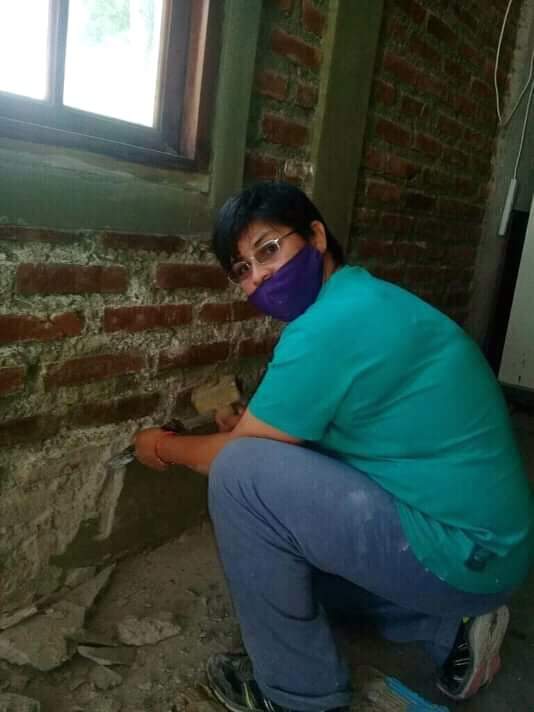
María was born and raised in the countryside with her six siblings. At the age of nine, her parents took her to the town of Ingeniero Jacobacci so she could attend school. She lived alone in a small house they owned there. She only completed the third grade because her parents came back to take her to the countryside. Later, she worked as a bricklayer and factory worker in Jacobacci to support her family as private fences encroached upon their land.
“In 1977, these men started fencing off the land and confining my father to just a few hectares (…) and our animals began dying from lack of pasture and the limited space left by the fences. He then started selling firewood to support us. That's when Abi Saad Alfredo filed a complaint against my father for taking firewood and threatened him with a fine of 50 goats or a month in jail,” María Antual recounted in a radio segment on Radio Nacional produced by the Indigenous Advisory Council (CAI, one of the grassroots political organizations of the Mapuche people).
Their story is yet another example of the judicial and political network that has been overwhelming the Mapuche and Mapuche Tehuelche communities in Patagonia.
The Carrilafquen Lof
The Lof (a form of Mapuche community organization) was formed 20 years ago, in 2002, when several families reclaimed a portion of their territory that the Abi Saab family, well-known businessmen based in the area, had been fencing off since the late 1970s. At that time, after a lengthy legal process, supported by the CAI (Armed Peasant Confederation), the court ruled in favor of the community.
María informed the judicial authorities that she reaffirmed her possession of a section of the territory she and the families of the Carrilafquen community have occupied for over 15 years with their animals. She based her claim on the laws that recognize her rights. During the process, she did not commit any acts of violence, nor did she conceal her identity.
The judicialization of ancestral law
“ I have not usurped the territory where I was born. But because I am a peasant woman, because I am Mapuche, I have to live justifying and proving my presence in the territory. I am in the territory of our community and we are not leaving,” wrote María Antual on the CAI Facebook page.
On May 21, 2021, Laurin Romulo Héctor, the caretaker of the disputed property known as “Estancia La Angostura,” filed a complaint for trespassing. Following this, Edgardo Adem, nephew of the Abi Saab family, brought the case against the community (File No. MPF-BA-2758-2021 “Antual Natividad and others s/ trespassing”).
The judge overseeing the preliminary hearing is Juan Pablo Laurence, and the trial judge is Marcelo Álvarez Melinger. Laurence ordered the eviction on November 4. This measure was upheld at a hearing on November 17 by Judge Marcelo Álvarez Melinger, who rejected the appeal filed by the defense, despite the rights of Indigenous peoples and communities recognized in current Argentine laws, such as Law 26160, and international treaties (ILO Convention 169).
Adem's lawyer is Ernesto Saavedra, a well-known representative of various cases against Mapuche communities in Río Negro. He is also currently defending those accused of the murder of the young Mapuche man, Elías Garay, in Cuesta del Ternero, Río Negro, on November 21st.
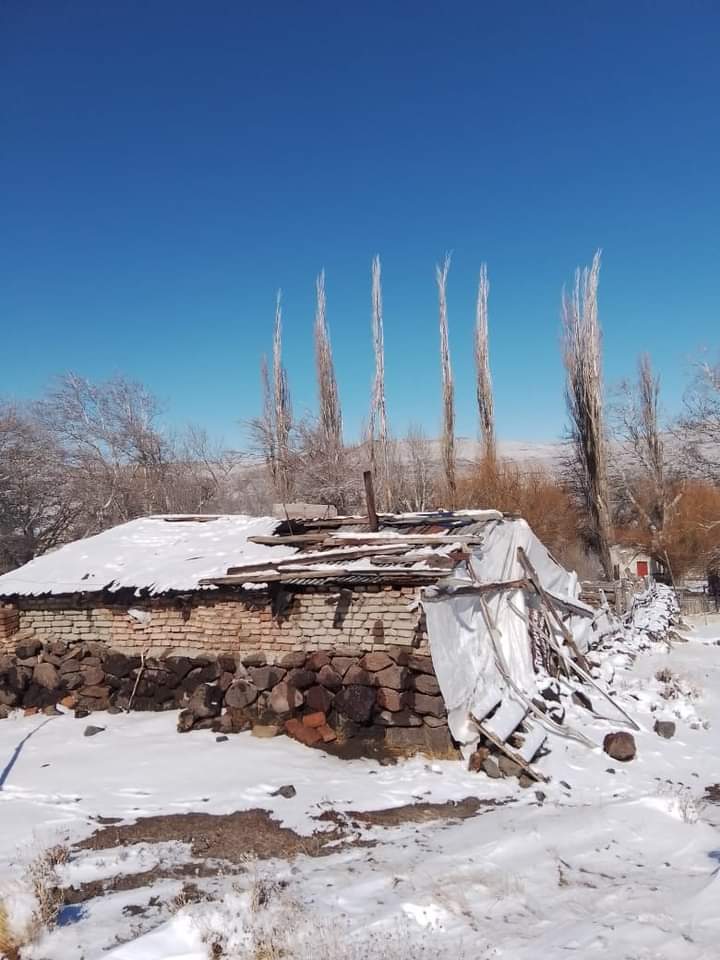
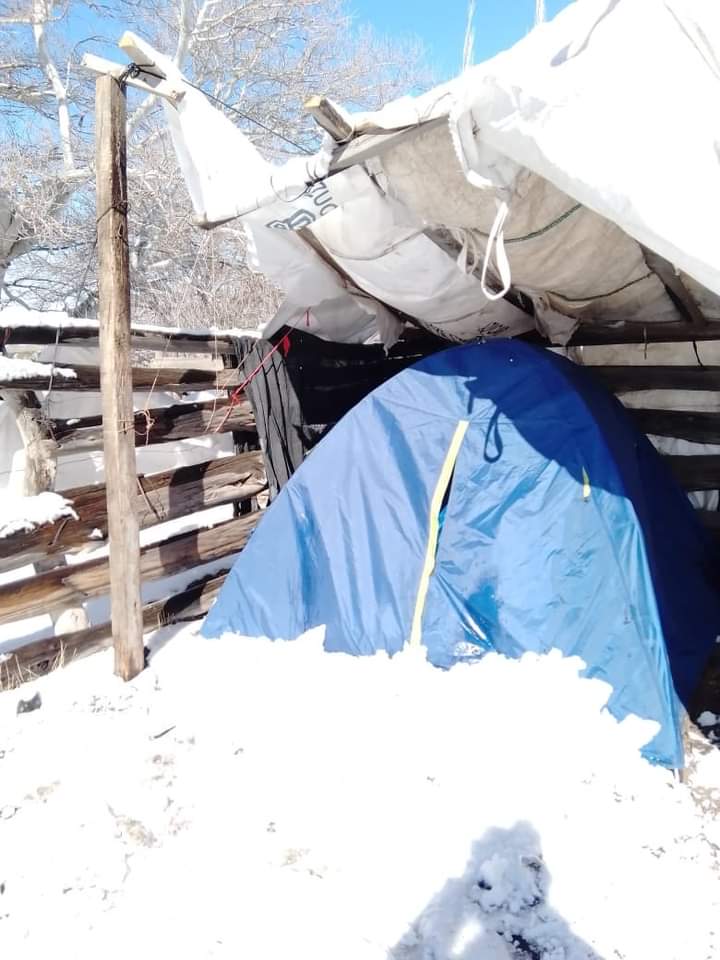
“On May 23rd, I had my first hearing where they issued a restraining order preventing me from having my minor daughters with me and from improving my living conditions. I spent the winter under a tent, using parts of an old shed for shelter from the cold, cooking, and other necessities. This land belongs to us; our grandparents and parents occupied it. Then these people gradually confined us, leaving us in a space where we couldn't all live. What I'm asking for now is to be allowed to work, to be allowed to develop my livelihood, and to be able to give my children a better life.”
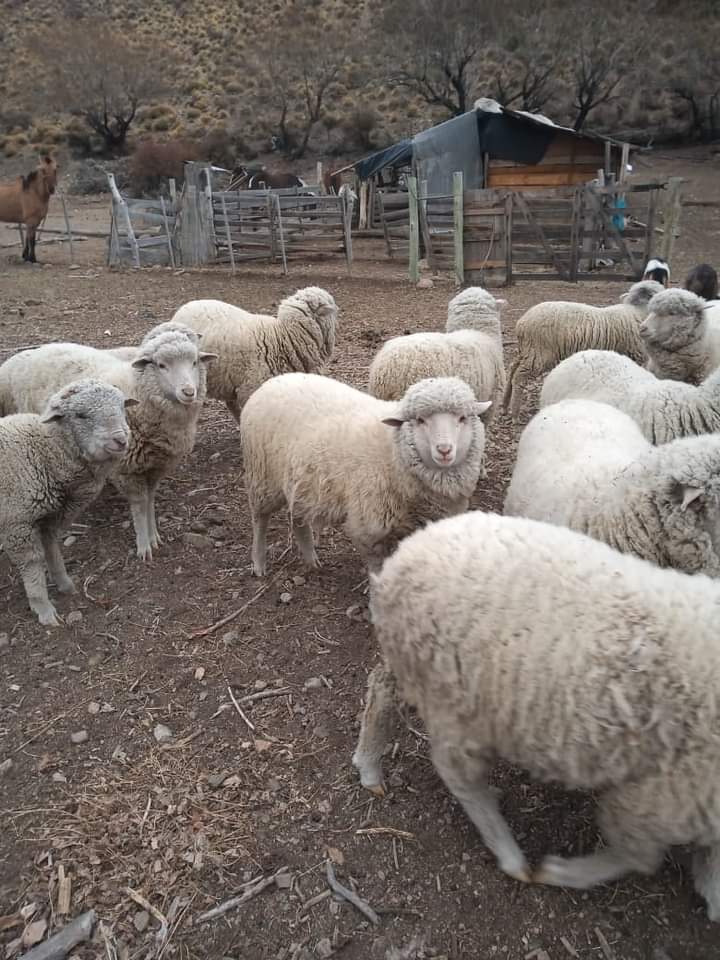
"They won't let them bring in coats or food."
María is represented by public defender Marcos Cicciarello. “They aren’t allowing them to bring in shelter or food, arguing that it will prevent them from consolidating the squatting, but in reality, it’s a de facto eviction. We are awaiting a ruling from the Superior Court of Justice of the province of Río Negro, the highest provincial court, on an appeal for extraordinary review that was denied. The ball is now in their court,” Cicciarello told Presentes.
Her defense is being supported by the CAI and the Center for Legal and Social Studies (CELS). María José Venancio, from the CELS's economic, social, and cultural rights team, told Presentes:
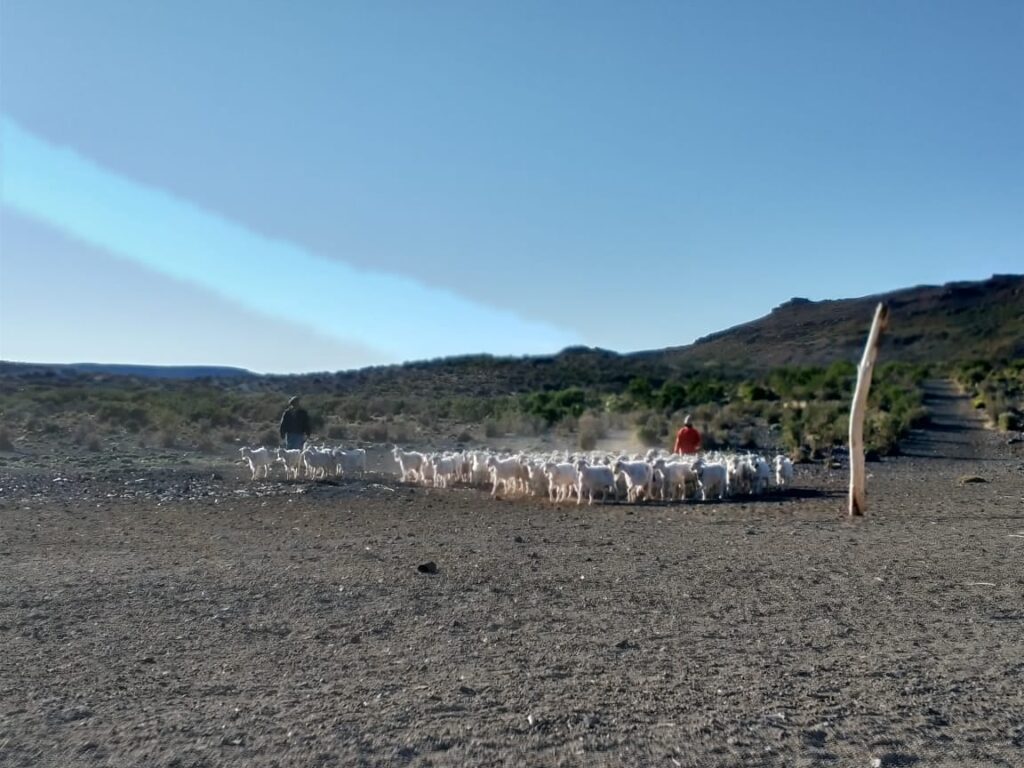
"CELS has been supporting several Mapuche communities (Lof Che Buenuleo, Quijada, Millalonco Ranquehue, Tambo Baez, Quemquemtrew, Carrilafquen, among others) and in all of them there are similar patterns such as the lack of recognition and guarantee of the territorial rights of the communities and on the other hand, the criminalization and repression by the judicial power."
He added: “ The Indigenous communities of Patagonia have been suffering an escalation of physical and symbolic violence. The province of Río Negro, in particular, is acting outside the law by failing to comply with the requirement to carry out the Territorial Technical Survey mandated by National Law 26,160: of the 106 identified communities, only 55 have had the survey completed . On the one hand, the provincial executive branch is not complying with the law; on the other, when communities make territorial claims, the provincial judiciary responds by criminalizing them. In most cases, these are mega-projects, whether real estate or extractive industries, that are encroaching on Indigenous community territories. These projects are supported by a political, economic, and judicial sector that constantly makes its positions against the rights of the Mapuche people public.”
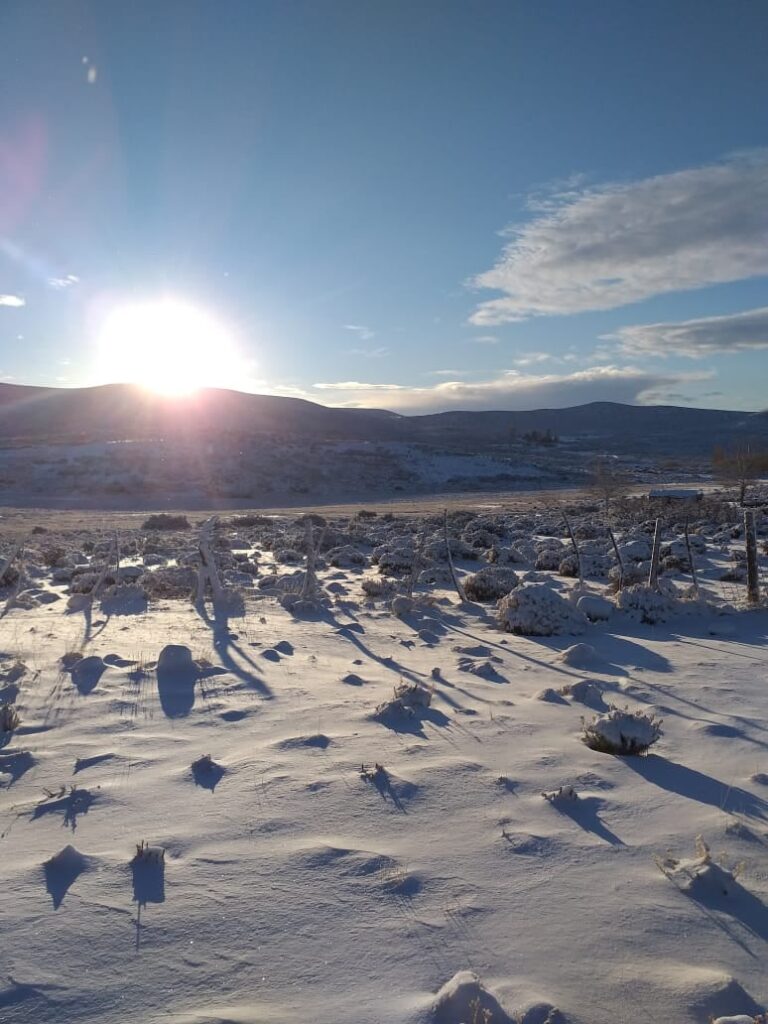
The interests behind the plunder
Susana Lara , a journalist from Patagonia specializing in the investigation of the processes and protagonists of the dispossession of the Mapuche and Mapuche Tehuelche communities, highlights the relationships between the economic, political and judicial power that are deployed to perpetuate these practices.
“The Antual-Albornoz community resettled near the Carrilafquen Grande lagoon, northwest of Ingeniero Jacobacci (Río Negro). The reclaimed lands were buried under ash during the 2011 eruption of the Puyehue volcano. Recovering their livestock and garden took years. María Antual , a young woman, was part of the movement to reclaim the land appropriated by a local landowning family. She grew up, started her own family, strengthened her connection to the Mapuche people, and had to work in factories in town until the Covid-19 pandemic made it impossible to sustain that way of life. With her own family, in May of this year, she resettled in a space abandoned for years so they could raise animals.”
Susana Lara tells Presentes: “The Carrilafquen lagoon area (Grande and Chica) is a space that could be considered marginal to the interests of large, concentrated capital. It does, however, bear the marks of dispossession by Syrian-Lebanese and Spanish migrant merchants who settled in Río Negro at the beginning of the 20th century. The Abi Saad family, based in Ingeniero Jacobacci, usurped the lands of numerous Mapuche people for several generations, with the full agreement and participation of local justices of the peace and police stations. Several files from various communities prove years of persecution, as is the case of the Antual family, who formed the Antual-Albornoz community from what they were able to retain from the ancestral occupation. The individual currently litigating against María Antual is a merchant from Zapala who received part of the land through irregular inheritance, land he never effectively occupied.” Yes, the plaintiff's lawyer's interest in using it for the strategy of the Consenso Bariloche group and the PPP (Private Property Patagonia) plan seems decisive .
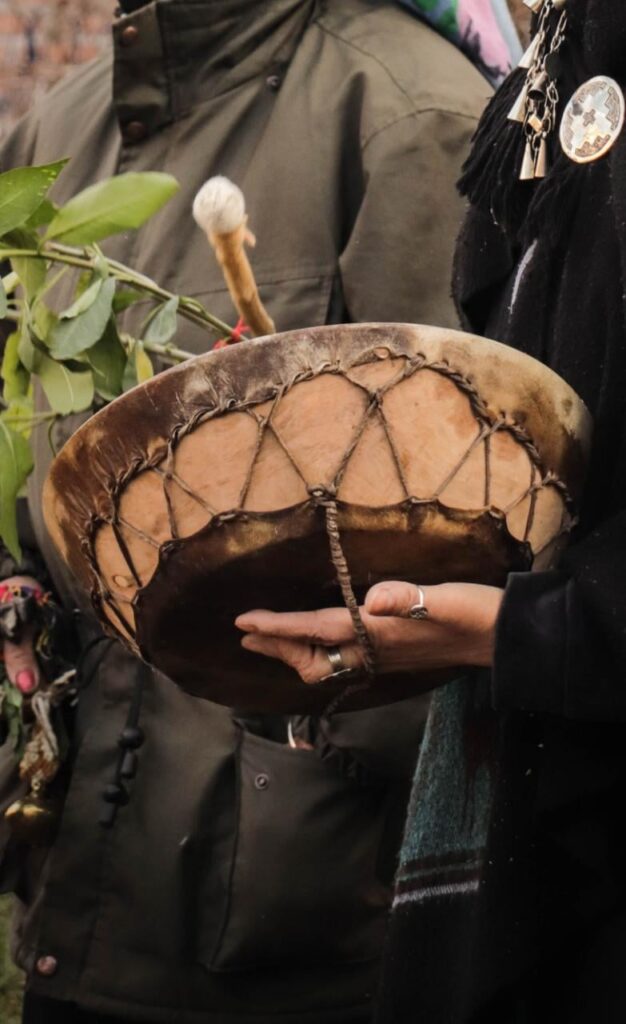
Lof for sale
Meanwhile, the land remains for sale on websites: “It is a beautiful place to achieve a different life and a good income. Department of 25 de Mayo, Ing. Jacobacci, Rio Negro. The area is 13,883 hectares, located 18km from Ing. Jacobacci and 11km from the airport and Route 23. It consists of three lots with their respective deeds (1,641 hectares, 2,225 hectares, 9,987 hectares).
"What we see is significant resistance within the state and judicial spheres to the application of Indigenous law. This resistance stems from racism, conservatism, or even ignorance. Many state institutions are unfamiliar with the legislation. Even judges (as we recently saw in the case of the Quemquemtrew community) resist addressing the conflict through Indigenous law, treating it instead as a simple land grab and a private criminal matter. Consequently, the system becomes flooded with criminal cases, the problem isn't addressed from the perspective the state should be using—Indigenous law—and people end up being criminalized, with the regrettable and tragic consequences we already know." "It is a major failing of the provincial states and a negative resistance to applying the legislation, also due to this racism, sometimes underlying and sometimes not, that exists in our society and among officials," Nelson Ávalos of the Permanent Assembly for Human Rights (APDH) of northwest Chubut, which has been supporting land reclamations in Chubut, Río Negro and the region for more than two decades, told Presentes.
We are present
We are committed to journalism that delves into the territories and conducts thorough investigations, combined with new technologies and narrative formats. We want the protagonists, their stories, and their struggles to be present.
SUPPORT US

FOLLOW US
Related notes
We are present
This and other stories are not usually on the media agenda. Together we can bring them to light.