

They rejected a project by trans scientist Fran Bubani because they did not consider her a woman.
The regulations under which Bubani and two colleagues applied require that 50% of the team be women. After she filed a complaint, they agreed to evaluate the project.


Share

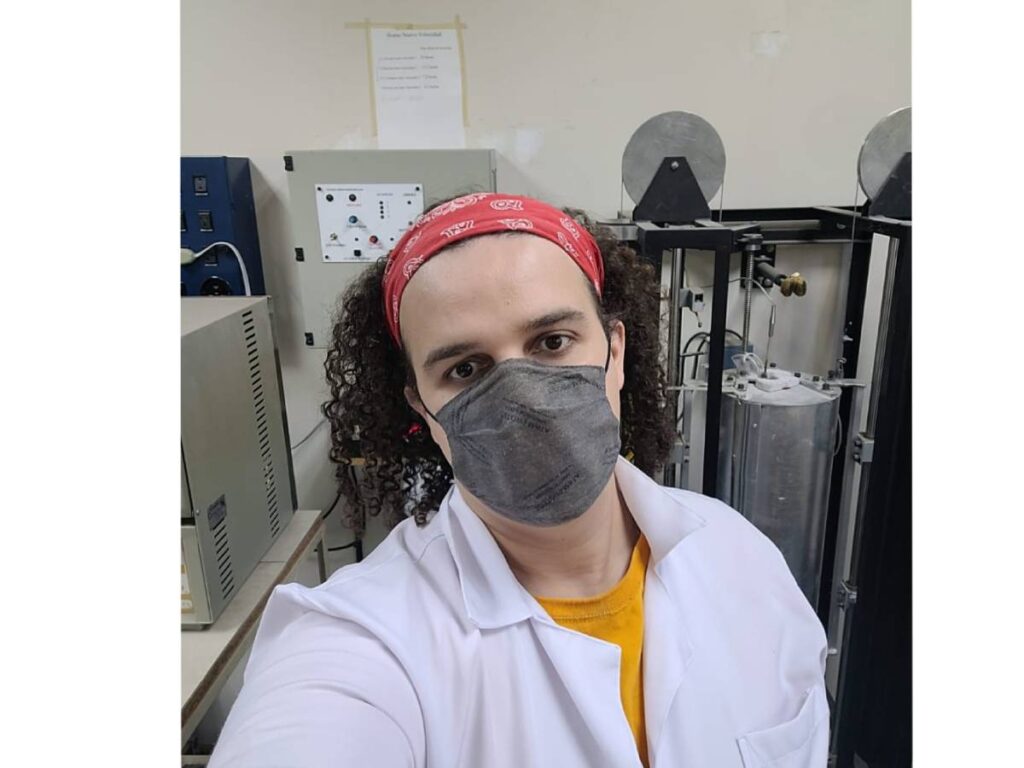
BUENOS AIRES, Argentina. Trans researcher Fran Bubani, along with three colleagues, submitted a project to an agency of the Ministry of Science, Technology and Innovation. One of the requirements for acceptance was that the team responsible for the project be 50% female. Days later, they learned it had been rejected.
“The project was deemed inadmissible, and it’s in the ruling, because it doesn’t meet the 50% female requirement. And that’s because I’m a trans woman. And the person who did the admissibility check didn’t consider that I’m a woman,” Fran explained to Presentes .
The ruling states, verbatim, the following: “We hereby inform you that according to DI-2021-36-APN-DNFONCYT#ANPIDTYI dated December 1, 2021, your project submitted in the PICT Applied 2021 call, Category I Intensive Scientific and Technological Research Projects – under the code PICT-2021-CAT-I-00072 – was declared Inadmissible according to the following observation: The submitted project does not meet the criterion that indicates that 'at least half of the members of the Responsible Group must be women'” .
The project is called “Development of Geothermal Heat Pumps Based on Elastocaloric Materials: A Key Technology for Improving Habitability in Patagonian Areas.” As Bubani explained, it has both social and ecological impact: it aims to heat homes in Patagonia using geothermal energy, extracting heat from the ground. The idea is to develop the technology to heat spaces without burning fuel or gas, and without releasing carbon dioxide. They submitted it to this call for proposals to secure funding for its development.
The CUIL or discrimination
Upon learning that the project was rejected for “not meeting the requirements,” Fran decided to complain. She called the Ministry of Women, Gender and Diversity and also the National Agency for the Promotion of Research, Technological Development and Innovation (I+D+i Agency) , belonging to the Ministry of Science, Technology and Innovation , which was denying the project's approval.
When contacted by Presentes , the communications department of the Agency under the Ministry of Science indicated that “there was an administrative error since the current software used the CUIL field of applicants as a parameter, within the framework of the accreditations of more than 3500 projects in different calls throughout the country that we received from the last quarter of last year until February of this year.”
For Fran, it's not that simple: "Whenever a discriminatory event occurs, some excuse always appears, someone saying that the problem was the system. Nobody ever acknowledges that there was discrimination," she said.
The Agency explained that they are working on computer systems and control mechanisms that "adjust to the new inclusion policies" and are being updated "to support gender policies."
Does she have to become president for people to say, 'Yes, she's a woman'?
To resolve the problem, the Agency authorities had to intervene. “I received a call from the Agency's president apologizing and admitting that I am a woman. They told me something related to the CUIL number to determine gender,” Fran Bubani told Presentes .
The Agency explained the same thing: they learned of the problem on Tuesday, February 8th, and the following day "it was resolved favorably for the research group, through extraordinary means given the relevance of the issue."
The project was finally accepted. The next step is for the agency to analyze, along with the other projects, which ones will receive funding..
“Now,” Fran asks, “does she have to become president for them to say, ‘Yes, she’s a woman’? The (gender identity) law has been in place for 10 years .”
His path in research
Fran Bubani was born in 1980 in Belo Horizonte (Brazil), graduated in Mechanical Engineering and in 2008 arrived in Argentina to do a doctorate at the Balseiro Institute, one of the most important in the scientific environment of the country.
She is now an adjunct researcher at CONICET and a professor at the Balseiro Institute in Bariloche. Her transition began in 2015, and by January 2020 she had already corrected the information on her national identity document to match her gender identity.
When she found out the project hadn't been accepted, she couldn't believe it. But she knew what was happening: “Because I'm trans, I have to prove over and over again that I'm a woman. What a struggle, I have to fight all the time because I'm a woman. It goes far beyond having an ID or having had surgeries.”
February 11th, days after Fran's experiences, was International Day of Women and Girls in Science. A series of events and tributes were held throughout the country to commemorate this day.
In May 2020, Fran told Presentes that she was the first visible trans person—in the scientific field—at her workplace: “Saying that I am the first visible trans person means that there are surely more people who do not identify with the gender assigned at birth, but who choose not to make it public because they do not feel protected. I also don't know anyone else who has undergone a social transition and changed their ID here.”
We are present
We are committed to journalism that delves into the territories and conducts thorough investigations, combined with new technologies and narrative formats. We want the protagonists, their stories, and their struggles to be present.
SUPPORT US

FOLLOW US
Related notes


We are present
This and other stories are not usually on the media agenda. Together we can bring them to light.