

Collective loves that cross the boundaries of the conventional
Community, empathy, support, and solidarity are the cornerstones of the trans and LGBT relationships that spoke with Presentes to share their experiences in the vast world of relationships.


Share

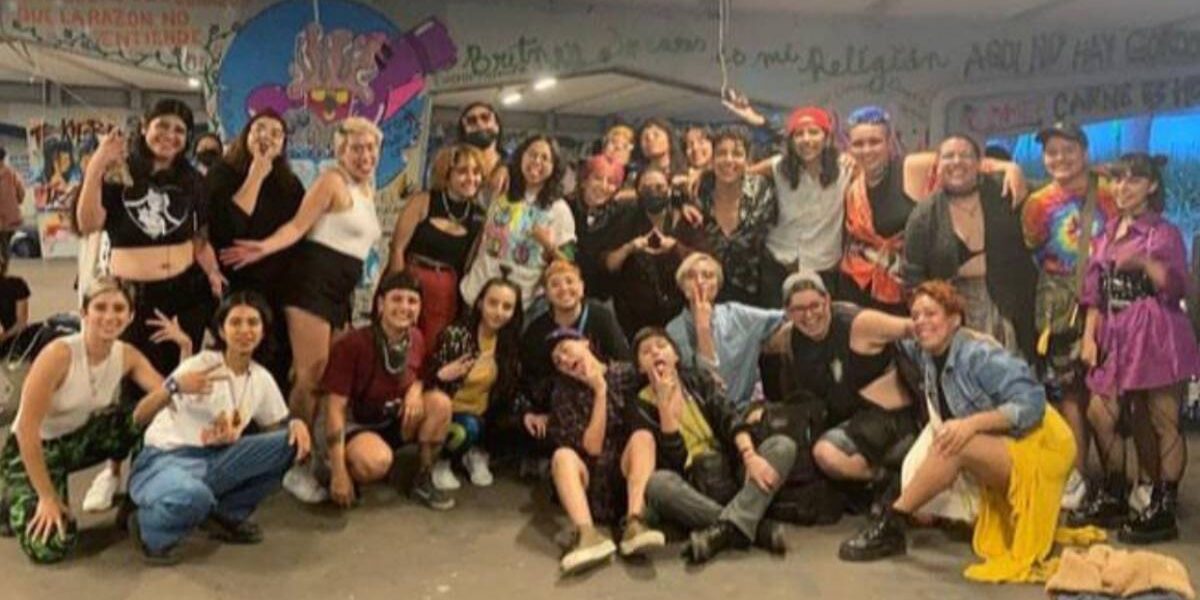
Collective loves, complicit, empathetic, sincere, containing, “alternative to the capitalist system” and to romantic love.
Presente spoke about feelings and emotions with LGBTIQ+ activists from Mexico, Chile, and Argentina . They find in community love an escape from ways of relating based on individualism, hierarchies, and competition.
Anastasia Benavente is a 45-year-old Chilean trans woman, teacher, activist, and performance artist. She met trans activist Alejandra Soto at a young age, but their lives took different paths. While Benavente was pursuing her university studies at the University of Chile, Soto was part of the Amanda Jofré . They reconnected in 2016.
“I had been fired from the university where I worked as a professor, and I started looking for work at other universities. But it didn't go very well because, obviously, in Chile they weren't going to have a transvestite professor teaching. The women opened the doors (of the union) for me, and it was super exciting for me to be with my peers,” said Anastasia, who joined the group four years ago as a professional technical assistant.
Regarding the union, she tells Presente : “It’s a home where I have my friends, my comrades, my sisters in struggle. Over time we have built great networks among ourselves.”.
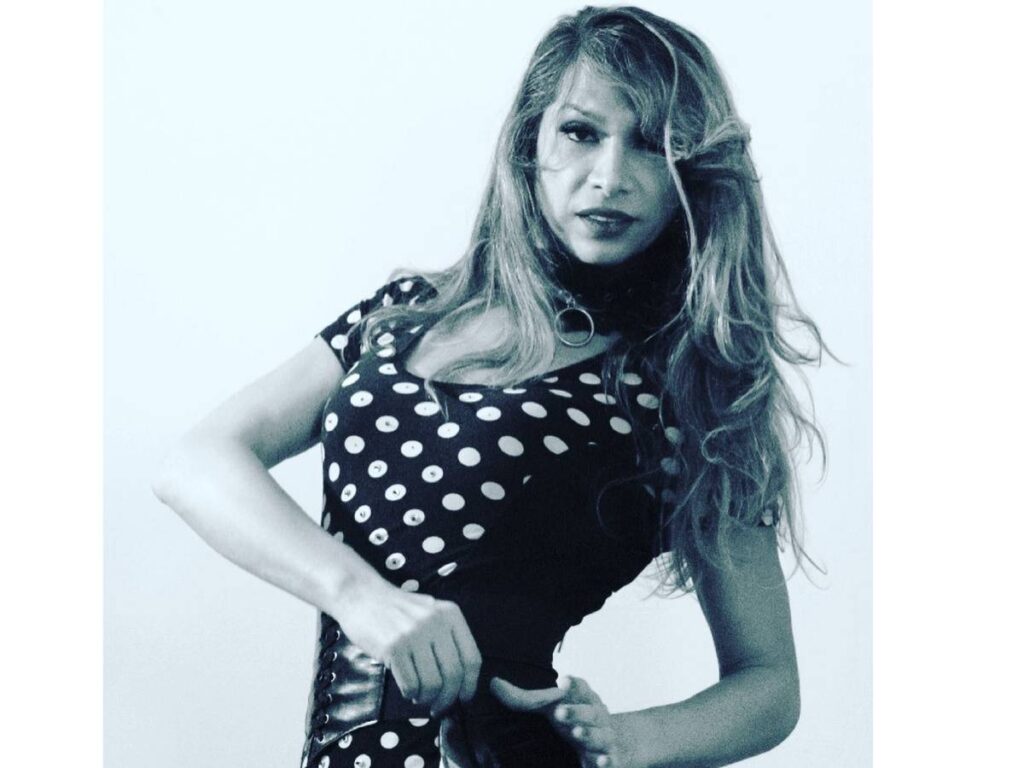
Photo: Andrés Valenzuela.
Loving outside of patriarchy
For Anastasia, the love that unites them is "based on understanding and a completely genuine empathy" because they share many common experiences. "I know I can tell my partner anything and she'll understand me," she says, emphasizing that it's a "love of complicity and empathy."
She also acknowledges that it is an environment “established by patriarchy and colonization,” and therefore not exempt from “competition, hierarchy, and egos.” However, despite the “structural violence” they experience daily, they strive “not to add more violence to their relationships.”
“We have a very ingrained habit of telling each other we love each other, hugging each other, touching each other, defending each other, marching together hand in hand, and although we have many activities to do, we never stop asking each other how we are doing,” she says.
For her, it's about "a collective love." "Here, individualities often don't matter: what matters is how we build ourselves within a collective, in a 'we are,' in a plural . I think that collective love gives us, trans women, a broader perspective on life," she summarizes.
“It is revolutionary that dissidents love each other”
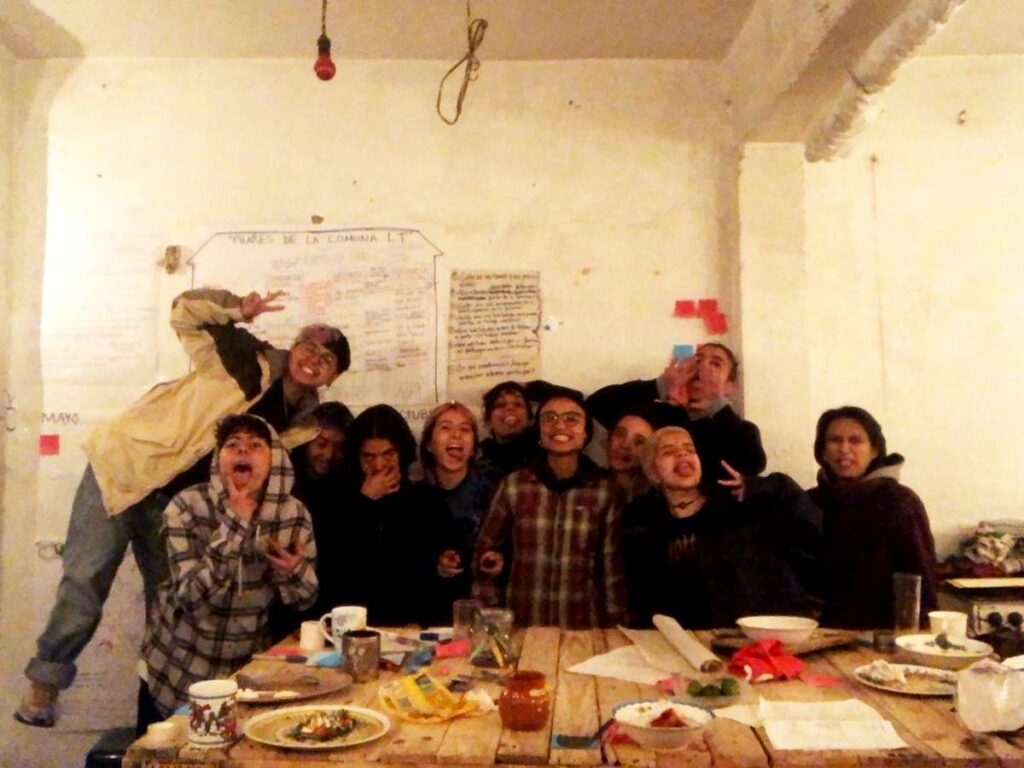
In Mexico City, a group of trans comrades built a self-managed space for women, lesbians, gay men and trans people, which they named " La Comuna lencha trans ".
currently made up of ten people who “live, sleep, and share a common life .” In addition to the “extended commune,” which consists of the affective and political bonds built from affinity and shared experience of the space.
To respect the principle of horizontality that exists in the commune, the two people who spoke with Presentes preferred to do so on behalf of everyone.
For its members, this way of existing in community is a way of "surviving together the precarity in the big city of capital, and at the same time claiming a way of living, of loving and of building an alternative to a world that we do not like, does not make us happy and does not let us live in freedom."
The bond that unites them is friendship, and about it they say: “For us, friendship is political. It is revolutionary that women love each other, that dissidents love each other, that we can build a way of life together based on friendship.”
For the Commune, the love between friends is an example to understand that "there are other ways of understanding love that are not romantic and that rather position themselves against romanticism."
In this sense, they made a distinction between romantic love, which for them “builds a separate world, for two, that separates itself from the community” and the love of friendship.
“We are always thinking about how to ensure that our emotional bonds do not lead to rupture, division, separation, or conflicts that are historically determined by the way we relate romantically,” they say.
A place to find love
In Mexico City there is also located “ Lleca – Listening to the street ”, a collective for the care of people living on the streets, focused on LGBT+ people, which is coordinated by Victoria Sámano.
Sámano is a 28-year-old trans woman originally from the state of Morelos. A year and a half ago, she began reaching out to homeless people in Mexico City, and during these encounters, a gay man made her aware of the difficulties faced by LGBT+ people in these circumstances. This led her to create Lleca, a space where seven trans people live and five volunteers work.
“With the problems that surround us, people in the community have no other option than to create these support spaces,” she explains to Presentes .
She elaborates further: “Being a trans person and living on the streets makes you seek out loving connections because you may have been rejected at home since childhood. That's why we aim to create a safe space for them, a place where they feel like they're part of a family.”
Personally, this place has helped Victoria "a lot" because she came out as trans six months ago and considers it a "complicated situation with her family." "I've found so much refuge here; I think I've formed a new family," she says.
She also discovered that it's a safe haven from abusive relationships. "Trans women often experience very violent relationships. I think these kinds of networks help them tremendously to break free."
In this sense, Victoria believes she has been "deconstructing" herself and that she now experiences love differently. "I think that the love I used to seek in relationships, which sometimes becomes very toxic because you have certain ideals and expect so much in return from the other person, I've replaced with all this love that has formed in this collective, that I've formed with my peers, and that is sometimes very reciprocal."
Love is collective or it is nothing
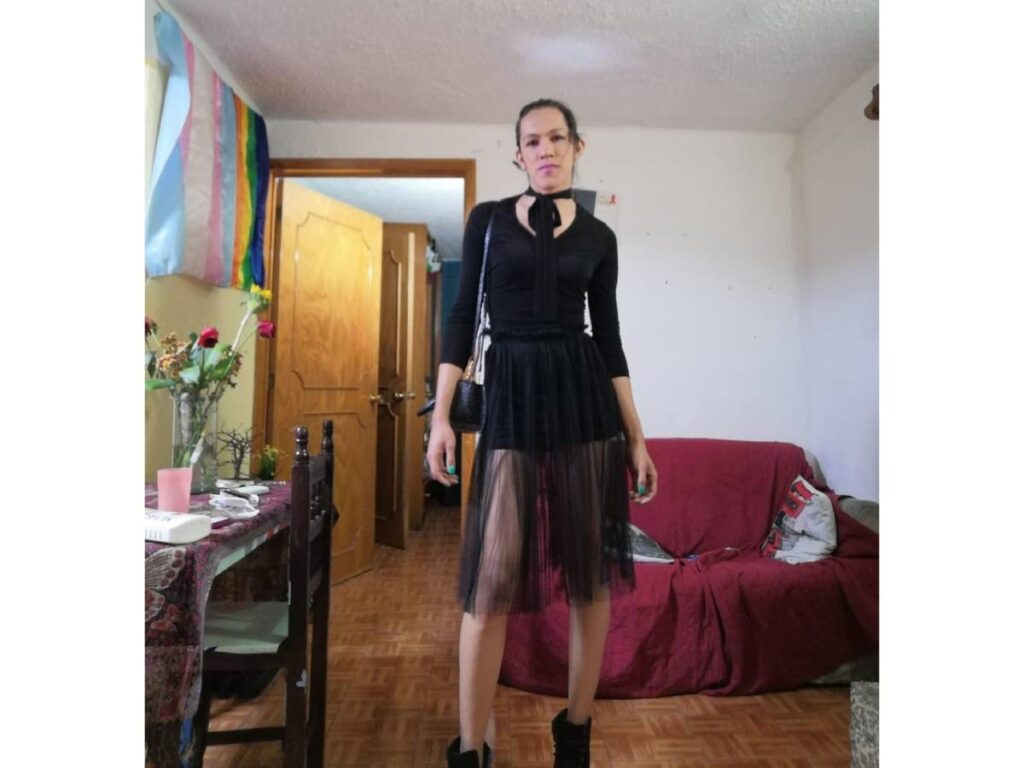
From the province of Tucumán, in Argentina, Galo Ismael, a 27-year-old transgender man and Archaeology student at the National University of Tucumán, Presentes
Throughout his life, from a young age, Galo frequented many places where he felt supported by his peers. He is currently part of the team at the "La Escuelita de Famaillá" Space for Memory and the Promotion of Human Rights .
“My biological family didn’t accompany me much during my growth or my processes of self-discovery, so from a very young age I had to seek support, shelter and affection outside my home,” he says.
From his life experience he understood "the need to come together, to meet, to be militancy side by side and to enjoy life with others."
Thus, throughout her 27 years, she wove a “great network” that provided her with unconditional support and comfort. “They are the ones who raised money for me to move when the situation at my family’s house became unbearable. Those who, during quarantine, saved me from being confined with violent people, those who reviewed and corrected my grades to the dean of my faculty, asking that my name and gender be respected. Also, those who tattooed my name wrapped in a butterfly as a sign of affection,” she shares.
Galo revisits one of the pandemic's slogans, "No one is safe alone," to talk about collective love. "When we think we've done something alone, there's always someone else involved, someone who came before us and paved the way. We are, in a way, both cause and effect of a multitude of collective loves that built the good in the world and bequeathed it to us so that we can navigate it by doing our part."
“That love as a driving force changes things, it saves us and others. It doesn't have to be a romantic relationship to feel it. It forms networks and packs that allow one to resist and, above all, to be happy,” she concludes.
We are present
We are committed to journalism that delves into the territories and conducts thorough investigations, combined with new technologies and narrative formats. We want the protagonists, their stories, and their struggles to be present.
SUPPORT US

FOLLOW US
Related notes


We are present
This and other stories are not usually on the media agenda. Together we can bring them to light.