

Right to identity: Mexico grants birth certificates to trans people abroad
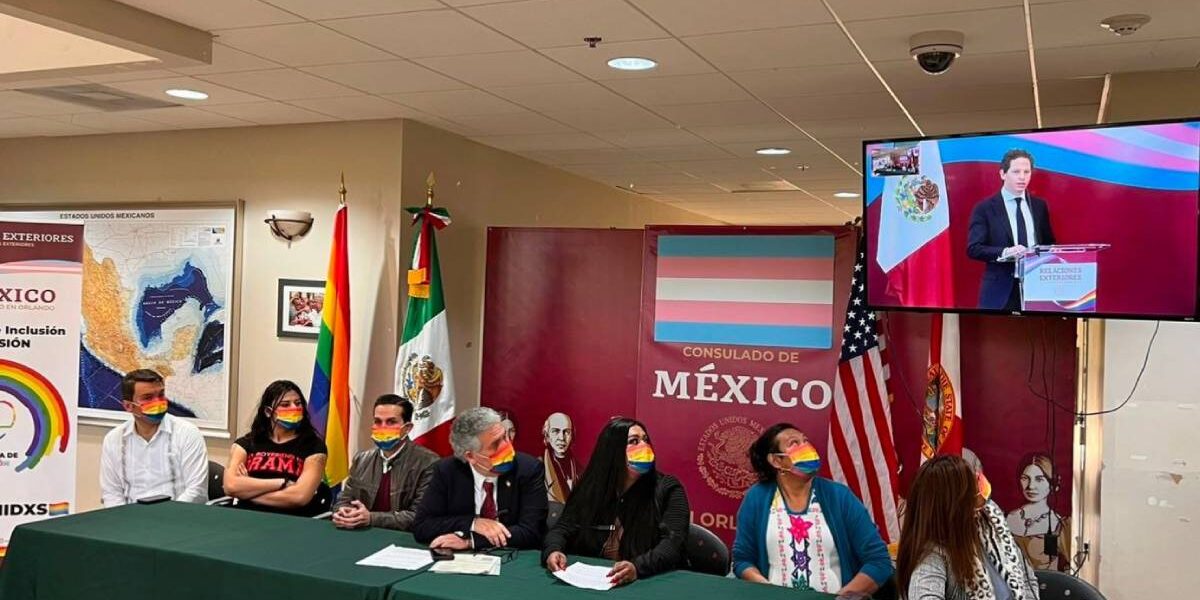
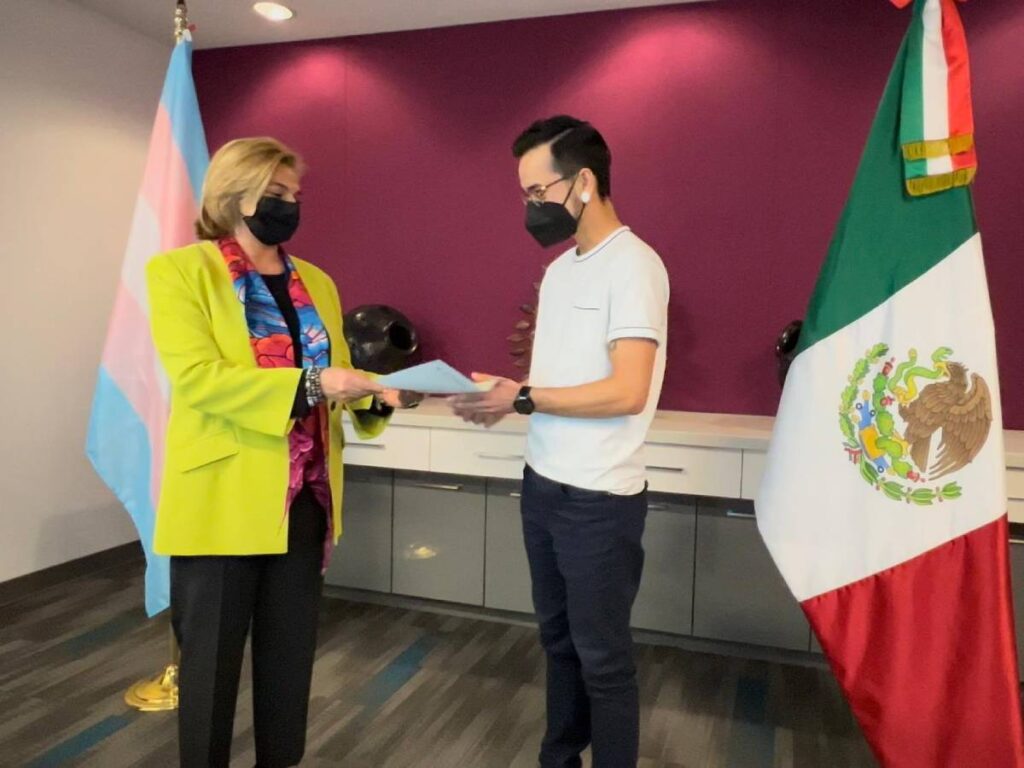
The first birth certificates were delivered in Texas, Florida, and Washington. This was achieved thanks to the coordinated efforts of activists, LGBT organizations, and government officials.


Share

GUADALAJARA, Mexico. A few years ago, Jacqueline Castillo was denied services as a Mexican citizen in the United States. She was forced to remove her makeup to validate her identity in her passport, and the document was confiscated even though her immigration status in the country was illegal. She recounted this on January 19, the day the gender identity of transgender Mexicans outside of Mexico was officially recognized.
Starting January 19, Mexican trans people residing abroad can process a birth certificate that recognizes their gender identity and name.
This arrangement was made possible through the coordinated work between activists, LGBT+ organizations and federal authorities , in which the Ministry of Foreign Affairs grants the power to function as civil registries to the 67 Mexican consulates and 80 embassies around the world.
The issued directive does not discriminate based on age, ensuring that transgender children and adolescents enjoy this right equally. Furthermore, no transgender person should be required to provide documentation proving their gender identity.
“Today we are putting a stop to discrimination here.”
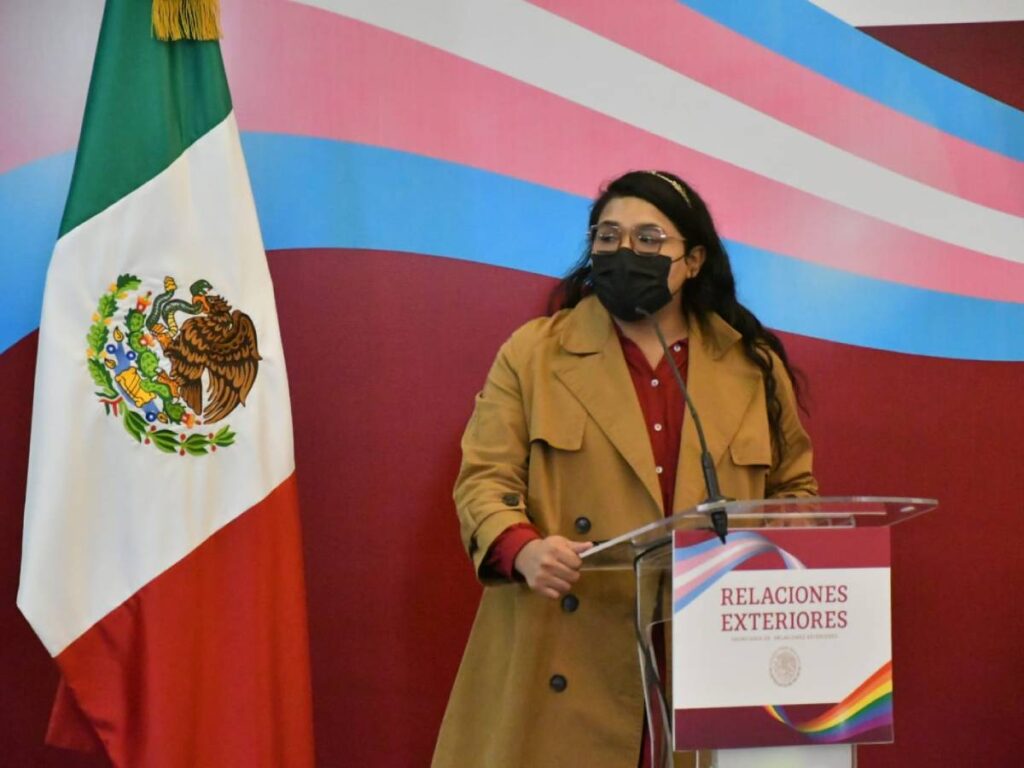
Jaqueline Castillo narrated her story in a video that was shown at the in-person and virtual event for the delivery of birth certificates .
“A few months ago, I went to the consulate with trepidation. All I asked for was a name change, to be identified by my appearance, and fortunately, I found people who wanted to help me. They told me it could take a few months, but they soon gave me good news: that I could realize my dream, to be called by my name, and at this moment, it has been a huge achievement for me. Thank you for making my dream come true. Not only my dream, but also the dream of so many friends and colleagues who lived and others who died suppressing their true selves,” Jacqueline concluded.
Jaqueline, along with Perla Pascual and Rosita Guillén from Orlando (Florida); Kassie Guerrero in Houston (Texas) and Mateo Acosta de la Torre in Washington DC, were the first trans migrants to receive, outside of Mexico, a birth certificate that recognizes their gender identity and name.
Kassie said she felt very happy and commented that for her it represents "a step forward for all trans people."
For his part, Mateo also shared in a video that this recognition opens up possibilities for many Mexican trans migrants around the world. He explained, “We have endured humiliation after humiliation through these processes, and we even face daily danger living with documents that are denied to us. This has been a never-ending battle for many people, but today we are putting a stop to discrimination. (…) For me, this means that for the first time in my life I will be able to vote in my country's elections. But I hope you understand that for many other people, this could be what saves their lives.”
How was it made possible?
Presentes spoke with Juan Pablo Delgado, lawyer and director of Amicus (human rights defense organization) and Visible (an observatory of violence against LGBT+ people in Mexico).
Delgado recounted how activism and organizations worked to get the Mexican State to recognize the identity of Mexican trans people who migrated and reside in other countries.
For Juan Pablo, there are three key moments in this story. Eddie Martínez's journalistic investigation into the immigration status of Mexican trans people in the United States; the advocacy and litigation work undertaken by Amicus in conjunction with lawyer Jessica Marjane, founder of the Trans Youth Network ; and the collaboration with public officials in the current administration.
In 2018, a group of transgender women requested recognition of their gender identity from the Mexican consulate in New York. The consul's response was that they would have to travel to Mexico to do so. This situation was exposed by journalist Martínez and marked the beginning of a legal battle, from Mexico, for the organization Amicus to advocate for the recognition of the gender identity of transgender migrants in the United States.
“In 2019, we looked for people who wanted to go through the process. Obviously, it took time because it also involves a lot of emotions for people. So, by 2020, we had eight people among those we had identified and those referred to us by organizations in Mexico, such as Impulso Trans in Jalisco and the Association for Trans Children . And that's how we began the process of filing four injunctions with this group of people. We didn't want to file all eight at once so that, if they weren't successful, we could refine the strategy,” Juan Pablo explained in an interview with Presentes .
Legislative work
While the injunctions were being processed, Senator Martha Lucía Micher presented in November 2020 an initiative to reform article 44 of the Mexican Foreign Service Law so that the heads of Consular Offices would be given the power of Civil Registry judges in order to issue marriage certificates, including same-sex marriages, "as well as those of people who request the issuance of a new certificate for recognition of gender identity."
“Senator Malu Micher was a great ally in suggesting, while the law reform was being approved, the creation of a directive for the Ministry of Foreign Affairs to prevent further injunctions. And now we are seeing the results, right? A result that didn't take four calendar years, but is the culmination of a long period of work involving journalistic efforts, organizations, trans people, and the commitment of allied officials,” the lawyer added.
Currently, the reform proposed by Senator Micher has already been approved by the Senate and is awaiting a vote in the Chamber of Deputies. For Juan Pablo, it is important that this proposal be enshrined in law and not just in a set of instructions.
No data on Mexican trans migrants
In Mexico there are no official records on the migration of Mexican people due to their sexual orientation or gender identity.
However, the Arcoíris Foundation (a human rights organization for LGBTI+ populations) considered migration in the 2020 report of the Observatory of Hate Crimes against LGBT people.
And while no data is provided on Mexican trans migrants, it does present the panorama of internal migration that exists, as well as the violence that migrants experience when crossing Mexico.
In the report, the organization clarifies that the reasons for internal mobility are diverse and that trans women are the ones who move the most.
Furthermore, it emphasizes that “it cannot be ruled out that the reason for migration is violence, threats, or persecution due to their gender identity. Each journey is unique, and yet we can observe certain patterns regarding sending and receiving states for LGBT people in situations of mobility. Although, of course, once again, the lack of information limits the conclusions.”
In the United States, data disaggregated by sexual orientation and gender identity are also limited, including the number and characteristics of asylum applications made by LGBT people.
Amid this information gap, the Williams Institute on Sexual Orientation and Gender Identity Law and Public Policy used data from the U.S. Citizenship and Immigration Services (USCIS) Asylum Prescreening System to analyze credible or reasonable fear from LGBT+ individuals.
According to that analysis , between 2007 and 2017, at least 4,385 asylum applications were based on fear. That is, more than four thousand people had to demonstrate to immigration officials that their lives were at risk in their countries of origin due to persecution and violence as LGBT+ individuals. In 98.4% of the interviews, the fear of the LGBT+ applicants was verified.
The document highlights that more than half (51.3%) of the applications came from LGBT+ people originating from the Northern Triangle: El Salvador (28%); Honduras (14.9%) and Guatemala (8.4%); and 12.1%, that is, 530 applications were from Mexico.
In another report by the same institution, it is estimated that three-quarters of LGBT+ adults with a temporarily illegal immigration status in the United States were born in 10 Latin American countries, of which 136,600 are from Mexico and 48,300 from countries in the Northern Triangle (El Salvador, Guatemala, Honduras).
What is needed?
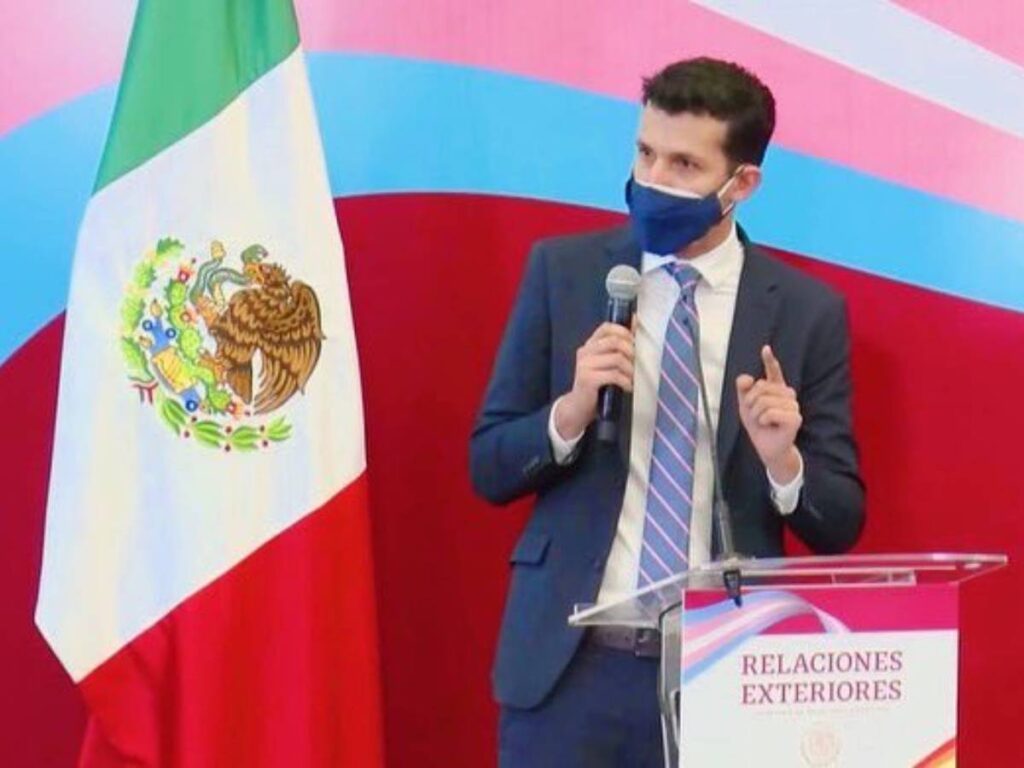
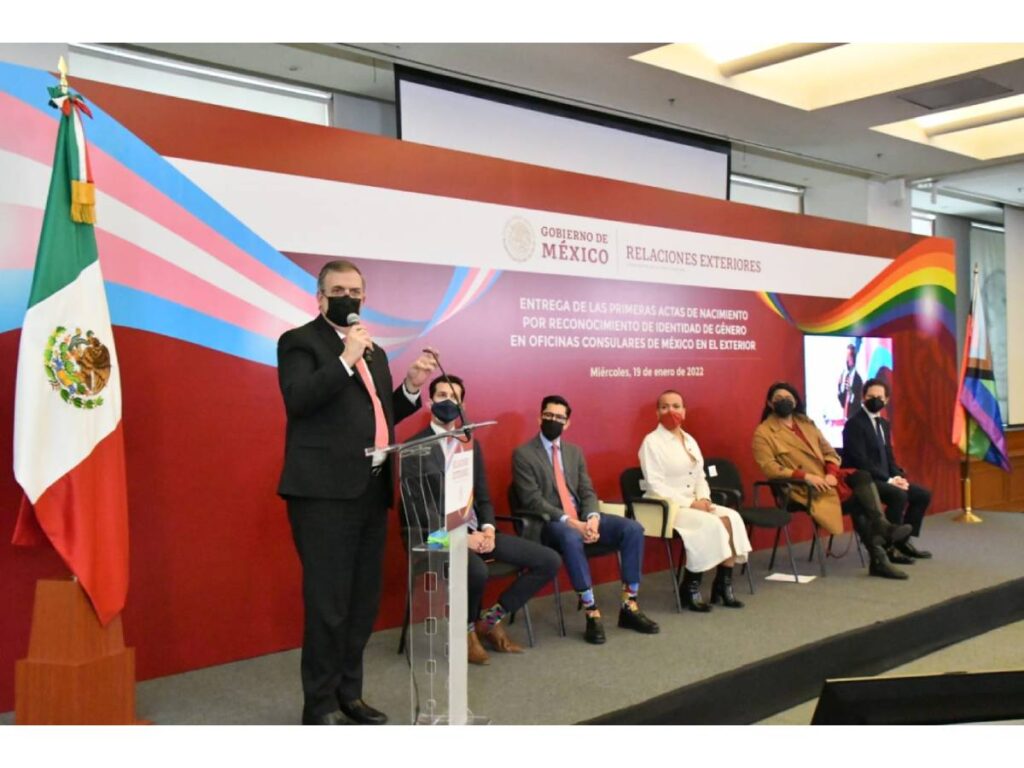
During the event to deliver birth certificates to Mexican trans people abroad, Congresswoman Salma Luévano commented that the recognition of the identity of non-binary people is still pending.
In response to the accusation, Foreign Minister Marcelo Ebrard pledged that during his tenure a passport that includes non-binary identity will be possible.
“This is another step we are going to take, because I believe that issuing these documents is not just another formality: it's not just a piece of paper, it's something that changes your life. It means that your freedom and your dignity are recognized,” he said.
Lawyer and human rights advocate Jessica Marjane was also part of the litigation strategies that made this regulation possible within the consular network. During the event, she commented that Mexico needs a genuine commitment to transgender people from a restorative and historical memory perspective.
“This step taken by the Ministry of Foreign Affairs aligns with international standards as outlined in Advisory Opinion 24/17 of the Inter-American Commission on Human Rights, and it also aligns with the various rulings issued by the Supreme Court of Justice. This is not by chance, and we still have a long way to go because many women have given their lives; these reforms have names, faces, and stories. In this world, we need more birth certificates, not death certificates. So today, I invite you to make this a starting point for dismantling the charade of inclusion and, as we are doing today, creating an inclusion that truly impacts people's lives,” she concluded.
How do I process my birth certificate?
The process is free and the authorities should not ask you for any type of document proving your gender identity; in addition, they must give you your first copy of your birth certificate with your gender identity and your chosen name.
1) Submit the following documents to the Mexican embassy or consulate where you are located:
- A written or verbal request for recognition of your gender identity and chosen name. -
A certified copy of your original birth certificate, including your time of birth.
- Identification with the information recorded on your original birth certificate, including a photograph. -
Two witnesses.
- If you are under 18 years of age, your legal guardian(s) must be present and must bring their identification.
2) During the process, the consular authorities will collect the following information:
- your chosen name and surnames
- the gender with which you identify
- the place, date, and time of your birth -
they will take biometric data (fingerprints)
We are present
We are committed to journalism that delves into the territories and conducts thorough investigations, combined with new technologies and narrative formats. We want the protagonists, their stories, and their struggles to be present.
SUPPORT US

FOLLOW US
Related notes


We are present
This and other stories are not usually on the media agenda. Together we can bring them to light.