

Guatemala: Achi women achieved a historic conviction against the soldiers who committed sexual abuses
The paramilitaries have been sentenced to 30 years in prison. The events occurred during the civil war. The sentence "recognizes the women's pain and their truth."


Share

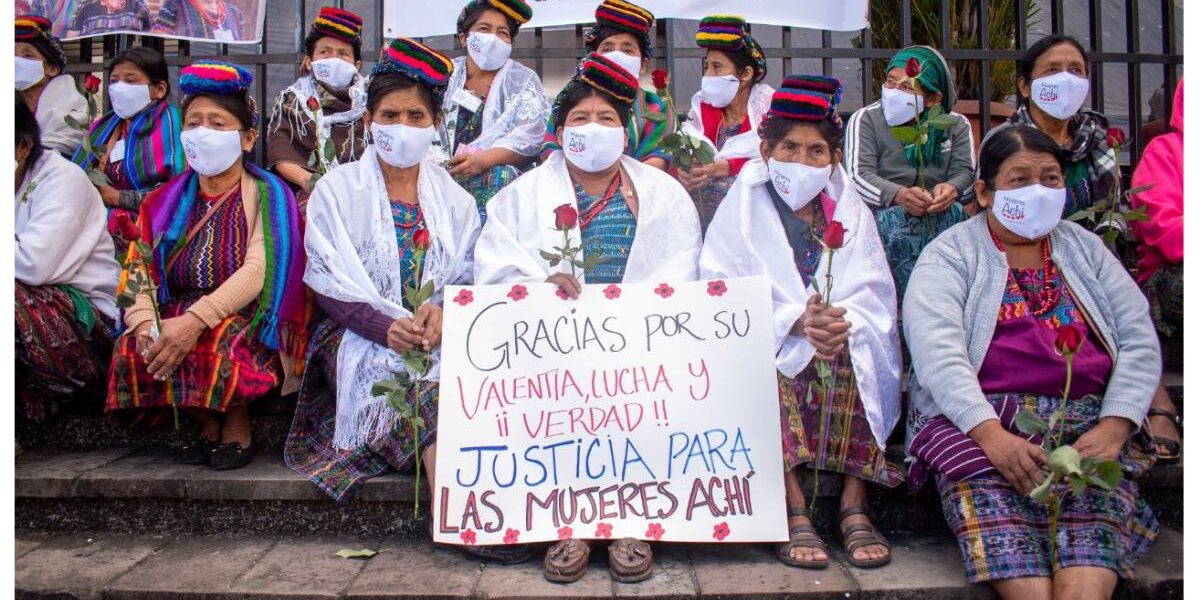
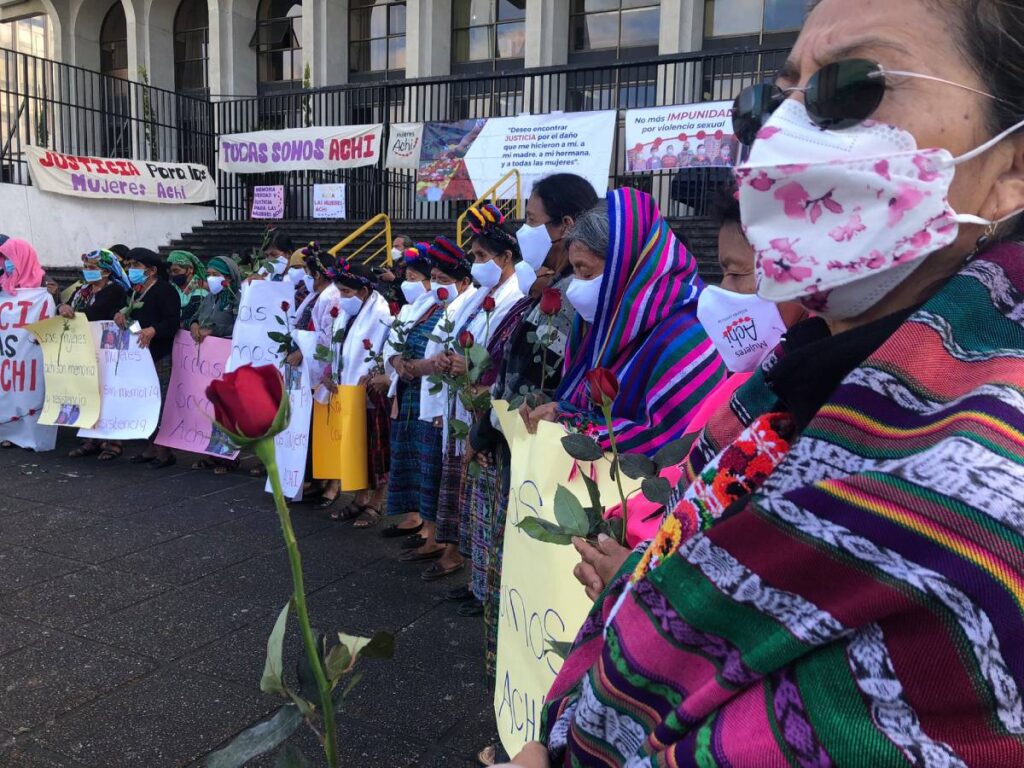
After more than 40 years of waiting for reparations, Guatemala's High Risk Court A sentenced five former members of the so-called Civil Self-Defense Patrols (PAC) who, during Guatemala's civil war, subjected at least 36 women of the Mayan Achi ethnic group to sexual violence and slavery.
“They always had their truth. They defended it, and now this sentence is quite important not only for them, but also for their families and their communities. Now they know they were believed. It is a sentence that recognizes the pain of the women and their truth,” Haydée Valey, a Maya Achi lawyer and one of the representatives, along with Lucía Xiloj and Gloria Reyes Xitumul, of the Achi women tells Presentes .
The sentences
Those convicted in the historic sentence of last Monday, January 24, were Benvenuto Ruiz Aquino, Bernardo Ruiz Aquino, Damián Cuxun Alvarado and Francisco Cuxum Alvarado, for “crimes against humanity” to 30 years in prison.
In addition, Gabriel Cuxum Alvarado received a longer sentence of 40 years for crimes against humanity, suppression and alteration of civil status, and public use of a false name.
During the trial, five Achi women testified and identified the five perpetrators of the crime..
“It is necessary for the Public Prosecutor's Office to make the decision to move forward in the chain of command because this implies a greater responsibility. Then we could discuss the cases of the 36 survivors,” the lawyer emphasizes.
Haydeé is from Baja Verapaz—the department where the events took place—and is a member of Impunity Watch in Guatemala , where she works on the victim participation program. From there, she accompanied the Achi women on their journey. Presentes spoke with her to learn her story.
A context of violence
When the events reported by the indigenous women took place, Guatemala was going through an internal armed conflict between government forces and various guerrilla groups - led after its formation by the National Revolutionary Unity of Guatemala (UNRG) - which lasted for 36 years.
It began in 1960 and ended in 1996, following the signing of the Agreement for a Firm and Lasting Peace .
The 36 women who reported rape and slavery suffered between 1981 and 1985 by former members of the PAC lived at that time in the municipality of Rabinal in the department of Baja Verapaz, in Guatemala.
“It has been a complex situation due to the historical background that made the violence in Rabinal much more severe. In that area, we have a history of the imposition of hydroelectric projects. The most serious case is that of the Chixoy hydroelectric plant,” Valey explains.
And on this point, he elaborates: “In 1980 there was a dispute between the communities of the Río Negro people. They disagreed with the way they were being evicted because the agreements with the government were not taking into account their situation regarding access to land.”
“This situation of rebellion by the Río Negro community was seen as a manipulation of thought by guerrilla groups,” he says. A “systematic persecution” of the various Indigenous communities then began, and thus, in the early 1980s, “the scorched-earth policy began to be implemented.”
The role of the State
According to the Commission for Historical Clarification , created “to clarify human rights violations” related to the armed conflict, in the four regions most affected by the violence, “state agents committed acts of genocide against groups of the Mayan people.”
In the report “ Guatemala: Memory of Silence ”, the Commission detailed that the total number of deaths climbed to 200,000, of which 83% were Mayan people and 17% were Ladinos.
At the same time, “state forces and affiliated paramilitary groups were responsible for 93% of the documented violations,” while “insurgent actions accounted for 3% of human rights violations and acts of violence.”
“Once their husbands, fathers, or mothers disappeared, the women were left with nothing. Then came the burning of homes, the theft of livestock, the looting of the few valuables in the houses. It was a systematic persecution against them. It is within this context that the human rights violations occurred,” Haydeé describes, based on the statements made by the survivors during the trial.
And she emphasizes: “We know that sexual violence constitutes war crimes, crimes against humanity and a form of genocide.”
The postponed crime
The first complaints from the Achi women were made in 2011. It took 11 years for those materially responsible for the acts they experienced to finally be brought to justice.
Regarding that initial moment, Haydeé believes it was "the most difficult part of these processes because women always put what happened to them before others: the deaths of family members, of partners, the clandestine cemeteries," she explains.
"There was a constant feeling that what had happened to them was not as important as what had happened to the others, who were murdered."
The legal process was also a challenge for those who carried it out in defense of women.
“We consulted international cases because in Guatemala at that time there were no sentences or court cases regarding sexual violence. We had to do self-education to be able to address these issues and initiate healing and empowerment processes with the women.”
Furthermore, the trial - which began on January 4, 2022 - involved "a great evidentiary challenge" because it dealt with events that occurred 40 years ago.
“We now have rulings from the Inter-American Court of Human Rights on the importance that should be given to the statements of victims of sexual violence, and how they should be analyzed. In this sense, judges must eliminate their prejudices before analyzing these statements, and it is necessary to understand the reality of women.”
Justice, the most anticipated reparation
During the search for evidence, the lawsuit intended to "change the mentality that when there is an act of sexual violence it is necessary to have physical or gynecological forensic evidence that proves that there was penetration."
In addition to the survivors' testimonies, they had "medical, psychological, psychosocial, cultural and spiritual expertise," the latter defended by a Mayan spiritual guide.
The violence they experienced had a “very severe impact” on the women. “The memories, the heartaches—as they say—the physical suffering, the sadness they carry, that depression, it’s quite intense,” Haydée explains.
She adds: “Listening to the testimonies is quite shocking, and even more so when they narrate them in their own language (Achi Maya). We are talking about a context of coercion in which the women were reduced to objects and were brutally humiliated and degraded.”
In this sense, she says that, having been attacked also through their cultural practices, some of them stopped transmitting their values, their language, their clothing.
“If the goal of genocide is to destroy the community, then it is being achieved 40 years later,” he says in relation to the break in the chain of cultural transmission.
However, the verdict brought happiness to the survivors.
“They are celebrating and are very happy. They hugged each other through tears when they learned of the sentence. We know this is not the end, but now it is a reason for joy for them and gives them more strength to continue.”
We are present
We are committed to journalism that delves into the territories and conducts thorough investigations, combined with new technologies and narrative formats. We want the protagonists, their stories, and their struggles to be present.
SUPPORT US

FOLLOW US
Related notes

We are present
This and other stories are not usually on the media agenda. Together we can bring them to light.
1 Comment