

How to build a sovereign and popular environmentalism
How does Argentina's debt negotiation with the International Monetary Fund affect environmental sovereignty?


Share

The world is heading towards an accelerating and irreversible ecosystem collapse. The responsibilities assumed by the international community regarding climate action are not resulting in measures commensurate with the urgency of the crisis. In this context: How does Argentina's debt negotiation with the International Monetary Fund affect environmental sovereignty?
The opening of new hydrocarbon projects, the continued existence of fossil fuel subsidies, and the upward trends in oil and gas demand projected for 2050 paint a bleak picture. We are far from seizing the last window of opportunity to limit the increase in average global temperature to 1.5°C.
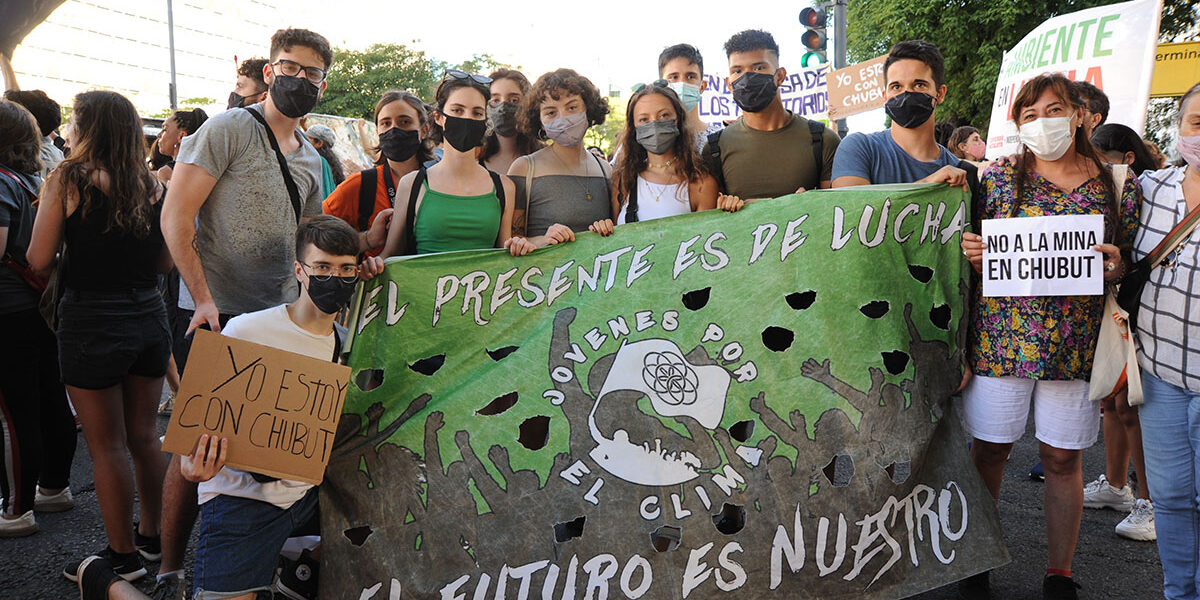
But if there's one thing young people teach us, it's that structural changes are achieved through social mobilization and collective awareness. Never before has there been such powerful citizen involvement in the socio-environmental movement. Never before have marches brought together thousands of people simultaneously across the globe demanding climate justice. However, a world that overcomes the onslaught of the climate crisis cannot be achieved through utopian ideals alone. It requires a program, organization, a sense of purpose, and activism.
Environmentalism from the South
An industrial metamorphosis process is needed that introduces new production systems and consumption patterns.
Designing and implementing policies that promote the ecological transition in an industrialized country is not the same exercise as applying the challenge to a semi-peripheral economy like ours. In our country, protecting common natural resources and abandoning the energy support provided by hydrocarbon exploitation are goals that clash with the wall of macroeconomic instability and financial barriers.
In this context lies the debate sparked by the authorization of offshore 300 km from the Mar del Plata coast.
The foundations of the discussion shed light on the internal aspects of environmentalism. I say environmentalism because, just as there are popular, national, and Latin American environmental movements, there are also neoliberal and foreign ones.
Several campaigns against the offshore exploration project advocate for its complete closure. A wide array of arguments exist, ranging from concerns about the impact of seismic techniques on marine life to skepticism regarding the economic benefits the project promises.
What the debate illustrates is the deep distrust of a significant sector of the citizenry in the role that the State plays in promoting extractive economic activities and avoiding major environmental liabilities.
But the discrediting of the state's role in developing oversight policies, while justified by observing various events that led to environmental disasters, is a dangerous symptom of our times. In several of these episodes, the destruction of ecosystems resulted from the mismanagement of projects by the entities involved.
It is the responsibility of civil society to demand the presence of the state, enforcing appropriate environmental regulations for each activity. Otherwise, companies will operate within lax regulatory frameworks, and our territories will see a proliferation of sacrifice zones. Those who defend these concessions to private groups are part of a dogmatic and anti-sovereign development agenda.
What the State does not manage, the market controls exclusively.
Furthermore, to expect the government to suspend all its export facilities based on environmental criteria is utter nonsense. To aspire to such a scenario in the context of the current economic crisis is simply irresponsible.
The oil exploitation agreement
The government initiative estimates economic returns of between $30 billion and $95 billion in revenue for the state. Furthermore, at the Mar del Plata well, 50% of the exports generated by the project will go to the state-owned company YPF, as the owner.
It is not a viable path for a country economically strangled by increasing poverty and the burdens of external debt to shift towards a demand for an absolute ban on all productive activities based on natural resources. As an Argentinian, I hope my country will increase its exports and stabilize its trade and fiscal balances.
But recognizing the importance of oversight cannot lead to undervaluing the present and future needs imposed by the climate crisis.
The worsening of extreme weather events has devastating consequences that our people are currently suffering.
Rising temperatures, especially in cities, threaten the well-being of millions of people, particularly those living in low-income neighborhoods . The increased frequency of floods and droughts will impact social and economic indicators. Delaying climate and environmental action is not an option.
Faced with a scarcity of resources
It's not because of the catastrophic picture described in scientific reports worldwide, nor is it because of Argentina's geopolitical positioning. Access to markets is becoming increasingly difficult for countries that fail to meet their international climate commitments or whose export products have a high carbon content.
It is imperative to advance along the path of decarbonization to ensure the future competitiveness of the Argentine economy. The agenda for protecting natural resources also remains crucial, given that conserving the natural heritage of a Latin American country is a strategic decision in the face of resource scarcity.
The responsibility of the powers
But our geopolitical engagement under the umbrella of the climate crisis does not end with overcoming the economic barriers to the transition. As a nation of the Global South, as advocates for a greater Latin American homeland, we cannot fail to denounce the responsibility of the major powers for the lack of international cooperation.
The Global North, in addition to its monumental failure to transfer funds to developing economies (United Nations Framework Convention on Climate Change, Chapter V, Article 40), controls the international lending institutions that subjugate Argentina through debt. They want us to comply with the Paris Agreement, yet they force us to deepen the extractive nature of our production model to honor financial commitments made by neoliberal governments. The same powers that financially subordinate us are our environmental debtors. Securing recognition of our status as creditors of the North's ecological debt to the South must be consolidated as an unwavering strategy of international pressure at multilateral climate action events, and the primary demand of the Argentine socio-environmental movement.
A country mired in debt will never be able to build the local capacity needed to achieve the socio-ecological transition. Therefore, in addition to confronting the external forces that want to bring us to our knees, we must also stop those within our borders who want to sell us out.
That's why we're calling for the construction of a national environmental movement.
A movement that defends the interests of the nation against the neocolonial advance of financial powers, that puts an end to what they've always tried to do to us from the outside: dominate us and control the people through foreign debt.
We are present
We are committed to journalism that delves into the territories and conducts thorough investigations, combined with new technologies and narrative formats. We want the protagonists, their stories, and their struggles to be present.
SUPPORT US

FOLLOW US
Related notes


We are present
This and other stories are not usually on the media agenda. Together we can bring them to light.