

Defending the territory: the wisdom of the Ava Guaraní midwives endures
The female leaders of the Ava Paranaense communities are reclaiming the spirituality of the people as a form of resistance.


Share

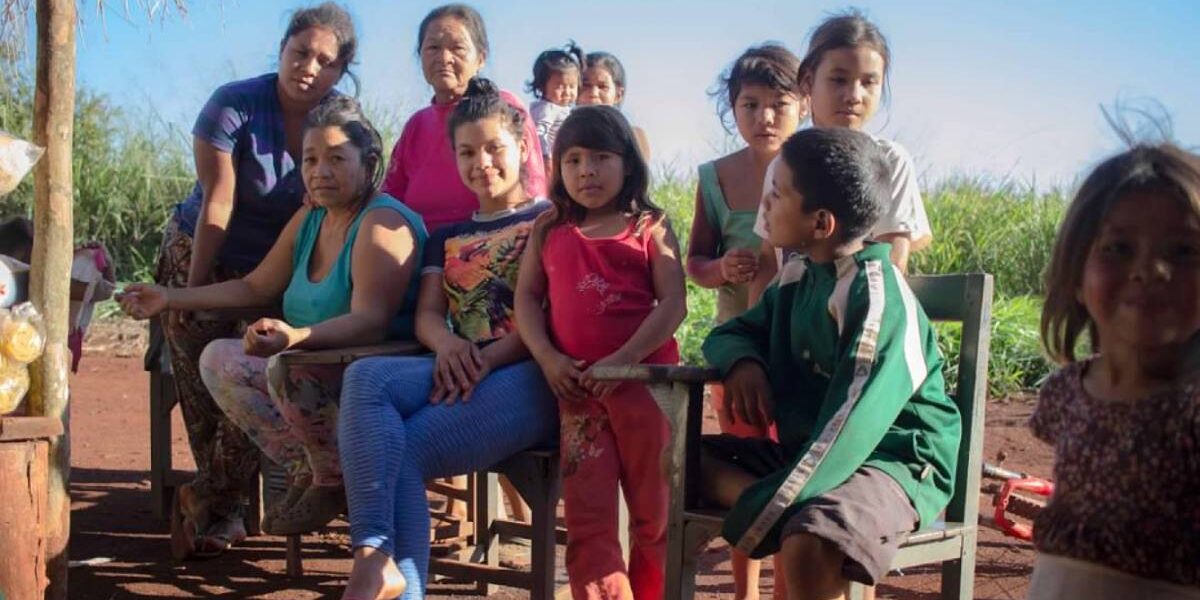
ASUNCIÓN, Paraguay. From the resistance of the female leaders of the Ava Paranaense people, from the Tekoha Sauce community , who return to their ancestral territory, they keep alive the knowledge they received from their mothers and grandmothers: midwifery.
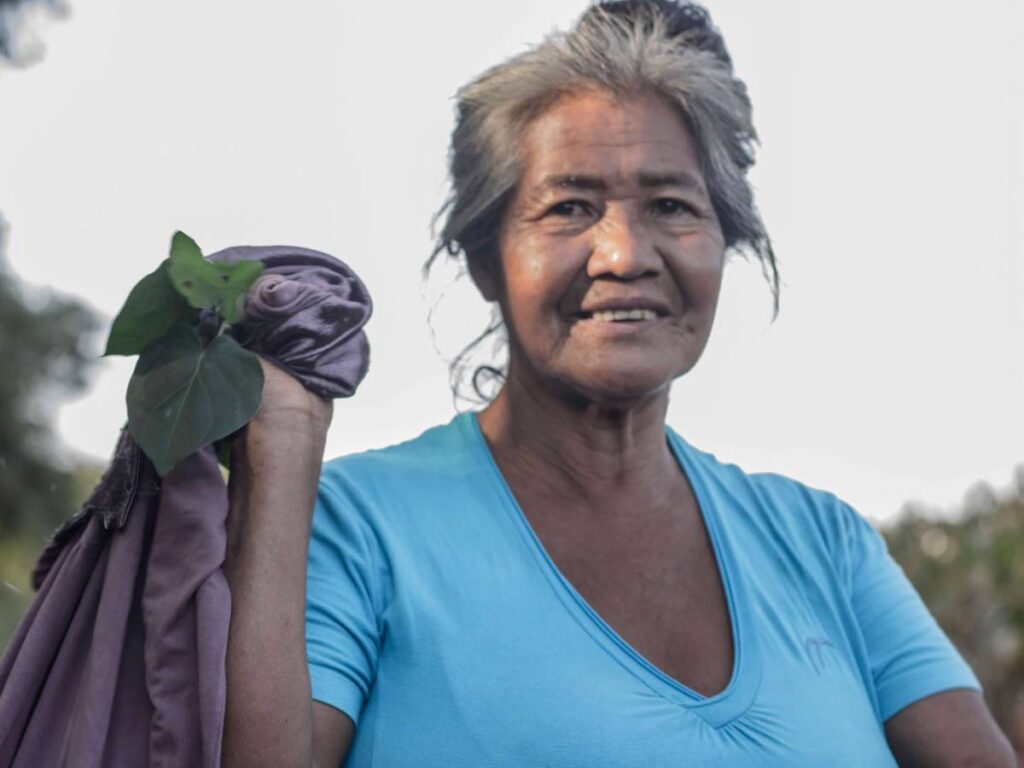
María Celia Benítez is 54 years old. She is a midwife and was born in the Tekoha Sauce Ava people . She supports the struggle to recover their ancestral territories, which were taken for the construction of the Itaipu Binational in the late 1970s.
Their community, Tekoha Sauce, is one of the 38 affected communities, located on the Paraná River in Paraguayan territory.
Maria was a child when the forced displacement occurred. As a result of this displacement, she suffered the loss of many family members. Most of them died because they could not survive in the inhospitable place to which they were relocated, without even being able to rescue their animals and belongings.
As a survivor of this genocide, he feels that the meaning of his life is the recovery of his territory and what the meaning of territoriality truly means to the Ava Paranaense people.
In a single word in Guarani, it is "tekoha," which encompasses culture, spirituality, way of life, the connection to the forest, and everything that sustains the essence of their identity. Furthermore, for the Ava Paraná people, their sense of life remains deeply intertwined with the Paraná River, which is of vital importance.
For this reason, the resistance and search for rights towards territorial recovery is linked to spiritual aspects and wisdom from plant medicine, traditional cultivation, along with fishing and hunting, as well as natural midwifery, which is what she keeps alive and received from her grandmothers.
Women who resist
Like Maria, other women lead and remain linked to the resistance until territorial recovery.
Amidst this resilience is the fact that their own children are born into precarious circumstances. This challenge also helps to preserve the knowledge of the grandmothers' cultural practices, which are directly linked to natural medicine and native plants.
Since they began returning to their territory, there have been many births and not a single case of death from childbirth since 2015.
To shine a light for the struggle
The women's testimony regarding childbirth is directly related to the same resistance.
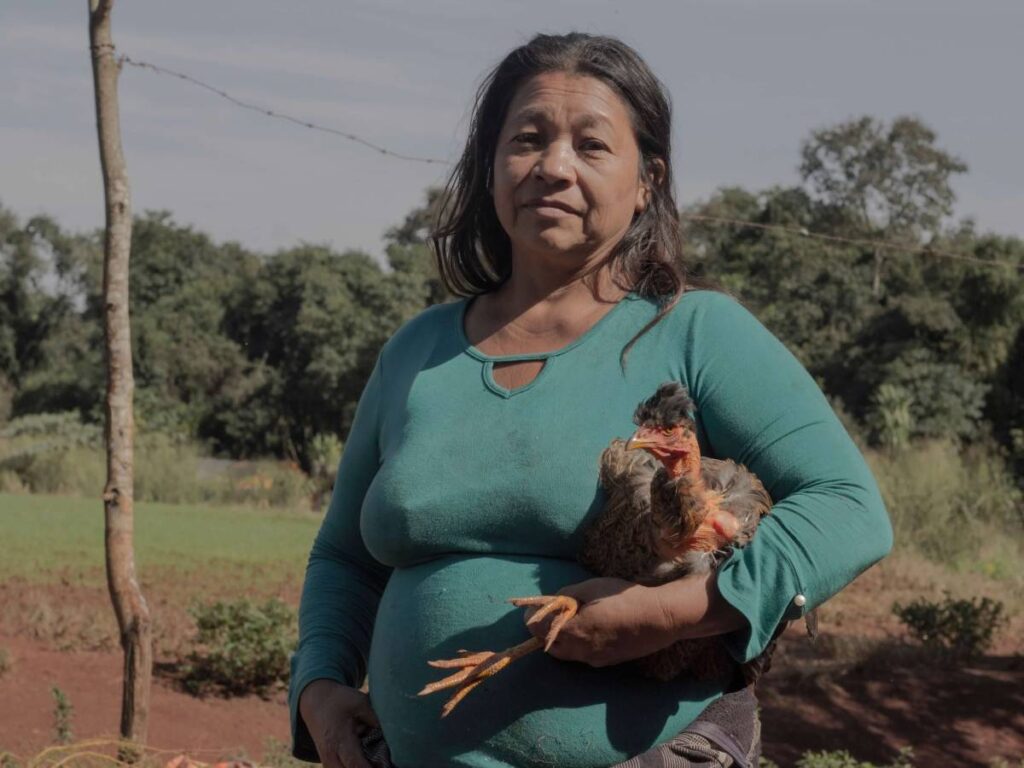
Nancy Ramos's (26) two children are the product of this way of life. She says it is the greatest symbol of resistance and the preservation of knowledge. She also feels uncomfortable when she has to go to public hospitals in the surrounding towns and cities.
Besides lacking basic necessities, she explains, the treatment of Indigenous women leaves much to be desired. Therefore , she considers it very important that her children know their history and keep it alive.
Lorenza Benítez, a 54-year-old medicine woman, also comments: “Each person comes with a gift to develop in service to the community. The legacy that María provides keeps alive the way of coming into the world. It has always been practiced with great respect by several generations and must continue to be a current practice, even though other medicines exist. Often, when we stop using this knowledge, we stop valuing ancestral medicines , we forget their names and their function with the other plants that must coexist together for the forest to remain a forest, just as the various exchanges between human beings and nature take place.”
Giving birth and recovery
Several other women, who have also given birth in the Tekoha Sauce community, share the same perspective as Nancy and Lorenza. They emphasize that in this struggle, it is very clear that what they seek is territorial recovery , and they are not asking for any favors. These are the circumstances that give them strength, as one of the leaders affirms.
Amada Martínez, (33) says that they are not history, as many would have you believe, but rather "they are making history." And that, in fact, these births demonstrate that their culture has great wisdom, that it is very valuable and could be useful to the whole world, since it respects nature.
The constant threat of evictions
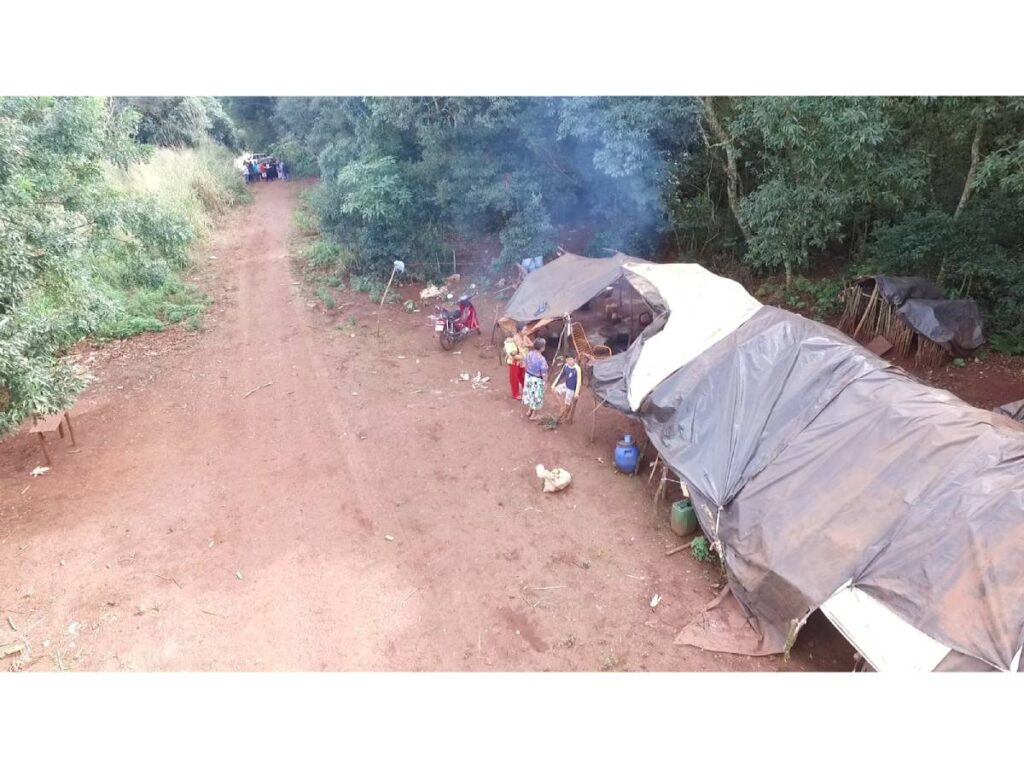
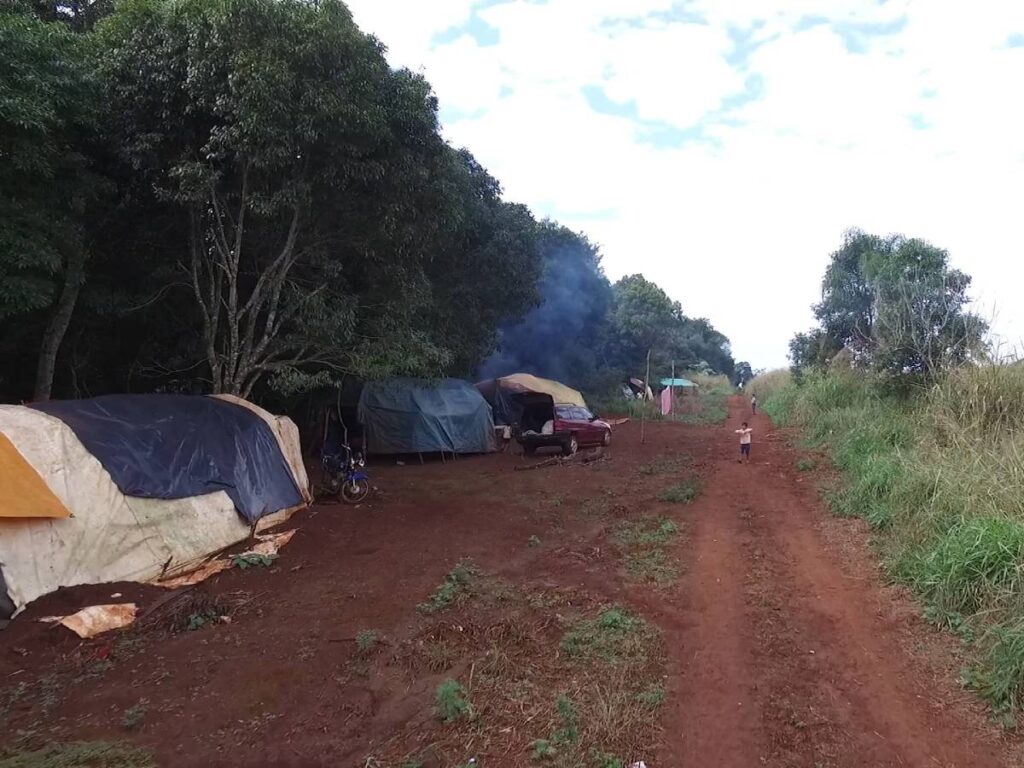
To this day, Tekoha Sauce is still resisting in part of what was its former territory, which today officially belongs to the Limoy Hydroelectric Reserve .
They have been there since their expulsion in 2016, after having tried for a year to recover another part of their former territories, which today currently belongs to a Brazilian landowner.
This community is once again facing an eviction lawsuit, this time driven by Itaipu, which is unfeasible, however, as there are many loose ends legally.
In fact, from 1975 to 1978, when they were expelled, the international laws of the ILO international convention that protected them were ignored, safeguarding their rights and mainly pointing out that, if they were to move from their lands, it should be by prior agreement and in a place with equal or better conditions.
From the beginning
In this struggle with so many gears, Maria's value is founded from the root.
All the girls born in the midst of this search for restitution have been born from their knowledge, with the conjunction of the prayers of the spiritual leaders who still live and carry out their jeroky aty or spaces of singing, dancing and prayer.
During various celebrations, María also prepares the corn-based spiritual beverage called kagyui or chicha. Each woman carries her takua pu, or bamboo drum, to tap on the ground; this instrument accompanies the chants and prayers. This strength keeps the resistance alive.
ancestral medicine
These spiritual and medicinal practices reflect the identity of their people and sustain a peaceful social struggle that prevails, even in these times of narco-politics and the interests of large-scale enterprises.
Among the reflections that Maria shares, she affirms that without the medicines of the forest, life could not be sustained..
For example, in order for the cedar to live, which is one of the most emblematic trees of its people, it needs a web of life that belongs to the same habitat.
Cedar is used for many ritual purposes, such as healing physical and mental illnesses and wounds. This tree, like the very essence of tekoha, the web of life, is what gives life to the river itself. A river suffering from droughts directly affects humans, all living beings, and even the hydroelectric plant.
Midwifery, a profession of struggle
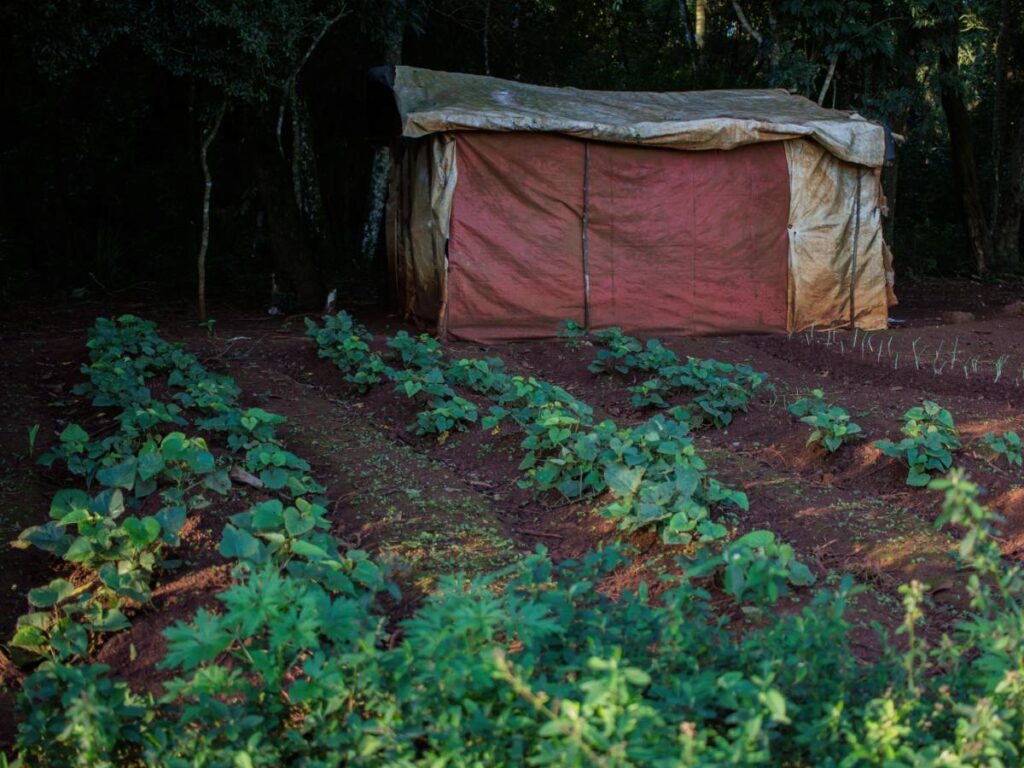
María believes that the midwife's profession cannot be lost. Nor can all the medicines that come from the forests be lost. In the 40 years since they began their resistance, they haven't needed pharmacies. This is because of the knowledge they have kept alive. And, on the other hand, because in the Paraguayan state, basic services don't adequately reach rural or indigenous populations.
However, given the current situation of living in plastic tents and the harsh conditions they face, such as constant fumigation, these natural remedies are unfortunately insufficient . Many people seek help in urban hospitals or suffer dire consequences .
But the resistance remains strong as there are organizations and teams of people who join in until restitution , as well as the strength of the women's commission of Tekoha Sauce.
Thus, hope remains alive, as does the possibility that María will pass on her knowledge. Not only to her people but also to the network of people she awakens and accompanies, those who wish to once again nourish that forest, that water, and our Mother Earth, drawing on the wisdom and practices of our grandmothers and grandfathers.
We are present
We are committed to journalism that delves into the territories and conducts thorough investigations, combined with new technologies and narrative formats. We want the protagonists, their stories, and their struggles to be present.
SUPPORT US

FOLLOW US
Related notes

We are present
This and other stories are not usually on the media agenda. Together we can bring them to light.