

An HIV patient filed a discrimination complaint against a doctor who questioned his homosexuality.
A doctor called a man with HIV "impious" after he visited the Melchor Romero hospital for follow-up care. The hospital announced it will speak with the doctor.


Share

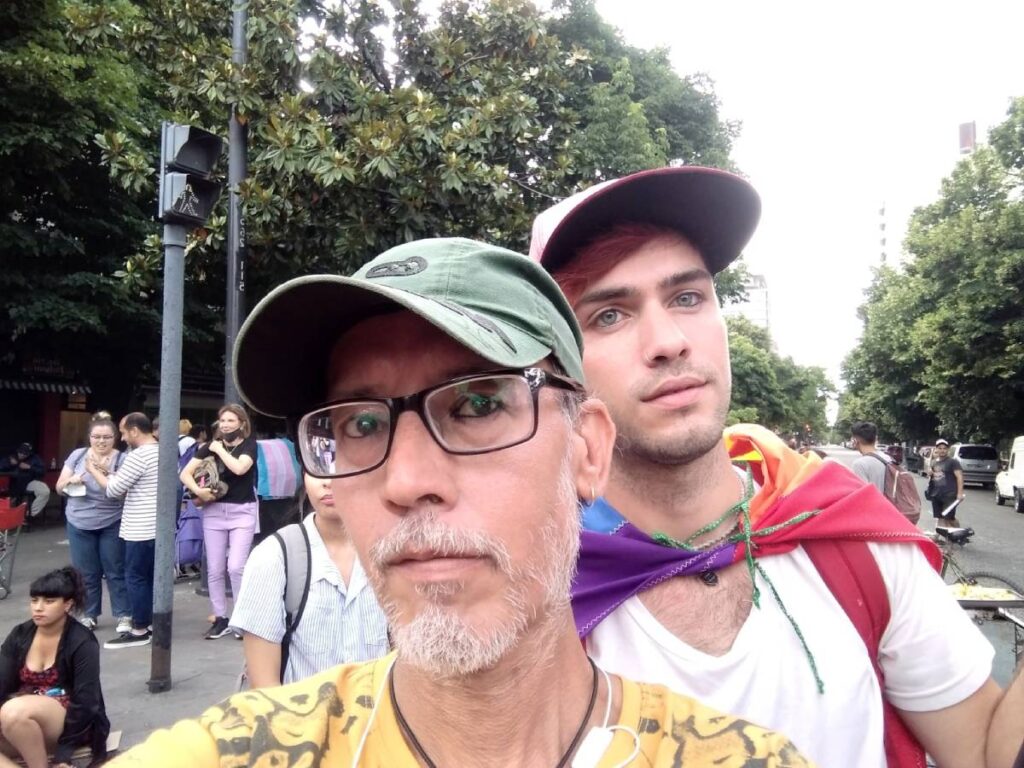
LA PLATA, Argentina. Diego de Jesús Arias is an LGBTQ+ rights activist and president of the organization Mateadas por la Diversidad (Mateadas for Diversity ). Last week, he filed a complaint with the National Institute Against Discrimination, Xenophobia, and Racism against a doctor at the Alejandro Korn Hospital in Melchor Romero, La Plata, for discrimination and homophobia. The doctor had told him that “God disapproves of his homosexuality and that this impious act was the reason for his current health condition.”
In an interview with Presentes , Diego said that he had already experienced a similar situation with this doctor four years ago and that it felt like déjà vu.
“It was very hard for me when he told us that he wasn’t against what we were doing, but that we were going against the path of the Lord and what the Bible dictated. At that first opportunity, we got up and left,” he says.
“Then we met his colleague, who treats us with a different kind of humanity and is the one who treated us for these four years. Because of the holidays, we ended up seeing this infectious disease specialist again, who received us and suddenly began to give us a talk that once again started to turn towards the religious,” Diego explains.
“The conversation could have gone on for hours. The conclusion was that all my problems were because I don’t follow God’s path because I’m gay. After that, we never saw him again.”
So that it doesn't happen again
Diego decided to make his complaint public before INADI because he believes that there must be many people going through the same thing and not realizing it.
“You’re going to a medical appointment for a condition that, while not an illness, is very complex, and the doctor has to provide support. This doctor made us feel very uncomfortable and can’t tell us what he told us. He can’t tell us that everything that’s happening to us is because we’re gay. Maybe he’ll say that to someone else, and that person will lower their head because they’re afraid their family will find out or because they’re afraid of the stigma associated with HIV.”
The hospital's response
On Sunday afternoon, after learning of the incident through the media, the Alejandro Korn Hospital contacted him to apologize. They promised to speak with the doctor to determine what action to take, as they condemned his behavior.
In the statement issued by the hospital to the media, they expressed that upon learning of the discrimination suffered by Diego de Jesús, they contacted him.
“The Mental Health Directorate, headed by Dr. Belén Maruelli, contacted him and offered him a meeting with the entire management team to discuss the situation and begin an active reparation process. We also contacted the professional in question, who is currently in isolation due to COVID-19, to thoroughly investigate and resolve this situation. Furthermore, we consider this an institutional issue, and therefore we are committed to the debate to guarantee access to the right to non-discrimination.”
The Ombudsman's Office explained that an active reparation process requires the healthcare professional to apologize and undergo training. Otherwise, if they refuse to make amends, they will have to leave their position. This is part of the monitoring that the Ombudsman's Office offered as training and awareness-raising to the doctors who volunteered at the hospital in response to this situation.
A professional lapse
Dr. Gustavo López, coordinator of the Legal Area of NEXO AC and Legal Advisor to INADI, explains to Presentes that most infectious disease specialists work with HIV and hepatitis. He adds that there are a large number of patients who are from the LGBTQ+ community, and that, in general, there are not as many complaints.
“In this case, since Diego was an activist, he had the means to report it. I'm worried about what might be going through the minds of young people who have been infected with HIV, who go for a consultation and encounter someone who says those things to them,” López explains.
“Under our civil law, there is no distinction based on sexual orientation; we are all equal. For a doctor to come and tell you that what you're going through is due to your homosexuality seems inappropriate to me. You're bringing religion into the realm of science. But, furthermore, you're spreading false information, which is what's truly worrying. HIV is transmitted regardless of sexual orientation or gender identity; it's a matter of exchanging bodily fluids, blood, or semen. For a medical professional to say such things is serious.”
López believes these constitute hate speech. “There is hatred of sexual diversity, particularly directed at men who have sex with men. This hatred is worrying. We at INADI work on the stigma aspect. How did stigma lead people to believe that someone has HIV simply for being gay? I'm concerned about the ignorance of some doctors. We've had cases at INADI of people being given the last appointment at the dentist because they had HIV. When we called and asked why they were given the last appointment, they told us it was so the environment could be more thoroughly disinfected and sterilized.”
A new HIV law is urgently needed.
On Tuesday, January 25, the National Bill for a Comprehensive Response to HIV, Viral Hepatitis, Sexually Transmitted Infections and Tuberculosis was placed fifth on the agenda for the extraordinary sessions of Congress, which will begin on February 1.
This project had been left unaddressed in the ordinary sessions of 2021 and if it is not addressed and does not achieve half approval it would again lose its parliamentary status.
Countless instances of discrimination are suffered by people living with HIV . Gustavo López explains that, while the 1990 law was very valuable at the time of its enactment, it is necessary to adapt to the new human rights paradigms that were incorporated following the 1994 amendment to the National Constitution, specifically Article 75, Section 22, and the International Human Rights Covenants.
A law to prevent discrimination
The opinion of the Social Action and Public Health and Budget and Finance committees of 2021 recommended the sanction of the bill which in Chapter II on Rights and Guarantees establishes that every person with HIV, viral hepatitis, other STIs and TB must have access to the right to receive comprehensive assistance; to receive dignified and respectful treatment, without discrimination of any kind, in all areas; to the protection of confidentiality, privacy and intimacy, in accordance with the Personal Data Protection Law No. 25326; to not declare their diagnosis and/or stage of their infection; and labor, educational, welfare, social security, and all other rights, without any type of discrimination or delay for access.
“If you want to prioritize religion, do it in your private, family life, but not in the professional sphere,” says Gustavo López. “If a doctor doesn’t want to believe what science itself says, at least they should comply with the regulations of the Ministry of Health, the hospital, and everything related to the recognition of people’s human rights,” he emphasizes.
“In this country, homosexuality ceased to be considered an illness many years ago. You live in a country where you cannot make prejudiced remarks about people because of their sexual orientation or gender identity. What you are doing is prejudging by saying 'you have HIV because you are gay'.”
Diego is certain there are many more cases. “It’s not something that only happened to me and my partner. We know this because it’s logical. It’s important that these cases come to light so that people report these things and don’t suffer. I advocate not only for the rights of our community but also for Human Rights. I want doctors to be educated and trained.”
We are present
We are committed to journalism that delves into the territories and conducts thorough investigations, combined with new technologies and narrative formats. We want the protagonists, their stories, and their struggles to be present.
SUPPORT US

FOLLOW US
Related notes

We are present
This and other stories are not usually on the media agenda. Together we can bring them to light.