

What is it like to be a lesbian mother in the State of Mexico
Lesbian women who choose to become mothers face various forms of institutional discrimination. The urgent need for a nationwide marriage equality law.


Share

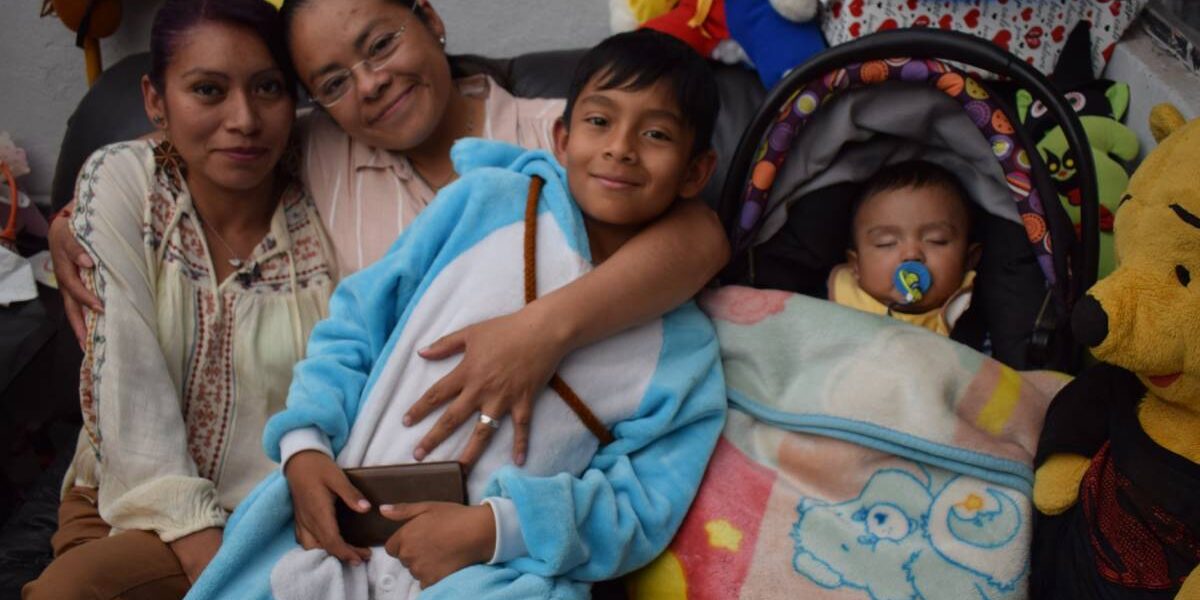
STATE OF MEXICO, Mexico. Changing diapers and taking her eldest son to school are some of Nancy Velasco's favorite activities.
For the past 10 years, Nancy has walked hand in hand with Teodora Saldívar, her wife and the mother of her two young children. Joining them on that journey were Noah, just eight months old, and Fernando, seven years old. And although she admits that having a family wasn't always in her plans, she doesn't hesitate to say that these three people are the most important thing in her life.
“One moment I love is when I get home from work and Fer runs out yelling 'Mommy!' and comes to me and tells me she missed me. And then I go inside to see Noah, who gets so excited as soon as he sees me. Being a mom, I enjoy making Fer's breakfast, I enjoy changing Noah's diapers, and even though neither of them is my blood, they love me. I've earned their love, and you can't change that affection for anything,” says Nancy.
Family life
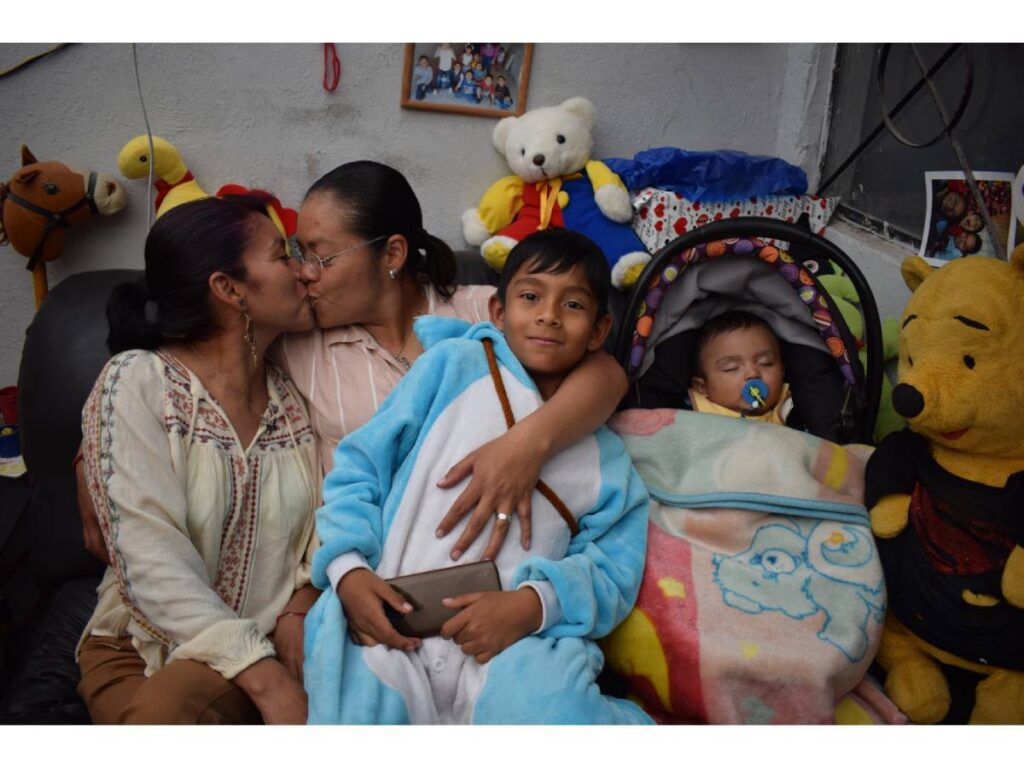
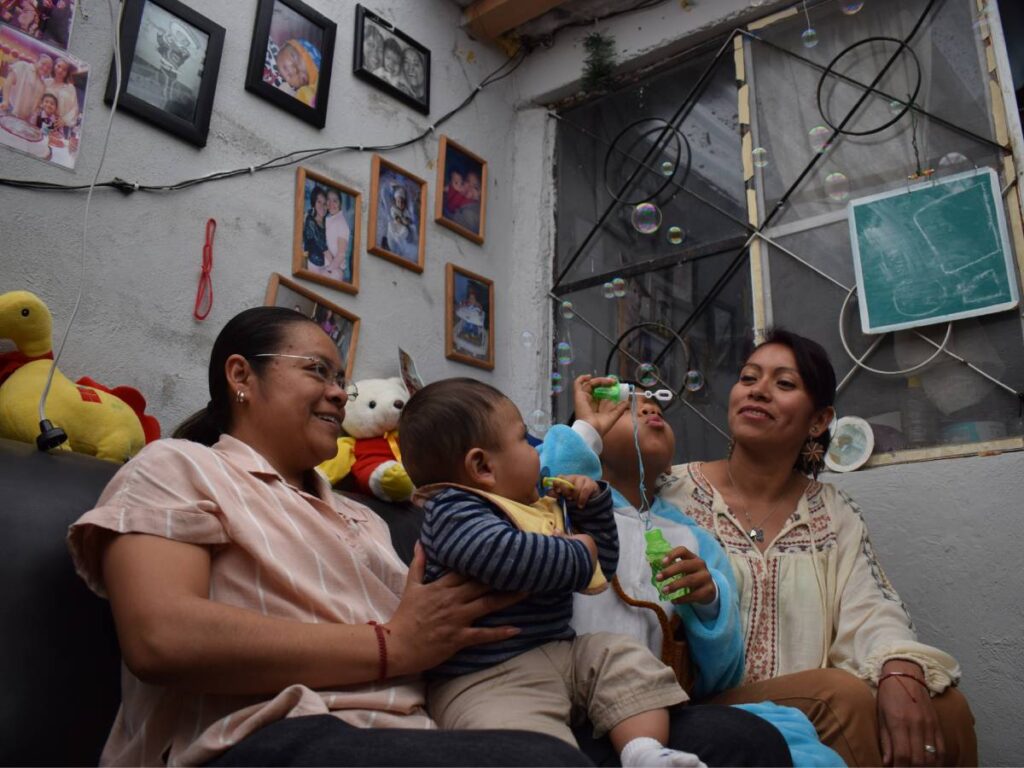
Sitting in the first room of their house in the municipality of Ecatepec, State of Mexico, Teo and Nancy chat on the black sofa, the same one that serves as the children's playroom and is overflowing with stuffed animals and toys, mostly Fernando's. There, sitting next to each other, they are surprised to announce that this year they will celebrate their tenth anniversary as a couple.
With little Noah on her lap, after feeding him chayote puree, Teo recalls that the desire to be a mother was always there; for her, imagining raising children was part of her plans. However, she never imagined the institutional discrimination she would face as a lesbian mother.
“Noah was born in Morelos , and when we wanted to register him, they put up a lot of obstacles. At first, they said they would accept my marriage certificate, but they didn't look at it properly, and when I went to the second check, the official looked at it, read the certificate, and gave it back to me because he said it wasn't valid. They also questioned me about who Nancy was and why I didn't have the child's father with me. I told them that he didn't have a father, but he did have two mothers, and they told us that in that case, only I could register him, and as a single mother,” says Teo.
In Mexico, 26 states have reformed their civil codes to allow same-sex marriage. However, in the states of Durango, Guerrero, Tabasco, Veracruz, Tamaulipas, and the State of Mexico—where Nancy and Teo live—their rights as a lesbian couple are not guaranteed.
“Here in the State of Mexico, they don’t give you anything as a couple. For example, here at the Health Center, they always ask for the 'mother,' and I tell them, we are both mothers. Oh no, they ask that the mother who gave birth speak and come in, and that, for me, is very discriminatory ,” Nancy points out while still sitting on the sofa in the brightest room of her house.
The diversity of families
Discrimination against lesbian motherhood and the stigma of the traditional family is something that Ana de Alejandro and Mitzi Leal of the Network of Lesbian Mothers in Mexico, a couple and mothers, know very well.
“The first challenge we lesbian mothers face is that people don’t usually recognize our families because they have a deeply ingrained idea that a family is only made up of a man and a woman. This concept excludes not only lesbians and gays but also single-mom families, single-dad families, aunts who take care of their nephews and nieces, grandmothers who take care of their grandchildren, and they don’t realize that there is more than one way to form a family,” Mitzi says in an interview for Presentes .
Following Mitzi's statement, Ana not only agrees with her, but also points out that if lesbian mothers are not visible, if they are not considered and respected in the laws, their human rights will never be guaranteed.
“ There are a lack of laws throughout the Republic to ensure we are treated equitably , because it must be said that if there is no marriage, there is no registration of the surnames of both mothers or both fathers. And if there is no registration, there is no recognition of sons and daughters,” Ana explains.
In the country, not all states allow the adoption of girls, boys and children by same-sex couples since it is only legal in Mexico City, Chihuahua, Coahuila, Aguascalientes, Hidalgo, Nayarit, Michoacán, Campeche, Veracruz, Colima, Morelos, Chiapas, Nayarit and Querétaro.
Another example of the invisibility faced by lesbian mothers, Ana explains, occurs when enrolling children in school , and some teachers ask for discretion. Or worse, they address only one of the mothers, since the other woman is not considered a mother in their eyes. In that case, activists denounce these measures as not only discriminatory but also violent, as they fail to respect the diverse parenting styles of families.
Furthermore, another challenge faced by same-sex parent families, Ana explains, is invisibility within extended families.
“If something happens to my stepchildren, I wouldn’t be able to do much for them; if something happens to my children, Miztli, being their stepmother, wouldn’t be able to do anything either. There needs to be an expansion of rights for diverse, multiple, and extended families,” says the founding partner and president of the Board of Directors of the Network of Lesbian Mothers in Mexico.
Beautiful love
It's almost two o'clock on a Tuesday afternoon and Noah starts to cry. The baby wants his nap and his mother Nancy takes him to his rocking chair while Teo stays behind stroking the hair of Fernando, her first baby, that boy who weighed more than three kilos and was born in water thanks to the help of a midwife.
While feeling his mother's caresses, Fernando takes advantage of the cuddle moment and begins to play with his bubbles, which his little brother admires from a distance with devotion and a desire to come closer and pop them.
“I enjoy being with my children. Seeing that they are well, feeding them, I really like taking Fer to school, hearing him tell me what he learned, I get excited when he says he won a prize for participating in class, it makes me feel proud,” says Teo moments before his son interrupts his story and repeats that when he grows up he wants to be a chef.
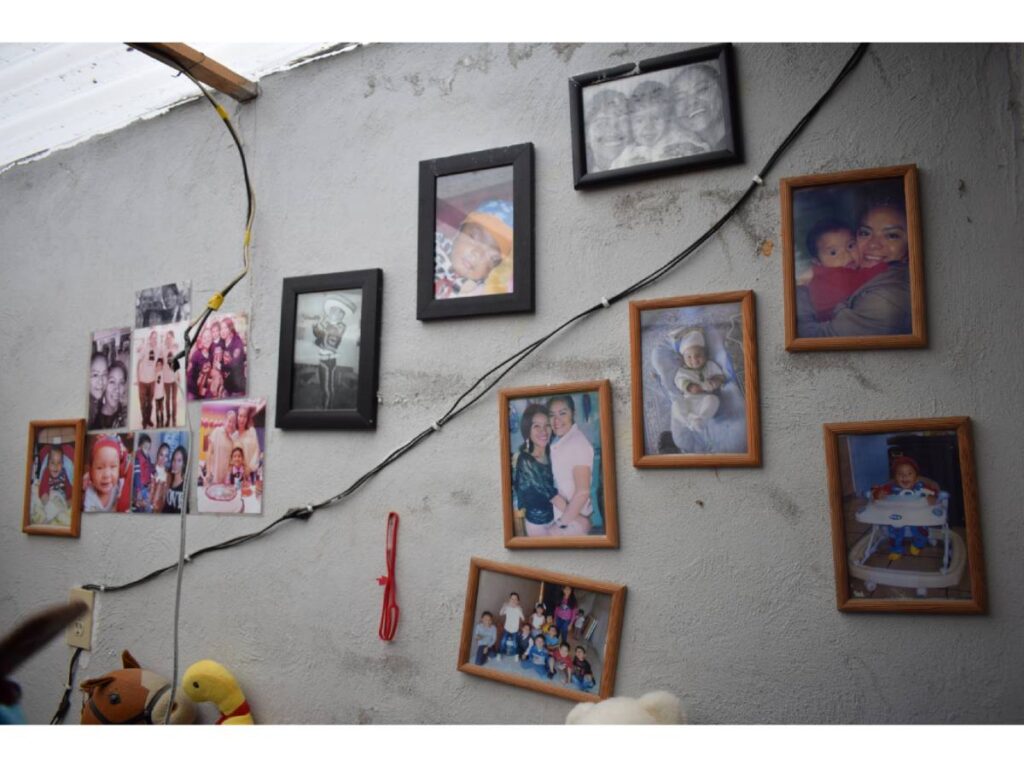
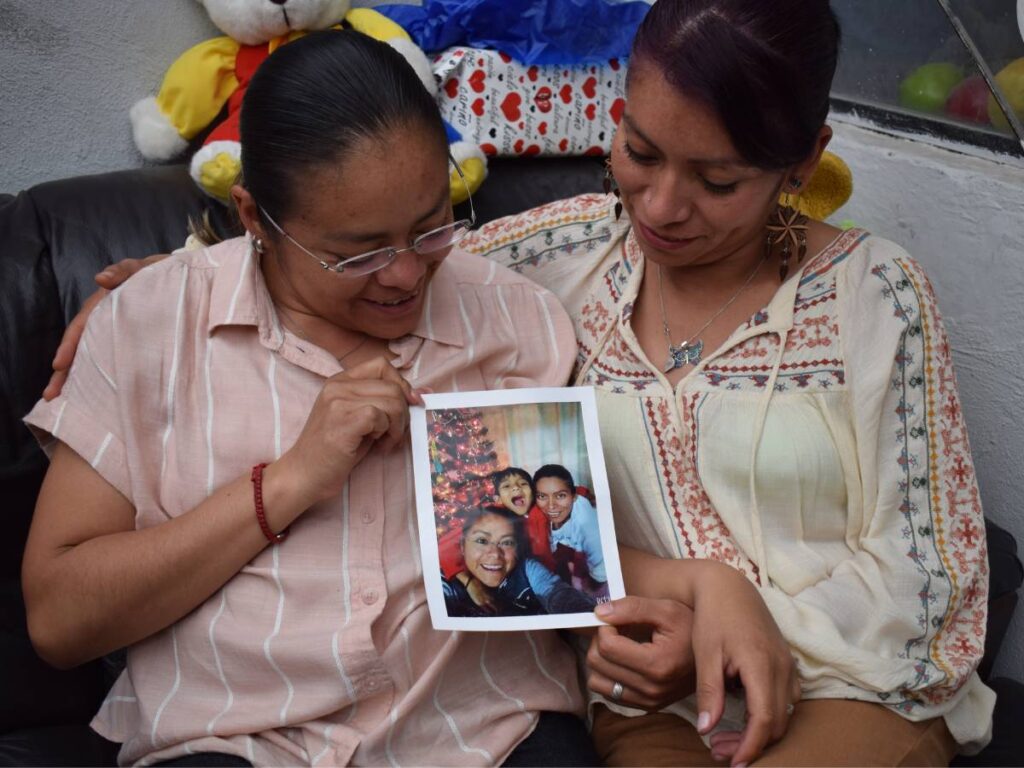
The wall where Teo leans against is decorated with photos of a baby Fernando, dressed as a charro and posing with his mothers next to a Christmas tree, and from where she answers that, for her, motherhood sounds like the song Hermoso Cariño by Vicente Fernández.
A few steps away from his wife and kneeling next to his youngest son, Nancy, who has dedicated her life to music since she was 15 years old as a ranchera singer who usually works in the Garibaldi square of Mexico City, immediately responds that Arrullo de Dios by José Alfredo Jiménez, is the melody that she would dedicate to her children.
“Have you heard it, skinny? It’s the one that goes – I buy this house without fortune, I buy this house with love, so my children can play with the moon, so my children can play with the sun, I want to leave them what I didn’t have, I want to watch them grow little by little and reach a cloud, I wish that God, that God would lull them to sleep, and a different tomorrow, and a different tomorrow, that God would also give them-…that song seems very beautiful to me for my children, ” Nancy finishes her song and with it, little Noah falls asleep without a sound.
We are present
We are committed to journalism that delves into the territories and conducts thorough investigations, combined with new technologies and narrative formats. We want the protagonists, their stories, and their struggles to be present.
SUPPORT US

FOLLOW US
Related notes
We are present
This and other stories are not usually on the media agenda. Together we can bring them to light.